Sunday, December 9, 2012

13 Players You May Not Know from the 1970's but Should

The 1970's were a decade of change and a decade of dynasties.  It was a decade that saw some of the great World Series' of all time. It saw many of the classic teams fall into the bottom of the league.  Some of them resurrected  themselves by decades end and other's wallowed in the basement.

 It was the first full decade to have a playoff round to reach the World Series and the first full decade to have divisional play. Whereas the 1980's seemed to give every team a chance to win, the 1970's saw the same teams in the playoffs every year.  .  The National League had the Phillies, Mets, Pirates, Reds or Dodgers in the playoffs every season.  The Phillies organization saw their most successful decade in their history as they reached the playoffs three years in a row but never reached the World Series.  The Reds and Pirates were easily the top teams in the league.  The Pirates made the playoffs in 1970, 1971, 1972, 1974, 1975 and 1979.  They won the World Series in 1971 and 1979.  The Reds reached the playoffs in 1970, 1972, 1973, 1975, 1976 and 1979.  They lost in the World Series in 1970 and 1972 and won it all in 1975 and 1976.
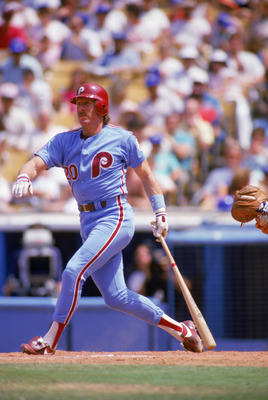

In the American League East the Orioles and Yankees dominated, winning the division in all but two seasons.  The AL West was dominated by the A's in the early  half of the decade and the Royals in the second half of the decade but similar to the Phillies, the Royals never made the World Series in the 1970's.

There were three truly great dynasties in the decade.  The first one was the Oakland A's of Reggie Jackson, Catfish Hunter, Vida Blue and Rollie Fingers.  They won three straight years (1972, 1973 and 1974) but they became quickly forgotten.  They beat the Reds and Mets in 7 games and then beat the Dodgers in 6. They were known as the "Mustache Brigade".  Their owner, Charles O. Finley, was constantly coming up with crazy ideas to bring people into the parks.  Some of them worked.  He proposed night World Series games.  That worked.  He proposed the Designated Hitter to improve offense. That worked.  He suggested using a bright orange ball to make it easier for the batters to see it and T.V. cameras to follow it.  That didn't work.  He created the name Catfish for Jim Hunter and told the press a fake back story to explain the nickname. That worked. He paid his players bonuses to grow crazy mustaches (hence the mustache brigade) which led to Rollie Fingers' signature look. That worked. Although they were a great team they were overshadowed by the Reds. 


The Big Red Machine started to rev up their engines in 1970 as they  reached the World Series for the first time since 1961.  They were swept out by the Orioles.  The machine kept chugging along and reached the World Series again in 1972 but lost to the Mustache Brigade.  The machine went through some renovations and part replacements and made it back to the World Series in 1975.  They won one of the greatest World Series ever in 1975 and then swept the Yankees in 1976.

1976 was just the opening of the Bronx Zoo.  1977 and 1978 were the main events.  The Yankees suffered through one of the worst stretches of their history between 1965 and 1976.  That all changed in 1976 as the Yankees reached the World Series.  They were swept out by the Reds but that just set up the crazy year of 1977.  As Son of Sam ran around New York, the Bronx burned and the world learned of the death of Bing Crosby, the Yankees tore themselves apart in the clubhouse (and sometimes in the dugout) and tore the competition apart on the field.  Reggie Jackson signed as a free agent in 1977 and immediately stirred up trouble with his teammates by telling a magazine writer that he would be "the straw that stirs the drink".  He fought with Munson, Nettles, Piniella, Mike Torrez, Mickey Rivers and Billy Martin.  Martin fought with everyone on the team and Steinbrenner.

After winning the 1977 World Series,1978 started off as a nightmare. Munson demanded to be traded, Jackson demanded to be traded and Martin demanded more control of the team. Martin got fired and was replaced with Bob Lemon who guided the Yankees to one of the greatest comebacks ever, tying the imploding Red Sox on the last day of the season leading to a one game playoff.  (Sox fans may want to skip to the next paragraph here.)  This led to one of the great games of all time and one of the great moments of the Yankees-Red Sox rivalry.  Trailing the Red Sox in the late innings a light hitting shortstop, forever known to Red Sox nation as Bucky F'ing Dent, hit just his 5th home run of the season.  The Yankees went on to beat the Royals for the third straight year in the ALCS and the Dodgers for the second straight year in the World Series.

There was a major advancement towards equality in the decade as well. After becoming one of the greatest players in the history of the game and one of the most respected players in the league, Frank Robinson became the first African American manager.  In 1975 Frank took over the Cleveland Indians.  It was a poor team.  It had a definite lack of talent.  The young players were not quite ready for prime time.  The older players, like Boog Powell, were well past their prime.  The uniforms were ugly.  The team's play was worse.  Frank made the best of it and was able to get future jobs.  He managed well into the 2000's as the last manager of the Montreal Expos and the first manager of the Washington Nationals.
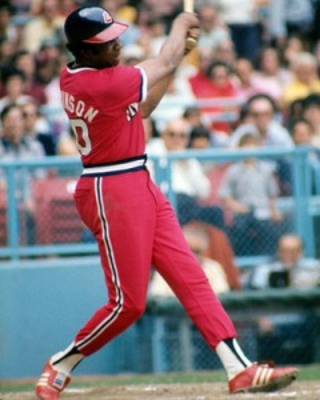

The biggest change in the game came in 1975. When Charlie Finley failed to properly execute Catfish Hunter's contract ( he wasn't properly distributing Hunter's deferred payments). Hunter sued.  The court ruled that the contract was not being executed properly and that the contract was void.  Hunter was no longer under contract and was a free agent.  The first free agent ever.  Everyone bid on him but he took the offer from the Yankees.

The reserve clause had been in every player contract since 1901.  This clause said that the services of the player signing the contract would be reserved for the following year (continuously) by the team.  In short, you signed a contract for one year and you were with that team as long as they wanted you.  When they didn't want you, you were finished.  Marvin Miller knew that the players needed a way to break this clause.  When Dave McNally was traded from the Baltimore Orioles to the Montreal Expos he reported to the team but didn't sign a contract.  He had been promised certain things by the owners of the Expos but the team didn't deliver.  He refused to sign the contract.  At the end of the season he had played an entire season with no contract.  They couldn't retain his services if they didn't have his signature saying they had his services to begin with.  Mike Messersmith was asking the Dodgers for a raise but Peter O'Malley refused.  Messersmith continued playing for the Dodgers but he didn't have a contract.  At the end of the year Messersmith and McNally were free to sign with any team they wanted.  Free agency had dawned.


Although the names of Johnny Bench, Tony Perez, Joe Morgan, Reggie Jackson, Steve Garvey, Eddie Murray and Nolan Ryan will be the names that are remembered thirty, forty or fifty years from now (or more), every decade has tremendously talented, successful players who make wonderful contributions to the success of their teams, organizations and the league as a whole. Unfortunately many of the players who fall into this category will be forgotten, overlooked and generally ignored. Here are 13 players* from the decade you may not remember but you definitely should:


Catcher
Bill Freehan
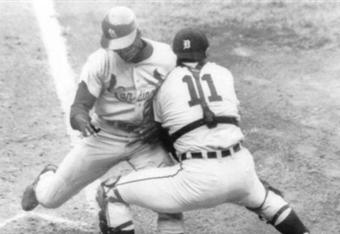


Career Teams:  Detroit Tigers (1961-1976)
All Star Appearances:  1964, 1965, 1966, 1967, 1968, 1969, 1970, 1971, 1972, 1973 and 1975
MVP Voting:  1964 (7th), 1966 (16th), 1967 (3rd), 1968 (2nd), 1969 (26th) and 1972 (26th)
Carlton Fisk, Thurman Munson and Johnny Bench were the recognized dominating catchers of the 1970's (and Fisk well into the 1980's).  Bill Freehan was just as dominant.  He just did it quietly.  The Tigers had big name players like Willie Horton and Al Kaline who got the respect.  They had Mark Fidrych whose quirky personality got the headlines but Bill Freehan was the steadying influence.  Freehan's defense was the best in the decade.  He won five straight Gold Gloves and handled the Tiger pitchers with great expertise.  Freehan was not the offensive powerhouse that Johnny Bench was, but Freehan was a strong force in the Tigers' ferocious lineup.  The hall of fame is usually reserved for players considered to be "the top at their position".  It would be hard to argue that someone who made ten straight All Star appearances, eleven total and won five Gold Gloves is not the best at his position.

Firstbase
Chris Chambliss


Career Teams:  Cleveland Indians (1971-1974), New York Yankees (1974-1979), Atlanta Braves(1980-1986) and New York Yankees (1988)
All Star Appearances:  1976
MVP Voting:  1976 (5th), 1977 (29th) and 1982 (23rd).
New York is a big city but even the big apple has a limit to the number of headlines that are available.  Competing with Reggie Jackson, Thurman Munson, Sparky Lyle and Billy Martin leaves little room for anyone else and Chambliss kind of liked it that way.  The big, quiet firstbaseman played on all the great Yankees teams of the 1970's.  He not only contributed, in 1976, hepersonally sent the Yankees to their first World Series since 1964.  The Yankees faced off against the Kansas City Royals in the Royals' first ever post season appearance.  The two teams fought into a deciding 5th game.  With the game tied at 6 in the bottom of the 9th, Chambliss stepped in against Mark Littel to lead off the inning.  Chambliss sent the first pitch into deep right field for a game winning, series ending home run.  Hal McRae leaned against the outfield wall, devastated.  Al Cowen had come over from Centerfield, in case the ball caromed off the wall.  When he saw McRae's reaction he stopped, stared at McRae in disbelief and just froze.  Chambliss started to run the bases and the entire city of New York poured onto the field.  If Chambliss didn't reach home plate the run didn't count.  Chambliss slapped away the hand of one person trying to high five him as he reached second.  As he turned second it seemed the entire stadium was right there.  He was tripped.  It looked like a running back getting tripped up just as he was ready to break a big run.  He fell as people mobbed him.  He forced his way up and elbowed his way towards third as people snatched at his batting helmet and tore at his jersey.  As he hit third base three policemen pulled the mass of humanity from him as he turned towards home.  Somehow he made his way home and the Yankees went on to get swept by the Reds.  Reggie Jackson went on to steal the show the next two years but Chambliss was a key part of the dynasty.

Secondbase
Willie Randolph


Career Teams: Pittsburgh Pirates (1975), New York Yankees (1976-1988), Los Angeles Dodgers (1989-1990), Oakland Athletics (1990), Milwaukee Brewers (1991) and New York Mets (1992)
All Star Appearances: 1976, 1977, 1980, 1981, 1987 and 1989
MVP Voting:  1978 (29th) and 1980  (15th)
As a rookie Willie Randolph wore black and gold and made his name as the guy who grounded to Joe Morgan, ending the Pirates' 1975 season. Two months later,the Yankees made one of their best trades of the 1970's or 1980's.  As the Yankees went to three World Series in the 1970's and one in the 1980's, Randolph was the defensive star.  Similar to Chris Chambliss, Randolph got lost in the big headlines but his defensive prowess was often eye popping.  A typical play saw Randolph sprinting toward the second base bag to catch a ball up the middle.  Unbelievably, the ball kicked off the front of second base, redirecting it in the exact opposite direction that Randolph was heading.  No problem.  Randolph followed the ball the whole way, grabbed it turned and threw to first to get the runner.  Somehow Randolph never won a Gold Glove.  Willie later became manager of the New York Mets and took them within one inning of the World Series.  After the Mets collapsed at the end of of the 2007 season and struggled in 2008, Randolph was fired in a particularly cruel fashion.  Rumors of his lack of future swirled as the Mets left for a long road trip to Anaheim.  The Mets won the first game of the series.  After the game the Mets GM flew out to Anaheim and met with Randolph letting him know he was fired.  Randolph was furious.  If they had already made up their mind why make him fly all the way across country just to send him back east right away?

Frank White


Career Teams: Kansas City Royals (1973-1990)
All Star Appearances:  1978, 1979, 1981, 1982 and 1986.
MVP Voting: None.
Kansas City is a tremendous baseball town, although the last 25 years have been difficult on the faithful fans.  The Royals arrived in Kansas City in 1969 replacing the transient Athletics franchise and struggled at first.  They started to create a strong team with players like George Brett, Al Cowens and Willie Wilson.  During the late 1970's and early 1980's the Royals dominated the Western division, the only time in their history that would stand out as a consistently competitive time and Frank White was there for the whole thing.  He was not an offensive powerhouse.  He never hit .300 in a season and had numerous sub .250 years but his defense was his great contribution.  White won 8 Gold Gloves, including 6 straight.  The Royals made the playoffs in 1976, 1977, 1978, 1980, 1981, 1984 and 1985.  Frank White is one of the few players to be able to boast that he played in every postseason game his organization has ever played.  The Royals have only retired two player numbers in their history: Gorge Brett and Frank White.

Shortstop
Bert Campaneris
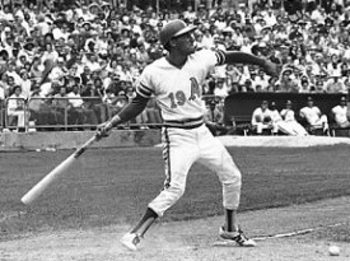


Career Teams: Kansas City/Oakland Athletics (1964-1976), Texas Rangers (1977-1979), California Angels (1979-1981) and New York Yankees (1983)
All Star Appearances:  1968, 1972, 1973, 1974, 1975 and 1977
MVP Voting:  1965 (29th), 1966 (10th), 1968 (11th), 1970 (24th), 1972 (16th), 1973 (26th), 1974 (15th) and 1975 (20th)
If stealing bases is an art form, Bert Campaneris was Michelangelo.  Campaneris led the American League in stolen bases six times, rarely stole less than 35 bases and stole a total of 649 bases in his career.  He was the motor guy in the A's forgotten dynasty.  Although Reggie Jackson, Catfish Hunter, Rollie Fingers and Joe Rudi are the remembered stars, they would not have won any of their three consecutive World Series without Campaneris.  Campaneris hit three big playoff home runs but none was bigger than the 11th inning, game ending home run in Game 3 of the 1973 ALCS against the Orioles.  The A's were often known to fight each other but they had one famous fight against another team.  In the 1972 ALCS against the Tigers Campaneris was hit in the ankle by a Lerrin LaGrow pitch.  Campaneris wanted to let LaGrow know that if the Tigers wanted to hit him, he would hit back.  He immediately threw his bat at LaGrow.  The benches cleared.  Tigers manager Billy Martin charged at Campaneris.  After several angry minutes the teams were separated and Campaneris was ejected, suspended the rest of the ALCS and the first few games of the next year.  He was allowed to participate in the World Series against the Reds and although he only hit .173 he went 2-4 with a run in the deciding game that the A's won 3-2.

Thirdbase
Rico Petrocelli


Career Teams:  Boston Red Sox (1963-1976).
All Star Appearances:  1967 and 1969
MVP Voting:  1967 (17th), 1969 (7th) and 1972 (18th)
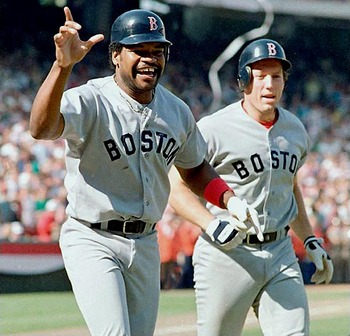
The 1967 Sox team was known as the "impossible dream" team because they came out of nowhere to win the American League and lost the World Series in a full 7 game classic.  Petrocelli was part of a strong young core of players led by Carl Yastrzemski, Tony Conigliaro and Reggie Smith  who were supposed to keep the Red Sox competitive for the next decade.  Conigliaro suffered a horrible injury and Reggie Smith was traded away.  The young team did not live up to expectations but Petrocelli was a strong leader, along with Yaz, in the clubhouse.  In 1975 Yaz and Rico made one last push to win the first World Series in Boston since 1918.  In one of the greatest World Series of all time Rico had 8 hits and drove in 4 runs.  The Sox didn't win that series and Petrocelli retired at the end of the 1976 season.  The Red Sox could have used his calm demeanor in 1978 as the Red Sox fell apart and the Yankees made a dramatic comeback.  Rico Petrocelli currently hosts a radio show on MLB Radio network titled "Remember When". 

Outfield
Lyman Bostock
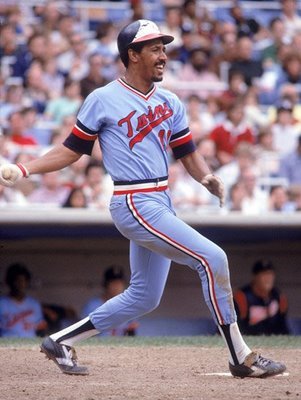


Career Teams: Minnesota Twins (1975-1977) and California Angels (1978)
All Star Appearances: None.
MVP Voting:  1977 (27th) and 1978 (23rd)
Lyman Bostock's career was tragically short. He made an immediate impact with the Minnesota Twins in 1975 and improved dramatically over the next two years.  He never made an All Star game and never played in a playoff game but he had a career .311 batting average.  At the end of the 1977 season Bostock was granted free agency and received offers from several teams.  He finally chose a large offer, $450,000, from Gene Autry's California Angels.  Autry was building a strong team and many felt that Bostock was the missing piece.  Bostock started the year terribly and the press and Anaheim fans started to show their disapproval at the overpaid star (not nearly as high priced but very similar to Albert Pujols's first year).  The happiest city on earth was a miserable experience for Bostock over the first few months.  Bostock struggled with the failure and felt he was letting down Autry. Bostock offered to return his big contract and play for free to compensate Autry for his poor play.  Autry refused saying "We wouldn't give him a raise if he had a good month so I'm not going to withhold his pay just because he had a bad one."  Bostock donated his entire first month's pay to a local church.  Bostock turned his season around.  He ended up hitting .296 and driving in 71 runs.  On September 23rd of that year Bostock's life ended tragically.  After the September 23rd game Bostock went to dinner with some family and friends.  As his car waited at a stoplight another car drove up next to them.  The man in the other car, the estranged husband of one of the passengers, aimed a shotgun at the vehicle and fired.  Bostock was shot and passed away before the night was over.  Baseball lost a great player and a great person.

Garry Maddox
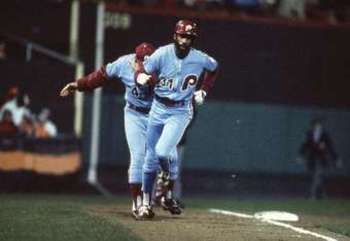


Career Teams: San Francisco Giants (1972-1975) and Philadelphia Phillies (1975-1986).
All Star Teams:  None.
MVP Voting: 1973 (28th), 1976 (5th) and 1978 (21st)
The Phillies organization had few eras that could be considered successful in the 1900's.  When the Phillies reached the post-season in 1976 it was the first time since 1950 and only the third time in the history of the organization but they would make the playoffs 5 times in the next 7 years, including two World Series appearances.  Garry Maddox was one of the stars of that era and is still a legend in Philadelphia.  Phillies fans may hear more about Schmidt, Luzinski, Carlton and Tug but Maddox was just as important.  Maddox won 9 consecutive Gold Gloves and was known as the Secretary of Defense (long before Reggie White showed up in the city of brotherly love).  Maddox was known for playing shallow because he could cover so much ground.  Harry Kalas, the legendary Phillies broadcaster once said "two thirds of the earth are covered by water.  The other third is covered by Garry Maddox."

Rick Monday


Career teams: Kansas City/Oakland Athletics (1966-1971), Chicago Cubs (1972-1976) and Los Angeles Dodgers (1977-1984)
All Star Appearances:  1968 and 1978
MVP Voting:  1976 (18th).
The Kansas City Athletics, a truly terrible organization, held the first draft pick in the first ever Major League Baseball amateur draft.  They chose a kid from Santa Monica High School in California.  Being the first ever draft pick in the history of baseball is a lot of pressure to put on a kid and brings expectations that no human being can live up to.  Rick Monday did a decent job of living up to it.  He never became a superstar but he became someone who organizations loved to have on their team.  His numbers were not eye-popping and he was never a guy you feared when he walked to the plate but Rick Monday had a better than average career. He was a member of four playoff teams and won the World Series with the Dodgers in 1981.  Monday's most famous play had little to do with baseball.  In 1976 Monday was playing in the outfield for the Cubs.  As the Cubs trotted off the field to bat in the bottom of the 4th, two teenagers ran onto the field carrying something.  One of the teens dropped it on the field an began pouring lighter fluid on it.  The other teen came over with a set of matches.  Monday couldn't quite tell what it was but he had an idea.  As security and stadium police ran towards the trespassers Monday ran back towards the dugout by way of the teens.  As the teen with matches struggled to get it lit Monday swooped in, grabbed the American Flag and continued running into the dugout.  The teens were shocked that the flag was taken from them.  He may not have been a relief pitcher but it was a hell of a save.  Rick Monday is currently a play by play announcer for the Dodgers.

Pitcher
Steve Blass


Career Teams:  Pittsburgh Pirates (1964-1974)
All Star Appearances:  1972
MVP Voting:  1968 (22nd) and 1972 (18th)
Cy Young Voting:  1972 (2nd)
There's this weird thing that happens to some people in baseball.  It happened to Rick Ankiel.  It happened to Chuck Knoblauch.  It happened to Steve Sax and Dontrelle Willis and it happened to Steve Blass.  Some people call it "the yips".  Some people just call it "the thing".  A lot of people call it the Steve Blass disease.  No one knows how it starts.  Sometimes it gets fixed and sometimes it doesn't.  One day you're a major league baseball player and in the middle of a game you somehow, all of  sudden, can't throw the damn ball where you want it.  The most basic part of the game: throw and catch.  Yet you just can't throw the ball.  Blass started out his career with great potential and was on track to become one of he winningest pitchers of the decade.  He was a great talent and a World Series hero.  In the 1971 classic Blass won two games including the deciding Game 7.  His 1972 season was his best.  He won 19 games lost only 8 and had a 2.42 ERA.  He was well on his way to a great career when all of a sudden he wasn't.  He hadn't changed anything but for some reason he just couldn't find the plate.  He struggled.  He worked harder.  He struggled more and worked even harder.  He went to coaches, hall of fame pitchers, hitters, physical therapists, psychiatrists, psychologists and possibly even random people on the street.  His wins dropped from 19 to 3.  His ERA went from 2.49 to 9.85.  His strike outs went from 117 to 27.  His walks went from 84 in 249 2/3 innings to 84 in 88 2/3. His hit batters went from 4 to12.  Almost overnight his career was over.  Steve Blass could have become a miserable person at the sudden change but if you ever get a chance to hear Steve Blass as an announcer for the Pirates you'll hear a guy who is happy to watch another game of baseball (usually more so when the Pirates win).

Randy Jones


Career Teams: San Diego Padres (1973-1980) and New York Mets (1981-1982)
All Star Appearances:  1975 and 1976
MVP Voting:  1975 (10th) and 1976 (10th)
Cy Young Voting:  1975 (2nd) and 1976 (1st)
The Padres were a new team in the 1970's, their first year in the league was 1969, and they were a terrible team.  They developed some great talent in Dave Winfield and Ozzie Smith, two future Hall of Fame players, but they paved their way to the hall with other teams.  Randy Jones was not a Hall of Fame pitcher but he had a few years that were amazing.  He was nicknamed "junkman" because he was known for "throwing junk pitches" at batters.  No pitcher infuriated Pete Rose more than Jones.  Rose would scream at Jones to throw harder and Jones would laugh, then throw another slow curve.  His first full year was an amazing disaster as he lost 22 out his 30 decisions.  The fact that his team was terrible minimized the terrible record.  Randy Jones kept working hard and found a way to win.  He won a lot over the next two years and became the best pitcher in the National League.  He won 20 games in 1975 and led the league with a 2.24 ERA.  Winning 20 games in the majors is not an easy job.  Try doing it on a team that loses 91 games.  That's 22% of the team's entire wins.  If that wasn't good enough, he improved the next year winning 22 games for a team that lost 89 games (that's close to 25% of the team's wins).  His ERA stayed low (most years) as the decade moved on but sometimes it is just impossible to win with a bad team behind you.  The win totals dropped and the loss totals rose.  By 1982 Jones was out of the majors.

Relief Pitcher:
Sparky Lyle
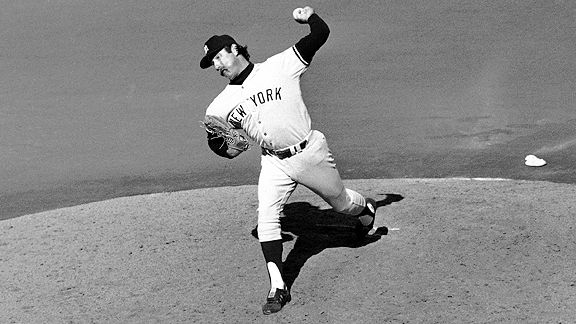


Career Teams: Boston Red Sox (1967-1971), New York Yankees (1972-1978), Texas Rangers (1979-1980), Philadelphia Phillies (1980-1982) and Chicago White Sox (1982)
All Star Appearances: 1973, 1976 and 1977
MVP Voting:  1972 (3rd), 1974 (25th), 1975 (22nd) and 1976 (6th)
Cy Young Voting: 1972 (3rd) and 1977 (1st).
The Yankees of the late 1970's  were an interesting group.  From the craziness of Steinbrenner being suspended for illegally contributing money for Nixon's presidential campaign to feuds between Reggie Jackson and Thurman Munson, Reggie Jackson and Graig Nettles, Reggie Jackson and Catfish Hunter, Reggie Jackson and Billy Martin...well it would be easier to say everyone and Reggie Jackson.  It was a team full of characters and Sparky Lyle was a perfect example.  As the Yankees closer, Lyle won the Cy Young in 1977 as the Yankees won their first World Series since 1962.  As a Cy Young winner for a World Series champion you would think your job would be safe, yet in the winter of 1977 the Yankees picked up Goose Gossage, a star relief pitcher and future hall of fame member.  Lyle was furious. After winning an awarded as the best pitcher of the year, Lyle spent the spring fighting for his job.  Billy Martin, always thriving on chaos, tried to play Lyle against Gossage in the press but neither bought into the feud.  As the year went on Lyle's innings decreased and Gossage's increased.  Lyle documented every day of it and turned it into one of the best baseball books of all time.  He titled it "Bronx Zoo".  It was a perfect title.

Designated Hitter
Hal McRae
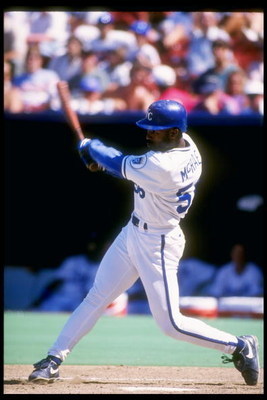


Career Teams:  Cincinnati Reds (1968-1972) and Kansas City Royals (1973-1987)
All Star Appearances:  1975, 1976 and 1982
MVP Voting:  1974 (30th), 1976 (4th), 1977 (24th), 1978 (31st) and 1982 (4th)
The Designated Hitter entered the American League in 1973, the same year Hal McRae came to the American League.  Managers weren't quite sure what to do with the new position and the players who were put in the position didn't exactly know how to approach the game.  Should managers use a top of the lineup guy who got on base and hit for average or use a power guy who could pound the ball out of the park?  Should they use an everyday player or a guy who normally pinch hits?  Was it best to have one guy in the position every day or rotate a different guy everyday?  McRae was the ideal DH and as the years went on he was used more regularly in the position.  McRae became one of the Royals all-time heroes and, along with Frank White and George Brett, was a huge reason the Royals dominated the AL West from 1975-1985.  Although not a Hall of Fame caliber player McRae helped define the position and define the Royals organization.  Similar to Dave Henderson in the 1980's, McRae had a huge smile that made you want to go out on the field and get a bat in your hands or run down a fly ball.

* Author's Note:  Just as in the last few weeks, and as may be seen in the next few weeks as we move through this series of articles, I did my best to keep this to one player per position, however, the farther we move from these eras, the easier it is to forget these types of players (and even some hall of fame players).  It is important to remember as we follow the sport that the superstars are not the only ones making contributions to the success of a team.  This is not a comprehensive list of players who fall into this category from this era, it is simply my choice of players who best represented their position and have become forgotten.  Your list is probably different.  Email me yours or leave a comment.

Monday, December 3, 2012

15 Players You May Not Know from the 1980's but Should

Baseball in the 1980's was not without controversy.  Similar to the steroids scandal today, baseball faced a drug abuse scandal in the 1980's.  It was not steroids that were the drug of choice but amphetamines.  In the winter of 1980-1981, just a few months after winning their first ever World Series, news broke that several high profile Phillies players were receiving "prescription" amphetamines.  The prescriptions were coming from a doctor in Reading, PA and worst of all were being delivered to the players at Veteran's Stadium (the story sounds very similar to Paul LoDuca receiving his steroid shipments at Dodger Stadium).  Amphetamines were not the only drug of choice as Steve Rogers, Tim Raines, Darryl Strawberry, Keith Hernandez, Dwight Gooden and Steve Howe all were caught using cocaine.  Howe was not necessarily the worst offender but he certainly was the one who got caught the most.  Howe was suspended seven times during his career for alcohol and drug abuse. 

Another scandal involved corked bats.  Filling the bat with cork made the bat lighter, allowing for quicker bat speed and also gave some extra spring to the ball off the bat.  There have been recent experiments that said the cork actually absorbs the force of the pitch as opposed to bouncing it as previously assumed.  Either way it is still illegal to use a corked bat.  Billy Hatcher of the Astros got caught red handed.  When the barrel of his bat broke in a 1987 game, cork exploded all over the field.  Hatcher was immediately ejected from the game and suspended for 10 games.  Hatcher didn't hesitate in shifting the blame.  He pointed to a teammate and said he had borrowed the bat.  According to Hatcher he had no idea it was corked.  Hatcher was the only player to get suspended in the 1980's but he was definitely not the only one using this practice.  Every time a guy who was "not a home run hitter" knocked one out of the park the crowd would yell to check his bat.

Bats were not the only thing escalating home runs in the 1980's.  1987 was known as the year of the Rabbit Ball because the ball was jumping out of the park at an alarming rate.  The leagues swore that there had been no change in the manufacturing process and the balls were the same.  There had only once before been an offensive power swing this drastic.  In the early 1920's when the league outlawed spitballs, trick deliveries or any use of foreign substance on the ball.and at the same time demanded that umpires put a new ball in play any time a ball was slightly scuffed, marked or dirtied.  This ended what was known as the dead ball era.

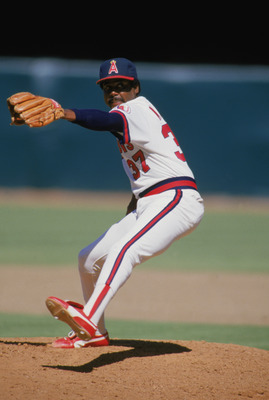
There were heartbreaking stories:  Donnie Moore, the Angels pitcher who gave up a big playoff home run to Dave Henderson, was unable to recover from the loss.  He was devastated at having cost the Angels their chance at the World Series.  He eventually committed suicide. 


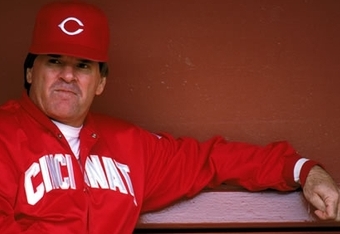
Pete Rose was caught betting against his team and was banned for life, forever locking one of the best all around players in history out of the Hall of Fame.  As the manager Rose had plenty of ways to influence the outcome of a game and his teams finished in second place every year, less than ten games out of first.  The scandal was eventually exposed by A. Bartlett Giamatti, the new commissioner.  Giamatti did not revel in the decision and almost seemed to suffer more over the ruling than Rose initially.  The strain was too much for Giamatti.  After almost exactly one year as commissioner, Giamatti died of a heart attack.


There was a true disaster:  The 1989 World Series was interrupted when an earthquake shook the bay area collapsing parts of the Bay Bridge and delaying the A's inevitable win.  The delay and concern over the state of the bay area overshadowed the initial excitement of the A's-Giants match up.  It was a match up that brought back great memories in World Series history.  The A's-Giants had met previously in 1905, 1911 and 1913 and the fourth installment looked like it would be a great series.  It wasn't, although it did have some great moments.  The A's won 4 straight.

There was a bizarre year in 1981 where the season was interrupted by a player strike.  The teams in first place at the time of the strike in mid June were declared first half winners and the teams in first place at the end of the second half, which started in August, were declared winners of the second half.  For the first time in history, there was more than one round in league playoffs. The Dodgers eventually beat the Yankees in the World Series.  Unfortunately, the Reds, who had the best overall record in baseball (combined first and second half) didn't lead the division in either half and missed the playoffs.


Of course, just like today, the media loved to focus on the negative and ignore the positives.

The 1980's was a great time to be a fan of almost any team.  In the AL East, every team except the Indians won the division at least once during the decade and in the AL West every team but the Rangers and Mariners won the division at least once.  In 1980 (Phillies), 1985 (Royals) and 1987 (Twins) organizations won their first ever World Series.  The Padres, Astros, Blue Jays, Brewers and Expos reached the playoffs for the first time in their history.  Only the Dodgers (1981 and 1988) won more than one World Series in the decade.  Not only did no one win back to back World Series, but after the 1970's where the World Series seemed to always be between the same few teams, no team represented their league twice in a row until the A's made the 1988 and 1989 World Series.

Several organizations experienced the highest of highs and the lowest of lows.  The Blue Jays reached the playoffs for the first time in 1985 and jumped out to a 3 games to 1 lead over the Royals.  They then collapsed and lost the series.  They looked strong in 1987 and led the division by 3.5 games with only seven left to play.  They lost their final seven games (including four to the eventual division champion Tigers) and were passed by Detroit.  The Angels made the playoffs in 1982 and 1986.  Both times they were one game away from advancing to the World Series but couldn't quite get there.  The 1986 Red Sox came back and beat the Angels, they then came up short in one of the classic World Series of all time.

The Orioles won the World Series in 1983 then saw a steady decline, bottoming out with the 1988 team which lost their first 21 games.  They rallied in 1989 to lead the AL East nearly all year before collapsing and losing to Toronto on the last day of the year.

The Fall Classics that were played between 1980 and 1989 were often true classics.  1982, 1985, 1986 and 1987 all went the full 7 games.  1980 and 1981 went six games.  The Dodgers-Yankees renewed their rivalry in 1981 and St.Louis ignited a new rivalry with the Dodgers with a classic 1985 NLCS.  The World Series also saw some of the most memorable World Series moments with Kirk Gibson making himself a legend and Bill Buckner making himself the biggest scapegoat in history.


There was also the heartwarming story of Jim Abbott.  Jim Abbott was a left handed pitcher.  He could throw hard and throw accurately but he was missing something that every other pitcher in the league had.  He was missing a right hand.  He never allowed it to slow him down and was able to develop a unique pitching motion that allowed him to throw, put his glove on his pitching hand, field a ball with the glove, switch it to his throwing hand and throw out a runner before you even knew what had happened.  The best part of Abbott's story is that he was truly a great pitcher.  He even pitched a no-hitter.


Directly in the middle of the decade is one of the greatest teams that you probably didn't know was great.  The 1984 Tigers.  Led  by Alan Trammell, Lou Whitaker, Chet Lemon, Lance Parrish, Kirk Gibson, Jack Morris  and Frank Tanana the Tigers jumped out to a 35-5 start, easily the best first 40 games of all time.  The Tigers never slowed down.  They raced through the regular season, eased past the Royals in the ALCS and destroyed the Padres in the World Series.  You'll hear more about them a little farther down.


Although the names of Mike Schmidt, Dwight Gooden, George Brett, Jose Canseco, Pete Rose, Don Mattingly, Dave Winfield and Jim Rice will be the names that are remembered thirty, forty, fifty years from now (or more), every decade has tremendously talented, successful players who make wonderful contributions to the success of their teams, organizations and the league as a whole. Unfortunately many of the players who fall into this category will be forgotten, overlooked and generally ignored. Here are 15 players* from the decade you may not remember but you definitely should:


Catcher:
Mike Scioscia


Career Teams: Los Angeles Dodgers (1980-1992)
All Star Appearances: 1989 and 1990
MVP Voting:  1985 (18th)
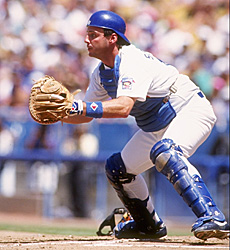
Current fans of the Angels recognize Mike Scioscia as the most successful manager in the team's history.  Current fans of the Dodgers recognize Mike Scioscia as the team's Catcher who should have been their manager if the ownership had been smart enough to hire him.  Few remember the talent that Scioscia displayed behind the plate.  He never won an MVP award or Gold Glove.  He only made two All Star teams but should have made more.  Scioscia handled the pitching staff of the Dodgers (Hershiser, Valenzuela, Don Sutton, Jerry Reuss and many more) the same way he has handled the Angels pitching staff for the past decade.  Scioscia sees the game and can anticipate the game better than most people understand.  Scioscia played a huge part in the Dodgers 1988 World Series run.  Not always known as a home run hitter, Scioscia hit a huge game tying home run in the NLCS against the Mets.  He only played in three games in the World Series due to injury but made several outstanding defensive plays to help the Dodgers stun the heavily favored A's.  Scioscia will not reach the Hall of Fame as a player but if he stays on his current path he may reach it as a manager.

Firstbase:
Will Clark


Career Teams:  San Francisco Giants (1986-1993), Texas Rangers (1994-1998), Baltimore Orioles (1999-2000) and St. Louis Cardinals (2000)
All Star Appearances:  1988, 1989, 1990, 1991, 1992 and 1994
MVP Voting:  1987 (5th), 1988 (5th), 1989 (2nd), 1991 (4th) and 1994 (15th)
If the early 2000's seemed to be the golden age of firstbasemen, the 1980's was a close second.  With Mark Grace, Don Mattingly, Mark McGwire, Fred McGriff and Keith Hernandez in their prime and Willie Stargell, Pete Rose and Tony Perez ending their careers, it was easy for Will Clark to get lost in the shuffle.  Clark was often known as "the Thrill" (his home answering machine played B.B.King's "The Thrill Is Gone") but he was also known as the "Natural".  It was well known by pitchers that he rarely swung at pitches outside the zone but pitchers didn't seem to get any breaks against him.  His signature moment came in the 1989 NLCS against Greg Maddux.  Ever wonder why everyone covers their mouths with their gloves when they visit at the mound ?  It wasn't always that way.  In the top of the fourth inning of Game One the bases were loaded with two outs and the Cubs had shaved the Giants big lead to a slim one run.  As Clark stepped into the plate Rick Wrona, the Cubs catcher, went out to talk over how to pitch to Clark.  They couldn't try to get him to chase a pitch outside the zone.  He wouldn't swing.  He would just take the pitches and walk.  While these conferences take place many batters take a few practice swings, look down at the thirdbase coach, look in the dugout, joke with the umpire.  Clark stared out at the mound and glowered at Maddux as he met with Wrona.  He couldn't hear anything above the cheers but he saw Maddux's lips communicate one thing: fastball.  The first pitch came in, a fastball, and Clark sent it out just as fast.  A grand slam to right field.  The Cubs never recovered from the blow and the Giants moved onto their first World Series since 1962.  The result of this play:  never let the batter see what you're saying.

Secondbase:
Harold Reynolds

Career Teams: Seattle Mariners (1983-1992), Baltimore Orioles (1993) and California Angels (1994)
All Star Appearances: 1987 and 1988
MVP Voting: None
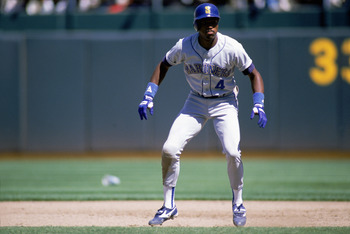
Over the last few weeks you have heard me refer to "baseball graveyards".  No better example exists than Seattle in the 1980's.  Talents like Jim Presley, Alvin Davis and Mark Langston toiled in vain in the pre-Ken Griffey, Jr. years of Seattle baseball.  No one toiled longer or better than Harold Reynolds.  The Mariners rarely got out of last place and were not ever competitive.  Reynolds was a top of the lineup, "motor" guy who made the Mariners go, although the destination was never a pretty place.  During the 1980's Rickey Henderson dominated the league in stolen bases.  In 1987, with Rickey suffering from injuries, Reynolds led the league with 60 stolen bases.  A few days after the season ended Reynolds was excited to receive a call from Rickey, assuming Rickey wanted to congratulate him for leading the league in steals.  Instead Rickey told him he should be embarrassed about leading the league with only 60 steals.  Rickey could have done that in half a season.  Reynolds was also a great fielder.  He won three straight Gold Glove awards.  Fans of the game can still see him on MLB Network's nightly coverage of the league.  He regularly gives tremendously insightful analysis, fundamental breakdowns and his own philosophy of the game.  It would be amazing to think what an impact his baseball mind could have made on a team that made the playoffs.

Jim Gantner

Career Teams:  Milwaukee Brewers (1976-1992)
All Star Appearances:  None.
MVP Voting:  None.
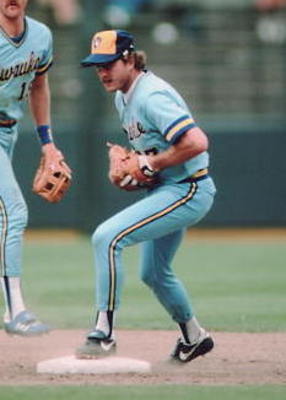
If there was ever a player who starred in obscurity and quietly did his job as the stars took credit, Jim Gantner was that player.  In 17 years in Milwaukee Gantner never made an All Star team, never received an MVP vote, never won a Gold Glove, yet he was a key part of the glory days of the Milwaukee franchise.  Although Paul Molitor, Robin Yount, Ted Simmons, Gorman Thomas and Teddy Higuera, and later Gary Sheffield and Greg Vaughn, got the headlines, Jim Gantner just kept plugging away.  He was a good, versatile fielder, playing every infield position at some point and never making more than 13 errors in a season.  Gantner played a big role in Milwaukee's only World Series appearance getting 8 hits including 4 doubles and a triple. In Ganter's final year, as Baltimore collapsed after the All Star break and Toronto thought they were in the clear, Milwaukee took a shot at the Blue Jays.  With three games to play Milwaukee trailed Toronto by only two games.  Gantner did not have his greatest season in 1992 but he certainly led the team in the clubhouse.  Although outside of Milwaukee he is rarely remembered, Brewers fans will never forget his 17 years of service.

Shortstop:
Alan Trammell


Career Teams:  Detroit Tigers (1977-1996)
All Star Appearances:  1980, 1984, 1985, 1987, 1988 and 1990.
MVP Voting:  1980 (20th), 1981 (21st), 1983 (15th), 1984 (9th), 1987 (2nd), 1988 (7th) and 1990 (19th)
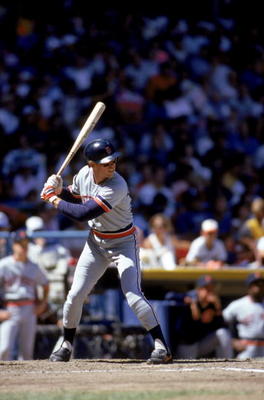
Every World Series winning team of the 1980's (and all but one of the runners up) have at least one player in the Hall of Fame except for the 1984 Tigers.  The '84 Tigers are one of the great teams in the history of the sport. They started the season 35-5 and never looked back.  He may not have been voted regular season MVP (the team had no shortage of candidates) but he was the World Series MVP.  In the ALCS against Kansas City, Trammell hit .364 with a triple, a home run and three RBI.  Those are big numbers but his World Series performance made those numbers look weak.  He hit .450 with a double, two home runs and 6 RBI and scored 5 runs.  He was clearly the World Series MVP as the Tigers destroyed the Padres to win their first World Series since 1968.  Trammell was often overshadowed by Shortstops like Ripken, Ozzie Smith, Ozzie Guillen and Tony Fernandez but Ripken always evaluated his own performances based on what Trammell did.  If Cal Ripken thinks he needs to be better than you to justify his own value it should be an easy decision that you should be in the Hall of Fame.

Thirdbase:
Carney Lansford

Career Teams:  California Angels (1978-1980), Boston Red Sox (1981-1982) and Oakland Athletics (1983-1992)
All Star Appearances:  1988
MVP Voting: 1981 (6th), 1982 (32nd) and 1989 (17th)
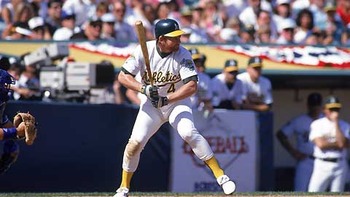
The Oakland Athletics of the late 1980's and early 1990's had a lineup filled with All Stars, MVP's, Rookies of the Year and future Hall of Fame legends:  Walt Weiss, Don Baylor, Rickey Henderson, Mark McGwire, Dave Parker, Tony Phillips, Willie McGee, Harold Baines, Terry Steinbach, Dave Stewart, Dennis Eckersley, Bob Welch and Jose Canseco.  Carney Lansford was almost always forgotten in this group.  Lansford started his career in California and was a part of the Angels' first playoff team in 1979.  The Angels lost to Baltimore in 4 games but Lansford hit .294 and drove in three runs.  After a few years in Boston Lansford moved on to Oakland.  The A's of the mid 1980's were in transition.  A few years after the signing of Lansford, Oakland started a renaissance with three straight Rookies of the Year (Canseco, McGwire and Weiss) and the developing of a great pitching staff.  Lansford played a big role in the A's rise to prominence but did not get the recognition he deserved.  Players like Lansford are usually called gritty.  Lansford's uniform was always dirty, he was constantly picking himself up off the dirt after making a diving stop, throwing from his knees.  As the A's won their first World Series since 1974, Lansford played some of the best ball of his career.  He hit .455 in the 1989 ALCS against Toronto and followed that up with a .438 World Series as the A's swept Will Clark and the Giants. 

Tim Wallach


Career Teams:  Montreal Expos (1980-1992), Los Angeles Dodgers (1992-1995), California Angels (1996) and Los Angeles Dodgers (1996)
All Star Appearances:  1984, 1985, 1987 and 1990
MVP Voting: 1987 (4th), 1990 (10th) and 1994 (18th)
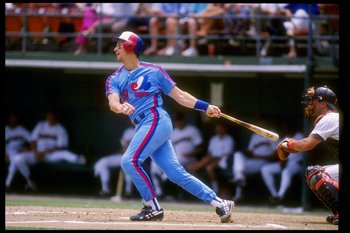
Playing thirdbase in the NL during the decade of the 1980's was difficult. You were competing with Mike Schmidt, one of the three greatest thirdbasemen of all time, Graig Nettles, a Yankees legend who moved to San Diego as well as Howard Johnson and Chris Sabo, two rising talents.  Playing baseball in Montreal in the 1980's after 1981 was a dead end.  As the Expos lost or traded their stars like Andre Dawson and Gary Carter, the middle years of the decade were dark years.  Tim Wallach was the quiet star of the organization.  Wallach was the one mainstay between the Andre Dawson/Gary Carter years and the development of the younger talent like Marquis Grissom, Delino DeShields and Larry Walker.  Wallach made 5 all star games, won three gold gloves and was one of the few players giving the Expos respectability.  Wallach exited Montreal in 1993 for the Dodgers and was rejuvenated, helping the Dodgers make the playoffs in 1995 for the first time since 1988.  Wallach rarely got the recognition he deserved but would have garnered much more attention had he played somewhere other than Montreal.

Outfield:
Dale Murphy


Career Teams:  Atlanta Braves (1976-1990), Philadelphia Phillies (1990-1992) and Colorado Rockies (1993)
All Star Appearances:  1980, 1982, 1983, 1984, 1985, 1986, 1987 and 1988
MVP Voting:  1980 (12th), 1982 (1st), 1983 (1st), 1984 (9th), 1985 (7th), 1986 (21st) and 1987 (11th)
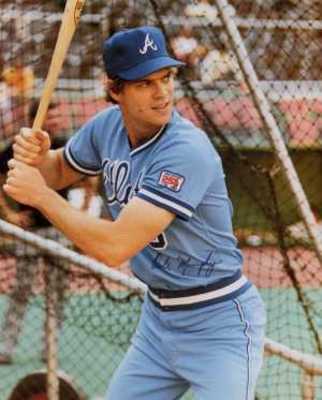
It is hard to believe that Dale Murphy doesn't have more people pushing for his inclusion in the Hall of Fame.  In fact as I was preparing this article, the ballots for this year's Hall of Fame were released.  Mike Ferrin on MLB Network Radio said that he too was surprised that more people do not support Murphy.  Ferrin's exact words were "if you would have told me in 1986 that Dale Murphy wasn't in the Hall of Fame I would have said you were nuts."  In the ten years between 1980-1989 Murphy received MVP votes in seven seasons, four of those years he was in the top 10 and twice won the award.  Most fans who remember the Braves' long stretch of playoff appearances in the 1990's and early 2000's remember hearing how horrible the Braves were before that time.  What few people remember is that the Braves were a playoff team in 1982.  They were swept out of the playoffs by the eventual World Champion St. Louis Cardinals but Murphy was the man who carried the Braves to a division title by one game over the Dodgers.  Murphy won a second MVP award in 1983 as the Braves finished only 3 games behind the Dodgers.  On top of his leadership and consistent bat in the Braves lineup, Murphy was a tremendous fielder.  He won five consecutive Gold Gloves as an outfielder.  As the Braves started to move towards their youth and looked to make room for young players like David Justice, Ron Gant and Deion Sanders, Murphy was traded to the Phillies during 1990.  Although Phillies fans were excited to get such a big name, Murphy's best days were over. Injuries and the Phillies own youth movement limited Murphy's playing time and effectiveness.  Murphy was known as a very religious, conservative guy who did not drink, smoke or carouse and did not approve of other players who did.  As the Phillies started gathering players such as Lenny Dykstra, Darren Daulton, Pete Incaviglia, John Kruk and Mitch Williams, Murphy's personality didn't really fit in.  He was moved to the Rockies before the Phillies' magical 1993 season but played sparingly for the expansion Rockies.  The only other 2 time MVP of Murphy's stature not in the Hall of Fame is Roger Maris.

Robin Yount


Career Teams:  Milwaukee Brewers (1974-1993)
All Star Appearances: 1980, 1982 and 1983
MVP Voting:  1980 (17th), 1981(17th), 1982 (1st), 1983 (18th), 1987 (11th), 1988 and 1989 (1st)
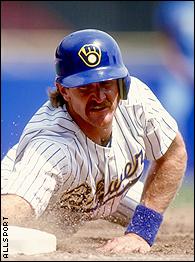
Robin Yount was elected into the Hall of Fame in 1999, so why is he on a list of forgotten players?  Because although he reached the hall of fame, if you were not a Brewers fans in the 1980's you may have missed just how good this guy was.  The Brewers have had very few eras they could hang their hat on but the Yount/Gantner/Molitor era is the big one, even more so than the Fielder/Braun era that just ended.  In the strike shortened season of 1981 the Brewers reached the playoffs for the first time and although Yount had a great season, it would be nothing compared to his 1982 MVP season.  As a shortstop (not yet a position associated with offensive prowess), Yount hit .331, led the league in doubles (46), hits (210) and total bases (367).  He also hit 29 home runs and stole 14 bases, made the All Star Team and won a Gold Glove.  Still, his best moments of the season were yet to come.  In the Brewers only World Series appearance Robin Yount hit .414, drove in 6, and had 5 extra base hits (4 doubles and a home run).  Few players have ever had a better series on a losing team.  Few shortstops on winning teams have had a series that good.  A few years later Yount started to develop severe shoulder problems, a major issue for someone who has to make strong throws from Shortstop.  So the Brewers moved Yount to the outfield.  Yount did just fine in centerfield and in 1989, on a fourth place team, Yount won his second MVP award at a second position (only the second player in history and the first since Hank Greenberg in 1935 and 1940 at Firstbase and Outfield) to win an MVP at two different positions. 

Dave Henderson


Career Teams:  Seattle Mariners (1981-1986), Boston Red Sox (1986-1987), San Francisco Giants (1987), Oakland Athletics (1988-1993) and Kansas City Royals (1994)
All Star Appearances:  1991
MVP Voting:  1988 (13th) and 1991 (21st)
Dave Henderson seemed to be everywhere during the playoffs of the late 1980's but always seemed to be the forgotten player.  In 1986 the Angels pitchers focused on Boggs, Evans, Rice and Buckner in the ALCS.  Yet it was "Hendu" who hit the big home run to steal the series from California and put Boston in position to reach the World Series, it was his only hit in the series.  Everyone, casual fan or student of the game, has seen Bill Buckner misplay the ground ball that allowed the Mets to win Game 6 of the 1986 World Series.  Few realize that Henderson was the man who put the Red Sox on top in the top of the 10th with another huge home run.  Henderson played the beginning of 1987 with the Red Sox but as the year started to unravel Boston tried to quickly rebuild and Henderson was traded to the Giants on September 1 for a player to be named later.  He did not make the postseason roster, something the Giants likely regretted in retrospect as they lost to the Cardinals in the NLCS.  As a free agent at the end of the season Henderson signed with an Oakland A's team that was looked at as a strong playoff contender with rising superstars Jose Canseco, Mark McGwire, Walt Weiss, Dave Stewart and Terry Steinbach and veteran leaders Dave Parker, Don Baylor, Bob Welch and Dennis Eckersley.  It was a crowded team but Henderson quietly made a big impact.  He hit .304 and pounded 24 home runs in a gigantic Oakland stadium, scored 100 runs and drove in 94.  Just like his stay in Boston, Henderson was best in big situations.  During the three years of the Oakland powerhouse of the late 1980's, Henderson hit 4 postseason home runs, 9 postseason doubles, scored 15 runs and knocked in 11 in just 24 postseason games with Oakland.  As the team evolved through the playoff drives, players like Harold Baines, Willie Wilson and Rickey Henderson cycled through the clubhouse and continued to get the attention, yet Henderson and Carney Lansford were the two forgotten consistent performers.  With his constant energy and unforgettable smile, it was impossible to watch Hendu play and not want to pick up a bat or put on a glove.  If anyone ever showed you it was OK to have fun playing ball, this was the guy.

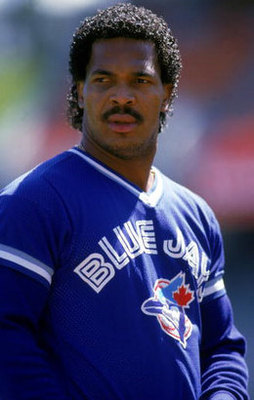
George Bell


Career Teams:  Toronto Blue Jays (1981-1990), Chicago Cubs (1991) and Chicago White Sox (1992-1993)
All Star Appearances:  1987, 1990 and 1991
MVP Voting:  1984 (19th), 1985 (8th), 1986 (4th), 1987 (1st), 1989 (4th) and 1992 (20th).
The early years of the Blue Jays were not good.  There were very few early stars and even fewer successful seasons.  George Bell was the organization's first star and he used his gigantic muscles to carry the entire organization on his back.  1980's baseball in Canada was a race to see which Canadian team could win a World Series first.  The Expos struck playoff gold first, reaching the NLCS in 1981.  The Blue Jays took a little longer to counterstrike but in 1985, led by Bell, the Blue Jays advanced to within one game of the World Series.  As the Jays jumped out to a 3 games to 1 lead over Kansas City, Bell hit .321, scored 4 times and hit 3 doubles.  Toronto  fell back in the standings in 1986 but Bell continued to carry the team.  As the 1987 season developed it appeared that Toronto was a strong World Series contender and led the AL East.  Bell was the MVP of the season hitting .309 and driving in 134 runs with 47 Home Runs.  Although it may seem silly to current fans, in the 1970's and 1980's hitting this close to 50 home runs was a major achievement.  Few players had gotten this close to it since Roger Maris set the record.  1988 was an off year for Bell (.269 and 24 HR).  1989 saw a resurgence as the Blue Jays won a great race with the Red Sox to reach the ALCS.  Bell struggled in the playoffs, hitting only .200, although he did hit a home run in the final game of the series.  The 1990 season saw another close Red Sox-Blue Jays battle but Bell seemed to play his way out of town as rumors swirled about his poor clubhouse attitude.  These rumors, poor relations with the Toronto media and lack of fan support led to Bell signing a big Free Agent contract with the Cubs.  Chicago fans were excited to get Bell's talent but the love affair ended quickly.  Bell did not fit in well in the Cubs clubhouse and the Cubs faithful were getting tired of waiting for a World Series.  Bell was traded to the crosstown rival White Sox before the 1992 season started.  The Cubs got a pitcher named Ken Patterson and a young outfielder named Sammy Sosa.  It originally appeared that the White Sox got the better of the deal as  Bell hit 25 HR and drove in 115 in his first year.  It is hard to tell why but Bell never could seem to regain the form that made him one of the best players of the decade.  Bell also falls into another dubious category for Phillies fans.  He is one of the long list of "could have been" players the Phillies let get away in the early 1980's as their playoff teams aged.   Bell was originally drafted by the Phillies in 1978 but was claimed by Toronto as a Rule 5 draft pick in 1980.

Starting Pitcher:
Mike Scott


Career Teams:  New York Mets (1979-1982) and Houston Astros (1983-1991)
All Star Appearances:  1986, 1987 and 1989
MVP Voting:  1987 (10th) and 1989 (15th)
Cy Young Voting:  1986 (1st), 1987 (7th) and 1989 (2nd)
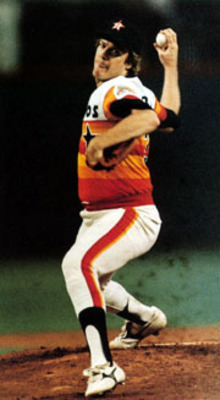
Mike Scott had an amazing 1986 season.  He was nearly unbeatable going 18-10 with 306 strikeouts and a 2.22 ERA.  He finally mastered the split finger fastball, although if you ask the 1986 Mets he was scuffing the ball.  Scott dominated the Mets in the NLCS, winning both games he pitched in and allowing only 1 run in 18 innings but Davey Johnson was positive Scott was doctoring the ball, causing it to make odd dips and twists.  The Mets gathered a hand full of balls that Scott allegedly scuffed during the playoffs and sent them to the National League office.  Nothing ever came of it. Scott fell off in 1987 and 1988 as the Astros started to break apart.  Scott had one last great season in 1989 going 20-10 and a 3.10 ERA.  Somehow, the 20 wins were not enough to win his second Cy Young Award as Mark Davis, a relief pitcher for the Padres, beat him out easily.

Tom Browning


Career Teams:  Cincinnati Reds (1984-1994) and Kansas City Royals (1995)
All Star Appearances:  1991
MVP Voting:  None.
Cy Young Voting: 1985 (6th)
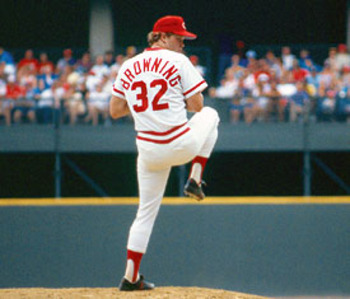
As a rookie Tom Browning won 20 games yet came in second in the Rookie of the Year to Vince Coleman and sixth in the Cy Young voting.  Browning had moments of being unhittable, routinely.  In June of 1988 he came within one out of a perfect game, Tony Gwynn broke it up with a single.  It was a heartbreaking moment.  Browning kept pitching at a high level and in September of 1988 he pitched one of the greatest games in history: a perfect game where he used only 100 pitches (72 strikes) and not one batter got even 3 balls into an at bat. Just short of a year later Browning was almost unhittable again.  He took another perfect game into the 9th inning against the Phillies when Dickie Thon led off the ninth with a single. Amazingly, Browning got 0 Cy Young votes that year.  If Pete Rose wasn't betting against his team, Browning may have had more postseason experience during his prime.  In the first full year after the Pete Rose scandal the Reds won the World Series.  Browning gave up three HR in the postseason but won two of his three games.  Browning started 1991 on a 10-2 stretch and made his only All Star team but things went down hill from there and bottomed out in 1994.  During a 1994 start Browning's arm snapped, literally, in mid pitch.  In baseball's version of the Joe Theisman injury, Browning's shoulder let out a loud pop and his arm separated from the shoulder socket.  Lucky to have mobility in his joint at all, Browning tried a come back with the Royals in 1995 but his career was over.  One of the best pitchers in the decade had the poor luck of playing for a crooked manager and suffering a gruesome injury.

Closer:
Dave Righetti

Career Teams: New York Yankees (1979, 1981-1990), San Francisco Giants (1991-1993), Oakland Athletics (1994), Toronto Blue Jays (1994) and Chicago White Sox (1995)
All Star Appearances:  1986 and 1987
MVP Voting: 1986 (10th)
Cy Young Voting:  1986 (4th)
Fans of the San Francisco Giants will recognize Dave Righetti as the guy who goes out to the mound when Barry Zito or Tim Lincecum is having a bad night.  Yankees fans will recognize Righetti as their best closer until Mariano Rivera came along.  Righetti entered the league in 1981 as a starting pitcher and won Rookie of the Year with an 8-4 record and 2.02 ERA.  In the bizarre 1981 season the Yankees reached the World Series but lost to the Dodgers. Steinbrenner came out and ridiculed his team for losing the World Series but it would be hard to blame Righetti.  He won three games in the playoffs and although he only lasted 2 innings in his only World Series appearance, he got a no decision.  After three years as a starter, including a 1983 no-hitter against the Red Sox, "Rags" got moved to the closer position.  As good as he was in a starting role, he was even better as a closer.  His best year was 1986 when he set a major league record by saving 46 games, went 8-8, walked only 35 and struck out 83 with a 2.45 ERA.  As Steinbrenner tired of the large payroll and small results, the stars were shipped off, along with many prospects,and the Yankees went into a full rebuilding phase.  Righetti signed with the Giants after the 1990 season.  Righetti's first season with San Francisco was spectacular, saving 24 games, yet as the years went on his appearances diminished. Righetti is not a Hall of Fame pitcher but he has certainly mentored several potential hall of famers in San Francisco.

Designated Hitter:
Don Baylor

Career Teams:  Baltimore Orioles (1970-1975), Oakland Athletics (1976), California Angels (1977-1982), New York Yankees (1983-1985), Boston Red Sox (1986-1987), Minnesota Twins (1987), Oakland Athletics (1988)
All Star Appearances: 1979
MVP Voting: 1975 (20th), 1978 (7th), 1979 (1st), 1982 (23rd) and 1986 (13th)
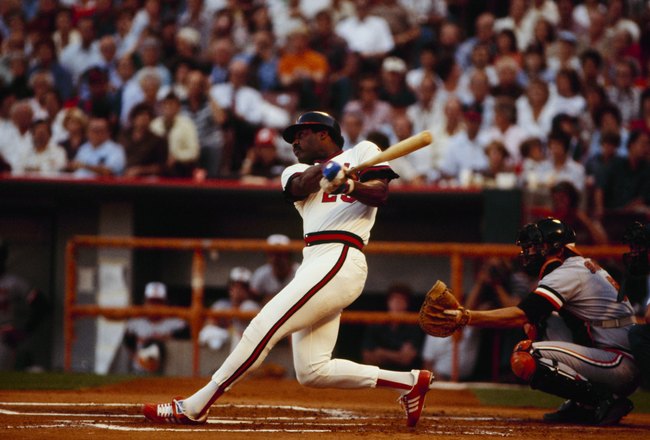
Don Baylor's career began before the Designated Hitter existed.  When the position was instituted it would have been a good idea for his teams to utilize Baylor in this position more often.  That is not to say Baylor was a poor fielder, playing mostly outfield and some firstbase he never made more than 9 errors in a season, Baylor was a steady, strong fielder who rarely made mental mistakes.  When his teams finally figured out what a DH should be, Baylor was the ideal man.  Similar to Mariano Duncan in the 1990's, Baylor's teams seemed to always be in the playoffs and Baylor always seemed to be the unknown, unsung hero. Baylor made the playoffs during his stops in Baltimore, California, Boston, Minnesota and Oakland.  1979 was his best season as he led California to the playoffs for the first time in their history. Baylor hit .296 and hit 36 HR that year while leading the league in RBI (139) and runs scored (120), and striking out only 51 times.  Baylor was also a big reason the Angels reached the playoffs again in 1982.  Baylor helped the Angels jump out to a big 2 games to 0  (in a best of 5 series) against Milwaukee led in the best of 5 ALCS.  In the first 2 games Baylor went 3-6 (including a triple),scored 3 times and drove in 5.  As the Brewers caught fire Baylor did everything he could to get the Angels to the promised land.  In the final three losses Baylor was only 3-11 but his three hits included a double and a Grand Slam that drove in 4 of the Angels 5 runs in a 9-5 Game 4 loss.  As I mentioned, Baylor's teams were almost always in the playoffs.  Baylor played on the infamous 1986 Red Sox team and played a big part in defeating his old team the Angels including a 2 run HR in the top of the ninth that brought the Red Sox to within one run and knocked Mike Witt out of the game eventually bringing in Donnie Moore.  The 1986 Red Sox did not win the World Series and Baylor was sent to Minnesota in a trade deadline deal that helped form one of the great moments in Twins history as the Twins won their first World Series.  Baylor was a free agent after the World Series and signed with a young Oakland team that many felt had one of the best collections of talent in history.  With young talent like McGwire, Canseco, Terry Steinbach and Walt Weiss, Baylor was the steadying influence in the clubhouse, although the 1988 A's were stunned by Mike Scioscia and the Dodgers in Baylor's last season.  Baylor became the first ever manager of the Colorado Rockies and won Manager of the Year as he led the expansion team to the playoffs in only their third year in 1995.  Baylor also managed the Cubs from 2000-2002 but for some reason has not been given another chance to manage.

* Author's Note:  Just as in the last few week, and as may be seen in the next few weeks as we move through this series of articles, I did my best to keep this to one player per position, however, the farther we move from these eras, the easier it is to forget these types of players (and even some hall of fame players).  It is important to remember as we follow the sport that the superstars are not the only ones making contributions to the success of a team.  This is not a comprehensive list of players who fall into this category from this era, it is simply my choice of players who best represented their position and have become forgotten.  Your list is probably different.  Email me yours or leave a comment.