They could hear shouting. Indistinct curses rebounded off the wood paneling forming seemingly random words. It was like listening to Ralphie's father try to fix the furnace in A Christmas Story. There was shouting, cursing, banging and grunting coming from the room. For all the reporters standing outside knew, the men inside may have decided to settle this with wrestling.
There were a total of eight men in the room and there was enough hot air being expelled to create a sauna effect. It was pure hatred. Fire breathing, dagger staring, if looks could kill, hatred. The National League had called the "peace" meeting to give an outward sense of holding the upper hand but really they were waving the white flag.
Following the 1899 season the National League contracted four teams. The Louisville Colonels, Baltimore Orioles, Washington Senators and Cleveland Spiders were removed from the league roster. It was as though they never existed. They were just wiped from the slate. It was not taken well by many people. How could owners just cancel teams? If they had power enough to drop the league from twelve to eight teams, what was to stop them from cutting it to six or four? Every team dissolved was one less job opportunity for the players. It was one less job for groundskeepers, peanut and cracker jack vendors and umpires.
Two men had decided to do something about it. Ban Johnson and Charles Comiskey got together to buy the minor league Western League for 1899 and formulated a plan to take down the National League. The Western League consisted of franchises in Detroit, Chicago, Milwaukee, Cleveland, Washington, Buffalo, Minneapolis and Indianapolis. If Johnson and Comiskey were going to compete they were going to have to take the fight straight to the National League by moving these organizations to major cities. They prepared for a head to head battle and they fired the first shot.

Still as a minor league, the two men prepared for the 1900 season by shuffling teams and invading NL territory. The Detroit Tigers, Chicago White Stockings (under the ownership of Comiskey), Cleveland Blues, Milwaukee Brewers and Washington Senators remained where they were for the 1901 season. The Buffalo Bisons became the Boston Red Stockings, landing in direct competition with the NL's Beaneaters (later named the Braves). The Indianapolis Indians became the Philadelphia Athletics in direct competition with the Phillies. The Minneapolis Millers became the Baltimore Orioles, a replacement for the storied franchise that was discarded by the National League in contraction. The new cities had been chosen carefully. Cleveland, Baltimore and Washington were three of the four cities that had lost a team in contraction and Boston was a city that already had a weak NL team (the Braves had finished first in the NL in 1897 and 1898 but were in clear decline).
Comiskey and Johnson did things big. They signed John McGraw to run the Baltimore franchise. McGraw was under contract to the St.Louis Cardinals but he jumped at the chance to return to Baltimore where he had been part of the winning days of the Orioles. Connie Mack and Ben Shibe were installed in Philadelphia. These were big names, respected names. Then the announcement came. Comiskey and Johnson announced they were a Major League on equal footing with the NL. Still the NL wasn't worried. What did they care if a minor league had respected owners? What did they care if they had minor league teams in the same cities? Realistically, does just announcing yourself as a major league really make you a major league?

Then came the shot(s) across the bow. The National League Philadelphia Phillies had a strong team led by Napoleon LaJoie and Ed Delahanty. As far as the league knew they were both paid the same amount of money because there was a limit to salaries. As far as LaJoie knew he was paid slightly more than Delahanty based on a secret bonus he got every year. In reality, Delahanty got significantly more based on a secret bonus bigger than LaJoie's. Somehow LaJoie found out and he was not happy. Knowing that the AL was offering bigger money with no salary limit LaJoie decided he would play for them and, what was worse for the Phillies, he signed with Connie Mack's Philadelphia franchise. He would be playing in the same city for the same fans who loved him but in a different stadium. Delahanty, knowing he could also make more money, signed with Washington. The American League was actively, aggressively poaching stars. Clark Griffith, Davvy Jones, George Davis, Jimmy Collins, Cy Young and Sam Crawford all followed suit. In total the American League stole 45 players from the NL. The one player they wanted but could not steal was Honus Wagner but that story is too funny to sum up here. I think that will be a post of its own.
The poaching crossed the line for the NL, probably because it was actually a threat now. The Phillies sued to keep LaJoie from playing in Philadelphia and won. LaJoie was legally unable to play in Philadelphia unless it was for the Phillies. Instead of sending him back to the NL Phillies, Connie Mack traded him to Cleveland. Take that NL! If Cleveland had to face the Athletics in Philly, LaJoie was given an Atlantic City vacation and met the team when they moved on. Now the American League was legitimate and now the NL was worried.
They had good reason to be worried. Johnson sold the American League to the public on the pitch of good, clean, family fun. There would be no umpire baiting. There would be no brawling, spitting, arguing. No beer guzzling galoots. This was family entertainment and Johnson would levy fines for any arguments with umpires, any swearing and any thing he deemed inappropriate. The NL failed to adjust and continued to allow the players to do mostly as they wished. The AL won at the box office. They won big. The 1902 season was even bigger. The Milwaukee Millers moved to St.Louis and set up shop as the Browns across town from the Cardinals and the AL now had direct competition for the NL in Philadelphia, Chicago, St. Louis and Boston.
Then the NL struck back. As the 1902 season wound down, the Baltimore Orioles were in last place. Dead last. Imagine the anger John McGraw showed when his Giants teams lost, even when they were in first place. Now multiply that by infinity as McGraw's Orioles lost 88 times that year. McGraw's frustration was visible and verbal and Johnson didn't like it. Fines, suspensions, meetings, lectures. Nothing worked and finally McGraw said enough. He walked out on the league and he went back to the National League. They welcomed him back with open wallets and with McGraw went several players. Dan McGann, Roger Bresnahan, Cy Seymour, Joe McGinnity. Basically, almost all of the future 1905 World Champion Giants, followed the little Napoleon to New York. McGraw didn't stop there. He grabbed George Davis and Ed Delahanty from other AL teams.
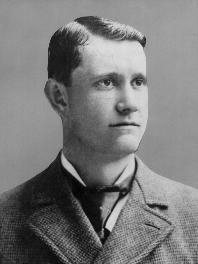
Johnson didn't sit idly by. With this many players gone from Baltimore they couldn't field a team and Johnson had no choice. The team had to be forfeited and replaced. Now where to put a team? Well, a Major League had to have teams in major cities and the AL seemed to be missing just one city: New York. And, oh, by the way, isn't that where McGraw went? And oh yeah, the NL New York team was owned by a guy who had once owned the Reds and banned Ban Johnson from the Reds property when Johnson was a journalist covering the Reds. Well, it was just a coincidence I'm sure.
The Giants had political connections. big Tamany Hall connections, and they fought to keep the AL out of New York, or at least make their stadium location so far out of town in an unrealistic location that no one would want to go. As the Giants fought Ban Johnson and players continued to jump contracts on both sides, the owners of the NL continued to lose at the gates. Enough was enough. The Cardinals owner, Frank Robison, suggested the NL ask for a truce. The Phillies, Cubs and Reds quickly agreed. Instead of fitting 16 egos into one room, a group of four delegates from each side attended the conference in Cincinnati on January 9, 1903.
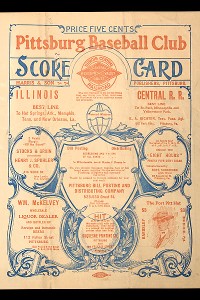
In what would be played out in countless league vs. player union disagreements decades later, the sides were so distant on their view points that it was unlikely it would come to anything. Of course, in any process, compromise is a must so the minor issues were discussed first, almost as an appetizer. The NL compromised by relenting to the team in New York and the AL relinquished any chance to ever place a team in Pittsburgh.
They agreed to end the player raids. From now on a contract was a contract and you couldn't take players from another team without compensation.
The final minor item, the one that was almost off handedly accomplished, would hurt the players for the next 75 years and lead to the forming of the players' union decades later. The reserve clause became standard in both league contracts.
Now the anger began. What do the teams do about the players who had two contracts? There were 15 players in question who had jumped and jumped again, taking money from both sides. Giving up the right to raid other team's players was fine but actually losing players was not quite the same easy topic.
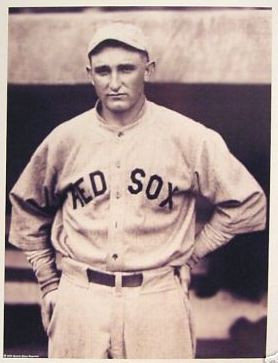
It came up when Henry Killiea, owner of the Red Sox, launched a tirade against McGraw for stealing Davis and Delahanty. An AL owner questioning the ethics of raiding teams did not go over lightly and the counter claims flew. It was kind of like the argument of two children caught fighting by an adult and they both use the excuse "he started it." Regardless, in a few moments the process was derailed. The delegates decided to take a break for the evening instead of calling it quits and resumed the next morning.
The question remained and the distance between agreement remained unchanged. As the second day opened Ban Johnson made a suggestion. Ed Delahanty had taken money from the Senators and the Giants and refused to return the money to either team. Worse, he insisted on playing for the Senators in the AL, which would mean he was jumping a third (or was it a fourth) time. Johnson's solution: He should never play for anyone ever again. And while they were on the subject, hadn't George Davis done the same? He should be banished too.
Garry Herrmann, the Reds owner made the first step towards bridging the gap. No one wanted to lose players and the NL had hoped that they would actually gain some back. Herrmann told Johnson and the delegation that although they still claimed Sam Crawford under contract, the Reds would drop their claim. The Tigers could have him. The move by Herrmann opened up the flood gates of generosity (or at least acquiescence). Suddenly the leagues were falling over themselves to prove they were the more generous league.
In the end there were 15 players in question. 8 ended up in the American League. 7 ended up in the National League. The box score looked like this:
American League:
Ed Delahanty:
One of several brothers to play in the majors. Delahanty was sent back to the Senators and part way through the season jumped the team. He was killed when he fell from a moving train crossing Niagara Falls. His body was found a few days later. He was elected to the Hall of Fame in 1945 by the Veteran's Committee.
George Davis:
Davis played for the White Sox until 1909. He was part of the 1906 "Hitless Wonders" team that won the World Series. He was elected to the Hall of Fame by the Veterans Committee in 1998.
Sam Crawford:
Crawford teamed with Davvy Jones and Ty Cobb to form the most successful Outfield trio in the first decade of the American League. Crawford and Cobb were the Gehrig and Ruth before Gehrig and Ruth, not in terms of power but in terms of success. The two couldn't stand each other and wouldn't speak a single word to each other if they could avoid it but they communicated on the diamond like few teammates ever have. Crawford was elected to the Hall of Fame by the veterans committee in 1957.
Willie Keeler:
Keeler was known for his saying "hit it where they ain't" and played with the New York AL franchise from 1903-1910. He ended his career with 2932 hits, just short of the 3000 hit mark, and was elected to the Hall of Fame by regular ballot in 1939.
Kid Elberfeld:
Elberfeld did not make the Hall of Fame like the first few in this list but he made major contributions to the league. He had jumped from the Reds in 1901 and played for the Tigers until being traded to New York in mid 1903. He stayed in the AL with the Highlanders (later the Yankees) and Senators until moving on to Brooklyn for 30 games in 1914.
Wild Bill Donovan:
Donovan stayed in the AL the rest of his career retiring in 1918. He spent the best part of his career with the Tigers as the ace pitcher on the Tigers staff as they reached the World Series three straight years from 1907-1909 (he was 25-4 in 1907).
Wid Conroy:
Although not a star the level of the others on this list, Conroy had a strong career. He played through 1911 with the Highlanders and Senators and retired with 1257 career hits and 452 RBI.
Doc White:
White played with George Davis on the "Hitless Wonders" White Sox team that won the World Series. He made a major contribution to that team's upset of the heavily favored cross town Cubs.
National League
Christy Mathewson:
Although Mathewson's contract was disputed he had never actually jumped to the AL. Mathewson is still considered one of the greatest pitchers of all time. He was elected into the Hall of Fame with the inaugural class in 1936.
Tommy Leach:
Like Mathewson, Leach had signed an AL contract but had never actually moved to the AL. Leach played for the Pirates through 1910, reaching the World Series with the team in 1903 and 1909. He retired in 1918. Although not elected to the Hall of Fame he was considered one of the best third basemen of his generation.
Vic Willis:
Willis played his entire career in the NL winning 249 games. He pitched most of his career for Boston but late in his career he helped the Pirates win the 1909 World Series. He won 20 games or more in eight separate seasons and was elected to the Hall of Fame by the Veteran's Committee in 1995
Harry Smith:
Smith spent six years in Pittsburgh as their Catcher. He played behind the plate for the Pirates in the first World Series and was a decent catcher. He finished his career in 1910 with the Braves.
Frank Bowerman:
Bowerman played mostly at Catcher and spent a total of 15 years in the Majors. His numbers were not spectacular. He hit .250 for his career and had only 102 doubles in 15 years, but he served McGraw well as a back up for Roger Bresnahan.
Jack Warner:
Warner played 14 years in the league, eight years of that prior to the 1903 peace conference. After the 1903 season he went on to play for the Cardinals, Tigers and Senators. Like Bowerman he was a solid backup but seldom played more than 75-80 games a year.
Rudy Hulswitt:
Hulswitt was the least of the 15 players awarded in the peace conference. Hulswitt played for the Phillies in 1903 and 1904 but disappeared from 1905-1907 reappearing with the Reds in 1908 and the Cardinals for 1909 and 1910.
The American League did decide to adopt the foul strike rule which caused foul balls with less than two strikes to count as strikes. This rule was adopted by the NL in 1902 and changed the rule that said a foul ball did not count towards the count on the batter. American League umpires, players and managers argued against this loudly but eventually gave in to the wishes of the committee.
Now that the fireworks were over, where did this leave the leagues? Were they on equal footing? Would they combine into one league? If they were one league, 16 teams were a bit much to come out with one champion. Should some of the lesser teams be contracted or "combined"? Hostilities were briefly reopened at the mention of contraction. The AL delegates flat out refused to give up any teams.
The final verdict on the separation/combination question was that they were two separate leagues. The American League and National League would each keep their own commissioners, their own teams and their own rules. This would lead to separate leagues under what has been called "the National Agreement". The separation allowed the American League to grow to 14 teams by 1977 while the NL stayed at 12 until 1993. It also allowed the AL to adopt the DH while the NL has rejected the idea and allowed Major League Baseball to keep inter league play out of baseball until the 1990's.
The final decision of the peace conference gave birth to the most identifiable moment of every MLB season since. Although the American League teams would name a champion of the AL and the National League would name a champion of the NL that was now not enough to claim bragging rights. Starting in 1903 the winner of the American League would face the winner of the National League in a post season series. It would be known as the World's Series to decide the World Champion of baseball. The series would grow in fits and starts with major issues for the first two years but beginning in 1903 there would be a World Series every year (except 1904 and 1994) through the present season.
The delegates emerged from the room and although John Brush, owner of the Giants, and his crony McGraw were furious and publicly refused to go along with this, the differences were settled. Gary Herrman's brief compromise on Sam Crawford opened the flood gates to the Major League Baseball structure we have today.
TRIVIA QUESTION:
Although the National League got what they wanted, a way to save face and avoid the constant fear of losing to the AL in a war at the box office, the press came up with a derogatory saying to explain what the NL had "won". What was the saying?
ANSWER TO LAST WEEK'S QUESTON:
Congratulations to TJD for answering last week's question correctly.
The Yankees needed a replacement for Wally Pipp for the 1923 World Series so they tried to use a Firstbaseman, an end of the year call up from the Newark farm team. John McGraw blocked the move so Lou Gehrig had to settle for watching from the sidelines. Pipp played despite the injuries and hit .250 (5 hits but 0 extra base hits) walked four times and drove in 1 run. It was not the first time McGraw got in the way of Gehrig's career. A few years before Gehrig had a try out for McGraw at the Polo Grounds. Gehrig was impressive at the plate but made an error in the fielding tryout. Things might have been different if McGraw's team wasn't in a slump at the time. Instead McGraw said "I've already got a bunch of guys who can't field. I don't need another one."
ANSWER TO LAST WEEK'S QUESTON:
Congratulations to TJD for answering last week's question correctly.
The Yankees needed a replacement for Wally Pipp for the 1923 World Series so they tried to use a Firstbaseman, an end of the year call up from the Newark farm team. John McGraw blocked the move so Lou Gehrig had to settle for watching from the sidelines. Pipp played despite the injuries and hit .250 (5 hits but 0 extra base hits) walked four times and drove in 1 run. It was not the first time McGraw got in the way of Gehrig's career. A few years before Gehrig had a try out for McGraw at the Polo Grounds. Gehrig was impressive at the plate but made an error in the fielding tryout. Things might have been different if McGraw's team wasn't in a slump at the time. Instead McGraw said "I've already got a bunch of guys who can't field. I don't need another one."