Showing posts with label Black Sox. Show all posts

Saturday, September 20, 2014

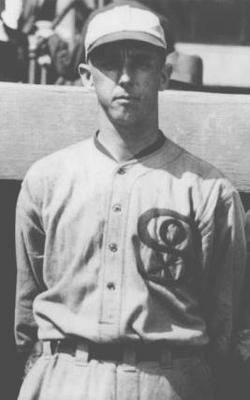
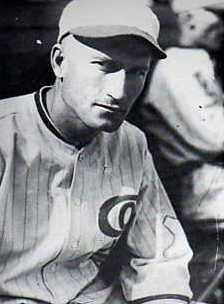
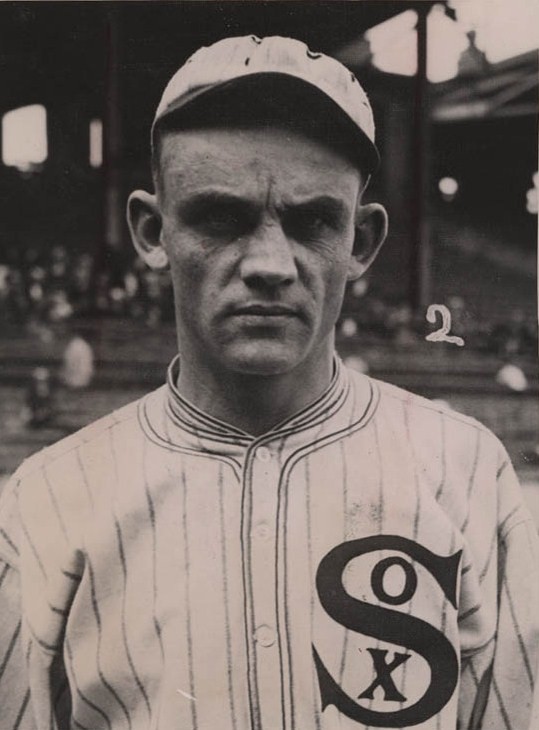
Almost a Dynasty: 1910's Chicago White Sox

What actually makes a sports dynasty?  Obviously a teem needs to be successful for a continuous amount of time.  Every sport has that one iconic dynasty that fits the Dynasty category.  The NBA had the Boston Celtics who won nine out of ten championships.  The Montreal Canadiens won 7 of nine Stanley Cups (including six straight).  The NFL had several dynasties including the 49'ers, the Steelers, the Cowboys and, most recently, the Patriots.  Baseball itself has had the Yankees dynasties in several incarnations including the 1930's, 1950's and 2000's.

So what actually makes a team a dynasty?  There can of course be several definitions since there are varying levels of success.  A team can dominate their division for a decade but be bounced out in the first round of the playoffs year after year.  We could of course consider that to be a divisional dynasty but you wouldn't call it an overall baseball dynasty.  So let us set the parameters for this series of articles.  A dynasty, for our purposes here, is a team that wins multiple World Series championships (above two as back to back is nice but not a dynasty) within a given amount of time.  That being defined, this series will explore those teams that may have been a divisional or league dynasty but for whatever reason could not get over the hump to that World Series dynasty.

This series will show an array of near dynasties.  Some are teams that made the World Series year after year but fell short.  Others will be teams that competed right down to the end of the regular season year after year just to be beaten out.

Don't miss last week's almost dynasty: The Detroit Tigers of the 1900's.  Now let's get started with this weeks "almost dynasty": The Chicago White Sox of the 1910's.


Building the team

Charles Comiskey was the American League.  He had come a long way from sneaking away from his father's construction business to play baseball as a young man.  His talent was large.  He was a star player of the American Association.  When he felt his rights, and the rights of all players, were violated he helped form the Players League.  After one failed year he jumped to the National League where he played for Cincinnati.  It was there that events were put in motion that eventually led to the formation of the American League.  Comiskey met a news writer in Cincinnati named Byron Bancroft Johnson.  Comiskey tired of the poor treatment the players received.  Johnson, who spoke his mind about the team, was banned from the Reds facilities by the ownership who did not appreciate the honesty of the writer.


The two men bought into the Western League and by 1901 they declared themselves a Major League, renaming the Western League the American League.  Comiskey had some early success.  In the inaugural American League season, pre World Series, Comiskey's Chicago Whitestockings finished first.  A few years later they toppled the greatest team of all time when they defeated the Cubs in the first ever cross town World Series.  It was then that Ty Cobb, Sam Crawford and the Tigers took over with their "almost dynasty".  Although the White Sox finished 3rd in both 1907 and 1908, they quickly fell off and began to routinely finish in the bottom half of the league.

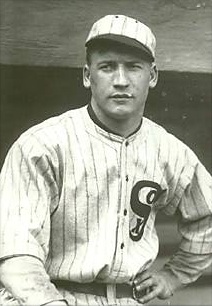
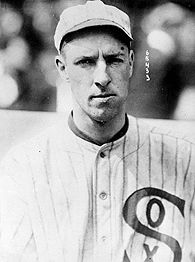
Of course the White Sox had some great players, several of whom would be central players in the near dynasty that would be built.  Ray Schalk, Hall of Fame Catcher, joined the team in 1912 as a 19 year old after being acquired from Milwaukee of the American Association. (One of the players included in that deal was Matty McIntyre, key outfielder and main Ty Cobb antagonist in Detroit's almost dynasty)  Buck Weaver also joined the South Side team in 1912 at 21.  Weaver would struggle with his defense at first but would become one of the best defensive third basemen in the game.  Shano Collins, one of the forgotten members of the strong White Sox teams, was 24 when he joined the team in 1910. Pitcher Red Faber joined the team in 1914 as a rookie.

One key member had nearly been part of the Tigers' almost dynasty.  Brought up with the Tigers in 1905, Eddie Cicotte saw little time.  He was sent back to the minors where his contract was sold to the Boston Red Sox in 1908.  Midway through the 1912 season, the one that would result in the Red Sox first World Series win of their own dynasty,  saw the Red Sox sell Cicotte's contract to the White Sox.

All of these key pieces were young and learning how to play the game.  They were learning it together.  By 1914 the team was starting to improve although they finished in sixth place, 30 games behind the Champion Athletics.  What the team needed was some veteran guidance.  The only veteran presence on that 1914 team was Hal Chase, not exactly an example you want your younger players to follow.

It had now been 8 years since the White Sox had won their World Series over the Cubs and Comiskey was tired of seeing other teams win.  He decided to add the pieces he needed to win now.  So he did what the modern day Yankees have done.  He started spending money.  The team added a young outfielder named Happy Felsch from Milwaukee of the American Association for $12,000 and spent an amazing (for the time) $50,000 to purchase the contract of Eddie Collins, still one of the greatest second baseman the game has ever seen.

Moving Up
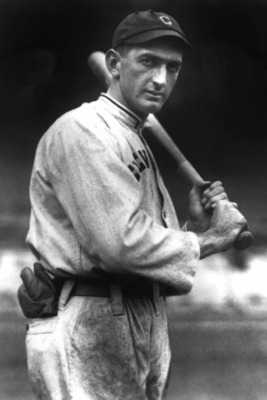
The American League was in an odd place as the 1915 season started.  The Federal League had raided the league for star players.  The World Series Champion A's  had been dismantled by Connie Mack.  There was no clear favorite in the American League.  Why not the White Sox?  They started off slowly but went on a tear led by the pitching of Ciccotte and Red Faber.  By July 3 they had built a 6 game lead over the competition.  The lead slowly eroded.  By July 18 the lead had shrunk to 1/2 game.  The young players could not compete with the Red Sox dominant group of Tris Speaker, Harry Hooper and Duffy Lewis.  Boston passed Chicago on July 19 and although the White Sox would hang out near the top for a few more days they slowly started to fade.  Comiskey made one last effort at the end of August to save the season.  On August 21 he sent two players and $31,500 to the Indians.  What he got in return was a  young man who had been compared to Ty Cobb.  Shoeless Joe Jackson was only 27 and had played in the Majors for only  four full seasons by the time Comiskey acquired him.  Comiskey envisioned Jackson, along with Eddie Collins, as the key piece in what he was building.  What he was building was hopefully the greatest collection of talent the world had ever seen.  Although the White Sox fought desperately to keep pace with the Red Sox, they finished the 1915 season in 3rd place. 10 games behind Boston.

For the 1916 season the White Sox added a young pitcher who had gone 33-12 for Salt Lake City of the Pacific Coast League in 1915.  It was hoped that Lefty Williams would be the missing piece when combined with Ciccotte and Faber.  The offense for the season was a bit shaky.  Collins, Jackson, Felsch and Schalk were strong but First Base and Short Stop were serious issues.  Jack Fournier hit just .240 as the first baseman and Short Stop Zeb Terry hit a paltry .190. Comiskey was spending big to gather all this talent and he expected big results.  The 1916 season did not start the way Comiskey wanted.  By May 19 they were in last place, 8 games out of first.  It was then that they made their move.  In late June Williams and Faber started to round into form and the team climbed as high as 3rd place.  In an amazingly tight race where teams could jump three places in the standing with one win, the Sox reached first place on August 1 but there was never more than a 1 1/2 game lead.  When the dust settled the Red Sox stood at the top for the second straight year.  Chicago was only 2 1/2 games behind.  They were so close.  Had they gotten off to a better start they might have beaten the Red Sox. Had they gotten better production out of First Base and Short Stop they might have beaten the Red Sox.

Reaching the Goal
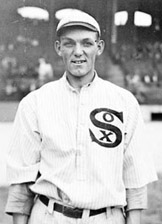
It was clear where the team needed to improve for the 1917 season and Comiskey would stop at nothing to get the pieces he needed.  He spent $3500 for Chick Gandil, a veteran First Baseman who had played with Cleveland in 1916. He then picked up Swede Risberg, a young Shortstop from the Pacific Coast League.  With these two additions and the close race of the year before, the team felt they had a great chance to win it all in 1917.

The pitching staff, led by Ciccotte (28-12, 1.53) and Williams (17-8, 2.97) was the reason for the team's success.  The offense, again led by Collins and Jackson, was lethal to the competition.  The additions of Gandil and Risberg had helped greatly, although a terrible late season slump would keep Risberg on the bench.  While they had stumbled out of the gate in 1916, they took off quickly in 1917, finishing the first month at 10-6, tied for first place.  By the beginning of June they had not lost any ground, but they had not gained any either.  It was clear this season would be a two team race between the White Sox and Red Sox.  Nearly every day of June was spent in first place and Chicago built a lead as large as 4 games but by July 4 they were tied with Boston again.  They built another five game lead in mid July but by July 31 they were again tied with Boston.  On August 1 Chicago took over first place again with a one game lead.  This time they would not look back.  A 22-9 August and 17-10 September gave them the margin they needed and they would win the American League easily by 8 games.


Their opponents in the World Series were John McGraw and the New York Giants.  While the Tigers had an almost dynasty in the American League, the Giants could be called an almost dynasty in the National League.  They should have played in the World Series in 1904 but McGraw refused to participate.  They won it in 1905 over the A's.  After coming close to getting back in 1908, McGraw rebuilt his team and emerged with a group that reached the World Series in 1911, 1912 and 1913 losing each of those years.  McGraw had again rebuilt his team and was now poised to do what he had not done in the previous three attempts, reclaim the World Series title.

The Giants sent Slim Sallee to the mound in Game 1 to face Ciccotte.  The first few innings were spent trading men left on base.  Each pitcher allowed men to reach base before working out of any trouble that developed and kept the game scoreless.  The bottom of the third started with Schalk grounding to third.  Cicotte then singled.  Shano Collins followed with his own single.  Cicotte was thrown out trying to reach third but Collins showed some aggressive base running and took second on the throw to third.  Fred McMullin, replacing the slumping Risberg, followed with a double and the White Sox scored the first run of the Series.  One inning later Happy Felsch hit a solo Home Run to give the Sox a 2-0 lead.  The Giants managed a run in the top of the 5th to cut the lead to 2-1 but that was as close as the Giants would get.  Following the 5th inning run, Cicotte allowed only one single and one base runner because of an error.  The White Sox looked strong in their Game 1 win.

Game 2 was Red Faber's turn to show what he could do.  He could do just fine.  He pitched a complete game, allowing 2 runs on 8 hits and allowed only one walk.  Things looked a bit shaky in the second inning.  The Giants grouped three of their 8 hits for the day into that inning and scored their 2 runs to give the Giants their first lead of the series.  It would not last long.  In the bottom of the inning Jackson, Felsch, Gandil and Weaver hit four consecutive singles to score two runs and when Giants starter Freddie Schupp walked Faber to load the bases, the Giants went to their bullpen.  Pitcher Fred Anderson avoided any additional damage for the time being and the game remained tied until the  bottom of the 4th.  Six singles scored 5 runs giving the White Sox a solid 7-2 lead.  Thanks to the nice lead and three double plays, Faber had an easy day the rest of the way and the White Sox were half way to achieving what they set out to do back in April.

Game 3 shifted the Series to the Polo Grounds in New York and the Sox sent their ace Cicotte to the mound again.  Cicotte was masterful again.  He struck out 9, pitched a complete game, allowed only 8 hits and two runs.  The only problem for the White Sox was that Giants' pitcher Rube Benton was even better.  He allowed only 5 hits and never allowed more than one hit in an inning while quieting the hot bats of the White Sox.  Weaver had two hits in three at bats, Collins had two hits and Felsch had one.  No other White Sox hitter could figure out Benton.  The Giants won 2-0.

Game 4 was pivotal for the Giants.  If they lost they would be behind 3-1 and the White Sox would be only one win away from the ultimate goal.  If they won, they would even the series and hold the momentum.  It was a rematch of Game 2 with Faber vs Schupp but it was anything but a repeat.  Schupp was sharp allowing only 7 hits and no runs in a complete game effort.  Faber, who had benefited from the offensive explosion in Game 2 had no such support in Game 4.  Faber held the Giants scoreless until Benny Kauff hit an inside the park Home Run in the fourth.  Four Giant singles in the 5th gave New York another run.  Chicago never threatened the lead and the Giants tied the series with a 5-0 win.

This was where Comiskey would find out what his money had bought him.  His team could either respond to the challenge, as the Giants had, or they could allow the Giants to capitalize on the momentum they had created.  The scene shifted back to Chicago for Game 5.  Sox fans must have asked if the team had left their bats in Chicago when they had made the trip to New York.  While they were dangerous in Games 1 and 2, their bats were silent in Games 3 and 4.  Chicago started pitcher Reb Russell and it was a disaster.  He walked the lead off batter followed by a single and an RBI double and his day was over before recording an out.  He was replaced by Cicotte who got two ground balls that McMullin and Weaver turned into outs at the plate and appeared to be out of trouble.  A single scored one more run before the inning ended and the Giants led 2-0.  Two more
runs scored when the Sox committed three errors and things looked bleak for the home team.  The Giants built their lead to 5-2 by the 7th but the Sox finally woke up in the bottom of the inning.  They scored three runs on three hits to tie the game.  One inning later they took command of the game and the series with a three run 8th. They were now just one win away.

Faber started Game 6 at the Polo Grounds.  The first three innings were uneventful.  In the fourth the Giants self destructed.  A wild throw to first and a dropped fly ball allowed the White Sox to score three runs.  The first of those three runs is one of the most memorable plays in baseball history.  Eddie Collins grounded to third but was safe on the wild throw.  When Joe Jackson hit a fly ball that was dropped Collins advanced to third.  Felsch followed with a ground ball back to the pitcher.  What should have been an easy inning for New York now turned into a comedy of errors.  Collins had been moving on contact and Rube Benton, the Giants Pitcher, threw home to catch Collins.  Instead, Collins turned and headed back to third.  The throw then went to third and a run down was on.  There was only one problem.  Someone missed their assignment.  When the ball went to third base Collins stopped and turned for home. What he saw amazed him.  No one was covering the plate.  Collins sprinted home.  Sprinting behind him was third baseman Heinie Zimmerman.  Zimmerman  dove for Collins.  Collins dove for the plate and umpire Bill Klem threw his arms out calling Collins safe.  If it wasn't so important a run it would have been comical.  Later, the reporters asked Zimmerman why he had chased Collins home.  His answer was obvious.  "Who the hell was I supposed to throw the ball to? Klem?"  Gandil followed with a single scoring both Jackson and Felsch and the White Sox went on to win the game and the World Series.

With the young core and strong pitching staff the Sox were viewed as the new dynasty.  There seemed to be nothing that could stop them.

The Lost Season
As the 1918 season neared, the US involvement in World War I deepened.  The Secretary of War issued what came to be known as the"Work or Fight" directive demanding that all men of draft age must either enlist in the military or find work that could be deemed beneficial to the war effort.  As more and more young men were being shipped over seas it became more difficult to justify playing a boy's game professionally.  The 1918 season started on time but for the White Sox, and many others who anticipated fighting for a pennant, it was a disaster.  Joe Jackson played only 17 games, Felsch only 53 games.  Collins, Risberg, Faber and Lefty Williams all missed the better part of the year in military service or war work.  The team finished in 6th place and were never a factor in the race.  This was a huge missed opportunity to solidify the dynasty but it was an opportunity  that was out of their hands.  The next missed opportunity would be of their own doing.

The Black Sox
Players were terrified that they might not have a job to return to, or worse, might not return at all.  The league worried that another year like 1918 could force the entire baseball industry to shut down.  Because of the uncertainty, all contracts were voided at the end of the 1918 season making everyone a free agent, technically.  On November 11, 1918 the war officially ended making it safe for baseball to freely start the season.  All players were returned to their previous teams (at reduced salaries) and the league picked up where it had left off.

The Sox picked up where 1917 had left off by pummeling the competition.  Surprisingly it wasn't the Red Sox that Chicago was battling.  It was a Yankees team that came out of nowhere and an Indians team that had been slowly improving themselves.  There was a small period at the end of June where there appeared to be a battle for first but the White Sox quickly righted the ship and took off for smooth sailing.  They out played everyone and cruised to the American League pennant.  Everyone wondered what could have happened the year before had the team stayed in tact.  Everyone also wondered how badly the Sox would beat the Reds.  As we know they didn't.  Without going into a break down of the series of the most infamous event of sports history I will direct you to the previous article exploring the myths of the Black Sox scandal.

The exposure and fall out from the scandal ensured that the almost dynasty of the White Sox would never come to fruition.  In fact, the White Sox organization would take generations to recover.  They would rarely compete over the next 70 years.  They would reach the World Series in 1959 and the ALCS in 1983.  Those would be the only two post season appearances in Chicago until they built a strong team in the 1990s and eventually on the World Series in 2005.

TRIVIA QUESTION:
After the 1919 World Series the White Sox would not appear in a World Series again until 1959.  Who was the manager of that White Sox team?

Answer to Last Week's Question:
The answer to last week's question could actually have two answers.  My original thought when asking the question was focusing on the World Series era but after re-reading my own question I realized that I left it open to interpretation so here are the two answers. Before the World Series era the Chicago Whitestocings of 1880, 1881 and 1882 were the first team to win three consecutive NL flags.  This is the franchise that would eventually become the Cubs.

The World Series era began in 1903 when the Pirates beat the Boston Americans (later the Red Sox).  The Pirates had also won the 1901 and 1902 NL flags on the strength of Honus Wagner, Tommy Leach and Fred Clarke.  TJD's anwer is technically correct, although the first two of the three did not occur in the World Series era.

The first National League team to win three straight pennants all in the World Series era was the Chicago Cubs of Tinker, Evers and Chance.  They won the NL pennant in 1906, 1907 and 1908 and defeated the Tigers of Ty Cobb in the last two. 


Sunday, May 5, 2013

15 Myths of Baseball's Greatest Scandal

When I was in college a professor told me that history is a cause and effect study.  Everything else is just trivia. The most significant historical moments are the ones that cause the most ripples in the time line of the future.  There are obviously many events in the history of the game that are important, however, there are probably about five that stand head and shoulders above the rest as historically significant.  The introduction of the American League in 1901.  Jackie Robinson's successful 1947 season.  The 1994 strike and the March 2005 congressional hearings are four of the five.

It will  be 93 years ago this fall that the game of baseball suffered through the worst scandal and one of the most significant events in the history of all sports, let alone the game of baseball.  Currently we are in the middle of the only scandal that has come close in comparison to what happened nearly a century ago but it still pales in comparison to the bomb that exploded  in 1920. 

Some wonder today if there is any way to get rid of steroids from the game forever and if we will be able to accurately compare the accomplishments of Barry Bonds to those of Babe Ruth or Hank Aaron.  How do we know when the steroids era started and who was using before there was testing?  All of these questions were quietly and nervously asked 93 Years Ago (obviously not comparing Ruth, Aaron and Bonds but comparing Honus Wagner and Johnny Evers to Joe Jackson and Buck Weaver) and the answers were never quite found.  Yet somehow the sport has continued to thrive and will continue to thrive.

The fear today over the steroid issue is the same as the fear that was pervasive back then:  this scandal strikes at the very integrity of the game and brings into question the validity of every win, every record and every championship in the record books. 

If you haven't guessed yet the moment we are exploring this week is the 1919 World Series.  There have been legends and misconceptions that have grown out of the event and as time goes on these become more and more accepted as the truth.  Just like every scandal and historical event there are two sides to every story and every rule breaker has their supporters.  For those of you interested in the history of the sport, or for those of you just interested in a good scandal, here are 15 myths that are generally accepted about the Black Sox scandal of the 1919 World Series:

THE BASICS:
I sort of take it for granted that everyone reading this knows exactly what I'm talking about but for those non-baseball fans who just want to read about a good scandal I will give you a bit of the back story.  The 1919 Chicago White Sox are generally considered one of the greatest collections of talent in the history of the game.  The team finished with a record of 88-52 and had a team that looked like it would become what the Yankees became just a few years later.  The team included future Hall of Fame members Eddie Collins (quite likely the greatest second basemen of all time) and Ray Schalk and several players who were considered to be on their way to becoming Hall of Fame members. Eight members of the team conspired with gamblers to throw the World Series to the Cincinnati Reds.  They did such a poor job of throwing the games and covering their tracks that rumors swirled before a pitch was thrown in the series and Ray Schalk along with Kid Gleason, their manager, made it clear to the players that they knew what was going on.  Gleason attacked Chick Gandil in the locker room and Schalk attacked Lefty Williams in a separate incident.  As a result of the fixed series eight players (1B Chick Gandil, SS Swede Risberg, 3B Buck Weaver, CF Happy Felsch, LF Shoeless Joe Jackson, P Eddie Cicotte, P Lefty Williams and IF Fred McMullin) were banned for life from the game.  As with every historical event there are varying opinions, varying interpretations, misunderstandings and myths.  Following are the 15 most common myths of the greatest scandal the game of baseball has ever experienced:


1.  The 1919 White Sox were the first players banned for throwing games:
We hear about the Black Sox scandal because it was the most widely publicised betting scandal in history and because it involved some of the games most recognizable names at a time that the sport was starting to establish itself as the national pastime.  This was not the first gambling scandal but it was definitely the biggest.  Way back in 1865, literally at the dawn of organized baseball, the New York Mutuals had three players (William Wansley, Thomas Devyr and Edward Duffy) who were caught throwing a game to the Brooklyn Eckfords.  The three were "banned for life" but just like today, if a player was talented and could help a team win, managers were willing to take a chance.  Although banned for life, the Mutuals allowed Devyr to play with them (there were no contracts at this point because it was before the professional days) and teams that lost games to the Mutuals protested.  A hearing took place at the 1867 National Baseball Convention in Philadelphia and Devyr begged to be reinstated stating he had been only 18 at the time and was in needy circumstances (a very similar argument to A-Rod's "young and dumb" argument to explain his use of steroids).  Whatever Devyr said it must have been a good story because the commission reinstated himself and Duffy.  Wansley was not reinstated though it is unclear based on the information available to me if he ever applied for reinstatement.

In 1877, in just their second season in the league, the Louisville Grays had a comfortable lead in first place, well ahead of the Boston Red Stockings (not today's Red Sox) when the team suddenly lost seven straight and tied in an 8th game.  The play of several players was suspicious. Odd errors.  Pitches that would have made batting practice look difficult.  Sloppy plays.  The Grays' collapse left them in second place, a distant seven games behind the Red Stockings.  The owner felt something was wrong and ordered that every player authorize him to view any telegram they had received through Western Union during the season.  Obviously this is long before Human Resources, workers rights or labor unions and the players had no choice.  One player refused but all other players agreed.  Most players had nothing spectacular (that we know of) in their telegrams, however three players continuously sent telegrams to the same individuals all of which contained the word SASH.  As the investigation continued it was found that SASH was code for "Sure as Shit".  Meaning the players would "sure as shit" throw the next game.  As a result Pitcher Jim Devlin, LF George Hall and utility IF Al Nichols were banned.  The one player who refused to allow his telegrams to be read may have had a great reason but the owners didn't care.  Shortstop Bill Craver (who was also the captain of the team) was banned along with the other three.  The Louisville Grays ended their existence after only two years.  Unlike Devyr and Duffy, no hard luck stories would gain them reinstatement.  This lifetime ban would stick.


2.  The fix was an isolated incident:
 By 1919 gambling was relatively common in the baseball world.  The owners were in a bad position:  how could they stop this from happening without revealing how prevalent it had become and without impacting the business?  There were rumors on a fairly regular basis and even John McGrawwas known to associate with notorious gamblers, including Arnold Rothstein, historically considered the mastermind of the fix. 

In the early days of the World Series the players were only given a share of the first 4 games' profits.   Germany Scahefer of the Tigers asked what would happen if one of those games ended in a tie.  The answer from the owners was that the players would add the profits of the tie game to their share of the first four games.  Amazingly in the first game, the Tigers led 2-1 in the 9th, gave up 2 runs to tie the game at three.  The inning went this way: single, hit by pitch, a sacrifice bunt, an error to load the bases, a ground ball to score a run and a passed ball on strike three that would have ended the game but allowed the tying run to score.  The game was called due to darkness still tied at  3-3 after the bottom of the 12th. 

The amazingly heavily favored Philadelphia Athletics were upset by the "Miracle Braves" of 1914.  There have long been rumors that the A's players, many of whom jumped to the Federal League shortly after the series threw the series.  Many of those who did not jump were traded away leading many more to speculate that the team was crooked. 

Just the year before the White Sox lot to the Reds, the Cubs lost to the Red Sox.  There were several questionable plays and when someone asked Eddie Cicotte why he felt the 1919 White Sox could get away with it he reportedly said "Why not? The Cubs did it last year."

Gambling and speculation of thrown games were not suspected only in World Series games.  Christy Mathewson and Walter Johnson were known to bet on themselves to win.  Hal Chase's crooked ways were legendary.  Later there was speculation that the Reds being in the 1919 World Series was not necessarily because of their winning but more because of the Giants' poor play. (See #9 below).  There are not the only suspicions that arose.  There were other rumors associated with the 1903, 1905, 1921 and 1922 among others.

3.  The players were taken advantage of by the gamblers:
Chick Gandil was the instigator of the entire fix.  He approached a gambling contact in Boston named Sport Sullivan and asked how much Sullivan thought he could get if Gandil convinced some of his teammates to throw the series with him.  Sullivan knew he didn't have the money available so he went to Arnold Rothstein for the cash.  As Gandil was pitching the idea to Sullivan, Cicotte was also pitching the idea to  Sleepy Bill Burns, who also went to Rothstein for money to pay off the players.

Although not all the players got all the money they expected it would be hard to say that the players were taken advantage of.  Cicotte got his money up front.  Gandil, Risberg and McMullin received several payments throughout the series, including the one that went to Lefty Williams and Joe Jackson.  When it became clear that the money source had dried up the players decided not to continue on with the plan and go for the winners share instead.  This can be clearly seen in the strong performance of games 5, 6 and 7.  Lefty Williams prepared for Game 8 with the intentions of winning but when one of Rothstein's men threatened his wife, he knew he had to throw the final game.


4.  The whole team was in on the fix:
The White Sox of this era were an amazingly divided team.  Considering they won a World Series in 1917 and dominated the league in 1919, it is almost unbelievable how strained some of the relationships were on this team.  Some have claimed the division was northerners vs. southerners.  Others have said young vs. old. Still others claimed college bred vs uneducated.  Regardless of what the dividing line was,  there were two factions on this team.  One faction consisted of Eddie Collins (2B), Ray Schalk (C), Red Faber (P) and rookie Dickie Kerr (P).  The other faction was the group of eight involved in the fix.  The feuds were so bad that Gandil and Risberg excluded Eddie Collins from the between inning warm ups.  Once when Collins complimented one of the others on a good play he got the response "shut up college boy."  The players throwing games would have known better than to let the other players know what was going on and they certainly would not have wanted to cut them in on the money they hoped to make.  There were only eight players involved.  No one else involved with the team knew about the fix but some other players certainly figured it out quickly. 


5.  Joe Jackson was playing on the level:
Joe Jackson testified before the Chicago Grand Jury investigating the rumors of gambling.  Jackson was the third member of the "Black Sox" to confess.  (Actually Jackson had tried to confess to Comiskey before he left for the winter but Comiskey refused to see him.  Many Jackson supporters point to this as a way to prove his innocence but his testimony will show why he did it.  He also attempted to confess after the World Series had been thrown which is a bit like closing the barn door after the horse has gotten out.)  Ciccotte was the first to confess to the Grand Jury and he was followed by Lefty Williams and Jackson.  Jackson, in his confession, said "I told them once 'I am not going to be in it.'  I will just get out of it altogether...He said I was into it already and I might as well stay in it.  I said "I can go to the boss and have every damn one of you pulled out of the limelight." He said it wouldn't be well for me if I did that." 

In his testimony he also says that he was promised $20,000 but only given $5000.  This was brought to him at his apartment before the team left for the fifth game of the series (before his above quoted conversation with Gandil).  His bitterness towards Gandil shows through clearly in his testimony.  He tells the Grand Jury "I don't think Gandil was crossed as much as he crossed us."

Another point Jackson supporters point to are Jackson's numbers in the series and it would be idiotic to say the numbers he had were not impressive.  We sometimes get too bogged down in the impressiveness of the statistics and fail to look at the situational hitting or failure in situations.  Stats are great to compare players or to mark milestones or just to find the odd anomalies in the game but we have to be a bit careful in how we use them.  Sure we can figure out what someone hits with runners on base, with a 3-2 count at home against a right handed pitcher (and I personally love these kinds of stats) but the bottom line is: did the hitter help the team score a run by advancing the runners or starting a rally or taking a few pitches to get the pitcher out of a rhythm.  If we look at the situational hitting for Jackson we can see he did not.

  The only Chicago batter with a higher average was Fred McMullin (he was 1-2). Jackson led Chicago's batters in hits (12), doubles (4), RBI (6, only Cincinnati's Pat Duncan's 8 RBI was higher in the series) and he hit the only Home Run in the series.  Statistics are great but you can't take statistics just at face value and it is important to look deeper into the situations surrounding the hits.  For example, Jackson was 0-4 in the game one loss, definitely one of the games that was thrown.  In game 2, another game that was definitely thrown, he was 3-4.  Sounds great until you look at the situations.  The first hit was a double to center with no one on base.  The second was a single with a slow runner on first.  The final was an infield ground ball that the first baseman threw away allowing Jackson a single and extra base on an error.  The one time he did not get a hit he struck out looking at strike three with a runner in scoring position.  Game 3 was a game the team won, Jackson was 2-3, with 2 singles. (This was the game where the players turned around on the gamblers, ruining their plans because they had not received the payments after games 1 and 2.).  After game 4 most of the players were convinced they wouldn't be paid and decided to play for real.  Jackson was 1-4 with a single, two ground balls, a K and reaching on an error.  In game 5, after Jackson got his $5000, he popped out to third base with two men on in the first.  He grounded out in the 4th and again in the 7th, both with the bases empty.  In the 9th, with a runner on third, with 2 out, he grounded out again.  By that time it didn't matter.  They lost 5-0.  Game 6 was one they were trying to win.  Jackson went 2-4, walked once and had 1 RBI.  The Sox won in 10 innings with Gandil driving in the winning run.  Game 7 was the last one they were all legitimately trying to win.  Jackson went 2-4 with 2 RBI.   Finally in Game 8, the game was over before the White Sox had a chance to bat.  The Reds scored 4 in the first and 1 in the second.  By the time Jackson hit a solo home run in the third inning it didn't make a difference.  He went 2 for 3 with 2 runs and three RBI, a double and a Home Run.

So what does all this mean?  It may be a lot of gibberish to a lot of readers so here is a more telling break down.  In 516 regular season at bats Jackson struck out a total of 10 times (roughly once every 52 at bats).  In only 32 at bats in the World Series he struck out twice.  Both in games the White Sox were told to lose and one of those with the runners in scoring position and the bat sitting on his shoulder.  Of his 12 hits 7 came as a lead off hit or with no one on base.  Knowing that the three batters hitting behind him were also in on the fix would certainly make it easier to hit freely.  Especially when two of the batters were Risberg and Gandil, the two ringleaders of the fix.  Further, in games one through five Jackson was 0 for 5 with runners in scoring position.  In games six through eight (they played to win in games six and seven) he was 4-7 and reached on an error with runners in scoring position.  The hit with runners in scoring position in game 8 came, as his Home Run did, well after the game was out of reach.


6.  Joe Jackson was an unintelligent hick who had no idea what he was doing:
Most portrayals of Joe Jackson depict him as a country bumpkin.  A dumb, illiterate almost a doofus character.   True, he could not read or write and was very self conscious about that fact. He was not able to sign his own name and often had his wife sign it for him.  All of this is true, however, being able to read and write does not mean that someone does not know right from wrong or cannot be successful in business.  Jackson was a fairly shrewd business man.  He toured on vaudeville in the off season and owned the legal rights to the show known as the "baseball girls".  He was also owner of a profitable farm, a pool hall and an apartment house.  One biographer referred to him as a "mini-conglomerate".  Although the White Sox were one of the most underpaid teams in the league, Jackson was doing alright with his other businesses.  He may not have been able to read and write but by the age of 32 he had lived and operated in the big city long enough to know a bit about business.  Connie Mack felt that Jackson was tricked into going along and the sympathetic perception of "poor Joe"  continued to grow.  The problem with this perception is that it chooses to ignore the success that Jackson had in the world outside of baseball and reduces him to almost having the intelligence of an infant.

7.  Joe Jackson had his whole career ahead of him:
Joe Jackson was originally signed by the Philadelphia Athletics in 1908 and played his first game in the majors at 21 that same year.  He had never been away from home, and like a lot of people off on their own for the first time, missed his family and his girlfriend and wanted to go back home.  He tried several times to jump trains going back home but each time Connie Mack stopped him before he could get away.  Jackson played in only 5 games that season and he was unhappy.  Lonely, shy, awkward on a team with established veterans, Jackson was miserable.  One day while the team was in Reading, PA, waiting for the next train Jackson turned to Mack and said "I wish you'd send me down south."  Jackson was getting little playing time so Mack shipped him back to New Orleans for more experience.  In July 1910 the Athletics sent Joe Jackson to the Cleveland Naps (later the Indians) to complete a previous trade.  He played for the Indians from 1910 to 1915 and was traded to the White Sox midway through the 1915 season.  At the end of the 1920 season, when he was banned from the game, Jackson was 33.  Certainly not an old man but he was far from a spring chicken.  Jackson's numbers had not slipped, in fact he hit .382 in 1920, but those who suggested that he would have challenged Babe Ruth for power when the lively ball came into play may not take into account the age factor.


8.  The players were acquitted in a court of law:
This is a tricky one.  The answer to this is a yes and a no.  Yes they were acquitted in a court of law on five charges: 1.  A conspiracy to defraud  the public, 2. A conspiracy to defraud Ray Schalk, 3. A conspiracy to commit a confidence game, 4. A conspiracy to injure the business of the American League and 5. A conspiracy to injure the business of Charles A. Comiskey.  No one honestly believed the players intended to defraud the public or that their hatred for Schalk (which was more of a behind the scenes feud) would  be enough to intentionally defraud him or to ruin the game itself.  They never even took any of those into consideration when they came up with the plan.  There was no law at the time making it illegal to bet on baseball.  There was no law making it illegal to throw a game.  Further, the trial was a circus.  The legal fees for the players were paid for by Charles Comiskey, the man who supposedly was trying to have the players kicked out of the league.  Three of the players (Cicotte, Williams and Jackson) confessed in front of the Grand Jury and gave specifics of the games and plays that were thrown and the payments that were made.  Unfortunately, the three confessions "disappeared" just as they were set to be entered into evidence.   So  yes, they were acquitted in a court of law but they were never really tried based on whether or not they had thrown games and there were enough anomalies in the trial process to doubt whether the jury made an informed decision.

9.  There were only 8 players banned because of the fix:
When the rumors started to circulate and gain more secure footing in reality, Charles Comiskey offered a reward of $20,000 to anyone who came forward with information that led to proof of a thrown World Series.  There was one man who wanted that money and he was a good friend of Swede Risberg. Joe Gedeon, second baseman for the St.Louis Browns went to Comiskey and told him all he knew, which implicated himself as having knowledge of the fix.  Not only did he not get the $20,000 he got himself banished from the game.


There were other anomalies revealed in the investigations.  For example, the Giants of that same year had a significant lead on the Reds.  During the collapse that followed there were numerous plays where Heinie Zimmerman played out of position.  McGraw and the coaches would give him specific directions on the positioning but when the pitch was delivered he was out of position again.  On the other corner of the Giants diamond, Hal Chase made some poor plays that led to opponent runs.  The result was a Reds pennant by a 9 game margin.  When Commissioner Landis handed out his punishments Gedeon, Zimmerman and Chase were banished as well. 

10.  None of the players were actually paid:
The exact total amount of money the players got from the fix is hard to calculate.  With the players getting a promise of $100,000 from one set of gamblers and $100,000 from another group of gamblers then questions of whether or not the players were placing their own bets on the games, the confusion of where money was coming and going made it hard for the players to nail down their amounts.  Cicotte insisted on getting $10,000 in advance, before a pitch was ever thrown.  Had he not gotten it the fix would never have gone down.  Buck Weaver did not take any cash and although he was aware of the fix, attended at least one meeting of the group and kept his mouth shut about it, few have ever claimed that Weaver played anything other than his best in the series.  Joe Jackson and Happy Felsch received $5,000.  Lefty Williams told Jackson he only received $5000 but Jackson always doubted he told the truth.  Gandil, Risberg and McMullin were the three who controlled the intake of money. It was mostly Gandil's show but Risberg and McMullin were never far from his side.  No one ever found out how much the three of them got but Gandil was able to walk away from the game and made a few purchases larger than would have been possible on his baseball salary.

11. The players only threw a few games in the World Series:
The general understanding of the banned players is that they threw the World Series and that was the end of that.  The truth is the gamblers knew how to work the players.  The players honestly believed they were done once the series was over but the gamblers knew that they could keep the cash flow coming.  Using the fact that none of the players wanted the scandal to come out, they continued to pressure the eight players to continue throwing the games.  The 1920 American League pennant race was one of the closest ever.  With the Yankees riding the success of their first season with Babe Ruth and the Indians keeping pace even after the tragedy of Ray Chapman, no one can know how close the race would have actually been if the White Sox weren't constantly keeping the race artificially close with thrown games to appease the gamblers.   We also will never know what the outcome would have been had the league not suspended the eight players with less than a week before the end of the playoff race.

12.  The players are erased from baseball history:
Some people believe that being banned from the game from life means the statistics are just erased.  Almost as though they believe you would open a statistics book and the teams would just have missing places.  This is definitely not true.  Their numbers still count.  Their achievements are still recognized.  Joe Jackson still has the 3rd highest average in the history of the game.  Eddie Cicotte is still 81st all time with 249 complete games.  Chick Gandil still ranks 163rd all time in Sacrifice Hits.  What is even more amazing to some is that the Black Sox can be represented in the Hall of Fame.  They are frequently mentioned in exhibits and several pieces of Joe Jackson's memorabilia pieces are prominently displayed.  The lifetime ban stops them from being inducted as individuals in the members section but not as being in any way mentioned.


13.  Fred McMullin was only a utility player who was cut into the deal because he overheard the talk in the locker room:
McMullin was a very close friend of both Gandil and Risberg.  He is often portrayed as an unsophisticated rookie who just stumbled into the fix because he was in the right place at the right time (or wrong place depending on your view).  Realistically, Gandil and Risberg likely would have cut him in.  The other view of McMullin as simply a utility player is off the mark.  McMullin was in his fourth full season with the White Sox.  When the White Sox won the World Series in 1917 McMullin played Third base in all six of the games.  Risberg played in only two games during the 1917 World Series both as a pinch hitter.


14.  The term Black Sox was introduced to describe the black mark left on the game by the dirty players:
The White Sox owner Charles Comiskey was notoriously cheap.  Considering the tremendous collection of talent the team had the payroll was almost non existent.  Not only did he keep salaries low, he would find ways to avoid paying them.  For example, he did not dry clean the uniforms like most owners did.  He forced the players to do it themselves and pay for it out of their pocket.  Some of the players decided to avoid the cost and just not have their uniform cleaned.  The filth and grime that accumulated on the white uniforms obviously led to discoloration.  The press started nicknaming the players with the dirty uniforms the "Black Sox".  Comiskey did not like the image it portrayed and sent the dirty uniforms for cleaning.  The cost of dry cleaning their uniforms was taken out of their paychecks.

15.  When the public heard of the scandal, a young boy walked up to Joe Jackson and said "Say it ain't so Joe."
"The fellow who wrote that just wanted something to say.  When I came out of the courthouse that day, nobody said anything to me."  The story is that when Jackson left the courthouse, having given his confession, a young boy walked up to him and said:  "It ain't so, is it Joe?  Say it ain't so."  It's a nice story but it is one of those things that was never said.  Like General Sherman saying "War is hell" or Durocher's "nice guy's finish last." This is a myth.

Have any more questions about the Black Sox scandal?  Have a differing opinion on the scandal or the impact it had on the game?  Email me your comments or add a comment!