The 1920's could not have started on a worse note. As the sport overtook horse racing and boxing as the most popular sports of the day, it suffered a major set back at the turn of the decade. The game had suffered through the unfathomable collapse of the 1919 White Sox in the World Series to lose to the Reds. Rumors had swirled all winter but were quieted by the major bomb shell when Babe Ruth was sold to the Yankees. The talk of a "fix" died down as the Sox fought for the pennant in 1920. Everything seemed to be back to normal except that the White Sox couldn't quite seem to pull away from the pack the way they had the year before.

The Yankees and Indians were fighting with each other and the White Sox for the AL Pennant and were facing off on August 16th when an unthinkable tragedy struck. Ray Chapman, the Indians Shortstop, leaned in to face Carl Mays when the pitch sailed high and inside, crushing Chapman's temple and leading to Chapman's death. The world was stunned. The Indians were devastated.
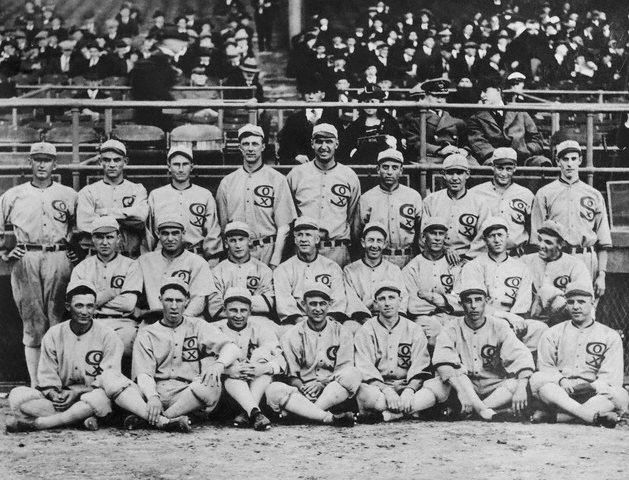
There was little time to recover. Just a few weeks later the sport faced the biggest threat it would ever face, (even bigger than the steroid scandal we see now). On August 31st before a meaningless late season game between the Cubs and Phillies, neither of which had a chance at the pennant, there was a late shift in betting odds to favor the Phillies, the worst team in the league. A total of $50,000 dollars were bet on the game that had little interest to anyone. Rumors of a fix reached the league office and an investigation was launched leading to a Grand Jury in Chicago. The Grand Jury decided to investigate not only the Cubs-Phillies game but the rumors from last October about the World Series. The result: the exposure that betting and throwing games was wide spread and eight members of the White Sox had taken money to lose the World Series. Worse yet, they were still taking bribes to lose games in 1920, keeping the pennant race tight.
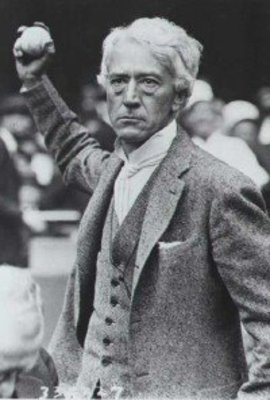
Baseball could have been destroyed but they organized and regrouped. They hired Judge Kennesaw Mountain Landis to take over as a Commissioner to run both the AL and NL and enforce penalties when needed. He moved quickly and banned the White Sox players as well as other players throughout the league who were guilty of throwing games or knew of games being thrown and had kept quiet. The league had to do some damage control.
It didn't have to wait long. Babe Ruth turned the league on end as he turned the Home Run from a rarely used offensive weapon into the main attraction at every game. Ruth absolutely dominated the league. In some years Ruth was hitting more Home Runs alone than entire teams combined had hit. Adding Ruth (and several other pieces of the late Red Sox dynasty) to the up and coming Yankees team launched the first Yankee dynasty of the century.
The Indians won the 1920 World Series, the Senators would win the AL in both 1924 and 1925 and the Athletics would win in 1929 but the Yankees would destroy the competition by reaching the World Series in 1921 ,1922, 1923, 1926, 1927 and 1928 winning three of the World Series. Many consider the 1927 "Murderer's Row" Yankees as the greatest team of all time. The Athletics 1929 team is also considered one of the greatest of all time, some even think them better than the 1927 Yankees.
The National League saw a similar dominance by the New York team. Brooklyn reached the World Series in 1920, the Pirates reached in 1925 and 1927 and the Cardinals in 1926 and 1928 but the Giants dominated the first half of the decade reaching the World Series in 1921, 1922, 1923 and 1924. It would be
John McGraw's last dominant period.
Although the names of Babe Ruth, Rogers Hornsby, Frank Frisch, George Sisler and Grover Cleveland Alexander will be the names that are remembered thirty, forty or fifty years from now (or more), every decade has tremendously talented, successful players who make wonderful contributions to the success of their teams, organizations and the league as a whole. Unfortunately many of the players who fall into this category will be forgotten, overlooked and generally ignored. Here are 11 players (+) from the decade you may not remember but you definitely should:
Catcher
Ray "Cracker" Schalk
Career Teams: Chicago White Sox (1912-1928) and New York Giants (1929)
All Star Appearances*: None
MVP Voting#: 1913 (20th), 1914 (6th), 1922 (3rd) and 1925 (12th)
When we hear players of the 1919 White Sox team mentioned the immediate reaction is to think "he was one of the guys who threw the World Series". For the casual fan it is assumed it was a team wide plot to throw the games, yet, only 8 players of the 25 man roster were involved in the plot. Ray Schalk was definitely not. Schalk was an intense player, often arguing with the umpires, opposing players and his own players. As a Catcher, no one in the history of the game could handle a pitching staff better. He knew his pitchers. Knew when they were having a good day just by the warm up pitches. He could yell out to them from behind the plate to keep that shoulder in, don't over stride, watch your location. As Lefty Williams and Eddie Cicotte were letting up on their pitches or "missing" signs in the 1919 World Series, Schalk knew. He told Kid Gleason, the manager, he told Comiskey, the owner, and he told Hugh Fullerton, the reporter who tried to blow the whole scandal sky high. When Comiskey and the other owners realized the black eye this would give to the game, he politely asked Schalk to shut his trap and retract anything he had already said. He did so but he wasn't happy about it. In the 1919 World Series, Schalk hit .304 (7 singles) and drove in 2 runs. He was also ejected from one game for asking the umpire if he was crooked. The White Sox had also played in the 1917 World Series, and won. Schalk had hit .263 in that winning year. After the eight players were expelled from the game, the White Sox tried to pick up the pieces and Schalk carried most of the load. Along with Eddie Collins and Red Faber, Schalk fought with everything he had to keep the White Sox in the top half of the league. Unfortunately for the Sox, their decline coincided perfectly with the rise of the first Yankee dynasty. Schalk retired as a player in 1929, though he did manage after his playing days were over. 84 years after his retirement Schalk still ranks in the top 10 White Sox in games played (5th), at bats (9th), plate appearances (9th), Hits (10th), walks (8th), stolen bases (9th), singles (9th), hit by pitch (10th) and sacrifice hits (3rd).
Firstbase
Wally Pipp
Career Teams: Detroit Tigers (1913), New York Yankees (1915-1925) and Cincinnati Reds (1926-1928)
All Star Appearances*: None
MVP Voting#: 1922 (8th), 1924 (14th) and 1926 (14th)
If you've been reading this blog consistently (what am I saying? of course you have. Who wouldn't?), you've learned that every era has a few players known for only one moment of their career, despite a career worth of hard work and positive contributions to their teams. You may have also learned that I try to avoid summarizing entire careers into one missed ground ball, one poor pitch or one poor base running decision. As soon as the name Wally Pipp is mentioned the first thought that comes into their mind is "that's the guy who took a day off and never got his job back". It really isn't that simple. Wally Pipp was a very strong hitter, leading the league in Home Runs twice (although it was in the dead ball era when home runs were less common. His league leading totals were 12 and 9). He had the misfortune to play for the Yankees long before they were
the Yankees. Pipp and Ping Bodie were two of the stars on the Yankee team that remained when the Red Sox dynasty was transplanted, player by player, to New York in the early part of the decade. There was a reason he remained. Pipp was good. He had started to improve as a hitter in the two years prior to Ruth showing up (.304 in 1918 and .275 in 1920) but with Ruth in the lineup, Pipp saw better pitches and took advantage. Between 1920 (the arrival of Ruth) and 1925 (his last full year in New York), Pipp hit .280 or better every year, even hitting .329 in 1922. As the Yankees became the feared team in baseball, Pipp contributed heavily, playing first base on the first three Yankee World Series teams, including the first ever championship team in 1923. As the team moved through a bad 1925 season, Miller Huggins had to start looking at the future and assessing what he had. What he had was one of the greatest prospects in the history of sports at first base. The story varies as to why he sat down on July 2nd. He either had a headache, got hit in the head by a pitch in batting practice, had the flu, or a cold or possibly just needed a day off in the middle of the hot summer (he's not the only player in history to need a day off in mid season). Regardless of why, Pipp sat out the game on July 2nd and
Lou Gehrig started at first base. Pipp never got his regular job back. Pipp was a great player but it is no insult to admit you are not Lou Gehrig. Pipp's contract was sold to the Reds before the 1926 season and he helped the Reds stay in the pennant race (.291, 15 HR, 99RBI) before finally fading to the World Champion Cardinals. Wally Pipp's career certainly deserves more than being "the guy who got replaced by Lou Gehrig".
Secondbase
Bill "Wamby" Wambsganss
Career Teams: Cleveland Indians (1914-1923), Boston Red Sox (1924-1925) and Philadelphia Athletics (1926)
All Star Appearances*None
MVP Voting#: 1922 (21st)
Pronounced Wambsganss, his name has been translated as a combination of German words meaning overcoat. When Cleveland signed him one reporter yelled out "Holy mackerel, what a moniker!". His teammates called him "Wamby" because who wanted to try getting that name right, but Ray Chapman told Wamby repeatedly that he never wanted to play alongside another secondbaseman. His career started in 1914 and was a respectable career, not hall of fame caliber but likely all star potential had there been an All Star Game at that time. As the Indians moved to the World Series in 1920, Wamby was struggling. He started the Series 0 for his first 9 at bats then worked a walk in game 4. It was the start of a great stretch of baseball for him. As the Indians took Game 4 to tie the Series Wamby went 2-4 with 2 runs and 1 RBI. Game 5 would give him his place in history. It was the best of three amazing moments in one amazing game in World Series History. The best of 9 series was tied at 2 games apiece. Elmer Smith, a part time Indians outfielder, had put Cleveland up 4-0 in the first with the first ever grand slam in World Series play. Jim Bagby, Cleveland's starting pitcher, put the Tribe up 7-0 in the bottom of the 4th with a three run Home Run, the first Home Run ever by a pitcher in World Series play. As the bottom of the 4th started, Brooklyn started to stir and show signs of life. Pete Kilduff and Otto Miller led off with back to back singles and the heart of the order was due up with no one out. Brooklyn was threatening to make this a game. On a 1-1 pitch Clarence Mitchell lined a shot destined for center field as Kilduff and Miller took off running. No one would possibly get this one and the Robins would at least have the bases loaded, possibly even a run or two with no one out. Wamby reacted at the crack of the bat and ran towards the second base-shortstop hole. He dove, stretched his arm as long as his name, and the ball smacked in his glove. 1 out. Wamby saw Kilduff, almost at third, slam on the breaks and scrambling back to second. Wamby raced to his feet and stepped on second to force Kilduff. 2 out. Miller had been just a few steps from second when the first out call was made. He was stunned when he saw Wamby make the catch and even more stunned when he saw how quickly Wamby got to his feet. He just stood there in confusion. Wamby took two steps and tagged him. 3 out. An unassisted triple play! It is almost unbelievable, almost impossible, but Wamby did it. Ring Lardner, one of the great writers of the time said "It was the first time in World Series history that a man named Wambsganss had ever made a triple play assisted by consonants only.
Shortstop
Glenn "Buckshot" Wright
Career Teams: Pittsburgh Pirates (1924-1928), Brooklyn Dodgers (1929-1933) and Chicago White Sox (1935)
All Star Appearances*: None.
MVP Voting#: 1924 (11th), 1925 (4th) and 1931 (25th)
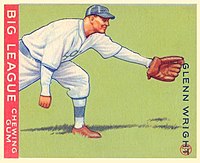
Every organization has at least one irreplaceable person. A player so revered, adored and idolized that no matter who you put at that position, no one will match them. The Dodgers have Jackie Robinson at Secondbase, the Giants have Willie Mays in Centerfield, the Orioles have Brooks Robinson at Thirdbase and Cal Ripken at Shortstop, the Padres have Tony Gwynn in Rightfield and the Yankees have someone at nearly every position. For the Pittsburgh Pirates no one has ever been able to fill the shoes of Honus Wagner at Shortstop. Between Wagner's retirement at the end of 1917 and Glenn Wright's debut in 1924 14 different players spent time at Shortstop for the Buco's. The only player to have any success in between Wagner and Wright was Hall of Famer Rabbit Maranville. Wright had some big shoes to fill. He didn't disappoint. With Wright's emergence in 1925, the Pirates won the World Series in 7 games over the favored Washington Senators. Wright was the star of the 1925 team (even over players like Pie Traynor) and led the team with 18 HR and 121 RBI while hitting .308. He struggled at the plate in the Series (hitting just above .180 with only 5 hits) although he had his best game as the Pirates fought out of a 3 games to 1 deficit. In Game 5, Buckshot had 2 hits, a double, a run and an RBI to keep Pittsburgh alive and swing the momentum back to the eventual World Champs. The Pirates reached the World Series again in 1927 but faced what many consider to be the best team in history, the 1927 Yankees. Wright again hit well below his season average hitting only .154 and getting only 2 hits in the 4 game loss. His career was shortened significantly by arm troubles which made it difficult to make the long throws from the hole between shortstop and third. Wright never got the attention that Traynor or the Waner brothers got in Pittsburgh but he was a big reason they were consistently in contention during the 1920's.
Roger Peckinpaugh
Career Teams: Cleveland Indians (1910 and 1912-1913), New York Yankees (1913-1921), Washington Senators (1922-1926) and Cleveland Indians (1927)
All Star Appearances*: None
MVP Voting#: 1914 (23rd), 1922 (21st), 1923 (13th) and 1925 (1st)
If there was anyone with bad luck it was Roger Peckinpaugh. He was unlucky enough to play for the Yankees just before they became the first Yankee dynasty and became the last lasting symbol of Yankee futility. The Yankees (previously known as the Highlanders, previously known as the Hilltopers, previously known as the Baltimore Orioles), had been one of the symbols of poorly run teams since the start of the league. They finally reached the World Series in 1921 and Peckinpaugh had a bad series. In the 8th and final game (it was a best of 9 series) he became the original Bill Buckner. In the first inning, with 2 outs and a runner on second, George Kelly hit a routine, everyday ground ball to Peckinpaugh. The only problem was he didn't field it. The ball rolled away and as he trotted after it to track it down, Dave Bancroft came around to score the first run of the game. The Giants won the game 1-0. After the season Peckinpaugh was shipped out of New York. Some said it was because of the error while others thought it was because many of the players wanted him as manager over Miller Huggins and the Yankee owners wanted the controversy out of the locker room. Either way, he ended up in Washington and they were happy. He won the MVP in 1925, for his leadership as much as for his bat and glove. In Game 7 against the Pirates, a rainy, muddy mess that would have made the 2008 World Series proud, Peckinpaugh tracked a ball by Max Carey that landed foul. As he turned to head back to his position he was shocked to hear the umpire call it fair. He was charged with an error that led to the Pirates tying the game. An inning later, with Max Carey at bat again, Peckinpaugh fielded a 2 out ground ball, possibly because of the poor fielding conditions, Peckinpaugh's throw was wild, allowing the Pirates to extend the inning and score the two winning runs. Much like Buckner, because of Peckinpaugh's bad timing, he is remembered for the errors and not a solid 17 year career.
Thirdbase
Heinie Groh
Career Teams: New York Giants (1912-1913), Cincinnati Reds (1913-1921), New York Giants (1922-1926) and Pittsburgh Pirates (1927)
All Star Appearances*: None
MVP Voting#: 1914 (21st)
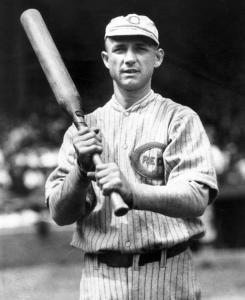
John McGraw rarely made mistakes, at least not many that he would admit to. He did admit to one. As his New York Giants won three straight NL pennants in 1911, 1912 and 1913, he was pretty comfortable with Buck Herzog at Thirdbase, but with Christy Mathewson aging and Rube Marquard being Rube, he needed pitching. He sent three players (including Heinie Groh) to the Reds in exchange for Pitcher Art Fromme. McGraw almost immediately regretted it. Groh got an abundance of playing time in Cincinnati and immediately proved he could play in the Majors. He regularly hit over .300 using a bat shaped like a bottle (he hit .320 in 1917 and .331 in 1921) and was usually near the top of the league in doubles, on base percentage and hit by pitch. On the 1919 Reds team that defeated the Black Sox Groh played a major part in the Reds first ever Championship. He had 2 doubles and 2 RBI in the series. McGraw was constantly trying to get Groh back but the Reds asking price was usually too high. He finally succeeded in 1922 and it paid off. In the second of five straight World Series appearances by the Giants, Groh pounded Yankee pitching. Pounded is probably an understatement: demolished, embarrassed, annihilated, obliterated? There doesn't seem to be a word strong enough. In the five game sweep (there was one tie game, called because of darkness), Groh hit .474. He had 9 hits in 19 at bats and scored 4 runs. Groh continued with the Giants over the next few years but as a young group of Giants such as Bill Terry,
Hack Wilson,
Freddie Lindstrom and Travis Jackson began to emerge, Groh saw less playing time. Groh hit only .182 in the 1923 World Series and saw only one at bat (he was 1-1 in the Series) in the 1924 Series. He remained in New York for the 1925 and 1926 season but his regular playing days were over. He finished with the Pirates for 14 games in 1927, but he was playing behind the emerging Pie Traynor. Groh could be recognized easily for years afterwards as he drove around New York, or anywhere. His custom plates were a dead giveaway: MR 474.
Outfield
"Long" Bob Meusel
Career Teams: New York Yankees (1920-1929) and Cincinnati Reds (1930)
All Star Appearances*: None
MVP Voting#: 1922 (15th), 1925 (18th) and 1926 (21st)
Bob Meusel stepped in for his first ever World Series at bat in the 1921 Series. Babe Ruth had just singled in a run to give the Yankees a lead in their first ever World Series inning in their first ever World Series game. Meusel heard shouts of encouragement from the bench. "Keep it going Bob." He looked around the field to assess the defense and see where he wanted to hit this ball. His gaze turned toward left field and he likely glowered a little bit. He knew the face out there. It was his brother, Emil "Irish" Meusel. Bob pulled a ground ball toward left field but it was intercepted by Frankie Frisch who turned it into an inning ending double play. The two could not be more different. Irish was a fun loving, always smiling, affable guy who got along with everyone. Bob was gloomy, curt, focused and the press couldn't quite figure him out. Before there was the Ruth-Gehrig show, there was the Ruth-Meusel show and it was a big draw for New York. The first Yankees dynasty (1921-1923) was pre Gehrig but having Ruth hitting third and Meusel fourth terrified American League pitchers and put butts in the seats. After the 1921 World Series Ruth and Meusel defied the rules of Judge Kennesaw Mountain Landis and went on a barnstorming tour of the country. Any one going against Commissioner was going to get punished and both Ruth and Meusel got suspended for over 20 games. With Meusel in left field the Yankees won seven American League pennants and three World Series titles.
Ross "Pep" Youngs
Career Teams: New York Giants (1917-1926)
All Star Appearances*: None
MVP Voting#: 1924 (5th)
As John McGraw cleaned out his managerial office to turn the team over to Bill Terry, he left two things until the last. In the long tenure of the manager, he had seen some of the greatest of all time come through his clubhouse. Some stayed for a long time, some made short stops. Some made major impacts on the history of the game and some became infamous. Of the hundreds of players who played under McGraw only two were honored enough to find a place to remain forever. McGraw kept two framed pictures of past players in his office. One was Christy Mathewson, the other was Ross Youngs. "I have never seen a greater outfielder." McGraw said. Considering how long he played and managed and the players he faced, that's a hell of a compliment. Ford Frick, commissioner of the game who placed an asterisk next to Maris's home run record, said "everyone has Ruth, Cobb and Speaker on his all-time outfield. But, somehow, I've got to find a place for Pep Youngs." The name Pep came from McGraw who saw Youngs playing a "never say die", all out hustle brand of baseball that every era fears is in danger of disappearing. As the game swung from McGraw's brand of inside baseball to the power game of Ruth, Youngs was able to keep McGraw's faith in the old style of play alive. He was known to break up a double play with a rough style, which led to more than one confrontation and helped give the Giants their reputation for a hard nosed team. In his ten seasons in the majors Youngs played on 4 National League Champions (two of which won the World Series) and hit well in all but the 1924 World Series. It wasn't always with the bat that Youngs excelled. Just as Yastrzemski would learn to play the Green Monster decades later, Youngs could play the outfield wall better than anyone. Frankie Frisch said Youngs could play an angle off the wall "as if he'd majored in billiards." McGraw couldn't imagine life without Youngs in the outfield. Had he imagined that life without Youngs would come so soon, he might have held onto
Hack Wilson a bit longer. As the 1926 season progressed (Wilson's first with the Cubs), Youngs wasn't feeling well and doctors couldn't quite explain why. He pushed on and hit .306 in 95 games but he felt worse as the year went along. The last person to ever beg out of a game, McGraw grew more concerned. In August, McGraw sent his favorite player home to rest and recover for the 1927 season. The off season didn't show any improvement, in fact his condition worsened and a blood transfusion was attempted in March to relieve Youngs. It wouldn't help. Youngs was in the late stages of Bright's Disease and would pass away in October 1927.
Sam Rice
Career Teams: Washington Senators (1915-1933) and Cleveland Indians (1934)
All Star Appearances*: None
MVP Voting#: 1926 (4th)
The envelope had been sealed since 1965 and sat in a vault in the Hall of Fame. When news of the passing of Sam Rice hit the news wires in 1974, the president of the Hall of Fame opened and read the contents."At no time did I lose possession of the ball." There were 2 outs and Washington had a one run lead in the 8th. Earl Smith, the Pirates Catcher, smacked the ball to dead Centerfield. Rice took off but quickly ran out of room. The team had added extra seats in Centerfield to accommodate the overflow crowd. Rice reached the temporary wall at the same time as the ball. He leaped, the ball hit his glove and Rice flipped over the wall into the seats. He disappeared from the view of everyone except the home town fans sitting around his landing. He was gone for a few moments. Then popped up with the ball in glove. The umpire called Smith out and Bill McKechnie, the Pirates manager, went nuts. "How the hell do you know he held onto that ball? You can't call my guy out on a play like that!" Commissioner Landis asked Rice after the game if he had made the catch. "Well Judge, the umps called Smitty out." Landis approved of the diplomatic answer and told Rice to repeat it anytime he was asked in the future. Rice was a great fielder before Gold Gloves, a stolen base threat in an era when the Home Run had become king and an All Star player before All Star Games existed. The controversy over whether or not Rice caught the ball continued for years after the World Series. Rice wrote the truth on a piece of paper, sealed it in an envelope and handed it to the president of the Hall of Fame to be opened at the time of his death.
Pitcher
Duster Mails
Career Teams: Brooklyn Robins (1915-1916), Cleveland Indians (1920-1922) and St. Louis Cardinals
(1925-1926)
All Star Appearances*: None.
MVP Voting#: None.
Duster Mails had a short career. It was almost the opposite of Billy Williams's career. Williams played Hall of Fame caliber baseball for the Cubs for 2213 games (from 1959-1974). In that time frame he never reached the playoffs (he would reach the playoffs with the 1975 A's). Duster Mails appeared in a total of 106 career games but every stop he made along the way included a pennant winner. For the National League Champion Brooklyn Robins in 1916, Mails appeared in 11 games, though he did not make an appearance in the World Series against the Red Sox. His next stop was in Cleveland for the World Series Champs. The Indians had a rough season that year on the way to the World Series. Ray Chapman was killed by a pitch. Their replacement Shortstop pulled a hamstring and they had to go with a kid fresh off the college campus, and their pitchers had trouble staying healthy. Manager Tris Speaker was desperate for a pitcher. Any one who didn't have a sore arm. Mails got the call. His first start in Washington did not go so well. He was wild and lasted only a few innings. The Indians came back and won and from that point on Mails was great. He went 7-0 in the regular season. As the Indians prepared to face the White Sox with the pennant on the line, Mails was confident. He told the umpire before the game "I'm going to shut these bums out." "Son, haven't you ever heard of Shoeless Joe Jackson, Eddie Collins and Buck Weaver?" the umpire asked him, unable to believe this kid's audacity. "Of course I have. But have they ever heard of the Great Mails?" The umpire laughed by "the Great Mails" came through with a shutout win. As the Indians moved on to the World Series, Mails was a big part of the team. He started two games in the Series (won 1 and got a no decision in the second) and gave up 0 earned runs in 15 2/3 innings. His 1921 season was good (he went 14-8) but by 1922 he had lost the magic. He was only 4-7. He was released by the Indians. His career was virtually over except for another brief stop in St.Louis. He was picked up in 1925 and went 7-7 for a Cardinals team that couldn't win on the road. The 1926 Cardinals would shock the World by beating the Yankees but Mails would be long gone by then. After an 0-1 record in his only appearance he was let go.
Carl Mays
Career Teams: Boston Red Sox (1915-1919), New York Yankees (1919-1923), Cincinnati Reds (1924-1928) and New York Giants (1929)
All Star Appearances*: None
MVP Voting#: 1926 (22nd)
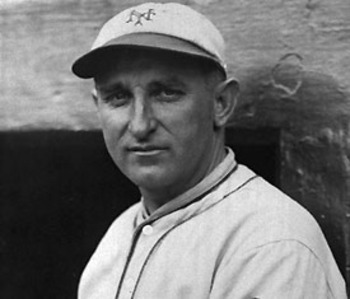
Few players have ever been hated, despised, feared or vilainised as much as Carl Mays. Think Bonds and Clemens have been put in a villain's role in the recent era? Mays has been portrayed as a racist, a cheater, a lunatic, a quitter, a dirty player and a murderer. Mays came up to the Boston Red Sox at the same time as Babe Ruth. Both were pitchers. Both had bright futures. One was outgoing, friendly, almost obscenely cocky. The other was dour, quiet, brooding with almost insane mood swings. When his team won he was quiet and complacent. When his team was losing in one of his starts Mays was outwardly angry, often openly yelling, berating teammates in public. As the Red Sox began to crumble after the sale of Ruth to the Yankees, Mays struggled through a poor season and walked out on his team...in the middle of a game he was pitching. In between innings he walked to the dugout, picked up his coat and walked to the clubhouse, cleaned out his locker and went home. He told the Red Sox he wouldn't play for them again and demanded a trade. Then it got ugly. He was suspended, traded to three different teams, sent back to Boston, unsuspended, resuspended, traded to another team, sent back to Boston. (the details will likely be another article all by itself). He was supposed to end up in Cleveland but he ended up with the Yankees instead. His odd "submarine" almost underhand delivery made it hard to hit against him and there were rumors that he cut the ball (not illegal at the time) and he had no problem throwing high and tight to move batters off the plate. He came in too high, too tight and too fast in 1920, hitting Ray Chapman in the head and fracturing his skull leading to Chapman's death. Mays always claimed he had not done it on purpose but the newspapers and players of the time thought he always tried to hit people in the head. There were protests from other players asking the league to ban him or at least outlaw the submarine delivery. Mays kept pitching and the league kept moving forward. The Yankees made the World Series in 1921, 1922 and 1923. Mays won 27 games in 1921 but had a habit of weakening in the late innings. In the 1921 World Series Mays won game one 3-0. He started again in Game 4 and was nearly perfect through 7 innings then amazingly lost control and gave up three runs losing the game. After the game, and for decades later, stories went around that he had been paid off to throw the game. An investigation was made by Judge Landis but nothing ever came of it. Miller Huggins was convinced Mays had thrown the games. (Another blog article to come later) Mays was traded to the Reds and had a few last decent seasons. Mays had near Hall of Fame numbers but never got elected. Some felt it was because of the pitch he threw to Chapman. Others felt it was because of the question over whether or not he threw the games. Some feel his numbers just aren't Hall of Fame caliber.
*-The All Star Game was not started until 1933. Many of the players in this weeks articles likely would have made numerous additional All Star Game appearances if the game had been in effect their entire career.
#-Various forms of the MVP Award were given out at the start of the league until 1931 when the current format was adopted. Between 1911 and 1914 the award was given out in both leagues but disappeared until 1922. When it returned, only the American League chose a winner in 1922 and 1923 and from 1924-1928 both leagues awarded the MVP. The AL failed to choose an MVP winner in 1929 and in 1930 neither team chose a winner. The award returned for good in 1931. From 1922-1929 the leagues did not allow a player who had already won the MVP to be considered for a second award. Had this rule not existed Babe Ruth likely would have won all of the awards during that time period. Because of this rule, when Ruth hit 60 Home Runs in 1927, he received 0 MVP Votes.
+-
Author's Note: Just as in the last few weeks, and as may be seen in the next few weeks as we move through this series of articles, I did my best to keep this to one player per position, however, the farther we move from these eras, the easier it is to forget these types of players (and even some hall of fame players). It is important to remember as we follow the sport that the superstars are not the only ones making contributions to the success of a team. This is not a comprehensive list of players who fall into this category from this era, it is simply my choice of players who best represented their position and have become forgotten. Your list is probably different. Email me yours or leave a comment.