Sunday, November 10, 2013

Rivalries: Matthewson vs Brown

It was 1916 and both of these men were old and tired by baseball standards.  The children at the game would have a hard time understanding the big deal, while their fathers were excited beyond all measure to see this, even if it was a watered down version of what they had read about for years. 

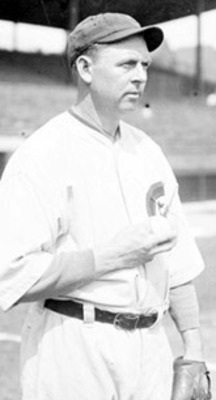
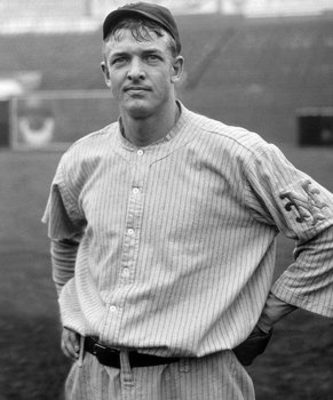
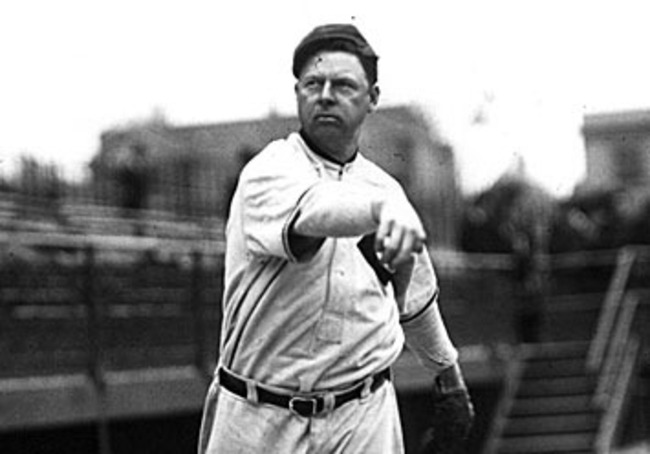
On September 4, 1916, in the second game of a double header, Peter Centennial Mordecai "Three Finger" Brown faced off against Christy Mathewson for the final time.  Mathewson, now with the Reds', was managing Cincinnati and had not pitched in weeks  As a way to revive the good old times Christy decided to face off against Brown in Three Finger's last career game.


The two men were forever linked.  The two best pitchers on the two best teams of the last decade.  Their match ups were what made baseball the national past time.  Mathewson was the leader, the shining beacon of what a ball player should be, the symbol of the New York Giants since the turn of the century.  Brown was the quiet, reserved, unquestioned ace of the Cubs' dynasty.

Between 1903 (the start of World Series play) and 1916 (their last season as active pitchers) Brown and Mathewson had been the top two pitchers in the game.  Their teams were the two best teams in the game.  The Giants had won the National League five times (1904, 1905, 1911, 1912 and 1913) and finished second five other times.  The Cubs had won the National League four times (1906, 1907, 1908 and 1910) and finished second three other times.  Clearly these two teams were constantly battling for the top spot.


The Cubs hated the Giants and the feeling was mutual. You didn't need to look any further than the Fred Merkle debacle to find the raw nerve that was exposed. It was a wound that started as a minor scratch when McGraw took over the Giants and immediately brought a swagger to a team that had talent.  At about the same time out west Frank Chance was taking over as manager of the Chicago Cubs and building a winner.  The rise of the Giants to a powerhouse and the rise of the Cubs to a rival led to the inevitable collisions that created a heated rivalry.


The two pitchers would face each other a total of 25 times.  Only once did the game end with neither getting a decision.  The games were usually close, tense affairs and in 13 of those 25 games Mathewson came out on top.  In the other 11 Brown came out on top.  In one legendary game in 1905 Mathewson no hit the Cubs and won 1-0.  His opponent, Brown, allowed only one hit, the game winning hit that scored the only run of the game.

This was a bitter rivalry but it was a rivalry with respect.  These two would leave the yelling to Chance, McGraw and Evers.  Both men were quiet men.  Both men were humble men.  Both pitched right handed. Both dominated the league but their upbringings were polar opposites.

Brown grew up in poverty.  He once said he thought he was fortunate to "have a shoe on one foot and a rubber boot on the other" while he was growing up.  He permanently damaged his hand in a thresher accident as a child, losing the tip of one finger.  In a later accident he broke another finger giving him a deformed finger.  Brown was forever known as "Three Finger" Brown but his team mates called him "Miner".  Brown worked in the mines spending long hours in atrocious conditions with little hope of ever finding a better job.  Brown was plain looking, a simple man.

Mathewson was born into a prominent family in Factoryville, PA near the Pennsylvania-New York border.  His mother wanted him to be a preacher.  He decided on going to college at Bucknell instead.  A recognized athlete in both football and baseball, Mathewson excelled in every facet of life.  His grades were good.  He was known as the handsome man on campus.  He attracted the most lovely ladies and he pitched for the Giants as a summer job in college.


The teams behind them on September 4, 1916 were not the ones that fans of the rivalry were used to seeing.  Mathewson was now wearing a uniform that read "Reds" on the left side, not the usual interlocked "NY" fans were used to.  Mathewson had been traded to the Reds in July.  It was done by John McGraw with the understanding that Mathewson would be given the opportunity to manage the Reds, a favor for Mathewson from McGraw for all the years of loyal service.

The defense behind both pitchers was different.  Instead of Fred Snodgrass, Fred Merkle, Art Fletcher and Roger Bresnahan, Mathewson had Hal Chase, Baldy Louden, Ivey Wingo and Emil Huhn.  Instead of Tinker, Evers, Chance and Johnny Kling behind him, Brown had Vic Saier, Larry Doyle, Chuck Wortman and Art Wilson. 

The pitches were not as sharp as the old days.  Mathewson's famous fadeaway ball didn't fade quite as much as it used to and the ball that Brown used to break off didn't break quite as hard.  This would not be a repeat of the combined one hitter from 1905.  The two men were shells of their former glory.  Both pitched all nine innings Mathewson allowed 15 hits, Brown allowed 19.  Mathewson allowed eight runs, Brown allowed ten.  Mathewson got the win, Brown got the loss.  The crowd got the right to tell their children and grandchildren that they saw Matty vs Three Finger Brown for the last time.

TRIVIA QUESTION:
Starting at First base for the Reds behind Christy Matthewson was Hal Chase.  What was significant about the relationship between Mathewson and Chase?

ANSWER TO LAST WEEK'S TRIVIA QUESTION:
The famous showdown between Grover Cleveland Alexander and Tony Lazzeri is often believed to be the way the 1926 World Series ended.  But Alexander's strikeout of the rookie sensation was only the final out of the 7th inning.  The Yankees still had six offensive outs to get back in the game.  The score was still at 3-2 when Lazzeri struck out and the Cardinals left two men on base to finish the top of the 8th.  The Yankees went in order in the bottom of the 8th and the Cardinals did  the same for the top of the 9th.  The Yankees had three outs left and they had the big bats coming up:  Combs, Koenig, Ruth and Meusel.  Combs and Koenig both grounded to third for the first two outs of the inning.  Babe Ruth followed that with a walk to bring up the clean up hitter Meusel with the tying run on first.  Ruth was deceptively fast for his body type and he knew that he had a better chance to score from second than he did from first if Meusel hit a ball in the gap.  He also counted on the fact that no one expected him to steal.  So on the first pitch to Meusel, Ruth took off for second.  What Ruth didn't count on was the throwing arm of Bob O'Farrell, the Cardinals Catcher and NL MVP of 1926.  Ruth was caught stealing and the World Series was over. 

Sunday, November 3, 2013

Book Recommendations to Get You Through the Offseason

We are heading into the off season for baseball and the time in between the end of the post season and the start of free agency for next season.  Until about five years ago I wouldn't have worried about the long winter because I could at least get excited about football.  I'll be honest, the NFL season just doesn't have the same excitement for me it did before the strike a few years ago.

Don't worry, there is still plenty of ways to keep you (and me) focused on the great game of baseball even during the winter months.  I was asked last winter where I get most of my information and a very good friend suggested that I do a post about the books or resources that I use for the blog.  I have honestly read over 100 books and have used close to 100 different DVD, game film and websites to gather my information so the list that follows is not comprehensive, it is just some of my favorite.

To give you some recommendations for reading material, holiday gift ideas or just plain better understanding of the history of the game I have broken them into two categories.  First is the Biographies/Autobiographies.  Please keep in mind that many times "autobiographies" are ghost written so the material may or may not be coming directly from the player/manager, etc.  I have chosen my favorite Biographies/Autobiographies where the personalities of the figures shine through their words, whether written by them or not.

Second, I have chosen a list of Team/Season studies.  As much fun as it is to read about an individual player's memories of a season or event, don't forget this is a team game so it is just as interesting to see how the team works together (or doesn't) and achieves (or falls short of) the ultimate goal. 

Some of these books may be a surprise to you and some may be obvious choices (like the first book on the Autobiography/Biography list).  Regardless, here are some book recommendations to help you through the cold off season winter:

Biographies/Autobiographies
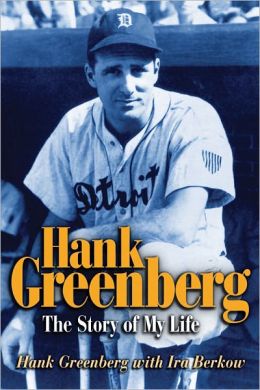
Author: Hank Greenberg and Ira Berkow
Did you really think I'd go more than a few weeks without a Hank Greenberg reference?  Greenberg was working with Ira Berkow on his autobiography when he passed away from cancer.  Berkow had sent Greenberg a list of questions about events, seasons, teams, opponents, etc and had Greenberg tape record his answers.  When Greenberg felt well enough between cancer treatments he would answer the questions and sometimes he would just give information outside of Berkow's requests.  Regardless, it was great information.  Berkow used Greenberg's recorded memoirs to fill out the book and complete the project.  What comes out in the pages is the life story of a humble man who enjoyed his time in baseball as a player and executive and loved his children.

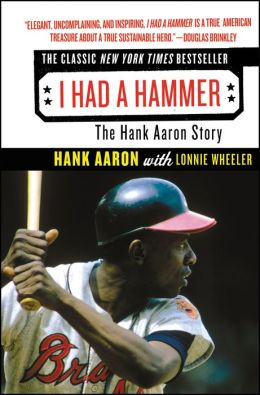
Author: Hank Aaron
Aaron's autobiography touches on the struggles he had coming up through the South Atlantic League in the 1950's, the winning days of the Milwaukee Braves and the trials and pressures of chasing Ruth's record. Aaron is one of the most likable people in baseball history and his personality comes across clearly in his story, making it even more difficult to accept the hatred he dealt with for doing nothing more than being successful.

Ya Gotta Believe: My Rollercoaster Life as a Screwball Pitcher and Part-Time Father and My Hope-Filled Fight Against Brain Cancer
Author: Tug McGraw
During his playing days, Tug McGraw was a household name in the Philadelphia and New York area due to his involvement in magical teams like the 1973 Mets and the 1980 Phillies.  After his playing days he has become known more as the father of Tim McGraw.  In his life story, McGraw discusses his career and personal life including his days with the Mets and the 1973 World Series, his days in Philadelphia, his struggle to form a relationship with his son Tim and his struggle with Brain Cancer.  McGraw is humorous, likable and positive despite his health scare and provides great detail about the Phillies' first ever World Series Championship.

The Only Way I Know
Author: Cal Ripken Jr
Junior has always been open and honest about his influences, his motivation and his love of the game.  This book is no different.  This book discusses growing up with a father managing in the minor leagues, coaching in the majors and the excitement of playing for his father and with his brother in the majors as well as the disappointment of seeing his father fired and his brother leaving the team.  Also discussed are the struggles of his rookie season, the transition from Third base to Shortstop and back, the playoffs and World Series of 1983 as well as the devastating losses of 1996 and 1997.  Cal also discusses the 1994 players strike and the frustration of the cancelled season.  Of course there is plenty of discussion of the streak.  Ripken never claims it himself but in the age of steroids he was the reason to believe in the good of baseball.

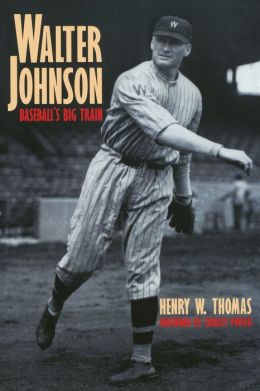
Author: Henry Thomas
Written by his grandson who was too young to know his grandfather when he died, this is the definitive Walter Johnson biography.  It traces the life of Johnson from his childhood in Kansas to the family's move to Santa Ana, CA, Johnson's travels through the minor leagues and his ultimate success as the "King of the Pitchers".  Johnson spent years with the horrible Washington Senators yet still won more games than any pitcher in history, except Cy Young.  Thomas provides great details of Johnson's personal and professional life and the chapters on the two World Series appearances of the Senators are particularly spectacular.  No detail is left out and no detail seems to be "fluff" material.  

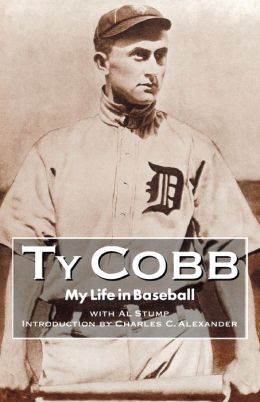
Author: Ty Cobb and Al Stump
Parts of the book are about the strategy of baseball.  Parts are descriptions of Cobb's approach to the game.  Part is bitter.  Part is hopeful.  And part is a defense of his poor reputation.  Cobb is definitely honest for better or worse in his life story.  The book was written mostly by Al Stump who spent several years personally discussing the project with an elderly Cobb.  Anyone who wants to make their own judgement of the legend that is Ty Cobb needs to read this.  Stump wrote the version of the book that Cobb wanted (it was proofed and approved by Cobb himself) so we have no doubt that this is Cobb's mind.  For an alternate perspective you can also check out Stump's biography of Cobb written about his experiences with Cobb during the project.  Stump's biography was later used as the basis for the movie "Cobb".

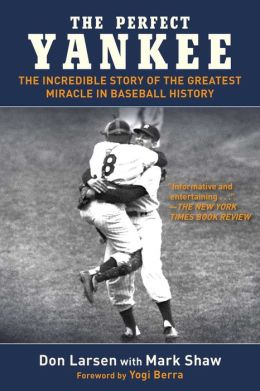
Author: Don Larsen, Mark Shaw and Yogi Berra
For a pitcher known as "googly bird" and someone who was never really considered an ace of any staff, Don Larsen has become famous far beyond the records of his career.  This is the book of his life as well as his experience of pitching the only World Series perfect game.  Larsen discusses his approach to the Dodgers, the joy of pitching and how he became the most imperfect pitcher to pitch a World Series perfect game.  His discussion of technical mechanics of his pitching are intriguing but general enough for casual fans to understand.  For example, he discusses how just one start before the end of the regular season he decided to abandon his wind up and pitch only from the stretch position for better control and how that effected his results, his confidence and led to his perfect game.

Extra Innings
Author: Frank Robinson and Berry Stainbeck
Intended as a response to Al Campanis's appearance on Nightline where Campanis declared that there were no African Americans in the front offices of baseball because no African American wanted a job that high, the book answers Campanis and so much more.  From Robinson's troubles in Cincinnati, success in Baltimore (including the difficulty of being an African American star loved for playing baseball but still not being accepted in general society), Robinson is  honest about his struggles with Angels manager Dick Williams, the benefit of what he learned from Earl Weaver and the difficult job of replacing Cal Ripken Sr and turning around the Orioles organization.  Particularly interesting are his experiences with Jack Clark, whom Robinson managed in San Francisco.   Clark recently accused Albert Pujols of using PED's.  Reading Robinson's view of Clark from 25 years ago may give you a different perspective of Clark's comments on Pujols.

I Never Had It Made: An Autobiography of Jackie Robinson
Author: Jackie Robinson
If you are looking for a book only about baseball this may not be your choice.  If you are looking for a book about the struggles of life, both professional and personal, and the strength that it takes to be successful regardless of continual road blocks, then this is it.  Robinson, of course, discusses breaking the color barrier and his career in baseball but he also discusses the struggle of being a father and husband while being on the road for the better part of the year, attempting to give his family a better life while dealing with the racism of the times and the pain of losing his son just as the son was turning his life around.  There is a reason that Jackie's number is the only one retired across the majors and it goes well beyond the diamond.  If you ever thought that Jackie was over rated as a player you need to read this and it will probably convince you that he is historically under rated.

The Duke of Flatbush
Author: Duke Snider, Carl Erskine and Bill Gilbert
This book may not be in print any longer so you may have trouble finding a copy.  I would suggest checking the library or used book stores.  Duke discusses not only his on the field play but the struggles of paying bills in the days before the million dollar salaries on the salary of a minor league manager.  He also discusses growing up as a fan of Jackie Robinson in Watts, CA,  the struggles of the Dodgers to finally win the World Series, his hatred of the Giants (and Halloween) and the tight friendships that made up the special days in Brooklyn.  Also discussed are Duke's final days in Los Angeles (with excellent details of the 1962 three game playoff between the Dodgers-Giants), his final days with the Mets and the odd feeling of ending his career as a Giant.

Seasons/Teams Studies
Author: Louis P. Mayer
This is a study of the formation of the American League, the war that resulted, the peace conference of 1903 and the first World Series.  Each game of the series has it's own chapter and is explained in detail.  The best of 9 series saw the American League's Boston franchise come back from a 3-1 deficit to win the first ever World Series.  It also includes details of a near player's strike, JFK's grandfather and the greed of the owners that would effect the game for decades.

Author: Cait Murphy
It is hard to pick a favorite book of all the ones I've read but this one is definitely in the top five.  The author does an amazing job of exploring the 1908 baseball season along with the political and social aspects of the US during the time.  The non-baseball sections include the corruption around Chicago and a female mass murderer in Chicago.  The baseball sections focus on the crazy baseball season which had a three team race in the NL that came down to Fred Merkle's "bonehead" mistake and a three team race in the AL which saw Ed Walsh of the White Sox win 40 games.

Author: Mike Vaccaro
A great telling of one of the greatest World Series of all time which ended with Fred Snodgrass's dropped fly ball and a Red Sox victory.  The author describes each game in detail as well as plenty of behind the scenes dealings and fights.  The story of the 1912 Red Sox includes the amazing season of Smokey Joe Wood, the corruption that nearly cost the Red Sox their World Series title and how the ownership's greed nearly alienated their most loyal fans. The Giants' 1912 season includes the stories of Rube Marquard's emergence as one of the best pitchers in the National League and the Giants' support of Snodgrass after the misplayed fly ball.  This was not only one of the most closely contested World Series, it is also one of the most controversial.  Anytime controversy was involved in the first 25 years of the World Series, you can bet John McGraw was involved somehow.

Author: Elliot Asinoff
This study of the 1919 season and the Black Sox scandal was the basis for the movie of the same name.  Asinoff explores the plot, the actual throwing of the games, the revelation of the scandal and the trial in one of the most important seasons in the history of the game.  Anyone who would like to truly understand the complex web of corruption that took place in this scandal should read this.
 
Author: Mike Sowell
This is more than a dual biography of Carl Mays and Ray Chapman, it explores the impact that the death of Chapman had on the Indians' team.  It also discusses the 1920 pennant race between the Yankees, White Sox and Indians.  1920 is one of the most important transitional seasons in the history of the game and this season saw Babe Ruth truly emerge as the new force while the White Sox team was torn apart.

Author: Paul E. Dotrich 
A great study of not just the baseball season of 1926 but many of the national events of the year including the death of Rudolph Valentino.  The author does a great job exploring the pennant race in the NL, including the mutiny and collapse of the defending World Champion Pirates and the first World Series title for the Cardinals.  Baseball fans may know that the 1926 World Series famously saw Grover Cleveland Alexander (alternately rumored to be drunk or hungover) enter the seventh game in relief and work out of a tension filled, bases loaded jam against the rookie sensation Tony Lazzeri.  If you have not heard of that famous at bat (or the bizarre way the series ended) this is a great place to learn more about it.

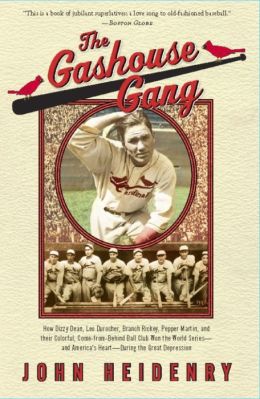
Author: John Heidenry
This book focuses mainly on the history of the St. Louis Cardinals, however, it is an interesting study of the Cardinals evolution from the perennial last place team to the most successful organization in the National League.  The book gives a great perspective on the importance of Branch Rickey before the Jackie Robinson signing and of course there are great Dizzy Dean stories.  The book also gives great description of the 1934 World Series with Joe Medwick's fight with Marv Owen of the Tigers and since this is the 1934 Tigers there is, of course, plenty of good Hank Greenberg information.

Author: Michael Shapiro
Anyone who has blamed Walter O'Malley for being a horrible, greedy, monster for uprooting the beloved Dodgers from the Brooklyn faithful and moving them to the West Coast must read this book.  Besides looking at the struggle of the team to defend their World Series title, Don Larsen's perfect game and the tight core group of the Brooklyn team, this book provides great detail of O'Malley's struggle to build a new stadium in Brooklyn and his desperation to avoid moving the team. 

October 1964
Author: David Halberstam
Anyone who has read a book by David Halberstam knows that you cannot go wrong reading a book by David Halberstam.  I nearly put another of his books (The Summer of '49) on this list as well, however, this one is my favorite of his work.  The 1964 season saw the Cardinals transitioning from the days of Stan Musial to the days of Bob Gibson.  It also saw the mighty Yankees becoming a tired, declining older franchise as Yogi Berra moved into a managerial position and Mantle struggled through knee injuries.  In a classic seven game series the state of baseball changed almost overnight.

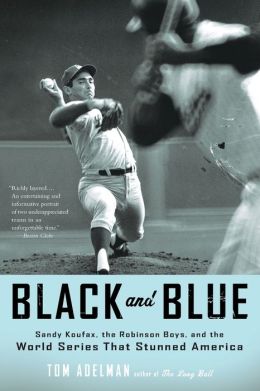
Author: Tom Adelman
Similar to Halberstam, you can't go wrong reading a book by Tom Adelman.  Adelman does a great job of tying in the stories outside the game.  This is the story of the Dodgers team, led by Koufax and Drysdale, that appeared to be unbeatable as they faced off against the Baltimore Orioles team which was considered to be a middle of the league team.  Particular focus is paid to the impact of Frank Robinson in Baltimore as he gets traded from the Reds.  Focus is also given to Koufax and his struggle to come to terms with the damage he is doing to his arm and his desire to help his teammates win one last time.

The Long Ball: The Summer of '75- Spaceman, Catfish, Charlie Hustle and the Greatest World Series Ever Played
Author: Tom Adelman
Adelman's title says it all.  This is arguably the greatest World Series ever (although I still think 1991 beats it).  This book has everything.  The Big Red Machine.  The curse of Babe Ruth.  The birth of free agency.  The rebirth of the Yankees featuring Billy Martin, Thurman Munson and George Steinbrenner.  The decline of the Oakland dynasty of the 1970's.  Even cameos by M.C. Hammer and Willie Randolph.  It includes the heart warming story of Luis Tiant seeing his parents for the first time in decades.  It includes details of every edge of your seat game of the series.  And of course, it includes perfect details of the greatest World Series game ever played, the Carlton Fisk Home Run game. Even if you ignore every other piece of advice I give you  (and let's face it all of you will) listen to this one.  You must read this book.


The Bad Guys Won: A Season of Brawling, Boozing, Bimbo Chasing, and Championship Baseball with Straw, Doc, Mookie, Nails, the Kid and the Rest of the 1986 Mets, the Rowdiest Team to Ever Put on a New York Uniform and Maybe the Best
Author:  Jeff Pearlman
This is one of the legendary teams of all time.  The team had so much potential that it is almost unbelievable they only won one World Series as a group.  Reading this will go a long way in telling you why they didn't win more.  The focus is not just on the 1986 team, but in the building of the team.  It includes great biographical information on many of the Mets including Strawberry, Gooden, Kevin Mitchell, Mookie Wilson and Sid Fernandez among others.  The book is entertaining and informative and does a great job of chronicling the legendary team.

The Last Night of the Yankee Dynasty: The Game, the Team and the Cost of Greatness
Author: Buster Olney
Olney is one of the most respected baseball writers of our time and he has done a great job of following the Yankees dynasty of the late 1990's-early 2000's.  Any Yankee fan (or just baseball fan) who wants to know more about the team that rejuvenated the nation's love of the game, this is your book.  In reading this book I gained a whole new perspective on many players including Paul O'Neill, David Cone and Bernie Williams.  I am not a Yankee fan by any stretch of the imagination but this book is one of the best I've ever read.  It discusses the transition form Buck Showalter to Joe Torre, from Don Mattingly to Derek Jeter and the eventual decline of the dynasty.  2001 was certainly one of the best and most emotional World Series ever and this will give you every detail.

TRIVIA QUESTION:
In today's article, I mentioned that the 1926 World Series ended in a bizarre way.  How was the last out recorded?
 
ANSWER TO LAST WEEK'S QUESTION:
Congratulations to Hope and TJD for answering last week's trivia question correctly.

Anyone who routinely listened to Phillies games between 1971 and 2008 can tell you how good Harry Kalas was in the broadcast booth.  He had a subtle humor that was remeniscent of Vin Scully and a professionalism that was remeniscent of Mel Allen.  He had a great exaggerated "Struck him out!" call and "That ball is outta here!" call that have to be heard to be appreciated.  Harry loved the Phillies (or the Fightin's as he often called them).  One of Harry's favorite players was Garry Maddox.  Maddox was often called the Secretary of Defense years before Reggie White became the Minister of Defense in Philadelphia.  Maddox's range in Centerfield was nothing short of amazing.  Maddox had to cover a lot of ground to make up for slower outfield partners like Greg Luzinski, Del Unser and Jay Johnstone.  In fact, Maddox covered so much ground that Kalas said "Two thirds of the earth is covered by water, the rest of it is covered by Garry Maddox."
Sunday, October 27, 2013

Satisfying October Part 2: The Top 20 Most Fulfilling Post Season Appearances

Last week we started to look at the top 10 most satisfying October appearances.  Not all of the teams won the World Series but they all overcame some level of adversity to reach October.  Some teams had decaded without any success.  Some teams had nearly a decade of close calls.  Here are the top 10 to finish out our list.  Don't forget to leave your comment or email me your list of Most Satisfying Octobers* and don't forget to check out our lists of Top 25 Most Disappointing Octobers Parts 1 & 2 as well as Top 20 Most Shocking Octobers Parts 1 & 2.

10. 2008 Philadelphia Phillies
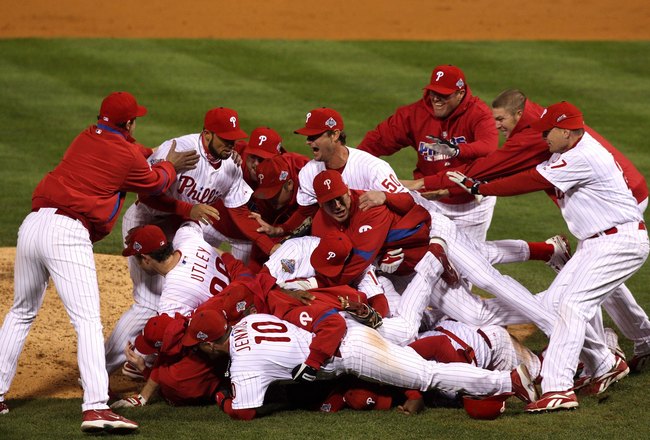
The Phillies organization does not have a history of what you could call success. For the greater part of the history of the league the Phillies have been known mostly as losers. The difference between the normal Phillies teams and this team was expectations. After finally making the playoffs in 2007 only to be swept out by the red hot Rockies, this year expectations were high. When they faced a surprise Brewers playoff team there were fears that there might be a repeat of the Rockies let down from the year before. The Phillies had little trouble with the Brewers but fought tooth and nail against the Dodgers and Manny Ramirez to reach the World Series for the first time since 1993. Facing the surprising Tampa Bay Rays there was again fear that the Rays would steal what the Phillies fans had waited so long to see. Riding the arms of Cole Hamels, Jamie Moyer and Brad Lidge the Phillies took a 3 games to 1 lead. Hamels started Game 5 and was spectacular in horrible conditions. Rain was soaking the field and wind was making it almost impossible to catch a pop fly.  Conditions got so bad that the umpires paused the game only to pick up where they left off more than 24 hours later. Phillies fans had already waited 28 years since their last World Series what was another 24 hours?  Using their great bullpen of J.C. Romero, Ryan Madson and Brad Lidge to shut down the upstart Rays, the Phillies scored the winning run on a Pedro Feliz single and brought home the second World Series Championship in team history. For home grown talent like Jimmy Rollins, Pat Burrell, Ryan Howard, Chase Utley and Cole Hamels it was a dream come true.


9. 1975 Cincinnati Reds
Sparky Anderson took over the Reds at the start of the 1970 season. He inherited a team that had won 89 games. He led them to 109 wins and a World Series loss to the #14 team on our list.  Anderson and the Reds reached the World Series again in 1972 and lost a classic seven game series to Oakland. They lost the NLCS the next year to the Mets and a pattern was seemingly forming. They had become known as the Big Red Machine for the way they could produce wins but the machine seemed to putter out at the end of the year. Their 1975 opponent was a surprise Red Sox team making their first post season appearance since 1967. When the Reds blew a lead late in Game 6, a potential clinching game, and lost when Carlton Fisk hit his infamous Home Run, Reds fans feared they had missed their chance. The machine kept chugging along in Game 7 and finally brought Sparky the World Series title he had been working on for all these years.

8. 1923 New York Yankees
Babe Ruth instantly changed the Yankees organization. They went from underachieving, disappointing losers to contenders almost over night. The Giants and McGraw, the National League rivals, allowed the Yankees to play at the Polo Grounds (for a fee) and call it their home (when the Giants were on the road). The Yankees finally reached the World Series in 1921 only to lose to the cross town Giants and the gloating McGraw. 1922 was a repeat of 1921 except that the Yankees surpassed the Giants in paid attendance. Unhappy that the Yankees were no longer the joke of the league. McGraw evicted Ruth and the Yankees leading to the house that Ruth built. The 1923 World Series was the third straight year of Yankees- Giants in the World Series. The series was tied at 2 after four games and still could have gone either way. The Yankees took the next two games to win their first World Series title ever. Even better, it was against McGraw and the hated Giants.

7. 1968 Detroit Tigers
The country was literally burning. Riots were everywhere and nowhere was hit harder than the city of Detroit. Police clashed in the streets with protesters. The nightly news flashed horrible sights that were occurring just blocks from Tiger Stadium. Inside the stadium something special was happening. Denny McLain was winning 30 games (the first time a pitcher had done so since Dizzy Dean in 1934). Disappointed by the close loss to the Red Sox in the AL race the year before and heartbroken by the city tearing itself apart,the Tigers focused on winning. They faced off against Bob Gibson, Bill White, Lou Brock and the St.Louis Cardinals. Gibson was without question the best pitcher in the game. He went 22-9 in 1968 and had an ERA of 1.12. Gibson dominated the Tigers in his first two appearances in the 1968 World Series. Gibson set the tone that this was a series for pitchers in Game 1 when he struck out 17 Tigers. Gibson won again in Game 4 giving the Cardinals a 3 games to 1 lead in the series. Gibson wasn't superhuman, he only struck out 10 in Game 4. The Tigers clawed their way back in Games 5 and 6 thanks to the pitching of Denny McLain and Mickey Lolich. In Game 7, facing off against Gibson in his third appearance (he had victories in the previous two starts) was Mickey Lolich. The game remained scoreless into the top of the 7th. Gibson got the first two outs and it looked like the pressure would be back on Lolich to keep the game scoreless. Gibson had retired the first 10 batters in a row before allowing a one out single to Mickey Stanley in the 4th. He retired the next 10 straight until Norm Cash singled with two out in the 7th. That was followed by a Willie Horton single, a Jim Northrup triple on a misplayed ball by Curt Flood and a double by Bill Freehan. All of a sudden Gibson was human again and the Tigers took a 3-0 lead. They won the game 4-1 and captured their first World Series since Hammerin' Hank Greenberg returned from war in 1945. It didn't fix the broken city. It didn't settle all of the differences between the factions but it did give the city something to celebrate together instead of mourn together.

6. 1989 Oakland Athletics
The inaugural "Bash Brothers" team of 1988 made our list of most disappointing Octobers. So how do you improve a team that is already the most talented team in the league? Seemingly they didn't, allowing Don Baylor to move on and only signing Mike Moore, an average pitcher to this point in his career. On June 21, the A's, the team that had dominated everyone in 1988, were only two games ahead of the Royals and only 3 1/2 ahead of the surprising Angels. On June 21 the A's made one of the great trades in the history of the game. They sent Pitchers Greg Cadaret and Eric Plunk and Outfielder Luis Polonia to the Yankees and in return they received the greatest player in the game: Rickey Henderson. The A's faced off against Will Clark and the Giants in the World Series most remembered for the Bay Area earthquake, which obviously took all of the celebration factor out of the victory. Still, the A's win gave them the championship in their 1980's-1990's dynasty.


5. 2005 Chicago White Sox
Generations of White Sox fans had seen star players come and go since the 1919 scandal that ruined the organization and nearly all of baseball. Nellie Foxx. Luis Aparicio. Ted Lyons. Even more recent stars like Carlton Fisk, Jack McDowell, Frank Thomas and Robin Ventura. They saw great managers come and go. Ray Schalk. Tony LaRussa. Al Lopez. They even saw a stadium go when old Comiskey Park was shut down, replaced by New Comiskey Park. The one thing they hadn't seen in their lifetime was a World Series. Between 1919 and the 2005 season the White Sox made four playoff appearances and had reached only one World Series. The White Sox surprised a lot of people in 2005 with a young pitching staff of Mark Buehrle and John Garland bolstered by veterans Orlando Hernandez and Freddy Garcia. Their opponents, the Houston Astros, were led by great pitching of their own with Roger Clemens, Andy Pettite and Roy Oswalt and featuring a young player with high expectations, Wandy Rodriguez. There were no easy games in this one. The White Sox rallied in Game 2 to win a 7-6 game. They fought through 14 innings in Game 3 and scored the only run of the Game in the 8th inning of Game 4. It wasn't an easy win but after 86 years the White Sox finally won a World Series. Eddie Collins, Ray Schalk, Kid Gleason and the rest of the Clean Sox could finally rest in peace.

4. 1980 Philadelphia Phillies
If your organization has been around since, seemingly, the beginning of time, you would think that at some point you would have a run of success. Nearly every team had, except the Browns, who were now the Orioles and had a run of success as the Orioles. The Washington Senators had already won a World Series, then moved to the Twin Cities and had a run of playoff teams there. Hell, even the Mets had won a world Series already. The Mets for God's sake! Of the original 16 teams 15 of them had won a World Series by 1980. By the time 1980 rolled around two teams had already won World Series in two cities. Phillies fans not only didn't have a World Series title, they had very few close calls. They had reached the World Series only twice (1915 and 1950) and had lost three straight NLCS from 1976-1978. They had a strong team with Hall of Fame players and All Stars. Steve Carlton, Mike Schmidt, Pete Rose, Bob Boone, Garry Maddox. There was no reason this team didn't have a World Series title. As late as September the team was struggling to get a lead on Montreal. When Garry Maddox lost two fly balls in the same game because he forgot his sunglasses in the dugout the General Manager Paul Owens went on a clubhouse tirade. As the Phillies lost to lesser teams the Phillies fans booed them terribly (I know. You're just as shocked as I am that Philly fans would boo someone).  The tirade seemed to do little to help. Larry Bowa called the fans the "worst fans in the league" and everything was starting to unravel yet again as the Expos stuck around until the last weekend. With three games head to head to finish the season the Phillies took two out of three to finish off Montreal and faced the Houston Astros in one of the best NLCS of all time. Facing George Brett and the Royals in the World Series looked like a serious obstacle but the team that came to be known as the Cardiac Kids, for their ability to walk that thin line between a dramatic win and a heartbreaking loss, had it under control through the late innings in Game 6. They gave Phillies fans one last palpitation when Bob Boone tracked a foul ball along the first base line. Boone put his glove up and as the ball hit the leather he turned to make sure the runners weren't advancing. The only problem was the ball popped back up in the air and Boone couldn't get a handle on it. Waiting by Boone's side with the most important assist in franchise history, Pete Rose snagged the ball. As he ran back to his position with a smile on his face, he bounced the ball off the turf at Veteran's Stadium as though this were just any other game. One strikeout later and the Phillies had their first World Championship. Tug McGraw said his third strike was the slowest pitch in history. "It took 80 years to get there."


3.   1985 Kansas City Royals
Kansas City was a minor league affiliate for the Yankees for years. When the Philadelphia A's moved there it seemed that the affiliation continued since many of their great players ended up in New York. When the Royals started play in 1969 the pipeline to New York stayed open until the ownership in K.C. said enough. They were no longer nurturing fruit that would ripen in the Big Apple. From now on they would keep their own players. So George Brett and Frank White were not going anywhere. In fact, they even made smart trades like picking up Hal McRae from the Reds. The Royals built a strong team by the mid 1970's and as the A's early 1970's dynasty crumbled the Royals took their crown, winning the division in 1976, 1977 and 1978. They lost each time to the Yankees. After missing the playoffs in 1979 the Royals seemed to have finally gotten past their barrier when they beat the Yankees in the ALCS. Unfortunately, they ran into a team in the same situation, the 1980 Phillies. The Royals continued to play good ball but couldn't seem to get back to the playoffs in a tough division. They finally made it back in 1984 only to face one of the great teams of all time, the 1984 Tigers. The 1985 Royals were nothing short of determined and, if nothing else, lucky. Every time it looked like the end for the Royals they found a way to win. They fought off a strong Angels team in a division race that went down to the wire, winning by only 1 game. In the first best of seven ALCS, the Blue Jays (my God, they were even going to lose to the Blue Jays) took a 3 games to 1 lead. The Royals fought back and shocked everyone by winning three straight to advance to their second World Series. Standing in their way was Ozzie Smith, Vince Coleman, Willie McGee, Jack Clark and Terry Pendleton, their cross state rival, the St. Louis Cardinals. The Royals again seemed to be on the verge of elimination but one of the most controversial calls in baseball history and a failure to react to the chaos by the Cardinals allowed the Royals to keep fighting. In the end, in one of the great seven game series, the Royals finally took the crown erasing all the years of disappointment.

2. 1955 Brooklyn Dodgers
1941. 1947. 1949. 1952. 1953. The Dodgers had reached the World Series five times in the last 15 years. Each year a loss. Each time to the Yankees. Usually in some painful, vindictive way. 1941 saw a potential game ending, series tying strike three squirt past Mickey Owens. 1949 saw Don Newcombe pitch one of the greatest games ever only to lose and be labeled as someone who can't win the big one. 1952 saw the Dodgers load the bases with two out and nearly have fate drop the World Series in their laps when the Yankees infield couldn't decide who should catch an infield pop up. As three Yankees looked at each other and three Dodgers raced around the bases, Billy Martin sprinted in from deep second base to grab the ball at his shoe laces ending the Dodgers threat. Brooklyn was the little city living in the shadow of big city New York.  After losing the first two games in the 1955 World Series in Yankee Stadium it looked like another year of failed expectations and another bitter loss to the Yankees. The Dodgers won the next three in Brooklyn to take the lead in the series but lost Game 6 back in New York. If they were going to win this series they would need to win at least one on the road. With a pitching staff that boasted Don Newcombe and Carl Erskine the Dodgers went instead with Johnny Podres in Game 7. With Hall of Fame talent like Duke Snider, Pee Wee Reese, Roy Campanella and Jackie Robinson as well as several other borderline Hall of Fame players (Gil Hodges and Carl Furillo), it was hard to believe the breaks had never gone their way. Brooklyn took the lead in the fourth with an RBI single by Gil Hodges and added a second run in the 6th on an RBI sacrifice fly by Hodges. Brooklyn fans were waiting for the breaks to go the Yankees' way, like they always did, and the bottom of the 6th looked like it was the start of the Yankee Magic they expected. Billy Martin led off with a walk and moved to second on a bunt single by Gil McDougald. Yogi Berra stepped to the plate and the Dodgers outfielders moved over towards right field, leaving the left field line open. Berra drove a ball towards left and Sandy Amoros, the Dodgers Left fielder, sprinted towards the line. Martin and McDougald were tearing around the bases and this would be at least a double and a tie game. Amoros kept sprinting and the left handed throwing Amoros stuck out his gloved right hand and the ball smacked right into the glove. Maybe the Gods had blinked allowing Amoros to make the catch or maybe even the Gods in Yankee Stadium couldn't stand to see the Bums lose again. Or even more realistically, maybe Amoros just made a hell of a play to get to the ball. That was only the first out of the inning. With Martin and McDougald now scrambling back to the base, Amoros turned and threw to Pee Wee Reese who threw on to Gil Hodges for a double play. Podres was spectacular the rest of the way and one of the greatest collections of talent ever assembled had finally beaten their nemesis.


1. 1905 New York Giants
Pride, anger and spite can force a person to make some truly dumb decisions. The start of the American League in 1901 started an all out war between the American and National Leagues. There was pure hatred between the two. One of the cornerstone franchises of the new American League was the Baltimore Orioles. Riding the glory of the original National League franchise, the Orioles signed John McGraw to lead the team. The AL sold itself as being above the National League. The AL players were classy. They wouldn't swear. They wouldn't fight. They wouldn't question umpire decisions. They were an event you could take the wife to see without a fear of offensive behavior. When Ban Johnson promoted the league on these principals he apparently forgot John McGraw was in the league. McGraw did all of those things, especially when he was losing (and with this Baltimore team he lost a lot). When Ban Johnson suspended McGraw (again) in the 1902 season McGraw had had enough of this clean playing, clean living crap.  So he left. He not only left, he went to the Giants and took a few of his star players with him. Enough players that Baltimore couldn't field a team. It was fine by McGraw. He was in the NL now, far away from any association with Johnson. The only problem was, the AL had eaten away enough of the NL's profit that some sort of compromise had to be found in order for the NL to stay in business. Enter the peace talks of 1903. One of the many results of the agreement decided that the AL winner would play the NL winner in a post season series to determine the REAL champions. It would be called the World's Series. Not surprisingly, the Giants were the biggest opponents of the peace agreement. Giants owner John Brush, who had a long standing feud with Ban Johnson, refused to go along with it. Brush had once owned the Cincinnati Reds when Johnson worked as a Cincinnati sports reporter. When Johnson was critical of the team's play and personnel decisions, Brush banned Ban Johnson from the facility making it impossible to report on a team that you can't see. It was a big reason why Johnson formed the AL. The 1903 World Series between the Red Sox and the Pirates went off (barely) without a hitch (almost) but 1904 was different. The Giants won the the National League and based on the league agreements would face the Boston Red Sox in the World Series. McGraw and Brush had their own ideas. According to them the National League was still the only Major League. Why would they tarnish their World Championship status by playing against an inferior minor league? The Giants' players begged and pleaded and protested but because of McGraw and Brush the Giants refused to play the 1904 World Series and declared themselves World Champions (they even wore uniforms with the words World Champions across their chest for the entire 1905 season). In the first of three Connie Mack-John McGraw World Series clashes, the Giants faced the A's in the 1905 World Series. The players, who were furious at not being allowed to play the 1904 World Series, couldn't wait to play this one. They gave the fans all they could have hoped for and more. Christy Mathewson won three of the Giants' victories, pitching three complete game shutouts (that's 27 consecutive scoreless innings in a five game World Series). The Giants won their championship and the World Series would never be missed again...until greed, pride and anger intervened in 1994.

*-Before everyone crushes me for not including the 2004 Red Sox in this list I realize they could very easily be the #1 most satisfying October.  I made a decision not to include any teams that had appeared in the Most Disappointing or Most Shocking lists in this list.

TRIVIA QUESTION:
Legendary Phillies broadcaster Harry Kalas once said that 2/3 of the earth was covered by water.  Who did he say covered the rest of it?

ANSWER TO LAST WEEK'S TRIVIA QUESTION:
Congratulations to Hope and TJD for getting the right answer to last week's Trivia Question.
After the 1964 season the Yankees were purchased by the CBS Corporation.  The Yankees had long had a reputation as being run in a corporate fashion and CBS saw the opportunity to add to a new corporate asset.  The Yankees were on the decline.  Berra had already retired. Mantle was on the decline due to injuries.  Whitey Ford was aging and had little support.  The minor leagues were dried up and the organization was suffering from ignoring the African American talent pool while the other teams were signing Jackie Robinson, Willie Mays, Henry Aaron, Ernie Banks and Frank Robinson (among many other great talents).  CBS tried to run the Yankees like a corporate asset and not like a baseball team.  Despite the best efforts of Michael Burke the Yankees suffered through their worst stretch since before the Babe Ruth era and the worst stretch until the 1980's and early 1990's.  In 1973 CBS finally decided enough was enough.  They sold the team to George Steinbrenner, who began the long process of restoring the good name of the Yankees.


Saturday, October 19, 2013

Satisfying October Part 1: The Top 20 Most Fulfilling Post Season Appearances

Certain teams go into the season with large expectations and lofty goals.  Others head to spring training with the bitter sting of the way the previous season (or previous several seasons) ended.  Still others go into Spring Training, having theoretically addressed the major issues that caused them to underachieve the year before.

Every team hits Spring Training with the idea that this should be the year they finally win it all, although some teams have more pressure applied from the expectations placed on them from outside the organization.  The satisfaction for these teams to reach the post season and, most of the time, win it all is greater when they look back and see what they have accomplished.

Starting this week we will look at #20-11 of the teams that should have felt most satisfied with having reached the post season and what they were able to accomplish in their season:


20. 2007 Colorado Rockies
Placing teams on this list who didn't win the World Series, especially one that got swept in the World Series, may seem a bit odd but looking at what the team overcame is a big reason the Rockies are on this list.  Looking at the team now we can see the talent that it had (Helton, Tulowitski, Holliday) but with the Giants, Dodgers, Diamondbacks and even the Padres in their division, Colorado looked like they would have no shot to come out of the cellar.  On June 5 the Rockies were in 5th place in the NL West, seven and a half games out of first and eight games out of the Wild Card.  By a small miracle they climbed to fourth on June 6.  Fortunately the Giants were also struggling this year so they were able to remain in fourth place but still more than five games behind the third place Dodgers.  Despite an eight game losing streak to end June the Rockies stayed only eight games out of first and eight and a half off the Wild Card pace.  As late as September 15 the Rockies were in fourth place, seven and a half back, and fourth in the Wild Card (also seven and a half back).  In order to make the playoffs, over the next two weeks they would need to climb over the Phillies, Dodgers and Padres as well as fight off the Brewers and Braves who were close behind.  The Rockies went 14-1 over the final two weeks.  Only the Padres (9-7) and Phillies (10-4) put up a fight.  The Phillies had their division and the collapsing Mets in mind but the Padres and Rockies tied for the Wild Card spot, requiring a one game playoff to decide the winner.  The controversial ending to the 9-8, 13 inning game meant the Rockies now had to fly to Philadelphia overnight to play the Phillies less than 24 hours later.  Despite the exhaustion and the chance for a let down the Rockies rolled through the Phils and swept through the Diamondbacks in the NLCS.  Only the Red Sox were able to conquer the Rockies.  Although they lost in the World Series, The Rockies could be satisfied that their organization had made it's first appearance in the Fall Classic.

19. 1996 Texas Rangers
The Texas Rangers could always boast some great star players.  Nolan Ryan. Ruben Sierra.  Juan Gonzalez.  Ivan Rodriguez.  Julio Franco.  What they could never boast was a playoff appearance.  The joke around the league was that Texas was a great place to play until the summer got hot and then the Rangers would melt away from the heat.  The team did very little to improve over the off season, mostly resigning their own free agents (Mike Pagliarulo, Mickey Tettleton) or signing middle infielders considered past their prime (Kevin Elster, Kurt Stillwell).  In fact, they lost Kenny Rogers, considered their best pitcher, to the Yankees.  Although the 1997 Orioles were the first team to spend every day in first without a World Series Championship, the Rangers nearly matched them.  They spent all but 3 days in first place and those 3 days were only one half game behind the leader.  The expected Texas wilting came as predicted, almost.  Up 9 games on September 10, the Rangers lost 9 of the next 10 allowing a late charging Seattle to close within one game.  The Rangers held on to win 6 of their final 8 and reach their first ever post season.  The Rangers' first ride into the playoffs did not end the way they wanted it and Will Clark blamed himself for the loss (though a team batting average of .218 was not all his doing).  Like the 2007 Rockies it may seem like an odd thing to have a team not winning it all on this list but this postseason appearance set the stage for the Rangers as legitimate contenders and helped lay the ground work for what is now a perennial World Series
contender. 


18. 1984 San Diego Padres
For the third straight spot on the list we see a team that did not win it all but should have felt satisfied with their October showing.  The Padres had seen their division dominated by the Dodgers and Reds since they came into existence but the Giants, Braves and even the Astros had spent time in the playoffs ahead of the Padres.  Their association with McDonald's and their ugly uniforms led to year after year of jokes about the team.  The 1984 group hung in with the big boys for March and April but they still weren't taken entirely seriously.  The team ran away with the division by 12 games.  It was the first time the organization even came close to post season.  They fell behind two games to none to the Cubs in the best of five NLCS but fought back to reach the World Series.  Although the Padres faced one of the great teams of all time, the 1984 Tigers, they managed to win one game and proved that the Padres were no longer a joke.  They were a real organization capable of impacting the league.

17. 1992 Toronto Blue Jays
In the arms race in Canada the Expos struck first with a 1981 playoff appearance.  The Blue Jays reached their first playoff in 1985 and blew a 3 games to 1 ALCS lead to the Royals (it was the first year the LCS went to a best of seven format).  In 1987 they looked like they would get a second chance but blew a division lead to the Tigers in the final days of the season.  1988 saw a close five team race where the Blue Jays finished tied for third with Milwaukee, just 2 games out of first. 1989 was their second post season chance but they were steam rolled by the # 6 team on this list.  1990 was another tight race and another second place finish just two games behind Boston.  1991 again saw them lose the ALCS to the eventual World Champion Twins.  By the time 1992 rolled around Jays fans learned to be cautiously optimistic.  Led by a pitching staff of Jack Morris, Jimmy Key, Todd Stottlemeyer and Juan Guzman and everyday players Joe Carter, John Olerud, Roberto Alomar, Devon White and Dave Winfield the Blue Jays were clearly the most talented team.  At the trade deadline they became a great team, picking up David Cone from the Mets.  Everyone contributed in the postseason.  The Braves were probably tired of Jack Morris from their 1991 World Series against the Twins.  This year they had to face Morris and Cone and it was more than they could handle.  The Blue Jays became the first non-US team to win a World Series erasing all the "could have beens" over the previous six seasons.


16 .1995 Atlanta Braves
For decades the Cowboys have billed themselves as America's Team.  In the 1990's the Braves became America's Team.  Known more for losing up until 1990 when they finished last, the Braves became the dominant NL team at the same time that TBS began reaching a national audience.  The station was built around the Braves' schedule, even regularly starting programs five minutes after the hour since games usually started at 7:05 EST.  The Braves built a playoff team around a young, exciting group of players and one of the greatest pitching staffs of all time.  Shocking the baseball world in 1991 the Braves came as close as possible without actually winning the World Series.  In 1992 they fell to the #17 team on this list.  Adding to an already unbeatable rotation for 1993, they signed free agent Greg Maddux but the result was the same, a loss to the Phillies in the 1993 NLCS.  1994 could have been their year but no one will ever know because the season was ended by the player's strike.  1995 added one more obstacle in the extra round of the playoffs.  Despite the presence of superstars Fred McGriff, David Justice and Marquis Grissom it was Mike Devereaux who earned the NLCS MVP.  Flying high off the excitement of beating Cincinnati, the Braves took on an Indians team that was loaded with talent and experience.  The Braves finally won the crown to cement their dynasty.


15. 1907 Chicago Cubs
After suffering the number one disappointing October, the Cubs won 107 regular season games.  They didn't face the "Hitless Wonders" this time.  Instead they faced Ty Cobb, Sam Crawford and the Detroit Tigers in their first ever World Series appearance.  The Cubs were led by Johnny Evers and Harry Steinfeldt in mauling the Tigers to satisfy the hunger that had been left from the 1906 loss.

14. 1970 Baltimore Orioles
Upset and shocked by the Miracle Mets in 1969, the O's returned an almost identical team.  The biggest addition to the team following the 1969 World Series was the chip on their shoulder.  Riding strong years from Frank Robinson, Boog Powell and Brooks Robinson and the arms of Jim Palmer, Mike Cuellar and Dave McNally they outpaced the second place Yankees by 15 games, rolled over the AL West Champion Twins and lost only one game to the NL Champion Reds.  Don't feel too badly for the Reds.  The loss helped lead to the #9 team on this list (check back next week).  The star of the 1970 World Series was Brooks Robinson's glove.  The amazing defensive play of the Baltimore legend led Pete Rose to nickname Robinson "Hoover" because he was sucking up everything off the AstroTurf carpet at Riverfront Stadium.  Sparky Anderson said Robinson belonged in a higher league.  The Orioles 1970 win took away some of the sting of the 1969 loss and satisfying their feeling of disappointment.


13. 1920 Cleveland Indians
For years the Indians seemed to be just on the brink of making the World Series.  First they tried building a team around Addie Joss, Nap LaJoie and Terry Turner.  When that didn't work they rebuilt around Tris Speaker, Joe Jackson and Ray Chapman.  Joe Jackson was traded away to the White Sox and the Indians never seemed to be able to track down the A's,Red Sox or White Sox.  Entering the 1920 season Chapman was thinking retirement.  He was newly married, expecting his first child and his father-in-law was promising him a nice paying city job.  The Indians hung with the White Sox and surprising Yankees into early August when tragedy struck.  Chapman was killed by a pitched ball in a game devastating the Tribe.  His replacement, Harry Lunte, started off playing well (or at least not terrible) but pulled a hamstring and had to be replaced himself.  The Indians reached out to a Shortstop right off the campus of the University of Alabama.  He ended up having a great season and one day Joe Sewell even made the Hall of Fame.  The Indians faced the Brooklyn Robins in the World Series amid the growing Black Sox scandal.  Despite the distraction of the scandal the World Series gave countless headlines including the first ever World Series Grand Slam, the first World Series Home Run by a pitcher and the only unassisted triple play in World Series history.  The Indians won the World Series and dedicated the win to Chapman.

12. 1986 New York Mets
The Mets were an improving team with a ton of young talent.  Darryl Strawberry. Doc Gooden.  Ron Darling.  Lenny Dykstra.  Kevin Mitchell.  Add to that some very smart free agent acquisitions.  Gary Carter. Keith Hernandez.  Ray Knight.  It was all brought together by the mad genius, ahead of his time, stats geek Davey Johnson at manager.  The expectations heading into the 1986 season were enormous.  The Cardinals seemed to be the only possible challengers in the NL East.  In Spring Training Johnson commented that he felt the team would dominate the competition and Cardinals manager Whitey Herzog joked that they could probably all save some time and just go home.  They might as well have followed that advice.  The Mets won the division easily and when they weren't fighting each other they were fighting the opponents.  After a classic NLCS with the Astros that could have gone either way the Mets devastated Astros fans and advanced to face the Red Sox.  In one of the great World Series of all time the Mets helped immortalize Bill Buckner and themselves as one of the great teams of all time.

11. 1977 New York Yankees
The Yankees are, without doubt, the most successful organization in sports history. There have been very few periods where the team failed to win.  Following the 1964 World Series loss to the Cardinals the Yankees fell into one of the worst periods of the team history. After being in nearly every World Series between 1947 and 1964 the Yankees missed every postseason from 1965 to 1975.  The Yankees made a huge step back to being THE YANKEES in reaching the 1976 World Series but were swept by the Cincinnati Reds "Big Red Machine".  Yankees fans were excited by the playoff berth but appalled at the poor showing in the series.  The off season saw the Yankees sign Reggie Jackson and the Bronx Zoo was immediately open for business with enormous expectations.  Between several players being suspended and fined for failing to appear at a charity event on their off day, Jackson immediately alienating all of his teammates, Billy Martin fighting everyone and Munson demanding a trade, this Yankees group was anything other than the classic corporate machine of Ruth, Gehrig, DiMaggio and Ford.  The Bronx Zoo became a side show but they managed to reach the post season.  After a dramatic ALCS against the Royals they played a tough Dodgers team.  In one of the great moments of World Series history Reggie Jackson hit four Home Runs in four straight at bats (actually on four straight pitches) and the Yankees were once again THE YANKEES.


TRIVIA QUESTION:
After a nearly 20 year run of consecutive success, the Yankees were sold after the 1964 season,which ended in a World Series loss to the Cardinals.  They would not return to the post season until 1976, just a few years after the sale of the team to George Steinbrenner.  Who owned the team during that time period?

Answer to Last Week's Trivia Question:
Francisco Rodriguez made his Major League debut with the Anaheim Angeles on September 18, 2002 against the A's.  He appeared in five total games and gave up 0 runs in 5 2/3 innings.  During his short appearance in the 2002 season he struck out 13 batters and walked only 2.  Due to that he was included on the post season roster.  In the Angels' surprise win over the Yankees in the ALDS, Rodriguez won 2 games.  In the ALCS that year he won 2 games as the Angels advanced to the World Series to face the heavily favored Giants. Rodriguez won 1 and lost 1  in the World series giving the man with only five Major League appearances a record of 5-1 for the post season.  He pitched a total of 18 2/3 innings in the 2002 post season and struck out 28 batters.  Rodriguez was immediately an Angels star and given the name of K Rod.  K-Rod would be the Angels closer for several years and in 2008 set a single season record with 62 saves.

Saturday, October 12, 2013

Shocking October Part 2: The Top 20 Most Unlikely Post Season Victories

If you don't check the blog everyday (and why would you) you likely missed the tribute to Andy Pafko, who passed away this week.  Please check this article out and if you have any memories of seeing Pafko play or good Pafko stories to share please leave a comment.

Last week we started our look at the most shocking October appearances.  Just as with our Most Disappointing October list I am certain you have been on the edge of your seat all week waiting for our top 10.  Well, your anticipation is over.  You can find out my picks and then immediately start questioning my sanity.  I do love that the Most Disappointing list was able to get some small debate going, so please feel free to leave me your list.

10. 1954 New York Giants
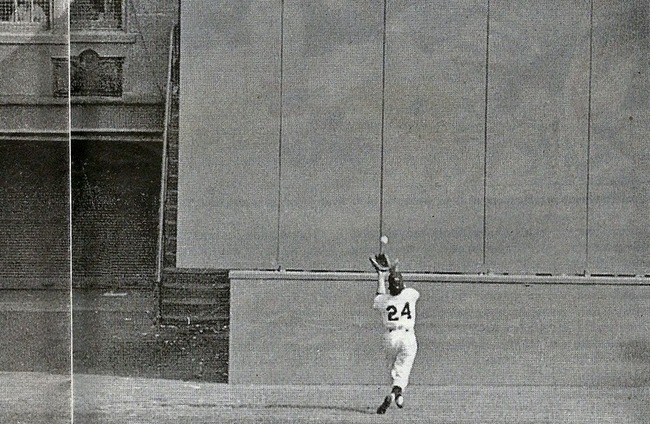
Willie Mays was so good even his glove had a nickname. It was known as "the place where triples go to die". Mays would end up one of the greatest of all time but he was still a young kid.  He had been with the Giants in 1951 when they reached the World Series and lost to the Yankees. Mays knew that these chances don't come every year and 1954 could very well be his last chance to win a World Series. Standing in the way of Mays and the Giants were the Indians, winners of 111 games and seemingly the best team in decades. The Indians, feeling unstoppable, seemed to be on their way to the predicted domination but Mays's glove and Dusty Rhodes's bat led the way to one of the biggest upsets in baseball history.


9. 2002 Anaheim Angels
The Angels in 2002 were in the same situation as the 2007 Phillies (see #15 on this list). They had built a strong young team but were continually under achieving. They had blown a big lead to the #4 team on this list and had failed to overcome Seattle, Texas or Oakland in any year since. In fact, going into the 2002 season, the Angels were the only AL West team not to win the division or make the playoffs under the current Wild Card format. They finally reached the playoffs in 2002 and had to face the Yankees in the first round, the team that had won the American League for five of the last six years. Instead of the big names Garrett Anderson and Tim Salmon leading the way in the ALDS, role players like Adam Kennedy and Sean Wooten stepped up to lead the Angels to the ALCS against the Twins. Minnesota was a surprise team themselves but the Angels, again led by Adam Kennedy, beat a Twins team led by a future Angels favorite, Torii Hunter. The World Series opponent was the Giants led by Barry Bonds and Jeff Kent. Dusty Baker's kids were excited that they could see Disneyland from their hotel and the San Francisco fans were excited for the first World Series win since they moved from New York. The Giants took a 3 games to 2 lead after a 16-4 crushing in Game 5 and jumped out to a 5-0 lead in Game 6 before the Angels rallied for six runs in the 7th and 8th to force Game 7. After the miraculous reprieve of Game 6 the Angels shocked the Giants in Game 7 with a 4-1 win and the only Championship for the Angels to this point.

8. 1960 Pittsburgh Pirates
The Yankees were led by Hall of Famers and All Stars. Mantle, Maris, Berra, Ford, Richardson. They had won the World Series eight of the last ten years and were a frightening thought for any team. The Pirates were in their first World Series since 1927 when they were swept by Babe Ruth and Lou Gehrig's Yankees. The Yankees won games by scores of 16-3, 10-0 and 12-0. By those numbers the series should have been over already. Yet somehow, the Pirates had forced a Game 7. The Pirates jumped out to a 4-0 lead but gave it back to the Yankees and trailed 7-4 going into the 8th. When a sure double play ball to short stop took a bad hop and hit Tony Kubek in the throat (it was feared it may have crushed his windpipe and he spent some time in the hospital) things unravelled for the Yankees and before anyone knew it the Pirates had five runs and a two run lead. Yet the Yankees were the Yankees and came back to tie the game at 9. The Pirates had the bottom of the order coming up for the bottom of the 9th. Stepping to the plate was a player who had only 48 career home runs in 2379 at bats. That works out to one every 49 at bats. This was Mazeroski's 25th at bat of the series and he had already hit one home run. He hit .320 for the series so there was a good chance of him getting on base just not very likely that he would win it on a Home Run. Then he did what no one would have ever expected. He ended the World Series on one swing and the Pirates, outscored in the series 55-27, had toppled the Yankee dynasty on the most unlikely Home Run.

7. 1991 Minnesota Twins
After the 1987 World Series win (see #11 on this list) the Twins had some serious down years (making the #11 shocking October even more shocking). 1990 saw the Twins in last place but a fall off in Oakland and Kansas City and a White Sox team still a few years away from a playoff run opened a window in the division. With many of the same players from the 1987 team plus the rookie of the year and a former World Series champion (who these Twins had beaten in the 1987 playoffs) the Twins took advantage of the opening and became the first team in history to go from last place to first place in only a single year. They faced the Braves, who had accomplished the same feat, in one of the greatest World Series in history and in the greatest Game 7 ever won a 1-0 extra inning game to defeat the team that would reach the playoffs for the next 13 years.

6. 1964 St. Louis Cardinals
Replacing someone just known as "the Man" is not an easy thing to do, especially when he helped lead the organization in four World Series. The Cardinals were still considered a rebuilding organization in 1964 when they made a trade that sped up the rebuilding. They picked up an outfielder from the Cubs, a player who didn't quite fit into the Cubs plans, named Lou Brock. Brock jump started the Cardinals offense and as the Phillies had a historic collapse in the last two weeks of the season. Three teams had a chance to win the NL on the last day of the season. The Cardinals beat out the Reds and Phillies to reach the World Series but had to face Mickey Mantle and Roger Maris. Led by the pitching of Bob Gibson the Cardinals won a classic seven game series and beat the Yankees in their last World Series appearance until 1976.


5. 1906 Chicago White Sox (aka "Hitless Wonders")
The other side of this series was the #1 disappointing October of all time. Known as the "hitless wonders" the White Sox were seen as fortunate to even reach the World Series. Facing off against the winningest team of all time with great pitchers and strong hitters the White Sox didn't stand a chance. With the pitching of Nick Altrock, Doc White and Ed Walsh the "hitless wonders" pulled off one of the greatest upsets of all time.

4. 1995 Seattle Mariners
Baseball in Seattle was synonymous with losing. They played in a poorly lit, poorly constructed sham of a stadium that someone once said was like "playing in my basement". The Mariners couldn't even fill the stadium and the owners, after years and years of poor attendance and financial losses, were ready to move. The city of Tampa Bay was making some very serious offers and if things didn't improve the move was certain. Then the worst possible thing that could have happened to the Mariners happened. Ken Griffey Jr broke his wrist and was out for an unknown amount of time. With the Angels way ahead in the race the Mariners seemed to be headed out of town. Then Jay Buhner and Randy Johnson took over and the Mariners were right back in the fight. When the trade deadline came around the M's made a trade to make a playoff run by picking up Andy Benes from the Padres, it was the first time the Mariners tried to improve themselves at the deadline instead of dumping talent. The Mariners passed the Angels for first place then allowed the Angels to catch them. Tied for the AL West lead on the last day, the Angels and Mariners played a one game playoff in Seattle. The Mariners won and advanced to the playoffs for the first time in their history. Facing a Yankees team in the playoffs for the first time since 1981, the Mariners and Yankees played one of the best playoff series of all time with dramatic late inning home runs, countless lead changes and even a near riot in the Bronx when the Mariners pulled their players off the field for their safety. After beating the Yankees in five games in the most dramatic fashion possible the magic ran out. The Mariners lost to the Indians in the ALCS but the playoff run saved Seattle baseball.

3. 2003 Florida Marlins
The Florida Marlins won the World Series in 1997 by buying their way to the World Series. Immediately after the World Series they dismantled the team sending the pieces of the winners everywhere. The 2003 Marlins looked like they were going nowhere. In May the Marlins were in dead last and replaced their manager with the oldest manager in the majors, Jack McKeon. The laughter surrounding the major leagues' laughingstock got a little bit louder. The Marlins were made up of young, inexperienced players like Dontrelle Willis, Derek Lee, Juan Pierre, Brad Penney, Josh Beckett, A.J. Burnett and Miguel Cabrera as well as one experienced veteran leader, Ivan Rodriguez. The team never got close to the division winning Braves but they won the Wild Card and then, in one of the most famous NLCS of all time, they beat the Cubs to advance to the World Series. Their opponent there was the powerful Yankees riding the emotion of Aaron Boone's dramatic Home Run to beat the Red Sox. With the Yankees being led by a huge payroll and experienced post season players no one gave the Marlins a chance. Led by the pitching of Brad Penny, the Marlins shocked the Yankees in six games.

2. 1969 New York Mets (aka "The Amazin' Mets")
The Mets had been a punchline for the first few years of their existence. It was worse than a punchline. It was a three ring circus. Between a manager who fell asleep on the bench and wrote a book titled "Can anyone here play this game?" and a team that lost more games than anyone in history no one in their right mind would consider the Mets a contender. The race to see whether man would set foot on the moon or the Mets would reach first place first got amazingly close as the 1969 season progressed. The Cardinals suffered from injuries and the Cubs got off to a huge lead. The Cubs fan base, always on the look out for the dreaded curse of the Billy Goat, saw a brand new curse in 1969. In the middle of the pennant race a black cat, an actual cat, ran onto the field, crossed the path of Ron Santo in the on deck circle then ran over to the Cubs dugout, stared down the Cubs and the collapse was underway. The Mets caught fire, the Cubs fell apart and the Miracle Mets made it to the first ever National League playoffs. They faced Hank Aaron and the powerful Braves lineup. Surprisingly, the Braves were no challenge and the Mets swept their way to the World Series. Facing the greatest Orioles team of all time they not only beat the O's, they dominated them. The outfield of the Mets led by Cleon Jones and Ron Swoboda seemed to turn every fly ball into the greatest catch in World Series history. The Mets, much like the 2003 Marlins, went from joke to World Series Champions almost over night.

1.   1914 Boston Braves (aka "The Miracle Braves")
The first ten years of World Series National League play was dominated by a few organizations. The Pirates (1903 and 1909) the Giants (1905, 1911, 1912 and 1913) and the Cubs (1906, 1907, 1908 and 1910) had won every NL Pennant since the start of the postseason series. On July 4th they lost their fifth straight game to fall 15 games out of first place. This team was going nowhere. They won seven of the next eight and cut the lead to ten and a half games. A nine game winning streak starting on July 27 cut the lead to six and a half but there was still little chance that the Braves could keep winning at this pace. They lost August 7th but started a new seven game winning streak the next day. They tied for first on August 25th and hovered between first and second for about a week. By September 8th they were up a game. By September 18th they were up 3 games. They went 25-4 over the last month of the season and won the NL by 10 games. They went from 15 games out to 10 games up in two months (remind anyone of the 2013 Dodgers?). Next up was the Philadelphia Athletics. The World Champions three of the last four years. The $100,000 infield. Connie Mack. One of the greatest collections of talent ever. The Miracle Braves, led by the keystone combination of Johnny Evers and Rabbit Maranville and pitchers Bill James and Dick Rudolph the Braves stunned the A's with a four game sweep. Rumors have swirled ever since that the A's threw the World Series to the Braves in a precursor to the Black Sox scandal. Regardless of whether or not the Series was on the level the Braves' miracle run turned the sport upside down and over the next few years new teams would find their way into the World Series.


Think a team is too high or too low on this list? Think there is a team missing? Email me your list or leave a comment.  Check back next week for part 1 of the Top 20 Most Satisfying Octobers

TRIVIA QUESTION:
The 2002 World Series saw the emergence of one of the best relief pitchers of the next decade (he is still an active pitcher but is currently more of a set up pitcher). What Angels relief pitcher used his 2002 World Series performance to emerge as a star?

Answer to Last Week's Trivia Question:
Don Baylor was a member of the 1985 Yankees, who failed to make the playoffs despite one of the most talent filled teams of the decade.  In March of 1986 the Yankees traded Baylor to the Red Sox for Mike Easler.  Baylor appeared in the 1986 World Series as a member of the Boston Red Sox.  Baylor was on the Red Sox roster for most of 1987 but was traded on 9/1/87 to the eventual World Champion Twins in exchange for Enrique Rios.  Following the World Series win, Baylor was released and became a free agent.  He signed with the Oakland Athletics who went on to lose to the 1988 Los Angeles Dodgers.
Reggie Sanders appeared in the 2001 World Series as a member of the Arizona Diamondbacks. Following the 2001 season Sanders was a free agent.  Sanders signed with the 2002 San Francisco Giants, who lost to the Anaheim Angels in the World Series.  Sanders did not appear in the 2003 World Series, however, following the 2003 season (which was spent with Pittsburgh), Sanders signed with the St.Louis Cardinals and appeared in the 2004 World Series against the Red Sox.