Showing posts with label Red Sox. Show all posts

Sunday, April 6, 2014

The origin of team names: American League

I have often made mention of the Washington Senators in my previous blog posts.  Ever wonder what happened to them?  What about the St. Louis Browns?  Where did they go?  Did you realize that the Yankees were not always the Yankees, the Red Sox were not always the Red Sox and the Indians were not always the Indians? 

Today's article is a history of American League team names and movements.  If you ever wondered where teams came from or where teams disappeared to here is your answer:

American League East:

Baltimore Orioles:
There was a Baltimore Orioles club in the American Association from 1882-1892.  The current team is not the same franchise.  That organization kept the name Baltimore Orioles and moved to the National League beginning in 1893 and stayed until 1899.  This team was tremendously successful featuring future Hall of Fame players like Ned Hanlon, John McGraw, Hughie Jennings, Wilbert Robinson and many other great players.  This is also not the same team.  When the American League started in 1901 there was a Baltimore Orioles team.  Still not the same one.  The current Baltimore Orioles started out as the Milwaukee Brewers and played the first American League season (1901) in Milwaukee.  At the end of that season they became the St. Louis Browns and played as the Browns from 1902-1953.  As the Browns they had very minimal success, only reaching the World Series once (1944) when many stars of the league were overseas in the military.  They moved to Baltimore in 1954 and became the Baltimore Orioles that we know and love (some of us anyways) today.  They have had great success in Baltimore, though the last twenty years have been a tough period.


Boston Red Sox
The Boston franchise is one of the original American League franchises.  They were created with the league in 1901 and were introduced as the Boston Americans from 1901-1907.  At the start of the 1908 season the new owners were looking for a new identity and the son of the owner gave it to them.  The son loved the red color of the uniforms, particularly the stirrups.  Due to this fascination the Red Socks were born.  The "cks" was abbreviated to x to make it easier for newspapers to fit the name in headlines.

New York Yankees:
Try to keep up with me on this one because this could get confusing for everyone.  The New York Yankees were originally...wait for it...the Baltimore Orioles and although Birdland would love to be able to add an extra 27 World Series championships to their current total of three, there is no connection between the two.  Remember above when I told you that John McGraw had played for the Orioles American Association team from 1882-1892?  This is not the same Orioles.  This was the Baltimore Oriole team that was created with the American League in 1901.  Still with me?  John McGraw was brought into the American League by Charles Comiskey and Ban Johnson as a drawing card for the American League franchise.  Because McGraw was so strongly associated with the successful Baltimore organization of the American Association, he was the perfect choice to lead the new incarnation.  McGraw resented the control Johnson tried to take of the league and also was tired of the losing ways of the team so during the 1902 season, the second American League season, McGraw decided to go back to the National League New York Giants and took most of his team with him.  Unable to field a competitive team,  the Orioles were moved.  The American League had already been looking for a way to get a team in New York anyways and this was their chance.  The problem was McGraw and the Giants owners had friends in very high (and corrupt) places so the franchise struggled to find a place to play.  Finally, a week before the season started in 1903 they were given land high on top of  a hill in Manhattan.  The new franchise was nicknamed, what else, the Hilltoppers but their official name was the New York Highanders.  When they moved out of Hilltop Park after the 1911 season they agreed to a part time rental of the Polo Grounds , where they alternated home series with the Giants.  They have been named the New York Yankees since the 1913 season (though their success would not come until the 1920's).


Tampa Bay Rays:
The Rays have only been in the league since 1998 and were created as an expansion team at the same time as the Diamondbacks.  Their original team name was the Tampa Bay Devil Rays.  Their entrance into the league blocked a rumored move by the Seattle Mariners to the Tampa Bay area.  The Devil Rays were the joke of the league (and Orioles fans thanked God every year that Tampa Bay was in their division because it meant they wouldn't be last).  The team finished 5th out of five teams in all but one of their first ten seasons, reaching the blissful heights of 4th place (poor 2004 Blue Jays) once.  Then came the 2008 changes.  They became the Tampa Bay Rays (as in rays of sunshine) in 2008 and the change was immediate. They reached their only World Series that year but have been consistent contenders ever since. 


Toronto Blue Jays
The Toronto Blue Jays were created in the 1977 expansion draft that brought the Seattle Mariners into the league.  An ownership group led by Jack Kent Cook (future owner of the Lakers, Redskins and several other successful teams), Toronto was very nearly part of the 1961 expansion, however, at the last moment Gene Autry won the rights to bring an American League team to Los Angeles.  This team entered the league as the Blue Jays and have remained as the Blue Jays ever since though they are commonly referred to as the Jays.  Their logo and uniforms have changed drastically over the years but the name remains.

American League Central:


Chicago White Sox
These White Sox have been the White Sox and nothing else.  They joined the American League from the very beginning in 1901 and have remained consistent ever since.  The Black Sox name so commonly associated with the club was not officially the team name, for obvious reasons.


Cleveland Indians
The Cleveland franchise was another American League original but the team name changed continuously for the first few decades.  Their first season was played as the Cleveland Blues.  1902 was the Cleveland Bronchos.  When Napoleon LaJoie, one of the greatest second basemen of all time, joined the team, the organization renamed themselves the Naps out of respect for LaJoie.  The team name Indians came into the fold in 1915 after LaJoie left and a team name was needed.  The Cleveland Plain Dealer held a contest to name the team.  Cleveland had previously had a team in the American Association called the Cleveland Blues (1887-1888) and moved to the National League from 1889-1899.  The most popular player on the team was a Native American named Louis Sockalexis.  In honor of this player, the team name Indians won out.


Detroit Tigers
Along with the White Sox, the Tigers are tied for the longest stay in a single city with a single name.  Although they were sometimes referred to as Wolverines, their official name is and always has been the Detroit Tigers. 


Kansas City Royals
When the Athletics picked up and left Kansas City the league wanted to get a team back in the area as quickly as possible.  The problem was solved when the league expanded in 1969 and added the Washington Senators and the Kansas City Royals.  They have never played  under any other name.


Minnesota Twins
The Twins were one of the original eight American League teams but they entered the league as the Washington Senators.  Although there was a strong push by some to call them the Nationals, the Senators retained their identity until their move to Minnesota for the 1961 season. Clark Griffith, their owner and one of the founding members of the American League, originally wanted to call them the Twin Cities Twins but the league wanted a specific geographic area in the name so Minnesota gave birth to the Twins.  The failed attempt to name the team Twin Cities Twins can still be seen when the players wear the alternate caps with the intertwined T and C.

American League West:

Houston Astros:
Some of you may remember a recent article that briefly mentioned the Houston Astros' original name.  The Houston franchise was added to the National League in 1962 along with the New York Mets.  Luckily for Houston, known as the Colt .45's until 1964, the Mets were one of the worst teams in history, allowing the Colt .45's to avoid the attention of being a bad team.  The team changed it's name to the Astros to start the 1965 season and have remained so ever since.  The name Astros is a reference to the space program based in Houston.

Los Angeles Angels of Anaheim
The Angels have probably changed their geographic name more than any team while actually moving the shortest distance to get to the new location.  The city of Los Angeles had a team called the Angels in the old Pacific Coast League (PCL) which was in town from 1903-1957.  The team played in Los Angeles's Wrigley Field (most famously used for the Home Run Derby program of the 1960's) bordered by Avalon Street,  41st Street, 42nd Place and San Pedro Street and was a minor league affiliate of the Cubs.  The site is the current location of the Kedren Community Mental Health Center.  In 1957 the Cubs sold the affiliation rights for the Angels to Walter O'Malley and the Dodgers, who  really only wanted territorial rights to the Los Angeles area.  The PCL Angels moved to Spokane, WA and the Dodgers moved to LA.  Just a few years later, when the American League expanded to add two new teams in 1961, the Los Angeles Angels were born.  Gene Autry needed a stadium for his new team.  Wrigley Field was too small, Gilmore Field (now the site of the Grove and CBS Studio City at 3rd and Fairfax) was not for sale.  The LA Coliseum, used by the Dodgers in their first years in LA had proved impractical for baseball so the Singing Cowboy signed a lease to share Dodgers Stadium while the Dodgers were on the road.  The terms were very one sided but one of Autry's close friends had a way out for him.  His good friend Walt Disney was trying to build up the city of Anaheim around Disneyland and wanted more tourist attractions in the area.  Walt convinced Autry that Anaheim was the Angels' city of tomorrow so Autry renamed the team the California Angels for the 1965 season and moved them 35 miles south to Anaheim.  The team remained the California Angels until 1996.  In 1997 the Disney Corporation, at that time also owners of the Anaheim Mighty Ducks, decided that Anaheim needed more national recognition so the California Angels became the Anaheim Angels.  The current owner, Arte Moreno felt that the Angels, although in Anaheim, deserved a cut of the Los Angeles market but still had a lease with the city of Anaheim and so the team became the Los Angeles Angels of Anaheim.  Another change in name could come in the next few years as the lease in Anaheim will expire and Moreno may change the name to the Los Angeles Angels.
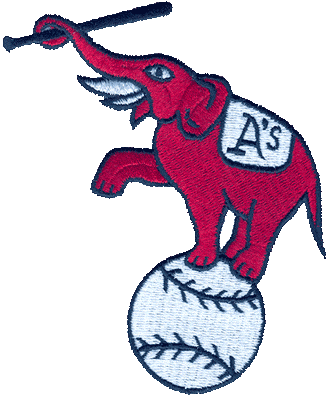

Oakland Athletics
The team name of Athletics has been in existence since the start of the American League.  In fact, the old National League had a Philadelphia Athletics team (not connected to the Philadelphia Athletics team formed with the American League in 1901) as far back as 1876.  The team name disappeared after that one season but another Philadelphia Athletics team played in the American Association from 1882-1890.  A separate Philadelphia Athletics team began play in the Players' League in 1890 and after one year that team moved to the American Association for one year.  The Philadelphia Athletics name disappeared until 1901 when the American League opened for business.  The team has kept the name Athletics since that time but they have moved quite a bit.  They stayed in Philadelphia until the 1954 season.  When it became more and more clear that cities could not support more than one team, the Athletics abandoned Philadelphia for Kansas City and played there from 1955-1967.  1968 was their first year in Oakland and they have been there ever since, although there are rumors of a move to San Jose in the near future.  One last note on the Athletics: ever wonder why their logo has an elephant?  When teams were forming for the American League they had to find players to fill out their rosters.  When John McGraw saw the Athletics' roster he said that Connie Mack had found himself a nice collection of white elephants (at the time a white elephant was a cheap trinket you would find at a flea market).  McGraw meant it as an insult but Mack turned it into a term of empowerment that lasts through today.


Seattle Mariners
In 1977 the league had the last expansion until 1993 and introduced two new teams:  Toronto Blue Jays and Seattle Mariners.  The original ownership team in Seattle included Danny Kaye.  The Mariners were not very successful and attendance at the doomed Kingdome was dismal.  By 1995 the team was on the verge of moving.  Tampa Bay was probably the leading candidate to receive the team but a funny thing happened on the way out of town.  The Mariners got good.  The team made their first playoff appearance because of a surprise Angels collapse in 1995 and they made the playoffs four times between 1995 and 2001.  For the foreseeable future the Mariners will remain in Seattle.


Texas Rangers
When the American League went through their first expansion in 1961 they did it at the same time that the Washington Senators moved to Minnesota to become the Twins.  In an almost snap decision, the AL decided to beat the NL to the punch and instead of planning for an extra year and doing things right they placed teams in Los Angeles and Washington before they had ownership groups in place.  The result was a new Washington Senators team replacing the one that had just moved to Minnesota.  While the Twins would develop into a World Series team by 1965 the new Washington Senators finished as high as 4th once in their first ten seasons (and that was after the league had gone to the two division format so it was really 4th out of 6 teams).  Even Gil Hodges, who would lead the miracle Mets to a World Series in 1969, couldn't get the team out any higher than 6th out of 10.  At the end of the 1971 season the nation's capital saw the last baseball team until the Nationals arrived from Montreal/San Juan in the early 2000's.  The Senators picked up and moved to Texas to become the Rangers.  Although they had a few second place finishes in the 1970's and early 1980's, the team really took off in the mid to late 1990's and have been fairly competitive ever since. 

TRIVIA QUESTION:
The American league first expanded in 1961 adding the Washington Senators to replace the version of the Senators moving to Minnesota and the California Angels.  Since that first expansion the league has added the Kansas City Royals, Seattle Pilots (check back next week to find out what happened to them), Toronto Blue Jays, Seattle Mariners and Tampa Bay Rays.  There are a total of four World Series wins among them.  Which American League expansion team was the first to win it all?

Answer to Last Week's Question:
In 1916 the Boston Red Sox faced the Brooklyn Robins in the World Series. In Game 1, former Giants star Rube Marquard faced off against the Red Sox ace Ernie Shore. Helped by 4 Brooklyn errors and three unearned runs, Shore and the Red Sox took a 1-0 series lead with a 6-5 win.  On Monday, October 9, 1916 the teams faced off for Game 2.  The Robins scored first in the top of the first.  The Sox tied it up in the bottom of the third.  There was no more scoring until the Red Sox pushed across the winning run in the bottom of the 14th inning.  Brooklyn's Sherry Smith pitched 13 1/3 innings allowing 2 runs.  Boston's pitcher did even better.  After allowing the run in the bottom of the first, Babe Ruth pitched 13 shutout innings for the win.

Sunday, November 24, 2013

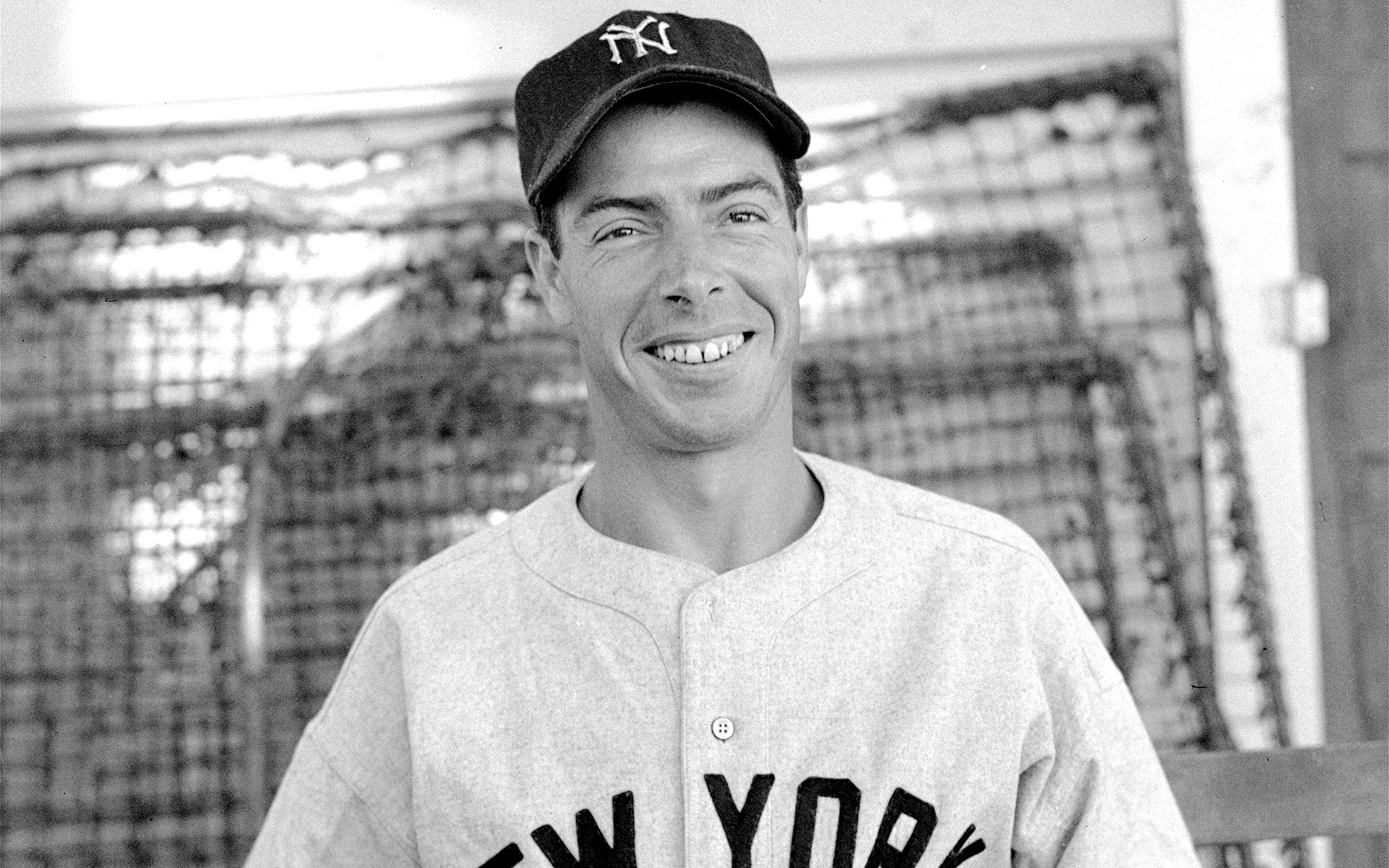
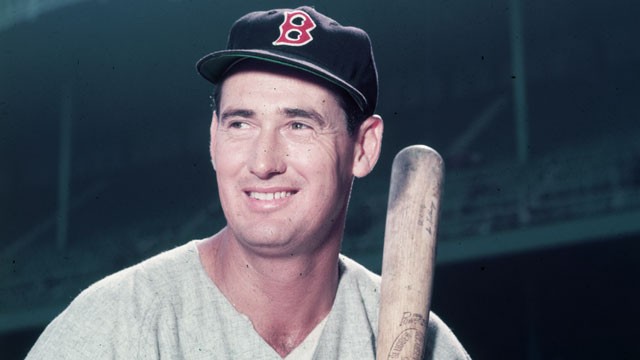
Rivalries: Williams vs. DiMaggio

Don't forget to check the first two articles in the Rialries series: Christy Mathewson vs Three Finger Brown and Ty Cobb vs Babe Ruth.

"I can't do it."  The voice was disappointed but still yearning for a positive result.  "I just can't.  The people here, the fans, would just kill me.  They think Ted's a better ball player.  Now, if you want to throw in that funny looking outfielder in the deal I might be able to sell this thing here in Boston."

The voice belonged to Tom Yawkey, owner of the Boston Red Sox.  Sitting on the other end of the phone, just as disappointed, was Larry MacPhail, General Manager of the New York Yankees.  The trade, discussed in the late spring of 1947 but never completed, could have changed baseball history up to the current time. 

What had been proposed was this:  the Red Sox would send Ted Williams, the greatest hitter who ever lived, the most identifiable person to wear Red Sox across his chest, to the New York Yankees.  In return the Red Sox would receive two players:  Joltin' Joe, the Yankees captain, and the funny looking outfielder who would go on to become a multiple MVP winner and one of the greatest Catchers in history, named Lawrence Peter "Yogi" Berra.

The trade, which might have brought a World Series to Boston decades before the 2004 "Reverse the Curse" team, was never made.  DiMaggio would continue to patrol the Yankee Stadium center field until 1951. Williams would continue to destroy AL pitching in Fenway for much longer.  The proposed trade, which was discussed (in varying states of inebriation, depending on the version you read) was just one of the many moments that intertwined the two legends in a decades long rivalry.


Joe DiMaggio, an immigrant's son known to his teammates and opponents as "the Dago", came to the major leagues in 1936 with the acclaim of having hit in 61 straight games while playing for the San Francisco Seals.  He arrived in Yankees camp and was issued uniform #9.  Wearing Joe's future #5 was Frankie Crosetti.  (Crosetti would move to #1 for 1937 giving Joe his famous #5).  DiMaggio first played for the San Francisco Seals at the end of the 1932 season.  He had 2 hits in 9 at bats (a double and a triple).  In the next three seasons in the minors Joe played in 460 games, had 657 hits and a .351 average.  The stats were enough to have every team asking for him.  That is until the knee injury and all of a sudden the Yankees were "taking a chance" on Joe.


Ted Williams grew up in San Diego but anyone who claimed he was a privileged white kid didn't know Teddy.  When the Red Sox scout came to his house Ted refused to stand up to shake his hand.  It had nothing to do with lack of manners or social skills.  It had to do with the fact that his parents didn't have enough money to replace the furniture so he was terrified the scout might see the hole in the upholstery of the chair Ted was sitting in. 

The rivalry had so many facets.  Both were poor kids from California.  Both had the fast track to the majors with high expectations.  It was Northern California vs. Southern California.  Yankees vs. Red Sox.  Team captain vs. team captain.  The classy Joe DiMaggio vs the working class Williams. 

The player rivalry lacked one thing:  an actual player rivalry.  "So much was made of my rivalry with Ted and yet I never felt it was there.  There was rivalry with the Red Sox and frankly that was what it was about." That was DiMaggio's view.

If winning was what it was about then, hands down, DiMaggio won the rivalry.  Williams and the Red Sox reached the World Series in 1946 and pushed the Cardinals to a seventh game but ultimately lost.  Williams hit .200.  The Red Sox reached a one game playoff to decide the American League in 1948.  Williams went 1-4 and scored a run but the Indians came out on top.  That was the extent of Ted's post season experience.

Joe played in the post season ten times.  In Joe's first post season, 1936, he had nine hits. That's three more postseason hits than Ted would have in his career.  In total Joe would play in 10 World Series and win 9.  By the time Ted started his rookie year Joe already had two more World Series titles than Ted would have at the end of his 19 year career.

Still, although Joe and Ted may not have had a rivalry like Cobb and Ruth or like Munson and Fisk (check back in a few weeks) situations often create rivalries that the players unwittingly participate in.  The Red Sox had not been good since, well, since the sale of Ruth, Mays, and most of the Red Sox to the Yankees. Now the transplanted Red Sox were gone. The owners of that Red Sox group was gone and a new attitude in Boston felt they could compete with the big bad Yankees.  And they did.

Year after year, as DiMaggio and Williams fought each other for the batting title the Yankees and Red Sox fought each other to reach the World Series.  Seemingly every year Williams would win the batting title (he won six, including two triple crowns) and DiMaggio's Yankees would win the American League.  In 1946 the Red Sox won the AL by 12 games over the second place Tigers and the Yankees were 22 behind.  In 1947 the Yankees beat the Tigers by 12 and the Red Sox were 16 behind.  In 1948 the Red Sox tied for first with the Indians but the Yankees had their revenge. 

With the 1948 pennant on the line in the last day of the regular season  (and the Yankees out of the running) Joe McCarthy was concerned that DiMaggio would effect the Red Sox chances.  He tried to anticipate DiMaggio, sitting on the bench because of an injury, pinch hitting.  Three separate times in the final game McCarthy had his pitching ace up and throwing in the bull pen, ready for Joe.  DiMaggio stayed on the bench.  The problem was that because he had thrown so many warm up pitches in anticipation of an at bat that never happened, Boston's ace was not available for the playoff game against the Indians.  Instead, McCarthy played a hunch and used Denny Galehouse in the playoff game.  The Indians won.

1949 was the height of the rivalry.  The teams entered the final two games, head to head with the Red Sox needing to take one of two to clinch the AL Pennant.  They led in the first game until Birdie Tebbetts, the Red Sox Catcher, told Yogi (remember that funny looking outfielder) he was looking forward to sipping champagne in a few hours and taking tomorrow off.  Yogi went back to the bench and told the Yankees what he heard and the Yankees went to work.  They won that first game of the series, forcing a final day show down of the two teams.  The Yankees won that final game and moved to the World Series.


If the personal rivalry was not the focus of the two players and winning was the ultimate goal, the numbers of the two legends tell the story of their careers.  DiMaggio went 3-8 with a double and a triple in that final 1949 series.  Williams, however, went 1-5.

Unlike the other rivalries we have reviewed in Ruth and Cobb or the ones you will see in the future of this series this was a mostly press driven rivalry but it continued well after they both had retired.  Williams was known as the greatest hitter who ever lived.  DiMaggio insisted on always being called "the greatest living ballplayer".  The press and fan driven rivalry lasted even after their deaths.  In 2012 the United States Postal Service released a series of stamps known as "All Stars Forever".  Included in the series were Larry Doby, Willie Stargell, Joe and Ted.  The post office tracked orders of each stamp to see which was more popular and decades after each had retired the rivalry was back on.
TRIVIA QUESTION:
In Joe DiMaggio's final World Series appearance of 1951 who was playing Right Field for the Yankees in Games 1 and 2?

Answer to Last Week's Trivia Question:
Claire Merritt was born in Athens, Georgia, not far from the hometown of Ty Cobb.  Cobb and Merritt met and dated seriously as Cobb was on his way up to the Major Leagues.  The seriousness of the relationship varies based on who is telling the story.  It has been described simply as a friendship all the way up to near engagement.  Many years later Claire Merritt (now known as Claire Hodgson.  Her husband Frank Hodgson had died.) was introduced to Babe Ruth.  On April 17, 1929 Claire Merritt Hodgson became Claire Merritt Hodgson Ruth.

Sunday, October 28, 2012

Greatest World Series Moments: Greatest Game Part 1

The Reds were ahead in the 1975 World Series three games to two.  Fenway Park was oddly quiet.  Even with a three run lead in the top of the fifth and one out the fans in Boston seemed to be waiting for something bad to happen.  At the half way mark there was little about this game that would lead anyone to think this was a classic.   

Ed Armbrister pinch hit for pitcher Jack Billingham, already the Reds third pitcher of the game, and walked.  Pete Rose followed with a single and suddenly, with Ken Griffey, Joe Morgan, Johnny Bench and Tony Perez due up next, the Fens buzzed with anxiety.

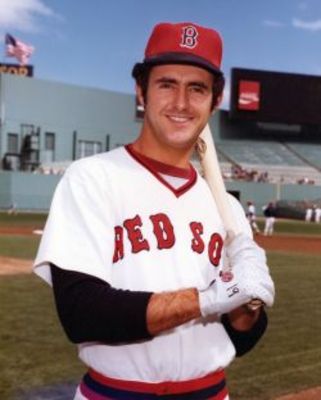
Fred Lynn was on the move with the crack of the bat.  He had already put the Red Sox ahead 3-0 with a first inning 3 run home run and now he had a chance to break the Reds' back with another sensational catch.  This was a rookie but you couldn't tell from his performance in the biggest week of the baseball season.  He tracked the ball towards left-center field, that big green wall.  It wasn't headed to the monster, it was that little angle where the odd dimensions of Fenway converge.  Fred Lynn had only played in this park for a year but he had learned to trust his abilities and trust the other outfielders.

(Fred Lynn had an amazing rookie year in 1975.  He became the first player to earn Rookie of the Year and MVP honors in the same year.  Not until Mike Trout, for the 2012 Angels, would another rookie have the impact that Lynn had for the 1975 Red Sox)

Griffey had driven the ball hard but Lynn knew that he had it.  Even if he didn't reach this ball Dwight Evans and Yaz would be there to play the ball off the wall.  He had the ball timed perfectly.  He took two strides onto the warning track and jumped toward the wall.  It was an amazing effort to reach the ball in the first place but this was what Freddie had done since he came up from the minors.  He stuck out his right foot to brace himself against the wall.  It was his first mistake all year.  The metal cleats hit the concrete wall.  No traction.  Moving at full speed the foot slipped straight down and his momentum twisted his body.  Suddenly, the back that had carried the Red Sox to one of the most improbable championship runs smashed against the concrete wall and Fred Lynn crumpled to the warning track motionless.  Fenway went silent, like a funeral. 


(Ed Armbrister was involved in a controversial play in game 3 that led to a Reds win.  He pinch hit in Game 6 and earned a walk, scoring on Ken Griffey's triple)

The ball shot off the wall and Dwight Evans was there to field it and fire it back into the infield but not before Armbrister and Rose had scored and Griffey stood on third with a triple.  New England held their collective breath as Yastrzemski, Evans, manager Darrell Johnson and the team trainer stood over a body.  It was a bad sign when Yaz had to help Lynn straighten out his legs which had staid in that position since he had hit the wall.

Eventually Lynn was helped up.  He rolled his head around a few times, did a few bends and nodded to the trainer that he was OK.  He got a quiet, reserved standing ovation from the Boston fans, but the moment had come.  This was the beginning of the end, Sox fans were sure.  Just like every other disappointing year since 1918. 

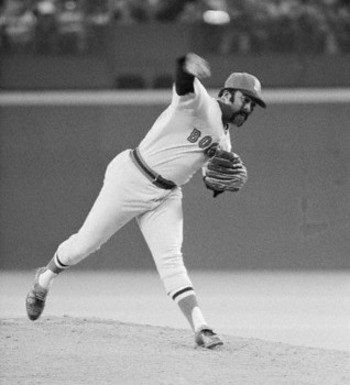
The Reds were able to tie the score in that inning but that was it.  The Sox weren't losing, but still, there was a sense of doom hanging over Boston as the city waited for the other shoe to drop.  It came in the top of the 7th.  Luis Tiant was the heartwarming story of the series.  His career had been resurrected in Boston after some tough years in Cleveland and Minnesota.  He now had a chance to become the first pitcher to win three games in one World Series since Denny McLain for the Tigers in 1968 and had a chance to do it in front of his parents.  After leaving Cuba to become a Major League pitcher over ten years ago, he had not seen his parents, who still lived in Cuba.  That was until a deal was made with Castro to allow the senior Tiants to visit the US to see their son perform in the World Series.  He had not disappointed but the tired arm could hold out only so long. 

He had breezed through the first 4 innings.  Gave up three in the fifth after Lynn's crashing attempt but had settled down in the 6th.  The Reds batters didn't like his pace.  It was too quick.  So they started to slow the game down themselves.  Calling time late.  Stepping out of the box late.  Taking time in between pitches.  Making Tiant work.  He gave up two runs in the 7th but got out of further trouble then gave up a lead off home run to Cesar Geronimo to start the 8th.


(Luis Tiant used a deceptive pitching motion to keep batters off balance.  Leading up to the series the Reds argued through the press that Tiant's motion was a balk.  In Game 1 he was called for a balk.  Tiant nearly became the first pitcher since 1968 to win three World Series games.)

Suddenly the Sox were three runs down, their pitching star demoralized and only six outs left to save their season.  The conversation went from Tiant being able to win three games in one world series and turned instead to Rawly Eastwick of the Reds having a chance to win three games in one series.  As the game moved to the bottom of the 8th it seemed like little more than a wake for the World Series hopes of the 1975 home town heroes.

Lynn started the 8th with a single to leftfield and Rico Petrocelli worked a walk.  Runners on 1st and 2nd.  0 out.  Any momentum that was being built was quickly quieted as Evans struck out swinging and Rick Burleson flew out to leftfield.  That brought up the pitchers spot.  Darrell  Johnson went to his bench for a pinch hitter.  Bernie Carbo walked to the plate.  He had hit a pinch hit home run in Game 2 and Johnson hoped he might be able to do it again.

Eastwick's 2-2 pitch was low and inside.  Carbo couldn't decide what to do: take it or swing.  Too close to take and now too late to get a good swing.  The ball was nearly in Bench's glove when Carbo finally decided he better do something, so he awkwardly dropped the bat head in the direction of the pitch and fouled the ball off.  Tom Adelman, in his great book The Long Ball:  The Summer of '75- Spaceman, Catfish, Charlie Hustle and Greatest World Series Ever Played (honestly one of the greatest books I have ever read), would call this the ugliest swing in the history of baseball, and it is hard to argue.    Red Sox fans had essentially thrown in the towel.  The next 2-2 pitch came in and Carbo swung again.

Dick Stockton had called every Red Sox game that year and watched the ball off the bat.  "Deep centerfield!  Way back, way back!  We're tied up!"

Fenway erupted as the wake ended and the crowd awoke.  Carbo clapped his hands as he rounded second, knowing he would be a Red Sox legend for life.

(Bernie Carbo was originally drafted by the Reds.  When Reds manager Sparky Anderson cut him several years later Carbo was bitter.  Carbo hit two pinch hit home runs in the 1975 World Series tying Chuck Essegian (1959 Dodgers) for most pinch hit home runs in one series)
A game six in any playoff series is a bizarre animal.  One team has to be ahead three games to two.  One team has a chance to gain a series win.  One team has to fight with everything they have to avoid having their season end.  This game six had now gone from a good game to a desperate struggle and each team had three outs left to decide if this was the end or if they would play tomorrow for all the glory.

It would be hard to say that the Big Red Machine could ever be desperate with a future hall of fame manager, three future hall of fame players (two or three others that should be in the hall of fame and one more who would be in the hall of fame if not for his own poor life choices).  This team would not give up and the big bats would be coming up.  Morgan, Bench, Perez.  If anyone would scare the Red Sox relievers, these guys would.  If anyone was scared on the Red Sox they didn't show it.  Morgan, Bench and Perez went down quickly raising the pressure on the Red Sox.

(The 1975 Big Red Machine lineup: Catcher Johnny Bench (5), First Baseman Tony Perez (14), Second Baseman Joe Morgan (5), Shortstop Dave Concepcion (13), Third Baseman Pete Rose (14), Outfielder Ken Griffey (30), Outfielder Cesar Geronimo (20) and Outfielder George Foster (15).  The team won the World Series in 1975 and 1976.)
Score one run and the game is over, the series moves to tomorrow.  Fail to score and the momentum switches right back to the Reds.  The bottom of the ninth had a promising start.  Denny Doyle drew a walk.  Yaz, the legend in the flesh, shot a single to right field, sending Doyle to third.  1st and 3rd.  0 out.

Baseball fans immediately recognize the situation.  Bottom 9th.  Tie Game.  Runner on third. Less than 2 outs.  A fly ball wins the game.  The Reds had few choices with Fisk, Lynn and Petrocelli due up next.  Sparky Anderson paced the dugout trying to decide what to do.  He finally held out his hand with four fingers extended and Fisk was walked to load the bases.  Facing Lynn was certainly no less dangerous than facing Fisk but at least it set up a force play at any base that might save the day.

Lynn just needed a fly ball to get the run in from third.  He got it, but as soon as it was hit he could tell it wasn't deep enough.  Foster ran to the foul line and lined up the catch.  Fenway's odd dimensions came into play again.  The foul line along leftfield runs very close to the wall and gives a right handed outfielder throwing home a hard time to get good arm extension on a throw. 

Before the pitch Don Zimmer, coaching third base, had yelled in Doyle's ear:  "Anything in the air you tag up immediately.  Wait for me to tell you if you're going."  Doyle stood on third watching Foster come in to make the catch.  Zimmer knew right away it wasn't deep enough so he was surprised when he turned and saw Doyle heading toward home.

"NO, NO, NO!" Zimmer yelled to Doyle.  Doyle later said he heard Zimmer yelling "Go, Go, Go!"

Foster made the catch at the wall, took one step back and fired a perfect strike to Bench at home.  Doyle's out, double play and the momentum back to the Reds.  Petrocelli grounded out to end the inning and the stadium fell silent again.  This game was getting better as it went along.  Pinch hit home runs, plays at the plate, extra innings.  If the fans there only knew what they were about to see they would have laughed at how excited they were getting over these small things.

(Denny Doyle took off from third on George Foster's catch in the bottom of the ninth.  Bench waited with the tag.)


The game moved to the 10th.  The Reds got a one out single and a steal of second by Dave Concepcion but they stranded him there. Momentum to Red Sox.  Boston sent Evans, Burleson and Carbo to the plate.  They went down in order.  Momentum back to Reds. 

Rose was hit by a pitch to start the 11th.  Or was he?  The pitch was inside and Rose spun  around but there was no clear contact with any part of his body or his uniform.  Never one to argue with a free base, Rose tossed his bat and sprinted down to first.  Who knows what it hit but the umpires gave Rose first. Griffey tried to sacrifice Rose to second.  The bunt was in front of the plate and slightly down the third base line.  Fisk moved quickly, made eye contact with Burleson, grabbed the ball and fired down to second.  Burleson stepped on second and forced Rose.  It wasn't a double play but it was an amazing reaction nonetheless.  With Griffey on first, Joe Morgan stepped up.  Joe Morgan, little Joe as his teammates knew him, was the engine that powered the Big Red Machine. Anytime something happened, he was driving the momentum for the Reds.  Morgan drove a 1-1 pitch to right field.  This was it.  The moment that would turn the game and put the Reds up. 


                                                    Photo Courtesy of Bleacher Report
 (Joe Morgan was the leader of the Big Red Machine. He was a 10 time All Star, 2 time MVP (1975 and 1976) and was inducted into the Hall of Fame in 1990.  After his playing career, Morgan became a highly successful analyst for ESPN)


Griffey moved on contact.  It wasn't what the fundamentals said but it was clear that this was over the head of Dwight Evans.  At worst extra bases and a run scores.  At best a two run home run.  Evans had been playing in and broke back on contact.  He ran back.  Straight back.  Turned his back to the plate and just ran.  Kept running.  He knew it was hopeless.  He just ran.  The ball was over his head, headed to the freakishly short wall, a sure home run.  Evans made a desperate jump as he hit the warning track.  Not only was it over his head when he jumped, the ball was moving behind him.  He just threw his hands up and back.  The ball stuck in the glove. Evans landed, stumbled to the wall and braced himself awkwardly. It was one of the greatest catches ever made in a World Series game but Evans didn't have time to celebrate.  It was only out number 2. 

Griffey was past second by the time he realized the ball was caught.  He slammed on the brakes and came back around second.  Evans steadied himself, turned to the infield and heaved a throw towards first.  After having made one of the best catches in history, he now made one of the worst throws.  It was not only off line, Yaz had to come past the firstbase coach's box to field it.   Over 35,000 people in the stadium held their breath as Griffey came tearing back towards first.  There was no way they would catch him and Johnny Bench would walk to the plate.

Yaz heard someone yelling.  "First base, first base!"  It was Burleson.  The shortstop had sprinted across the diamond, racing Griffey back to the bag.  The Reds firstbase coach was screaming to Griffey to get back.  Griffey didn't know what was happening or where the ball was.  It was hard enough to believe Evans had reached the ball but to believe that the throw back to the bag was so far off line and then to look at first and see the shortstop standing there  It was chaos.  Yaz tossed to Burleson in plenty of time.  Double Play. Inning Over.

(Dwight Evans was one of three rookie outfielders to make a significant impact for the 1975 Red Sox.  Along with Lynn and Jim Rice, the Red Sox appeared to have a trio of Outfielders for decades to come.  Rice did not play in the 1975 Series because of a broken wrist.  Evans, seen here making one of the greatest catches in World Series history, followed the catch with one of the worst throws ever.)
It was one of those moments that make fans think their team is destined to win.  For this unbelievable play to happen Evans had to make an unbelievable catch.  To save the Red Sox from allowing Griffey to get back to the bag, Yastrzemski had to be aware that Fisk had not moved up to back up first base, that the pitcher had backed up third on the play and that he had to get off the bag to save the throw from going wild.  To allow for the double play Burleson, whose job was to cover second (Doyle would be the cut off man) had to realize as soon as the ball left Evans's hand, that the poor throw would leave firstbase uncovered.  Momentum back to the Red Sox. 

If ever momentum would give a team a kick in the rear this had to be it.  Rick Miller pinch hit for Dick Drago to start the bottom of the 11th.  Miller, Doyle and Yaz went down in order.  Momentum back to the Reds.  It was well into Sunday morning by this time.  Late night programming was being delayed but no one in the stadium could have cared less.  Back and forth.  This game seemed like it would never end.  This game had gone from constant runners on base and big hits to a pitchers duel with no warning.  The Reds fighting to not have to play later today and to celebrate tonight, or what was left of tonight.  The Red Sox punching back to get one more chance at the title.

The Reds put two runners on in the top of the 12th but couldn't move anyone along.  Momentum back to the Red Sox but momentum was getting tired.  Everyone was getting tired.  The Red Sox had Fisk, Lynn and Petrocelli due up this inning but at this time of night it didn't seem to matter.  It was late.  It was cold.  It was damp October weather and everyone was exhausted.

Pat Darcy warmed up on the mound and Bench could see his pitches were not sharp.  Fisk and Lynn tried to stay warm in the on deck circle, watching Darcy warm up.  Fisk used the weighted bat, swinging it one armed like a windmill.  Fisk turned again and watched Darcy.  He watched another flat fastball barely pop Bench's mit.  Fisk turned to Lynn, pounded the knob of the bat on the ground to dislodge the weight and said:  "I got a good feeling.  I'm going to drive one off the wall.  You drive me in, OK?"  Pudge wasn't joking.  Pudge never joked about baseball.  This was serious.  Lynn smiled.  Nodded his head.  Didn't say anything.  What can you say to a guy calling his shot?

Fisk stepped into the batters box.  He had a routine.  Used the right hand to lift the jersey off the left shoulder, it got rid of the constriction on the swing.  Arms up to shoulder height.  Jerk them back quickly with a severe motion to loosen the shoulder muscles.  One.  Two.  Hold the bat above the head, bend back, bend to the left bend to the right.  Adjust the jersey on the shoulders again so it doesn't constrict the swing.  Now you're ready.  First pitch was a ball.  Bench was concerned.  If Fisk had told Lynn he had a good feeling Bench would have told someone he did not.  Fisk stepped out and repeated the routine.  He stepped back in to the plate.

The 1-0 pitch came in belt high over the plate and he turned on it.  He drove it towards the wall, that big green monster of a wall in left.  Depending on the angle of where you sat it was fair, it was foul, it was off the wall, it was an out, it was a home run.  Fisk had the perfect view straight down the line.  So did Bench and the umpires.  It was high.  It was far.  Fair or Foul?

Fisk hopped down the line once.  Fair or foul? He waved his arms across his body towards first base, hoping, begging, pleading for the ball to stay fair.  Fair or foul? He hopped again, waved his arms toward first base again.  Desperate for anything that would help that ball get fair.  He hopped again, waved his arms.  Hopped again waved his arms.  Fair or Foul?  The ball bounced off the bright yellow pole above the green monster.  Fair ball!


(Carlton Fisk begs the ball to stay fair as he hops down the first base line.)
(Fisk celebrates as the ball hits the foul pole.  Fisk waving the ball fair is one of the greatest images of all time, sports or otherwise.  It is almost impossible to watch this play and not be excited.)

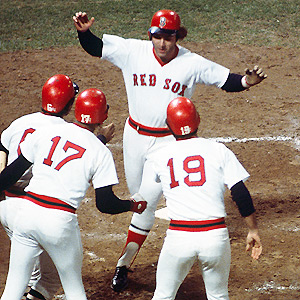
The stadium exploded.  It was bedlam.  Fisk went crazy.  Hopping each step of the way down to first base.   Fans poured onto the field.  Fisk had to fight his way through the  madness. Pushing people out of the way.  Fans patting him on the back, wanting to shake his hand.  He still had to reach home plate for the run to count.  He almost had to elbow two teens as he ran down the third base line.  The hallelujah chorus played on the stadium organ as Fisk landed on home plate.

Outside the stadium New England was full of crazed fans.  Church bells rang.  Bars emptied. People poured into the streets.  Children were woken up to experience the thrill that would never be experienced again.

This was only Game 6.  What would game 7 have in store?