Showing posts with label Rico Petrocelli. Show all posts

Saturday, January 3, 2015

I Didn't Know He Played For: Reading

To many people living outside of Pennsylvania, the city of Reading, Pennsylvania may only be known for being featured as part of the original Monopoly board game as the "Reading Railroad" location.  Since the decline of the railroad industry the city of Reading has become known more for the signature Pagoda that sits on top of Mount Penn or for the reality T.V. show couple Jon and Kate.

I grew up in the greater Reading area and I can tell you personally what a great city it is.  There is of course the pretzels.  There are great family diners (Arner's and Paolo's) and the summer festivals ( Mifflin Days but my favorite was always Apple Dumpling Festival).  I can't leave out the Farmer's Markets where you can go and get Shoo-Fly Pie for a great price.  Reading from top to bottom is a great area.

One of the greatest traditions of Reading that many overlook is the Reading baseball team.  Since 1967 the team has been associated with the Philadelphia Phillies, however, prior to that they were also associated with the Red Sox, Indians and Dodgers.  The history of the Reading minor league franchise dates back to 1883 when the Reading Actives played in the Interstate League.  Since then they have been known as the Coal Heavers, Pretzels, Coal Barons, Aces, Keystones, Red Sox, Brooks, Chicks, Indians, Phillies and (currently) Fightin' Phils.

Throughout the tradition some big names have come through the city and gone on to big time baseball fame.  Names like Roger Maris, Earl Averill, Herb Score, Mudcat Grant, Ryne Sandberg, Mike Schmidt, Jimmy Rollins, Ryan Howard and many other legends that everyone associates with the team's rich history.  Today's article will be the start of an ongoing series to point out some of the people you never knew or may have forgotten made their way through the organizations of baseball.  We start with the great area known as Reading, PA.:

Morrie Rath:


Morrie Rath made his major league debut for Connie Mack's Philadelphia Athletics in 1909.  Having attended Swarthmore College,just 11 miles outside Philadelphia, Connie Mack would have had the inside track on finding him.  Mack had a great scouting system (especially for local talent), spent money when needed (the cross town Phillies rarely did) and loved signing college bred players (most other managers over looked these players). Rath split the 1908 season between the East Carolina League and the Virginia League before moving on to Reading, PA for the 1909 season.  While there he would play in 114 games and end the year with a .315 average.  It was good enough for a call up to the big leagues with Mack's Athletics.  Rath was not an All Star calibre player but would spend six seasons in the big leagues.  After 2 years with the A's, Rath was sent to the Indians during the 1910 season.  He landed in Chicago with the White Sox for 1912 and 1913.  While there he would play with six playes who would later be a part of the infamous 1919 season.  This would  be a connection oddly overlooked conisidering his claim to fame came as a member of the 1919 Reds team.  When the eight (or seven if you take out Buck Weaver) Black Sox agreed to throw the World Series, the gamblers needed a sign that they were going to go through with the plan.  The decided sign to the gamblers was that Eddie Cicotte would hit the first batter.  That batter, who took a fast ball to the middle of his back, was Morrie Rath.  Rath would play just one more year in the major leagues.


Dixie Walker:
Ewart Gladstone Walker, better known as Dixie, was actually born in Brownsville, PA.  Brownsville is a small town in southwest Pennsylvania in Fayette County.  He made his major league debut in September of 1909 and played parts of four Major League seasons, all with the Senators.  As a team mate of the great Walter Johnson, Walker  finished his major league career with a 25-31 record and a 3.52 ERA (fairly high for the dead ball era). After his final days in Washington Walker bounced around the minors playing a part of one season with the Albany Senators who shifted midseason 1916 and joined the Reading Pretzels.  Walker played a total of 43 games that year going  25-18.  Walker's career may not have been tremendous but baseball was a family business.  His brother Ernie played three years (1913-1915) with the St.Louis Browns.  He also had two sons that made large impacts on the Major Leagues.  His son Harry "the Hat" Walker was a big part of the St.Louis Cardinals' dynasty during the 1940's and would go on to manage for nine years.  His other son adopted the father's nickname of Dixie and would have a long successful career.  He would be the only player to spend time on the field with both Babe Ruth and Jackie Robinson and he would be forever remembered as the player who led the petition against Jackie Robinson.

Steve O'Neill:

Steve O'Neill was born and raised in Minooka, PA, a small town just south of Scranton, in the heart of mining country. O'Neill would have a long Major League career spent mostly with the Indians.  As the Catcher for the Indians from 1911-1923 he became very close friends with Shortstop Ray Chapman and was one of the most devastated when Chapman was killed.  As his career was winding down O'Neill started to become a journeyman moving from city to city trying to keep the baseball career rolling.  O'Neill moved to the Red Sox for 1924.  O'Neill played for the Reading Keystones for 34 games in 1925 before being picked up by the Yankees to end the year.  He did not help greatly as the Keystones finished 4th that season.  O'Neill would go on to a very successful managerial career with the Indians, Tigers, Red Sox and Phillies.  His most successful managerial year was 1945 when he led  the Tigers to a World Series title.   O'Neill would also be a long time popular broadcaster for the Indians.

Everett Scott:

The minor leagues are sometimes a book end to a career. They can sometimes launch a player onto the national baseball stage and can sometimes be the cushion at the bottom when that career starts coming back to earth.  Everett Scott was a great player in the major leagues, mostly with the Red Sox and Yankees.  Scott played on the great Red Sox teams in the 1910's and was one of the many players shipped to the Yankees in the early 1920's which gave the Yankees their start of dominance.  Scott was good enough to play in 1307 consecutive games.  That would be a record until a guy named Lou Gehrig passed him.  Gehrig and Scott were actually team mates until mid 1925.  On June 17 of that year, just over two weeks after Gehrig started his streak, Scott was released by the Yankees and signed by the Washington Senators.  He would spend the 1926 season with the White Sox and Reds.  Trying to hang on Scott would play for Toledo in 1927.  He rounded out his career in 1928 and 1929 in Reading, who were at that time Chicago Cubs affiliates.  Reading would finish 6th in 1928.  Scott did fairly well hiting .316 with 156 hits in 131 games, including 39 doubles.  His numbers dropped dramatically in 1929, his final year in professional ball.  He hit only .287 with 54 hits (18 of them doubles). One reason for his lack of playing time in 1929 may have been the presence of Shortstop Billy Jurges, future star short stop for the Chicago Cubs.

Whitey Witt:
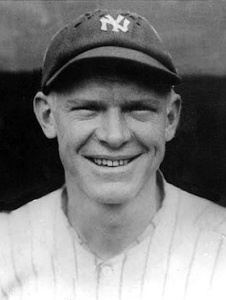
Whitey Witt had an interesting career. Of course he did! otherwise we wouldn't bother reviewing his brief stop in Reading here would we?  Witt started with the Philadelphia Athletics just as the Connie Mack dynasty in the early 1900s was being dismantled.  Instead of playing with the $100, 000 infield he played on one of the worst teams of all time.  From 1916-1921 Witt witnessed some of the worst baseball imaginable.  With this being an article about players in Reading you would think  his career would have started there.  It didn't.  Witt went right from the campus of Bowdoin College (the college where Civil War hero Joshua Lawrence Chamberlain was a professor) to Connie Mack Stadium.  Desperate for cash to keep the A's profitable, Mack sold one of his few stars to the Yankees before the 1922 season.  Witt joined a team that was just starting to become THE YANKEES.  It was a tough job.  He was joining an outfield with Bob Meusel and Babe Ruth and replacing popular power hitter Ping Bodie.  Witt would play a big part in that early Yankee success and was a key member of the Yankees first World Series team.  Midway through the 1925 season Witt was released.  His replacement would be Earle Combs, the next great Yankee Center Fielder.  Witt's career in the major leagues would end after the 1926 season with the Brooklyn Robins.  He would go on to play two years in the minors, the final one in 1929 with the Reading Keystones.  He would play in only 30 games but had 30 hits and batted .330.

Phil Cavarretta:

Cavarretta had a 22 year career with three All Star appearances and an MVP award.  He was the team leader for the Cubs for many years and was the star on the 1935, 1938 and 1945.  Cavaretta spent part of the 1934 season with Reading playing 85 games and hitting .308 with 4 Home Runs.  Cavarretta also spent three years as the Cubs Manager, never finishing higher than 5th.  He would continue to manage in the minor leagues until 1971 and had a one year managerial stint with the Lancaster Red Roses in 1960.

Joe Altobelli:

Joe Altobelli played parts of three seasons in the majors and had a mostly forgettable career.  He played 42 games for the 1955 Indians, 83 games for the 1957 Indians and 41 games for 1961 Twins. He spent much more time bouncing around the minor leagues, 18 seasons to be exact.  Two of those years were spent with the Reading Indians in the Eastern League.  Altobelli's mark on baseball was left more as a manager.  He managed the Giants for three seasons, never finishing higher than 4th.  In 1983 Altobelli took over for a retiring Earl Weaver in Baltimore and led the Orioles to their third (and so far last) World Series.


Rico Petrocelli:
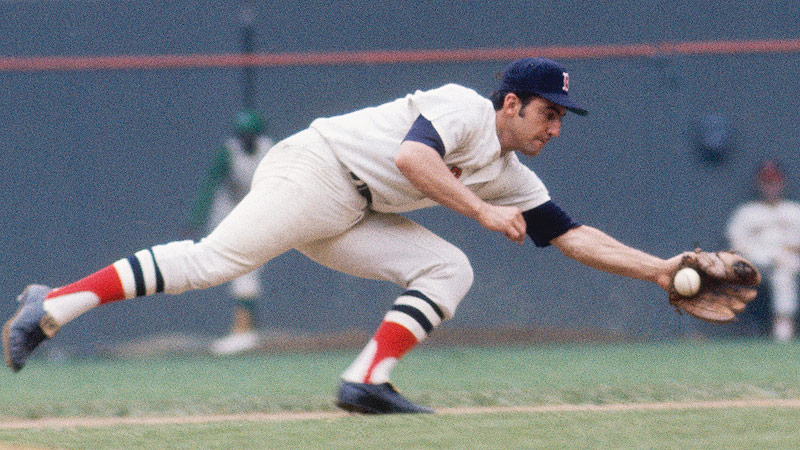
In the early to mid 1960's the Boston Red Sox had a strong farm system that started to produce quite a few talented players including Tony Conigliarro and Carl Yastrzemski.  Another important piece of that young group was the man known as "Petro".  Petrocelli was a product of Brooklyn, NY and started his minor league career in 1962 with the Winston-Salem Red Sox. After one year in Winston-Salem he was moved to the Red Sox AA team in Reading.  He spent the 1963 season with the Reading Red Sox and played 137 games.  He hit only .237 but showed good power with 19 Home Runs.  He would play the 1964 season in Seattle before being called up to Boston for good in 1965.  A two time All Star, Petrocelli helped lead two of the most famous Red Sox teams of all time: the 1967 "Impossible Dream" team and the 1975 Red Sox.


Ray Fosse;

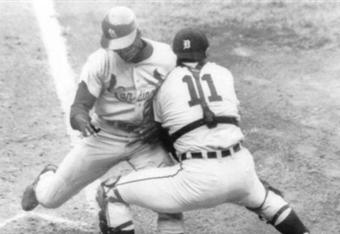
Ray Fosse's major league career started ramping up in 1967 with the Indians but took off in full flight in 1970.  In his first full season with Cleveland he was an All Star and a Gold Glove winner at Catcher.  Fosse would make the All Star team again in 1971 and would be injured in an infamous collision with Pete Rose at the end of that game.  He would go on to help the A's win back to back championships in 1973 and 1974 (he was not there for the first of the three straight World Series) and is still an announcer for the Oakland Athletics.  But before all that, in 1965, Fosse played 55 games for the Reading Indians.  He hit only .219 but his defense helped him move along in the minor league ranks.

Dallas Green:


Dallas Green grew up in Delaware, not far from Phillies territory.  In 8 Major League seasons with the Phillies, Senators and Mets, Green was 20-22 as a pitcher.  Similar to Joe Altobelli, Green's claim to fame came as a manager.  Under Green's leadership the Philadelphia Phillies won their first ever World Series in 1980.  Green would also manage the Yankees for one year and the Mets for several seasons.  Green spent ten seasons in the minor leagues working his way up to the majors.  His final stop as a player was in Reading in 1967. Green started 8 games for the Reading Phillies that year and went 6-2 with a 1.88 ERA.

Stump Merrill:

Stump Merrill was a career minor leaguer. He did spend six seasons in the Phillies organization bouncing around their minor league ranks from 1966-1971. He made two stops in Reading.  The first was in 1968 where he played 42 games and hit .189.  He was then sent to the Phillies' San Diego affiliate (one year before the birth of the Padres) to finish the season.  Merrill then was sent back to Reading for the 1969 season. He played in 80  games that year and hit .252. He never reached the majors.  So who the hell is he?  Stump Merrill went from a minor league player to a minor league manager and spent a large amount of time in the Yankees minor league system.  At the end of the 1989 season Bucky Dent replaced Dallas Green as Yankees manager.  Near the end of the 1990 season, with the Yankees struggling again, Stump Merrill was named manager of the New York Yankees.  Merrill would manage the end of 1990 and all of 1991.  At the end of the year Merrill was replaced by Buck Showalter as Yankes manager.

Andre Thornton:
Andre Thornton was a highly under rated player in the 1970s and 1980s. Thornton spent most of his 14 year career with the Indians, not the best place to play in the 1980s.  He also spent time with the Cubs and Expos.  In 1565 career games Thornton made two All Star Games, won a Silver Slugger award and three times received MVP votes but he never played in a post season game.  Thornton played 116 games with the 1971 Phillies where he hit only .267 but he hit 26 Home Runs.  So if he was in the Phllies organization why did he end up with the Cubs?  On June 15, 1972 Thornton and Joe Hoerner were traded to the Atlanta Braves.  The Braves then traded Thornton to the Cubs in exchange for Joe Pepitone.  Midway through the 1976 season he was shipped to Montreal who then sent him to Cleveland in the offseason of 1976-77.  Thornton would play 10 years in Cleveland and would make a major impact on their organization.

Mike LaValiiere:

Fans of the Pittsburgh Pirates know Mike LaValliere better as "Spanky", the gritty Catcher for the Bucs during their stretch of success in from 1990-1992.  Spanky got his start in the Phillies organization in 1981 and he steadily moved his way up the organizational chart.  By 1983 he landed in Reading. He played in 83 games there the first year playing some at Third Base but also splitting time behind the plate with Darren Daulton.    When the Phillies signed Lance Parrish a few years later and decided on Daulton as their Catcher of the future, LaValliere was expendable and released. He signed with the Cardinals where he played during the 1985 and 1986 seasons.  Before the 1987 season the Pirates traded Andy Van Slyke, and Mike Dunne along with LaValliere to the Pirates for Catcher Tony Pena.  LaValliere would be a sometimes overlooked key in the Pirates' three straight division titles.  He worked with Don Slaught, the Pirates other Catcher, to direct the Pirate pitchers.  LaValliere moved on to the White Sox in 1993 where he gave veteran presence to a White Sox team who made the playoffs for the first time since 1993.

Gio Gonzalez:


Gio Gonzalez is currently a star pitcher for the Washington Nationals.  He landed in the nation's capital in 2012 and helped the Nationals to their first ever playoff appearance.  The Nationals obtained Gonzalez from the A's.  In fact, Gonzalez's path to stardom was one of constant movement.  Gio was drafted in 2004 by the White Sox.  On November 25, 2005, just after the White Sox had won the World Series, the Phillies sent Jim Thome to the White Sox for minor leaguer Daniel Haigwood, star outfielder Aaron Rowand and a player to be named later.  Gonzalez was the player to be named later.  He spent the 2006 season in Reading where he pitched 154 2/3 innings with a 7-12 record.  Among his teammates in Reading that year were Michael Bourne and J.A. Happ.  In December 2006 Gio was sent back to the White Sox along with Gavin Floyd for Pitcher Freddy Garcia.  Before he could make it to the Majors with Chicago he was traded to the Oakland Athletics and it was on to stardom from there.


TRIVIA QUESTION;
The Reading Franchise had a one year affiliation with the Brooklyn Dodgers.  During the 1941 season the team was known as the Reading Brooks.  How many players from that 1941 team went on to play in the Major Leagues?

Answer to Last Week's Questions:
Hank Greenberg first played in the Major Leagues in 1930 but since he made only one appearance and there was no All Star Game we will leave that out as a year in the trivia question.  In total Greenberg made four All Star Games (1937, 1938, 1939 and 1940).  Of course he lost all but 19 games of 1941, all of 1942, 1943, 1944 and a significant amount of 1945 to the war.

Greenberg often made reference that he felt he had been snubbed in no being chosen for All Star Games so here is who made the team in his place, starting with the first All Star Game in 1933 (excluding the years he was out of the league for the war:
1933- Lou Gehrig (NYY), Jimmie Foxx (PHA)
1934- Lou Gehrig (NYY) (no other first basemen were on the roster)
1935-  Lou Gehrig (NYY) (no other first basemen were on the roster)
1936-Lou Gehrig (NYY), Jimmie Foxx (PHA)
1946- Mickey Vernon (WAS), Rudy York (BOS)
1947- Johnny Mize (NYG), Stan Musial (STL)
(1947 was Greenberg's final year in the league spent with the Pirates)

Sunday, December 9, 2012

13 Players You May Not Know from the 1970's but Should

The 1970's were a decade of change and a decade of dynasties.  It was a decade that saw some of the great World Series' of all time. It saw many of the classic teams fall into the bottom of the league.  Some of them resurrected  themselves by decades end and other's wallowed in the basement.

 It was the first full decade to have a playoff round to reach the World Series and the first full decade to have divisional play. Whereas the 1980's seemed to give every team a chance to win, the 1970's saw the same teams in the playoffs every year.  .  The National League had the Phillies, Mets, Pirates, Reds or Dodgers in the playoffs every season.  The Phillies organization saw their most successful decade in their history as they reached the playoffs three years in a row but never reached the World Series.  The Reds and Pirates were easily the top teams in the league.  The Pirates made the playoffs in 1970, 1971, 1972, 1974, 1975 and 1979.  They won the World Series in 1971 and 1979.  The Reds reached the playoffs in 1970, 1972, 1973, 1975, 1976 and 1979.  They lost in the World Series in 1970 and 1972 and won it all in 1975 and 1976.


In the American League East the Orioles and Yankees dominated, winning the division in all but two seasons.  The AL West was dominated by the A's in the early  half of the decade and the Royals in the second half of the decade but similar to the Phillies, the Royals never made the World Series in the 1970's.

There were three truly great dynasties in the decade.  The first one was the Oakland A's of Reggie Jackson, Catfish Hunter, Vida Blue and Rollie Fingers.  They won three straight years (1972, 1973 and 1974) but they became quickly forgotten.  They beat the Reds and Mets in 7 games and then beat the Dodgers in 6. They were known as the "Mustache Brigade".  Their owner, Charles O. Finley, was constantly coming up with crazy ideas to bring people into the parks.  Some of them worked.  He proposed night World Series games.  That worked.  He proposed the Designated Hitter to improve offense. That worked.  He suggested using a bright orange ball to make it easier for the batters to see it and T.V. cameras to follow it.  That didn't work.  He created the name Catfish for Jim Hunter and told the press a fake back story to explain the nickname. That worked. He paid his players bonuses to grow crazy mustaches (hence the mustache brigade) which led to Rollie Fingers' signature look. That worked. Although they were a great team they were overshadowed by the Reds. 


The Big Red Machine started to rev up their engines in 1970 as they  reached the World Series for the first time since 1961.  They were swept out by the Orioles.  The machine kept chugging along and reached the World Series again in 1972 but lost to the Mustache Brigade.  The machine went through some renovations and part replacements and made it back to the World Series in 1975.  They won one of the greatest World Series ever in 1975 and then swept the Yankees in 1976.

1976 was just the opening of the Bronx Zoo.  1977 and 1978 were the main events.  The Yankees suffered through one of the worst stretches of their history between 1965 and 1976.  That all changed in 1976 as the Yankees reached the World Series.  They were swept out by the Reds but that just set up the crazy year of 1977.  As Son of Sam ran around New York, the Bronx burned and the world learned of the death of Bing Crosby, the Yankees tore themselves apart in the clubhouse (and sometimes in the dugout) and tore the competition apart on the field.  Reggie Jackson signed as a free agent in 1977 and immediately stirred up trouble with his teammates by telling a magazine writer that he would be "the straw that stirs the drink".  He fought with Munson, Nettles, Piniella, Mike Torrez, Mickey Rivers and Billy Martin.  Martin fought with everyone on the team and Steinbrenner.

After winning the 1977 World Series,1978 started off as a nightmare. Munson demanded to be traded, Jackson demanded to be traded and Martin demanded more control of the team. Martin got fired and was replaced with Bob Lemon who guided the Yankees to one of the greatest comebacks ever, tying the imploding Red Sox on the last day of the season leading to a one game playoff.  (Sox fans may want to skip to the next paragraph here.)  This led to one of the great games of all time and one of the great moments of the Yankees-Red Sox rivalry.  Trailing the Red Sox in the late innings a light hitting shortstop, forever known to Red Sox nation as Bucky F'ing Dent, hit just his 5th home run of the season.  The Yankees went on to beat the Royals for the third straight year in the ALCS and the Dodgers for the second straight year in the World Series.

There was a major advancement towards equality in the decade as well. After becoming one of the greatest players in the history of the game and one of the most respected players in the league, Frank Robinson became the first African American manager.  In 1975 Frank took over the Cleveland Indians.  It was a poor team.  It had a definite lack of talent.  The young players were not quite ready for prime time.  The older players, like Boog Powell, were well past their prime.  The uniforms were ugly.  The team's play was worse.  Frank made the best of it and was able to get future jobs.  He managed well into the 2000's as the last manager of the Montreal Expos and the first manager of the Washington Nationals.


The biggest change in the game came in 1975. When Charlie Finley failed to properly execute Catfish Hunter's contract ( he wasn't properly distributing Hunter's deferred payments). Hunter sued.  The court ruled that the contract was not being executed properly and that the contract was void.  Hunter was no longer under contract and was a free agent.  The first free agent ever.  Everyone bid on him but he took the offer from the Yankees.

The reserve clause had been in every player contract since 1901.  This clause said that the services of the player signing the contract would be reserved for the following year (continuously) by the team.  In short, you signed a contract for one year and you were with that team as long as they wanted you.  When they didn't want you, you were finished.  Marvin Miller knew that the players needed a way to break this clause.  When Dave McNally was traded from the Baltimore Orioles to the Montreal Expos he reported to the team but didn't sign a contract.  He had been promised certain things by the owners of the Expos but the team didn't deliver.  He refused to sign the contract.  At the end of the season he had played an entire season with no contract.  They couldn't retain his services if they didn't have his signature saying they had his services to begin with.  Mike Messersmith was asking the Dodgers for a raise but Peter O'Malley refused.  Messersmith continued playing for the Dodgers but he didn't have a contract.  At the end of the year Messersmith and McNally were free to sign with any team they wanted.  Free agency had dawned.


Although the names of Johnny Bench, Tony Perez, Joe Morgan, Reggie Jackson, Steve Garvey, Eddie Murray and Nolan Ryan will be the names that are remembered thirty, forty or fifty years from now (or more), every decade has tremendously talented, successful players who make wonderful contributions to the success of their teams, organizations and the league as a whole. Unfortunately many of the players who fall into this category will be forgotten, overlooked and generally ignored. Here are 13 players* from the decade you may not remember but you definitely should:


Catcher
Bill Freehan


Career Teams:  Detroit Tigers (1961-1976)
All Star Appearances:  1964, 1965, 1966, 1967, 1968, 1969, 1970, 1971, 1972, 1973 and 1975
MVP Voting:  1964 (7th), 1966 (16th), 1967 (3rd), 1968 (2nd), 1969 (26th) and 1972 (26th)
Carlton Fisk, Thurman Munson and Johnny Bench were the recognized dominating catchers of the 1970's (and Fisk well into the 1980's).  Bill Freehan was just as dominant.  He just did it quietly.  The Tigers had big name players like Willie Horton and Al Kaline who got the respect.  They had Mark Fidrych whose quirky personality got the headlines but Bill Freehan was the steadying influence.  Freehan's defense was the best in the decade.  He won five straight Gold Gloves and handled the Tiger pitchers with great expertise.  Freehan was not the offensive powerhouse that Johnny Bench was, but Freehan was a strong force in the Tigers' ferocious lineup.  The hall of fame is usually reserved for players considered to be "the top at their position".  It would be hard to argue that someone who made ten straight All Star appearances, eleven total and won five Gold Gloves is not the best at his position.

Firstbase
Chris Chambliss


Career Teams:  Cleveland Indians (1971-1974), New York Yankees (1974-1979), Atlanta Braves(1980-1986) and New York Yankees (1988)
All Star Appearances:  1976
MVP Voting:  1976 (5th), 1977 (29th) and 1982 (23rd).
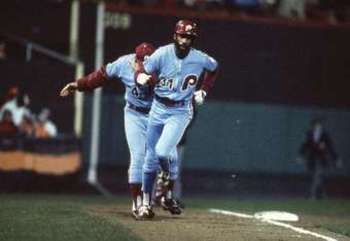
New York is a big city but even the big apple has a limit to the number of headlines that are available.  Competing with Reggie Jackson, Thurman Munson, Sparky Lyle and Billy Martin leaves little room for anyone else and Chambliss kind of liked it that way.  The big, quiet firstbaseman played on all the great Yankees teams of the 1970's.  He not only contributed, in 1976, hepersonally sent the Yankees to their first World Series since 1964.  The Yankees faced off against the Kansas City Royals in the Royals' first ever post season appearance.  The two teams fought into a deciding 5th game.  With the game tied at 6 in the bottom of the 9th, Chambliss stepped in against Mark Littel to lead off the inning.  Chambliss sent the first pitch into deep right field for a game winning, series ending home run.  Hal McRae leaned against the outfield wall, devastated.  Al Cowen had come over from Centerfield, in case the ball caromed off the wall.  When he saw McRae's reaction he stopped, stared at McRae in disbelief and just froze.  Chambliss started to run the bases and the entire city of New York poured onto the field.  If Chambliss didn't reach home plate the run didn't count.  Chambliss slapped away the hand of one person trying to high five him as he reached second.  As he turned second it seemed the entire stadium was right there.  He was tripped.  It looked like a running back getting tripped up just as he was ready to break a big run.  He fell as people mobbed him.  He forced his way up and elbowed his way towards third as people snatched at his batting helmet and tore at his jersey.  As he hit third base three policemen pulled the mass of humanity from him as he turned towards home.  Somehow he made his way home and the Yankees went on to get swept by the Reds.  Reggie Jackson went on to steal the show the next two years but Chambliss was a key part of the dynasty.

Secondbase
Willie Randolph


Career Teams: Pittsburgh Pirates (1975), New York Yankees (1976-1988), Los Angeles Dodgers (1989-1990), Oakland Athletics (1990), Milwaukee Brewers (1991) and New York Mets (1992)
All Star Appearances: 1976, 1977, 1980, 1981, 1987 and 1989
MVP Voting:  1978 (29th) and 1980  (15th)
As a rookie Willie Randolph wore black and gold and made his name as the guy who grounded to Joe Morgan, ending the Pirates' 1975 season. Two months later,the Yankees made one of their best trades of the 1970's or 1980's.  As the Yankees went to three World Series in the 1970's and one in the 1980's, Randolph was the defensive star.  Similar to Chris Chambliss, Randolph got lost in the big headlines but his defensive prowess was often eye popping.  A typical play saw Randolph sprinting toward the second base bag to catch a ball up the middle.  Unbelievably, the ball kicked off the front of second base, redirecting it in the exact opposite direction that Randolph was heading.  No problem.  Randolph followed the ball the whole way, grabbed it turned and threw to first to get the runner.  Somehow Randolph never won a Gold Glove.  Willie later became manager of the New York Mets and took them within one inning of the World Series.  After the Mets collapsed at the end of of the 2007 season and struggled in 2008, Randolph was fired in a particularly cruel fashion.  Rumors of his lack of future swirled as the Mets left for a long road trip to Anaheim.  The Mets won the first game of the series.  After the game the Mets GM flew out to Anaheim and met with Randolph letting him know he was fired.  Randolph was furious.  If they had already made up their mind why make him fly all the way across country just to send him back east right away?

Frank White


Career Teams: Kansas City Royals (1973-1990)
All Star Appearances:  1978, 1979, 1981, 1982 and 1986.
MVP Voting: None.
Kansas City is a tremendous baseball town, although the last 25 years have been difficult on the faithful fans.  The Royals arrived in Kansas City in 1969 replacing the transient Athletics franchise and struggled at first.  They started to create a strong team with players like George Brett, Al Cowens and Willie Wilson.  During the late 1970's and early 1980's the Royals dominated the Western division, the only time in their history that would stand out as a consistently competitive time and Frank White was there for the whole thing.  He was not an offensive powerhouse.  He never hit .300 in a season and had numerous sub .250 years but his defense was his great contribution.  White won 8 Gold Gloves, including 6 straight.  The Royals made the playoffs in 1976, 1977, 1978, 1980, 1981, 1984 and 1985.  Frank White is one of the few players to be able to boast that he played in every postseason game his organization has ever played.  The Royals have only retired two player numbers in their history: Gorge Brett and Frank White.

Shortstop
Bert Campaneris


Career Teams: Kansas City/Oakland Athletics (1964-1976), Texas Rangers (1977-1979), California Angels (1979-1981) and New York Yankees (1983)
All Star Appearances:  1968, 1972, 1973, 1974, 1975 and 1977
MVP Voting:  1965 (29th), 1966 (10th), 1968 (11th), 1970 (24th), 1972 (16th), 1973 (26th), 1974 (15th) and 1975 (20th)
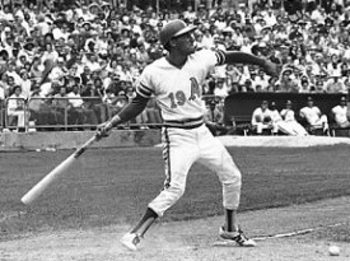
If stealing bases is an art form, Bert Campaneris was Michelangelo.  Campaneris led the American League in stolen bases six times, rarely stole less than 35 bases and stole a total of 649 bases in his career.  He was the motor guy in the A's forgotten dynasty.  Although Reggie Jackson, Catfish Hunter, Rollie Fingers and Joe Rudi are the remembered stars, they would not have won any of their three consecutive World Series without Campaneris.  Campaneris hit three big playoff home runs but none was bigger than the 11th inning, game ending home run in Game 3 of the 1973 ALCS against the Orioles.  The A's were often known to fight each other but they had one famous fight against another team.  In the 1972 ALCS against the Tigers Campaneris was hit in the ankle by a Lerrin LaGrow pitch.  Campaneris wanted to let LaGrow know that if the Tigers wanted to hit him, he would hit back.  He immediately threw his bat at LaGrow.  The benches cleared.  Tigers manager Billy Martin charged at Campaneris.  After several angry minutes the teams were separated and Campaneris was ejected, suspended the rest of the ALCS and the first few games of the next year.  He was allowed to participate in the World Series against the Reds and although he only hit .173 he went 2-4 with a run in the deciding game that the A's won 3-2.

Thirdbase
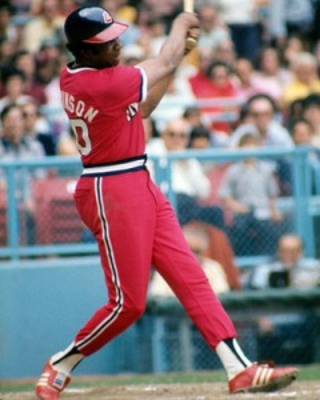
Rico Petrocelli


Career Teams:  Boston Red Sox (1963-1976).
All Star Appearances:  1967 and 1969
MVP Voting:  1967 (17th), 1969 (7th) and 1972 (18th)
The 1967 Sox team was known as the "impossible dream" team because they came out of nowhere to win the American League and lost the World Series in a full 7 game classic.  Petrocelli was part of a strong young core of players led by Carl Yastrzemski, Tony Conigliaro and Reggie Smith  who were supposed to keep the Red Sox competitive for the next decade.  Conigliaro suffered a horrible injury and Reggie Smith was traded away.  The young team did not live up to expectations but Petrocelli was a strong leader, along with Yaz, in the clubhouse.  In 1975 Yaz and Rico made one last push to win the first World Series in Boston since 1918.  In one of the greatest World Series of all time Rico had 8 hits and drove in 4 runs.  The Sox didn't win that series and Petrocelli retired at the end of the 1976 season.  The Red Sox could have used his calm demeanor in 1978 as the Red Sox fell apart and the Yankees made a dramatic comeback.  Rico Petrocelli currently hosts a radio show on MLB Radio network titled "Remember When". 

Outfield
Lyman Bostock


Career Teams: Minnesota Twins (1975-1977) and California Angels (1978)
All Star Appearances: None.
MVP Voting:  1977 (27th) and 1978 (23rd)
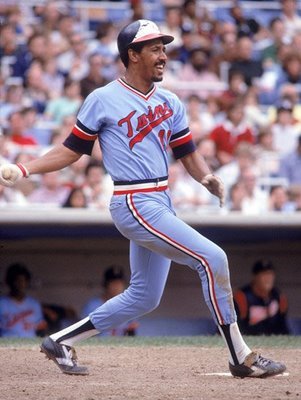
Lyman Bostock's career was tragically short. He made an immediate impact with the Minnesota Twins in 1975 and improved dramatically over the next two years.  He never made an All Star game and never played in a playoff game but he had a career .311 batting average.  At the end of the 1977 season Bostock was granted free agency and received offers from several teams.  He finally chose a large offer, $450,000, from Gene Autry's California Angels.  Autry was building a strong team and many felt that Bostock was the missing piece.  Bostock started the year terribly and the press and Anaheim fans started to show their disapproval at the overpaid star (not nearly as high priced but very similar to Albert Pujols's first year).  The happiest city on earth was a miserable experience for Bostock over the first few months.  Bostock struggled with the failure and felt he was letting down Autry. Bostock offered to return his big contract and play for free to compensate Autry for his poor play.  Autry refused saying "We wouldn't give him a raise if he had a good month so I'm not going to withhold his pay just because he had a bad one."  Bostock donated his entire first month's pay to a local church.  Bostock turned his season around.  He ended up hitting .296 and driving in 71 runs.  On September 23rd of that year Bostock's life ended tragically.  After the September 23rd game Bostock went to dinner with some family and friends.  As his car waited at a stoplight another car drove up next to them.  The man in the other car, the estranged husband of one of the passengers, aimed a shotgun at the vehicle and fired.  Bostock was shot and passed away before the night was over.  Baseball lost a great player and a great person.

Garry Maddox


Career Teams: San Francisco Giants (1972-1975) and Philadelphia Phillies (1975-1986).
All Star Teams:  None.
MVP Voting: 1973 (28th), 1976 (5th) and 1978 (21st)
The Phillies organization had few eras that could be considered successful in the 1900's.  When the Phillies reached the post-season in 1976 it was the first time since 1950 and only the third time in the history of the organization but they would make the playoffs 5 times in the next 7 years, including two World Series appearances.  Garry Maddox was one of the stars of that era and is still a legend in Philadelphia.  Phillies fans may hear more about Schmidt, Luzinski, Carlton and Tug but Maddox was just as important.  Maddox won 9 consecutive Gold Gloves and was known as the Secretary of Defense (long before Reggie White showed up in the city of brotherly love).  Maddox was known for playing shallow because he could cover so much ground.  Harry Kalas, the legendary Phillies broadcaster once said "two thirds of the earth are covered by water.  The other third is covered by Garry Maddox."

Rick Monday


Career teams: Kansas City/Oakland Athletics (1966-1971), Chicago Cubs (1972-1976) and Los Angeles Dodgers (1977-1984)
All Star Appearances:  1968 and 1978
MVP Voting:  1976 (18th).
The Kansas City Athletics, a truly terrible organization, held the first draft pick in the first ever Major League Baseball amateur draft.  They chose a kid from Santa Monica High School in California.  Being the first ever draft pick in the history of baseball is a lot of pressure to put on a kid and brings expectations that no human being can live up to.  Rick Monday did a decent job of living up to it.  He never became a superstar but he became someone who organizations loved to have on their team.  His numbers were not eye-popping and he was never a guy you feared when he walked to the plate but Rick Monday had a better than average career. He was a member of four playoff teams and won the World Series with the Dodgers in 1981.  Monday's most famous play had little to do with baseball.  In 1976 Monday was playing in the outfield for the Cubs.  As the Cubs trotted off the field to bat in the bottom of the 4th, two teenagers ran onto the field carrying something.  One of the teens dropped it on the field an began pouring lighter fluid on it.  The other teen came over with a set of matches.  Monday couldn't quite tell what it was but he had an idea.  As security and stadium police ran towards the trespassers Monday ran back towards the dugout by way of the teens.  As the teen with matches struggled to get it lit Monday swooped in, grabbed the American Flag and continued running into the dugout.  The teens were shocked that the flag was taken from them.  He may not have been a relief pitcher but it was a hell of a save.  Rick Monday is currently a play by play announcer for the Dodgers.

Pitcher
Steve Blass


Career Teams:  Pittsburgh Pirates (1964-1974)
All Star Appearances:  1972
MVP Voting:  1968 (22nd) and 1972 (18th)
Cy Young Voting:  1972 (2nd)
There's this weird thing that happens to some people in baseball.  It happened to Rick Ankiel.  It happened to Chuck Knoblauch.  It happened to Steve Sax and Dontrelle Willis and it happened to Steve Blass.  Some people call it "the yips".  Some people just call it "the thing".  A lot of people call it the Steve Blass disease.  No one knows how it starts.  Sometimes it gets fixed and sometimes it doesn't.  One day you're a major league baseball player and in the middle of a game you somehow, all of  sudden, can't throw the damn ball where you want it.  The most basic part of the game: throw and catch.  Yet you just can't throw the ball.  Blass started out his career with great potential and was on track to become one of he winningest pitchers of the decade.  He was a great talent and a World Series hero.  In the 1971 classic Blass won two games including the deciding Game 7.  His 1972 season was his best.  He won 19 games lost only 8 and had a 2.42 ERA.  He was well on his way to a great career when all of a sudden he wasn't.  He hadn't changed anything but for some reason he just couldn't find the plate.  He struggled.  He worked harder.  He struggled more and worked even harder.  He went to coaches, hall of fame pitchers, hitters, physical therapists, psychiatrists, psychologists and possibly even random people on the street.  His wins dropped from 19 to 3.  His ERA went from 2.49 to 9.85.  His strike outs went from 117 to 27.  His walks went from 84 in 249 2/3 innings to 84 in 88 2/3. His hit batters went from 4 to12.  Almost overnight his career was over.  Steve Blass could have become a miserable person at the sudden change but if you ever get a chance to hear Steve Blass as an announcer for the Pirates you'll hear a guy who is happy to watch another game of baseball (usually more so when the Pirates win).

Randy Jones


Career Teams: San Diego Padres (1973-1980) and New York Mets (1981-1982)
All Star Appearances:  1975 and 1976
MVP Voting:  1975 (10th) and 1976 (10th)
Cy Young Voting:  1975 (2nd) and 1976 (1st)
The Padres were a new team in the 1970's, their first year in the league was 1969, and they were a terrible team.  They developed some great talent in Dave Winfield and Ozzie Smith, two future Hall of Fame players, but they paved their way to the hall with other teams.  Randy Jones was not a Hall of Fame pitcher but he had a few years that were amazing.  He was nicknamed "junkman" because he was known for "throwing junk pitches" at batters.  No pitcher infuriated Pete Rose more than Jones.  Rose would scream at Jones to throw harder and Jones would laugh, then throw another slow curve.  His first full year was an amazing disaster as he lost 22 out his 30 decisions.  The fact that his team was terrible minimized the terrible record.  Randy Jones kept working hard and found a way to win.  He won a lot over the next two years and became the best pitcher in the National League.  He won 20 games in 1975 and led the league with a 2.24 ERA.  Winning 20 games in the majors is not an easy job.  Try doing it on a team that loses 91 games.  That's 22% of the team's entire wins.  If that wasn't good enough, he improved the next year winning 22 games for a team that lost 89 games (that's close to 25% of the team's wins).  His ERA stayed low (most years) as the decade moved on but sometimes it is just impossible to win with a bad team behind you.  The win totals dropped and the loss totals rose.  By 1982 Jones was out of the majors.

Relief Pitcher:
Sparky Lyle


Career Teams: Boston Red Sox (1967-1971), New York Yankees (1972-1978), Texas Rangers (1979-1980), Philadelphia Phillies (1980-1982) and Chicago White Sox (1982)
All Star Appearances: 1973, 1976 and 1977
MVP Voting:  1972 (3rd), 1974 (25th), 1975 (22nd) and 1976 (6th)
Cy Young Voting: 1972 (3rd) and 1977 (1st).
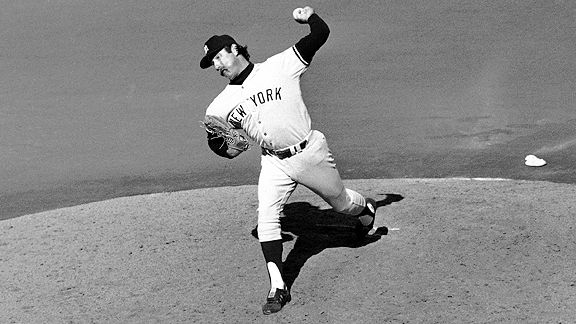
The Yankees of the late 1970's  were an interesting group.  From the craziness of Steinbrenner being suspended for illegally contributing money for Nixon's presidential campaign to feuds between Reggie Jackson and Thurman Munson, Reggie Jackson and Graig Nettles, Reggie Jackson and Catfish Hunter, Reggie Jackson and Billy Martin...well it would be easier to say everyone and Reggie Jackson.  It was a team full of characters and Sparky Lyle was a perfect example.  As the Yankees closer, Lyle won the Cy Young in 1977 as the Yankees won their first World Series since 1962.  As a Cy Young winner for a World Series champion you would think your job would be safe, yet in the winter of 1977 the Yankees picked up Goose Gossage, a star relief pitcher and future hall of fame member.  Lyle was furious. After winning an awarded as the best pitcher of the year, Lyle spent the spring fighting for his job.  Billy Martin, always thriving on chaos, tried to play Lyle against Gossage in the press but neither bought into the feud.  As the year went on Lyle's innings decreased and Gossage's increased.  Lyle documented every day of it and turned it into one of the best baseball books of all time.  He titled it "Bronx Zoo".  It was a perfect title.

Designated Hitter
Hal McRae


Career Teams:  Cincinnati Reds (1968-1972) and Kansas City Royals (1973-1987)
All Star Appearances:  1975, 1976 and 1982
MVP Voting:  1974 (30th), 1976 (4th), 1977 (24th), 1978 (31st) and 1982 (4th)
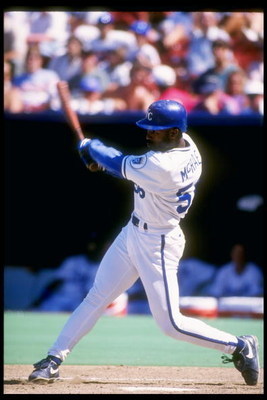
The Designated Hitter entered the American League in 1973, the same year Hal McRae came to the American League.  Managers weren't quite sure what to do with the new position and the players who were put in the position didn't exactly know how to approach the game.  Should managers use a top of the lineup guy who got on base and hit for average or use a power guy who could pound the ball out of the park?  Should they use an everyday player or a guy who normally pinch hits?  Was it best to have one guy in the position every day or rotate a different guy everyday?  McRae was the ideal DH and as the years went on he was used more regularly in the position.  McRae became one of the Royals all-time heroes and, along with Frank White and George Brett, was a huge reason the Royals dominated the AL West from 1975-1985.  Although not a Hall of Fame caliber player McRae helped define the position and define the Royals organization.  Similar to Dave Henderson in the 1980's, McRae had a huge smile that made you want to go out on the field and get a bat in your hands or run down a fly ball.

* Author's Note:  Just as in the last few weeks, and as may be seen in the next few weeks as we move through this series of articles, I did my best to keep this to one player per position, however, the farther we move from these eras, the easier it is to forget these types of players (and even some hall of fame players).  It is important to remember as we follow the sport that the superstars are not the only ones making contributions to the success of a team.  This is not a comprehensive list of players who fall into this category from this era, it is simply my choice of players who best represented their position and have become forgotten.  Your list is probably different.  Email me yours or leave a comment.