Showing posts with label Phil Cavarretta. Show all posts

Saturday, January 3, 2015

I Didn't Know He Played For: Reading

To many people living outside of Pennsylvania, the city of Reading, Pennsylvania may only be known for being featured as part of the original Monopoly board game as the "Reading Railroad" location.  Since the decline of the railroad industry the city of Reading has become known more for the signature Pagoda that sits on top of Mount Penn or for the reality T.V. show couple Jon and Kate.

I grew up in the greater Reading area and I can tell you personally what a great city it is.  There is of course the pretzels.  There are great family diners (Arner's and Paolo's) and the summer festivals ( Mifflin Days but my favorite was always Apple Dumpling Festival).  I can't leave out the Farmer's Markets where you can go and get Shoo-Fly Pie for a great price.  Reading from top to bottom is a great area.

One of the greatest traditions of Reading that many overlook is the Reading baseball team.  Since 1967 the team has been associated with the Philadelphia Phillies, however, prior to that they were also associated with the Red Sox, Indians and Dodgers.  The history of the Reading minor league franchise dates back to 1883 when the Reading Actives played in the Interstate League.  Since then they have been known as the Coal Heavers, Pretzels, Coal Barons, Aces, Keystones, Red Sox, Brooks, Chicks, Indians, Phillies and (currently) Fightin' Phils.

Throughout the tradition some big names have come through the city and gone on to big time baseball fame.  Names like Roger Maris, Earl Averill, Herb Score, Mudcat Grant, Ryne Sandberg, Mike Schmidt, Jimmy Rollins, Ryan Howard and many other legends that everyone associates with the team's rich history.  Today's article will be the start of an ongoing series to point out some of the people you never knew or may have forgotten made their way through the organizations of baseball.  We start with the great area known as Reading, PA.:

Morrie Rath:


Morrie Rath made his major league debut for Connie Mack's Philadelphia Athletics in 1909.  Having attended Swarthmore College,just 11 miles outside Philadelphia, Connie Mack would have had the inside track on finding him.  Mack had a great scouting system (especially for local talent), spent money when needed (the cross town Phillies rarely did) and loved signing college bred players (most other managers over looked these players). Rath split the 1908 season between the East Carolina League and the Virginia League before moving on to Reading, PA for the 1909 season.  While there he would play in 114 games and end the year with a .315 average.  It was good enough for a call up to the big leagues with Mack's Athletics.  Rath was not an All Star calibre player but would spend six seasons in the big leagues.  After 2 years with the A's, Rath was sent to the Indians during the 1910 season.  He landed in Chicago with the White Sox for 1912 and 1913.  While there he would play with six playes who would later be a part of the infamous 1919 season.  This would  be a connection oddly overlooked conisidering his claim to fame came as a member of the 1919 Reds team.  When the eight (or seven if you take out Buck Weaver) Black Sox agreed to throw the World Series, the gamblers needed a sign that they were going to go through with the plan.  The decided sign to the gamblers was that Eddie Cicotte would hit the first batter.  That batter, who took a fast ball to the middle of his back, was Morrie Rath.  Rath would play just one more year in the major leagues.


Dixie Walker:
Ewart Gladstone Walker, better known as Dixie, was actually born in Brownsville, PA.  Brownsville is a small town in southwest Pennsylvania in Fayette County.  He made his major league debut in September of 1909 and played parts of four Major League seasons, all with the Senators.  As a team mate of the great Walter Johnson, Walker  finished his major league career with a 25-31 record and a 3.52 ERA (fairly high for the dead ball era). After his final days in Washington Walker bounced around the minors playing a part of one season with the Albany Senators who shifted midseason 1916 and joined the Reading Pretzels.  Walker played a total of 43 games that year going  25-18.  Walker's career may not have been tremendous but baseball was a family business.  His brother Ernie played three years (1913-1915) with the St.Louis Browns.  He also had two sons that made large impacts on the Major Leagues.  His son Harry "the Hat" Walker was a big part of the St.Louis Cardinals' dynasty during the 1940's and would go on to manage for nine years.  His other son adopted the father's nickname of Dixie and would have a long successful career.  He would be the only player to spend time on the field with both Babe Ruth and Jackie Robinson and he would be forever remembered as the player who led the petition against Jackie Robinson.

Steve O'Neill:

Steve O'Neill was born and raised in Minooka, PA, a small town just south of Scranton, in the heart of mining country. O'Neill would have a long Major League career spent mostly with the Indians.  As the Catcher for the Indians from 1911-1923 he became very close friends with Shortstop Ray Chapman and was one of the most devastated when Chapman was killed.  As his career was winding down O'Neill started to become a journeyman moving from city to city trying to keep the baseball career rolling.  O'Neill moved to the Red Sox for 1924.  O'Neill played for the Reading Keystones for 34 games in 1925 before being picked up by the Yankees to end the year.  He did not help greatly as the Keystones finished 4th that season.  O'Neill would go on to a very successful managerial career with the Indians, Tigers, Red Sox and Phillies.  His most successful managerial year was 1945 when he led  the Tigers to a World Series title.   O'Neill would also be a long time popular broadcaster for the Indians.

Everett Scott:

The minor leagues are sometimes a book end to a career. They can sometimes launch a player onto the national baseball stage and can sometimes be the cushion at the bottom when that career starts coming back to earth.  Everett Scott was a great player in the major leagues, mostly with the Red Sox and Yankees.  Scott played on the great Red Sox teams in the 1910's and was one of the many players shipped to the Yankees in the early 1920's which gave the Yankees their start of dominance.  Scott was good enough to play in 1307 consecutive games.  That would be a record until a guy named Lou Gehrig passed him.  Gehrig and Scott were actually team mates until mid 1925.  On June 17 of that year, just over two weeks after Gehrig started his streak, Scott was released by the Yankees and signed by the Washington Senators.  He would spend the 1926 season with the White Sox and Reds.  Trying to hang on Scott would play for Toledo in 1927.  He rounded out his career in 1928 and 1929 in Reading, who were at that time Chicago Cubs affiliates.  Reading would finish 6th in 1928.  Scott did fairly well hiting .316 with 156 hits in 131 games, including 39 doubles.  His numbers dropped dramatically in 1929, his final year in professional ball.  He hit only .287 with 54 hits (18 of them doubles). One reason for his lack of playing time in 1929 may have been the presence of Shortstop Billy Jurges, future star short stop for the Chicago Cubs.

Whitey Witt:
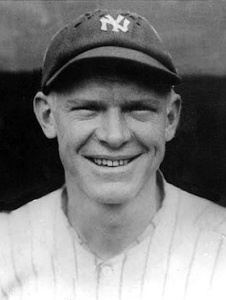
Whitey Witt had an interesting career. Of course he did! otherwise we wouldn't bother reviewing his brief stop in Reading here would we?  Witt started with the Philadelphia Athletics just as the Connie Mack dynasty in the early 1900s was being dismantled.  Instead of playing with the $100, 000 infield he played on one of the worst teams of all time.  From 1916-1921 Witt witnessed some of the worst baseball imaginable.  With this being an article about players in Reading you would think  his career would have started there.  It didn't.  Witt went right from the campus of Bowdoin College (the college where Civil War hero Joshua Lawrence Chamberlain was a professor) to Connie Mack Stadium.  Desperate for cash to keep the A's profitable, Mack sold one of his few stars to the Yankees before the 1922 season.  Witt joined a team that was just starting to become THE YANKEES.  It was a tough job.  He was joining an outfield with Bob Meusel and Babe Ruth and replacing popular power hitter Ping Bodie.  Witt would play a big part in that early Yankee success and was a key member of the Yankees first World Series team.  Midway through the 1925 season Witt was released.  His replacement would be Earle Combs, the next great Yankee Center Fielder.  Witt's career in the major leagues would end after the 1926 season with the Brooklyn Robins.  He would go on to play two years in the minors, the final one in 1929 with the Reading Keystones.  He would play in only 30 games but had 30 hits and batted .330.

Phil Cavarretta:

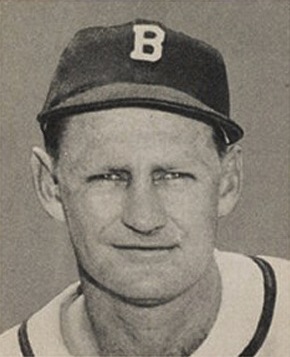
Cavarretta had a 22 year career with three All Star appearances and an MVP award.  He was the team leader for the Cubs for many years and was the star on the 1935, 1938 and 1945.  Cavaretta spent part of the 1934 season with Reading playing 85 games and hitting .308 with 4 Home Runs.  Cavarretta also spent three years as the Cubs Manager, never finishing higher than 5th.  He would continue to manage in the minor leagues until 1971 and had a one year managerial stint with the Lancaster Red Roses in 1960.

Joe Altobelli:

Joe Altobelli played parts of three seasons in the majors and had a mostly forgettable career.  He played 42 games for the 1955 Indians, 83 games for the 1957 Indians and 41 games for 1961 Twins. He spent much more time bouncing around the minor leagues, 18 seasons to be exact.  Two of those years were spent with the Reading Indians in the Eastern League.  Altobelli's mark on baseball was left more as a manager.  He managed the Giants for three seasons, never finishing higher than 4th.  In 1983 Altobelli took over for a retiring Earl Weaver in Baltimore and led the Orioles to their third (and so far last) World Series.


Rico Petrocelli:
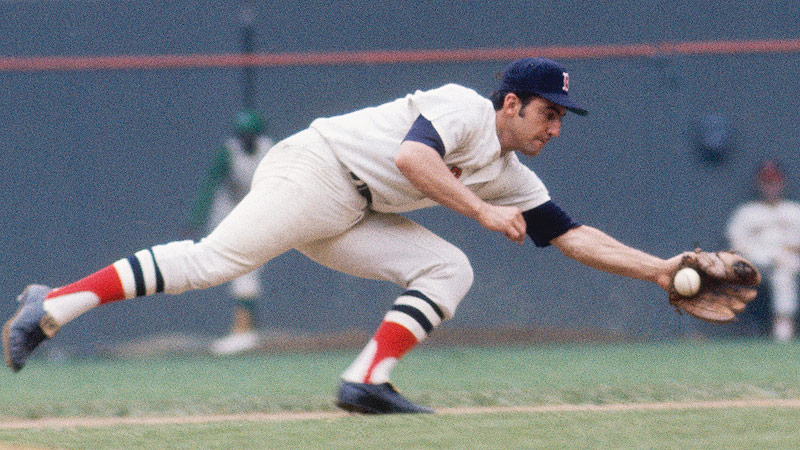
In the early to mid 1960's the Boston Red Sox had a strong farm system that started to produce quite a few talented players including Tony Conigliarro and Carl Yastrzemski.  Another important piece of that young group was the man known as "Petro".  Petrocelli was a product of Brooklyn, NY and started his minor league career in 1962 with the Winston-Salem Red Sox. After one year in Winston-Salem he was moved to the Red Sox AA team in Reading.  He spent the 1963 season with the Reading Red Sox and played 137 games.  He hit only .237 but showed good power with 19 Home Runs.  He would play the 1964 season in Seattle before being called up to Boston for good in 1965.  A two time All Star, Petrocelli helped lead two of the most famous Red Sox teams of all time: the 1967 "Impossible Dream" team and the 1975 Red Sox.


Ray Fosse;

Ray Fosse's major league career started ramping up in 1967 with the Indians but took off in full flight in 1970.  In his first full season with Cleveland he was an All Star and a Gold Glove winner at Catcher.  Fosse would make the All Star team again in 1971 and would be injured in an infamous collision with Pete Rose at the end of that game.  He would go on to help the A's win back to back championships in 1973 and 1974 (he was not there for the first of the three straight World Series) and is still an announcer for the Oakland Athletics.  But before all that, in 1965, Fosse played 55 games for the Reading Indians.  He hit only .219 but his defense helped him move along in the minor league ranks.

Dallas Green:


Dallas Green grew up in Delaware, not far from Phillies territory.  In 8 Major League seasons with the Phillies, Senators and Mets, Green was 20-22 as a pitcher.  Similar to Joe Altobelli, Green's claim to fame came as a manager.  Under Green's leadership the Philadelphia Phillies won their first ever World Series in 1980.  Green would also manage the Yankees for one year and the Mets for several seasons.  Green spent ten seasons in the minor leagues working his way up to the majors.  His final stop as a player was in Reading in 1967. Green started 8 games for the Reading Phillies that year and went 6-2 with a 1.88 ERA.

Stump Merrill:

Stump Merrill was a career minor leaguer. He did spend six seasons in the Phillies organization bouncing around their minor league ranks from 1966-1971. He made two stops in Reading.  The first was in 1968 where he played 42 games and hit .189.  He was then sent to the Phillies' San Diego affiliate (one year before the birth of the Padres) to finish the season.  Merrill then was sent back to Reading for the 1969 season. He played in 80  games that year and hit .252. He never reached the majors.  So who the hell is he?  Stump Merrill went from a minor league player to a minor league manager and spent a large amount of time in the Yankees minor league system.  At the end of the 1989 season Bucky Dent replaced Dallas Green as Yankees manager.  Near the end of the 1990 season, with the Yankees struggling again, Stump Merrill was named manager of the New York Yankees.  Merrill would manage the end of 1990 and all of 1991.  At the end of the year Merrill was replaced by Buck Showalter as Yankes manager.

Andre Thornton:
Andre Thornton was a highly under rated player in the 1970s and 1980s. Thornton spent most of his 14 year career with the Indians, not the best place to play in the 1980s.  He also spent time with the Cubs and Expos.  In 1565 career games Thornton made two All Star Games, won a Silver Slugger award and three times received MVP votes but he never played in a post season game.  Thornton played 116 games with the 1971 Phillies where he hit only .267 but he hit 26 Home Runs.  So if he was in the Phllies organization why did he end up with the Cubs?  On June 15, 1972 Thornton and Joe Hoerner were traded to the Atlanta Braves.  The Braves then traded Thornton to the Cubs in exchange for Joe Pepitone.  Midway through the 1976 season he was shipped to Montreal who then sent him to Cleveland in the offseason of 1976-77.  Thornton would play 10 years in Cleveland and would make a major impact on their organization.

Mike LaValiiere:

Fans of the Pittsburgh Pirates know Mike LaValliere better as "Spanky", the gritty Catcher for the Bucs during their stretch of success in from 1990-1992.  Spanky got his start in the Phillies organization in 1981 and he steadily moved his way up the organizational chart.  By 1983 he landed in Reading. He played in 83 games there the first year playing some at Third Base but also splitting time behind the plate with Darren Daulton.    When the Phillies signed Lance Parrish a few years later and decided on Daulton as their Catcher of the future, LaValliere was expendable and released. He signed with the Cardinals where he played during the 1985 and 1986 seasons.  Before the 1987 season the Pirates traded Andy Van Slyke, and Mike Dunne along with LaValliere to the Pirates for Catcher Tony Pena.  LaValliere would be a sometimes overlooked key in the Pirates' three straight division titles.  He worked with Don Slaught, the Pirates other Catcher, to direct the Pirate pitchers.  LaValliere moved on to the White Sox in 1993 where he gave veteran presence to a White Sox team who made the playoffs for the first time since 1993.

Gio Gonzalez:


Gio Gonzalez is currently a star pitcher for the Washington Nationals.  He landed in the nation's capital in 2012 and helped the Nationals to their first ever playoff appearance.  The Nationals obtained Gonzalez from the A's.  In fact, Gonzalez's path to stardom was one of constant movement.  Gio was drafted in 2004 by the White Sox.  On November 25, 2005, just after the White Sox had won the World Series, the Phillies sent Jim Thome to the White Sox for minor leaguer Daniel Haigwood, star outfielder Aaron Rowand and a player to be named later.  Gonzalez was the player to be named later.  He spent the 2006 season in Reading where he pitched 154 2/3 innings with a 7-12 record.  Among his teammates in Reading that year were Michael Bourne and J.A. Happ.  In December 2006 Gio was sent back to the White Sox along with Gavin Floyd for Pitcher Freddy Garcia.  Before he could make it to the Majors with Chicago he was traded to the Oakland Athletics and it was on to stardom from there.


TRIVIA QUESTION;
The Reading Franchise had a one year affiliation with the Brooklyn Dodgers.  During the 1941 season the team was known as the Reading Brooks.  How many players from that 1941 team went on to play in the Major Leagues?

Answer to Last Week's Questions:
Hank Greenberg first played in the Major Leagues in 1930 but since he made only one appearance and there was no All Star Game we will leave that out as a year in the trivia question.  In total Greenberg made four All Star Games (1937, 1938, 1939 and 1940).  Of course he lost all but 19 games of 1941, all of 1942, 1943, 1944 and a significant amount of 1945 to the war.

Greenberg often made reference that he felt he had been snubbed in no being chosen for All Star Games so here is who made the team in his place, starting with the first All Star Game in 1933 (excluding the years he was out of the league for the war:
1933- Lou Gehrig (NYY), Jimmie Foxx (PHA)
1934- Lou Gehrig (NYY) (no other first basemen were on the roster)
1935-  Lou Gehrig (NYY) (no other first basemen were on the roster)
1936-Lou Gehrig (NYY), Jimmie Foxx (PHA)
1946- Mickey Vernon (WAS), Rudy York (BOS)
1947- Johnny Mize (NYG), Stan Musial (STL)
(1947 was Greenberg's final year in the league spent with the Pirates)

Sunday, December 30, 2012

13 Players You May Not Know From the 1940's But Should

The 1940's were a decade of struggling to survive economic trouble and international chaos and a decade of one drastic change that took too long to occur.  Several of the teams regularly at the bottom of the league in the 1930's rose to become consistent contenders.  The Braves, Red Sox, Indians, Dodgers and even the Browns reached the World Series.  The Giants, Athletics and White Sox fell on very hard times.  The league saw some of the best, closest races ever including the 1948 American League race that ended in a one game playoff between the Indians and Red Sox.

The baseball world was shocked on June 2, 1941 to learn that Lou Gehrig had passed away from ALS.  It seemed unbelievable that Lou Gehrig, often used as the poster boy of good health and physical prowess, could die so young of a disease so crippling.  Gehrig had started noticing some issues in 1937 but thought it was maybe his age catching up with him and slowing him down.  As the team reported for Spring Training in 1938 Gehrig noticed he was having problems with everyday tasks like lifting his legs to put on his pants and tying his shoes.  His coordination was off and he somehow just couldn't hit the way he used to hit. Gehrig went to the Mayo Clinic and was told of his diagnosis.  The man known as "Iron Man" was eroding before the eyes of the world.  Gehrig remained positive but there was no cure and his case of the disease ravaged his body quickly.


The greater part of the decade was interrupted by World War II.  Just six months after the death of Gehrig, the United States was attacked at Pearl Harbor, forcing the country into the conflict.  The league continued to operate through the war, however, many of the leagues great players including Ted Williams, Joe DiMaggio, Bob Feller and Hank Greenberg were sent off to fight in the war.  While the players were away, the Browns snuck into the 1944 World Series.  The war played havoc, not only with the outcome of the seasons, but the way games were broadcast.  Due to fears of air raids or the enemy getting intelligence about the weather patterns to plan attacks, broadcasts were not permitted to give any detail at all about the weather or temperatures.  When games went into rain delays the announcers just kept talking until the game resumed as though it were just a pause in the game.  During a St.Louis Browns game that went to rain delay Dizzy Dean, broadcasting for the Browns, ran out of filler material and told the listening audience "I'm not allowed to tell you why this game is being held up, but if you just stick your head out the window I'm sure you'll figure it out."


The World Series' played during the decade saw some great moments.  The Dodgers reached the Fall Classic in 1941 for the first time since 1920 and looked to be serious contenders for years to come.  They were still missing one piece but would have it by the end of the decade.  The Tigers lost the 1940 World Series in 7 games to the Reds, then rode the strength of Greenberg's return from war in 1945 all the way to a World Series win in 7 games over the Cubs.  The Red Sox reached the World Series for the first time since 1918 but would lose in 7 games to the Cardinals.  The 1948 World Series was between two surprise teams, neither of which had been in the World Series in decades. The Indians were in their first World Series since 1920 and the Braves since 1914.  The Indians won but have not won since.

The 1945 World Series saw the casting of a curse that still terrorizes Cubs fans today.  The Cubs led the best of seven series 2 games to 1 and were getting ready for Game 4 at Wrigley Field.  Billy Sianis, owner of Billy Goat Tavern in Chicago, bought two tickets to the game. One for himself and one for his mascot, a billy goat.  He apparently was allowed to bring the goat into the stadium, however, when he found his seat several of the other fans in the area felt the stench of the goat was too much to stand.  They complained and the Cubs officials asked Billy and his goat to vacate the premises.  Sianis was furious and sent a telegram to Mr. Wrigley which told him the Cubs would  "lose this World Series and you will never win a World Series again because you insulted my goat."  Cubs fans will point to the angry tavern owner (and not to the fact that they have routinely had sub par players and often owners who refused to spend the money needed to bring in the pieces they were missing or made poor personnel decisions) to explain the fact that the Cubs haven't won a World Series.  (They also ignore the nearly 40 years without a World Series win before the curse was invoked).

There was one change that took way too long to happen, yet, when it did, it completely changed the way the game was played.  Branch Rickey had long wanted to integrate the game and there had been a few half hearted attempts by others throughout the years.  Bill Veeck had once tried to buy the Phillies organization and fill out the roster with all players from the Negro Leagues but when the other National League owners heard of his plan they made sure the team was sold to someone else.  Rickey realized that once African Americans were allowed to risk their lives to fight for the country overseas, it made no sense to keep them from playing the national past time when they came home.  Rickey searched long and hard to find the right person to break the color barrier.  Had he looked forever he never would have found a better person.


Jack Roosevelt Robinson was an All-American football star at UCLA, an Olympic champion, a military veteran and a member of the Negro leagues.  Rickey called him to his office and explained his plan:  Jack would be signed to play for the Dodgers with the understanding that no matter what happened, regardless of the things yelled at him, objects thrown at him, attempts to spike him or intimidate him Jack couldn't fight back  He couldn't respond.  This was not just about the success of Jack.  This was about the success of an experiment to see if the country would be able to accept this mixing of the races.  The pressure that Robinson was under is beyond comprehension.  There was no one he could turn to and discuss the loneliness, the hurt, the stress, the anger.  When Robinson stepped on the field in 1947 he had to ignore the intentional spikings, the pitches aimed at his head, the insults and angry curses from the fans.  When the team bus stopped for dinner at a restaurant Jack sat alone on the dark bus waiting for the team to finish eating.  If he was lucky one of the players would bring him cold take out, otherwise he went hungry.  When the bus stopped to fill up with gas, Jack had to pray the gas station would have a restroom for "colored" or he would at least be able to sneak into the "whites only" restroom.  Otherwise it would be a hell of a long trip.  When the Dodgers reached St. Louis, Cincinnati or Chicago and the white players went to their fancy hotels with room service and a pool, Jackie had to go to the roach motels, the only ones where African Americans were allowed, or hope there was a prominent family in town who would take him in for a few days.  No rookie has ever had more pressure or worse conditions and few rookies have had better years.  He stole 29 bases (including stealing home several times), scored 125 runs, hit 31 doubles, and laid down 28 sacrifices.  There's a reason the rookie of the year award is named after him.  Halfway through the season, when it became clear that Rickey and Robinson had succeeded, nearly every team was looking to integrate.  The teams that did not adapt to the new league would be the teams that were at the bottom of the standings over the years to come.

Although the names of Jackie Robinson, Joe DiMaggio, Ted Williams and Bob Feller will be the names that are remembered thirty, forty or fifty years from now (or more), every decade has tremendously talented, successful players who make wonderful contributions to the success of their teams, organizations and the league as a whole. Unfortunately many of the players who fall into this category will be forgotten, overlooked and generally ignored. Here are 13 players* from the decade you may not remember but you definitely should:


Catcher
Mickey Owen


Career Teams:  St.Louis Cardinals (1937-1940), Brooklyn Dodgers (1941-1945), Chicago Cubs (1949-1951) and Boston Red Sox (1954).
All Star Appearances: 1941, 1942, 1943 and 1944.
MVP Voting: 1942 (4th)
The fourth game is often the crucial game of a World Series.  It can put a team up by an almost insurmountable 3 games to 1 lead or it can even the series at 2.  If your team is an underdog, looking to upset one of the all-time great teams, you need a quick boost of confidence, something that tells your team, without any words, "These guys aren't so great.  We can beat these guys."  The 1988 Dodgers had the Kirk Gibson home run.  1954 Giants had Willie Mays's great catch.  The 1941 Dodgers had Pete Reiser's Game 4, 5th inning, 2 run home run to put the Dodgers ahead 4-3.  The Dodgers pitchers tip toed through the landmines of the Yankees lineup for the next three innings and retired the first two batters of the 9th inning.  One more out and the Dodgers had the series tied and confidence moving through the rest of the Series.  Tommy Henrich stepped in to face Hugh Casey and was quickly down to his final strike.  Casey threw the next pitch low in the zone and Henrich swung and missed.  Strike 3 game over...except...  The ball broke so sharply that it bounced right past Mickey Owen, the Dodgers catcher.  The movement of the ball was so ridiculous that some later claimed it was a spitter.  Regardless, the ball went far enough away for Henrich to reach first.  The next batter was Joe DiMaggio who singled and was followed by a two run Charlie Keller double, a Bill Dickey walk and a Joe Gordon two run double.  The Dodgers lost the game and lost the next day as well.  The one thing that everyone knew about Mickey Owen the rest of his career was that one passed ball.  Owen was never a gigantic offensive threat (he never hit higher than .286 and never hit more than 4 Home Runs in a season) but he was usually a very strong fielder.  He rarely reached double digits in errors for a season and did not allow more than 11 passed balls in any season while usually throwing out more than 50% of potential base stealers.  Owen was drafted into the Navy for World War II and when he returned was unable to reach an agreement with the Dodgers so he signed a contract with a team in the Mexican League, which was attracting returning players with higher salaries.  The commissioner was furious and suspended all players who signed with the Mexican League indefinitely (it would be hard to imagine them caring that they were suspended from a league they weren't part of anymore).  After three years the Mexican League shut down and the offending players were begrudgingly allowed to sign with major league teams.  Owen joined the Cubs and although he was a good contributor on some truly terrible Cubs teams, he would forever be remembered for the passed ball that allowed the Yankees to win Game 4.

Firstbase:
Frank "Buck" McCormick


Career Teams: Cincinnati Reds (1934 and 1937-1945), Philadelphia Phillies (1946-1947) and Boston Braves (1947-1948).
All Star Appearances:  1938, 1939, 1940, 1941, 1942, 1943, 1944 and 1946.
MVP Voting:  1938 (5th), 1939 (4th), 1940 (1st), 1942 (27th), 1943 (9th), 1944 (13th), 1945 (24th) and 1946 (34th)
The Cincinnati Reds are often overlooked for their historical success as an organization.  The Cardinals, Yankees, Red Sox, Braves and even the Pirates are viewed as the paragons of success.  Many think the Big Red Machine teams of the 1970's were the most successful period for the Reds.  True, the 1930's were not the best of times for the Queen City franchise but they ended with marked improvement.  Frank McCormick was a big reason for the turn around.   As the Reds started their assault on the top of the league, Buck was leading the league in hits three years in a row (1938-1940), led the league with 128 RBI in 1939 and won the MVP of the league in 1940 hitting .309 with 44 doubles and 19 Home Runs.  McCormick played in the World Series three times (1939 Reds, 1940 Reds and 1948 Braves). His best appearance was in the Reds 1939 loss to the Yankees.  As the rest of the team struggled to hit (Lonny Frey went 0-17 in the series) McCormick hit .400 with 1 run, a double and an RBI.  The Reds came back the next year, McCormick's MVP year, and beat the Tigers in a 7 Game World Series.  In the 7th inning of Game 7, with the Reds trailing 1-0 McCormick led off the inning with a double (only the 5th hit of the day for the Reds).  It sparked a rally.  Jimmy Ripple followed McCormick with another double scoring Buck with the tying run.  A sacrifice bunt, intentional walk and a sacrifice fly later, the Reds scored the go ahead (and eventual World Series winning) run.  The rally was sparked by the league MVP and forgotten star Frank McCormick.

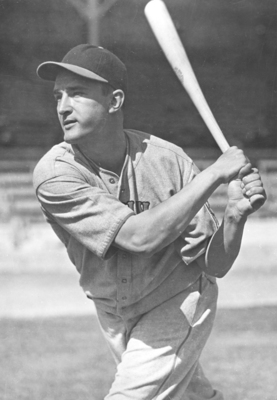
Phil Cavarretta


Career Teams:  Chicago Cubs (1934-1953) and Chicago White Sox (1954-1955)
All Star Appearances:  1944, 1946 and 1947
MVP Voting:  1943 (28th), 1944 (14th),1945 (1st), 1946 (10th), 1947 (23rd), 1948 (24th) and 1952 (23rd)
Fans of teams who have long stretches without a World Series title love to find a reason (other than the poor teams they fielded) to explain why the team hasn't won.  The Red Sox had the curse of Babe Ruth.  The Phillies (and Flyers, and Eagles, and 76ers) had the curse of William Penn.  The White Sox had the curse of the Black Sox.  The Cubs (still) have the curse of the Billy Goat.  Had you mentioned the curse to Phil Cavarretta he would have thought you were insane.  The Cubs, to Cavarretta, were a team constantly on the verge of a World Series win, they just always faced strong competition in the Series: The Philadelphia Athletics, the Yankees, the Tigers.  Their losing had nothing to do with a curse and definitely nothing to do with Phil Cavarretta.  The Cubs reached the World Series three times during Phil's tenure.   In Cavarretta's MVP season the Cubs took the Tigers to a Game 7.  It was an ugly series. The Cubs of the 1930's and 1940's had a reputation of being brutal on opposing players.  Their bench often was identified as one of the most vicious in taunting opponents.  The Tigers scored five times in the first inning of Game 7.  The inning was set up by a stunning sacrifice bunt by Hank Greenberg, the Tigers' version of Babe Ruth.  The Tigers manager Steve O'Neill said "that bunt upset them the rest of the game."  To the Cubs it wasn't over yet.  Cavarretta went 3-4 with a run and an RBI but it wasn't enough.  Cavarretta hit .423 with 2 doubles, a Home Run, scored seven runs and drove in 5 for the Series.  It would be the last time the Cubs would reach the World Series.


Secondbase
Joe "Flash" Gordon


Career Teams:  New York Yankees (1938-1946) and Cleveland Indians (1947-1950)
All Star Appearances: 1939, 1940, 1941, 1942, 1943, 1946, 1947, 1948 and 1949
MVP Voting: 1938 (12th), 1939 (9th), 1940 (23rd), 1941(7th), 1942 (1st), 1943 (25th), 1947 (7th) and 1948 (6th).
The Major League Baseball Hall of Fame has a Veterans Committee to review the borderline Hall of Fame players who were not originally elected.  The committee is made up of Hall of Fame members.  There are some who feel the Committee is pointless or just flat out stupid (I personally think they do a great job).  One of the deserving members of the Hall of Fame that was elected through this process was Joe Gordon.  There were a lot of people who complained that Gordon got in only because he was a Yankee and that it showed a Yankee bias.  I even saw someone write that it was "another undeserving" Yankee in the Hall of Fame.  Joe Gordon definitely deserves to be in the Hall of Fame.  A 9 time all star, 6 time World Series participant (5 time champion) and 1942 league MVP, Gordon lost three years in the prime of his career to serve in the military during World War II.  If nothing proves that he was not just another Yankee getting into the Hall of Fame, look at his contributions to the World Champion 1948 Indians.  He set career highs (even for a former MVP) in Home Runs and RBI and hit .280 for the year. Gordon was the double play partner for Cleveland's legend Lou Boudreau and his veteran, winning experience helped settle the Indians younger players.  Gordon had four hits in the 6 game series victory against the Braves, including a home run.  There is no doubt that Gordon belongs with the best of the best.

Shortstop
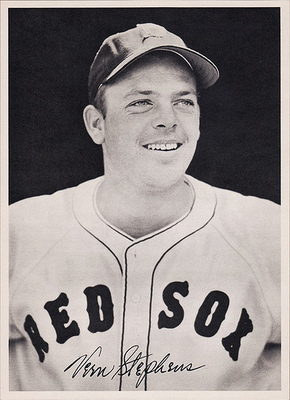
Vern Stephens

Career Teams:  St.Louis Browns (1941-1947), Boston Red Sox (1948-1952), Chicago White Sox (1953), St.Louis Browns (1953), Baltimore Orioles (1954-1955) and Chicago White Sox (1955)
All Star Appearances: 1943, 1944, 1946, 1948, 1949, 1950 and 1951
MVP Voting: 1942 (4th), 1943 (9th), 1944 (3rd), 1945 (6th), 1946 (19th), 1947 (31st), 1948 (4th), 1949 (7th) and 1950 (24th).
The St.Louis Browns reached the World Series once in their existence.  That's not a typo.  The St. Louis Browns won the American League pennant by 1 game over the Tigers and reached the 1944 World Series.  It would be easy to blow off the Browns success as only being made possible by the gigantic amount of talent that was sent to Europe to serve in the war.  True, the Browns had the least amount of men sent overseas. (insert joke here about the Browns players not even being good enough to be drafted).  Yet if they were that "lucky" to reach the World Series you would expect them to fall flat on their face when they faced the powerhouse Cardinals in the World Series.  They may not have had to face Joltin' Joe, Rapid Robert Feller, Hammerin' Hank Greenberg or Teddy Ballgame in the American League pennant race but they still faced a strong Cardinals team in their third straight World Series. The Cards had lost men too but Stan Musial, Danny Litwhiler, Marty Marian, Walker Cooper and Whitey Kurowski were still there.  The Browns team leader was unquestionably Vern Stephens, their shortstop.  He had lasted through some unbelievably bad Browns teams (he would last through quite a few more) but his 1944 season was probably his best.  He hit .293, drove in 109, scored 91 and hit 24 home runs.  The Browns got that momentum boost that Mickey Owen let slip past him.  They won the first game 2-1 as Denny Galehouse dominated the strong Cardinal lineup.  Game 2 was an 11 inning 3-2 Cardinals win and the Browns felt they could have easily been up 2 games to 0.  The Browns proved they were serious with a Game 3 6-2 victory but the pixie dust wore off and the Cardinals won the next three to close out the series.  The Browns never returned to the Series and within a few years Stephens was dealt to the Red Sox (along with half the Browns team).  The trade that brought Stephens to Boston was very similar to the trade this off season that sent half of the Marlins to Toronto.  The trade worked out for Boston.  Stephens went on to lead the league in RBI twice (he drove in 159 runs in 1949) and hit 29, 39 and 30 Home Runs in his first three years in a Red Sox uniform.  1948 was his best year in Boston.  As Ted Williams struggled with injuries, Stephens kept the Red Sox in the race, eventually allowing them to tie the Indians for first place.  In the 1948 one game playoff with the Indians, Cleveland took a 1 run lead in the first.  Stephens did what he did best:  he drove in a run to tie the game up.  Unfortunately, Ken Keltner saw to it that the Indians beat out the Red Sox.  The strong Red Sox teams of the 1940's are usually attributed to four main players:  Ted Williams, Bobby Doerr, Johnny Pesky and Dom DiMaggio.  Yet while they were the guys getting on base, Stephens was the one driving them in to the plate.

Thirdbase
Ken Keltner


Career Teams: Cleveland Indians (1937-1949) and Boston Red Sox (1950)
All Star Appearances:  1940, 1941, 1942, 1943, 1944, 1946 and 1948
MVP Voting:  1938 (14th), 1939 (12th), 1942 (14th), 1943 (34th) and 1948 (14th)
Every organization, whether brand new or one of the original sixteen, has their glory days.  Their one time period where the fan base can point to and say "That was our best time.  It will never be that good again."  Cubs fans have to go all the way back to the 1900's.  Braves fans will point to the 1990's.  I suppose Rockies fans can point to 2007.  Indians fans point to the 1948 season.  That was the last time Cleveland won a World Series.  The third baseman for the Indians' great team was Ken Keltner.  When the Indians and Red Sox tied at the end of the 1948 regular season, a one game playoff was set for Fenway Park.  Winner went to the World Series, loser went home for the winter.  The game was tied at 1 in the top of the fourth.  With Lou Boudreau and Joe Gordon on base, Ken Keltner untied the score with one swing.  Keltner launched a three run Home Run to give the Indians a 4-3 lead and knock Denny Galehouse out of the game.  As the tribe knocked off Bob Elliott and the Braves, Keltner's bat cooled off (2-16, .083 and 0 extra base hits).  Keltner had already done his job.  He had gotten the Indians to the World Series.

Outfield
Bob Elliot


Career Teams: Pittsburgh Pirates (1939-1946), Boston Braves (1947-1951), New York Giants (1952), St. Louis Browns (1953) and Chicago White Sox (1953)
All Star Appearances: 1941, 1942, 1944, 1947, 1948 and 1951
MVP Voting: 1942 (9th), 1943 (8th), 1944 (10th), 1945 (16th), 1947 (1st), 1948 (13th) and 1950 (24th)
Here's a trivia question to stump your friends with:  Who led the National League in hits during the 1940's?  Not Stan Musial or Pee Wee Reese or Phil Cavarretta.  It was Bob Elliott.  Similar to George Kell, Elliot played for the Pirates and Braves while they were struggling and finishing in the bottom of the league routinely.  Unlike Kell, Elliot was able to break into some national attention by winning the MVP in 1947 (Jackie Robinson's first year in the league) with a .317 average, 35 doubles, 22 Home Runs and drove in 113 runs as the Braves started climbing the standings ladder.  The next year they reached the top for the last time in Boston.  Elliott played well in the 1948 World Series, hitting .333 with 2 Home Runs, 4 Runs and 5 RBI.  Unlike George Kell, Elliott has not reached the Hall of Fame.

Pete Gray


Career Teams:  St. Louis Browns (1945)
All Star Appearances: None
MVP Voting:  None.
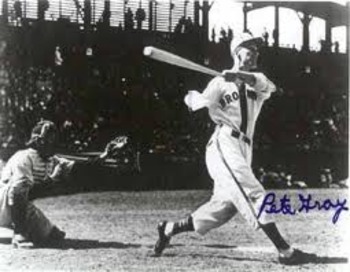
Jim Abbott was an amazing pitcher who overcame being born without a hand.  Pete Gray overcame similar obstacles.  At the age of 6, Pete Gray was in an accident where his arm was caught under a moving train.  The arm was amputated at the elbow.  As the Major Leagues saw their best talent of he 1940's sent to Europe to fight the war, the teams needed to fill out their roster with able bodied men not able bodied enough to be drafted.  Pete Gray likely would not have made the majors had it not been for the shortage of players, but he was doing just fine for Memphis in the minors.  Gray stood in the batters box from the left side and held the bat with his left (back) hand.  Obviously he couldn't follow through on his swing so he hit mostly singles (of his 51 hits only 8 were for extra bases.  He had two triples and six doubles).  To field the ball he kept his glove on his left hand.  When he fielded the ball he very quickly removed the glove and transferred the ball to his left hand.  It was so quick you almost couldn't believe it was possible.  He played in only 77 games and hit .217 but for his short time in the league he was a media sensation.


Vince DiMaggio


Career Teams: Boston Bees (1937-1938), Cincinnati Reds (1939-1940), Pittsburgh Pirates (1940-1944), Philadelphia Phillies (1945-1946) and New York Giants (1946)
All Star Appearances: 1943 and 1944
MVP Voting:  1941 (21st) and 1945 (33rd)
Occasionally baseball scouts find a gold mine of baseball talent in one area.  In the early part of the century everyone seemed to come from the crop of Irish immigrants.  In the 1920's it seemed to be the San Francisco area.  In the 1950's when the Aaron brothers, Willie McCovey and Tommie Agee came in the league they all came from Mobile, Alabama.  In the 1970's it was the Dominican Republic.  The 1930's seemed to be the DiMaggio household.  Vince DiMaggio was a good player but he was no Joe DiMaggio.  Vince, the oldest of the DiMaggio brothers, never threatened Joe's popularity or achievements but he did have a decent ten year career. It is not fair to compare his numbers (or any one's numbers) to Joe's but the biggest contrast is in the strikeouts.  Vince led the league in strikeouts six times.  Joe never had more than 39 in a season.  For his career Vince struck out 837 times, Joe's career strikeouts were only 369.

Dom "The Little Professor" DiMaggio


Career Teams:  Boston Red Sox (1940-1953)
All Star Appearances:  1941, 1942, 1946, 949, 1950, 1951 and 1952
MVP Voting: 1941 (27th), 1946 (29th), 1948 (29th),1949 (16th), 1950 (14th) and 1951 (19th)
Dom was the youngest of the three DiMaggio brothers.  Similar to Vince, he was no Joe, but he was still one of the top players in the league.  If the Yankees-Red Sox rivalry isn't vicious enough, imagine the intensity you added by throwing a sibling rivalry into it.  The 1948 pennant race was a tight three way battle between the Indians, Red Sox and Yankees.  Dom was scheduled to get married on October 6th, assuming the Red Sox weren't in the World Series.  The final three games for the Red Sox were head to head against New York in Fenway.  With two games left the Red Sox won, knocking the Yankees, and Joe, out of contention.  The DiMaggio's were having a big family dinner at Dom's house that night.  On the way to dinner Joe turned to Dom and said "You knocked us out today but we're going to return the favor tomorrow."  It wasn't a joke.  It wasn't sarcastic or bitter. Joe had spoken.  Dom replied "I think you're forgetting, I may have something to do with that."  Dom did.  He hit a game winning home run to send Boston to a one game playoff with Cleveland (which the Indians ended up winning).  He missed three years of his career to serve in World War II but he did get to play in the 1946 World Series.  Dom had seven hits in the seven game loss to the Cardinals, 3 doubles and although the Red Sox were constantly close they never made it back for a second chance.

"Pistol" Pete Reiser


Career Teams: Brooklyn Dodgers (1940-1948), Boston Braves (1949-1950), Pittsburgh Pirates (1951) and Cleveland Indians (1952)
All Star Appearances:  1941, 1942 and 1946
MVP Voting: 1941 (2nd), 1942(6th) and 1946 (9th)
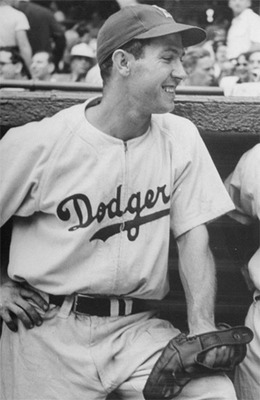
The St. Louis Cardinals were the first team to start using a farm system that fed directly into their Major League team and taught the young players the team's way to play the game.  The good news was that the Cardinals were able to build a strong team that was continuously near the top of the league.  The bad news was that they stockpiled talented young players they never intended to promote to the big leagues just so other teams couldn't use them.  The league didn't like it and forced the Cardinals to trade or release most of them.  Branch Rickey, the President of the Cardinals didn't want to lose Pete Reiser but he couldn't keep him.  He struck a deal with Larry MacPhail, President of the Dodgers and a long time friend.  He sold Pete Reiser's contract to the Dodgers for $100 with the understanding that he would come back to St. Louis when he was ready for the majors.  When the Dodgers manager Leo Durocher saw him in spring training he couldn't resist playing him.  He got an immediate notice from MacPhail never to play Reiser again and not to ask any questions.  Durocher ignored him.  Reiser very quickly became a star.  In his first full year in the majors, 1941, Reiser led the league in batting average, runs, doubles, triples, slugging percentage and hit by pitch.  In the World Series he hit only .200 but had 4 hits (a single, double, triple and the three run Home run that set up the Mickey Owen passed ball).  He was a "motor guy" who made the Dodgers offense go.  He could field, hit, run, throw. He did everything.  He had just one problem: he never knew when to stop.  In the middle of the 1942 season in a game against St.Louis, Reiser tracked a long fly ball from Enos Slaughter.  His teammates knew he wouldn't get it.  Reiser knew he would.  Sprinting straight back to the wall Reiser made the catch.  Reiser immediately collided head first, full speed, with the concrete wall in centerfield.  His skull was fractured.  Doctors told him he was done for the year but MacPhail refused to accept it and believed it was a personal affront to him that his star was being taken away.  Reiser suffered from double vision and dizzy spells but tried to force his way through the pain.  The doctor's were right.  It effected him terribly and long term. He struggled through the last few months and then was drafted for the military.  He returned after three years in the service but he wasn't the Reiser he was before.  Branch Rickey was furious with MacPhail for ruining what could have been a Hall of Fame  career.  Reiser is a legend in Dodgers history.  In the recent Captain America: The First Avenger film,the military is attempting to convince Steve Rogers that he is still in the 1940's and not the present day.  In the background, as he wakes from his coma, can be heard a play by play of a Dodgers game.  It is an inside the park home run for Pete Reiser.

Pitcher
Joe "The Fireman" Page


Career Teams:  New York Yankees (1944-1950) and Pittsburgh Pirates (1954)
All Star Appearances:  1944, 1947 and 1948.
MVP Voting:  1947 (4th) and 1949 (3rd).
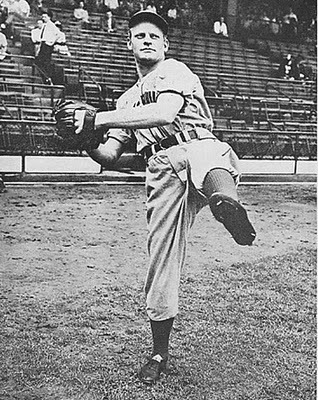
The nickname given to Joe Page pretty much says it all.  For four tremendous years in the 1940's he put out fires set by the Yankees starters.  If the game started to get dangerous the alarm was rung and Page rushed in to close it down.  This was before a relief pitcher was a glamorous job.  It was looked at as an insult not as a specialty.  Page didn't care.  Between 1947 and 1950 Page saved 73 games, including an amazing (for the time) 27 saves.  Like nearly all relievers (except for Lee Smith, Mariano Rivera and Trevor Hoffman) Page had a short shelf life.  He was sent to the minors half way through the 1950 season and never recovered his strong form from the previous three years.   

Rip Sewell


Career Teams: Detroit Tigers (1932) and Pittsburgh Pirates (1938-1949)
Al Star Appearances: 1943, 1944 and 1946
MVP Voting: 1940 (25th), 1943 (6th) and 1944 (11th)
Rip Sewell developed a pitch that Richard Pryor's character in "Brewster's Millions" would have been proud of. Sewell called it the "eephus pitch".   Here's how it worked.  A good fastball (not a Randy Johnson fastball) is in the mid to high 90's miles per hour.  All pitchers want to have a good off speed pitch, probably in the mid to high 80's, to fool the batter a little and upset their timing.  The thing about pitching an offspeed pitch is that the motion needs to be a mirror image of your fastball motion or the change in speed won't fool anyone.  Sewell had only an average fast ball but one day he decided to take a little off the pitch.  The pitch moved only about 55 miles per hour.  That wasn't the weirdest part.  The pitch had an arc to it, not like a curve ball or a sinker.  It was an arc like a lawn dart.  It went about 20-25 feet up and came down (hopefully) through the strike zone.  It was like slow pitch soft ball with an over hand motion.  Batters couldn't resist it.  Imagine being a home run hitter and getting a pitch easier than batting practice to swing at.  The only problem was no one could hit this damn thing.  The pitch wasn't something you can use every pitch but it was effective enough to earn Sewell a place in the 1946 All Star Game.  The National League got slaughtered 12-0.  Sewell and the eephus pitch were the most memorable moment in the game.  Ted Williams stepped into face Sewell in front of the home town fans in Fenway.  Williams had heard all about this pitch but had never faced Sewell before.  As Williams stepped up to the plate, the greatest hitter who ever lived, couldn't resist it.  He yelled out to Sewell "C'mon Rip, show me that damn eephus pitch you got!"  Sewell chuckled and unleashed the high arcing, slow moving toss.  Williams waited on it and fouled it off.  Williams laughed.  Sewell laughed.  Then Williams, still smiling, got serious about his work.  "Let's go Rip.  Throw it again."  Then Rip Sewell did what no other pitcher had ever done.  He let Ted Williams know exactly what was coming.  Ted Williams did what no one else had been able to do before and never would again.  He knocked Rip Sewell's eephus pitch for a Home Run.

* Author's Note:  Just as in the last few weeks, and as may be seen in the next few weeks as we move through this series of articles, I did my best to keep this to one player per position, however, the farther we move from these eras, the easier it is to forget these types of players (and even some hall of fame players).  It is important to remember as we follow the sport that the superstars are not the only ones making contributions to the success of a team.  This is not a comprehensive list of players who fall into this category from this era, it is simply my choice of players who best represented their position and have become forgotten or misunderstood.  Your list is probably different.  Email me yours or leave a comment.