Showing posts with label Curt Flood. Show all posts

Sunday, June 21, 2015

Oh, How Different Things Might Have Been: Lou Brock, Curt Flood and the 1968 Cardinals

History is fixed.  It is unchangeable.  Nothing can change the past.  You can watch Carlton Fisk hop down the line a million times and he will still waive the ball fair.  No matter how many times Todd Worrell touches that bag, Don Denkinger is still going to call Jorge Orta safe.  Bill Buckner is never going to field that little roller behind the bag and Mitch Williams will not look back over his shoulder to see Joe Carter's fly ball being caught.

The winners and losers in the history of the game will always be winners or losers.  But this series will explore some "what if's".  What if a player who missed the World Series hadn't gotten injured?  What if a play that turned a World Series had been completed differently?

We have already looked at  the 1905 Philadelphia Athletics , Johnny Evers and the impact he might have had on the 1910 World Series. Last week we reviewed the impact of Leo Durocher on the 1962 pennant race.  This week we look at how two plays turned the 1968 World Series for the Tigers:

Everything was on the line here. Everything.  So many emotions turned over this one little white ball.  As Julian Javier connected on the Mickey Lolich pitch a million emotions unfolded.

Relief.  It was a little looper to left.  Not particularly well hit and in left field, Willie Horton was playing fairly shallow.  Horton sprinted, in trying to catch up to the slowly falling ball.  It didn't fix all of their problems but it kept things from getting worse.

Panic.  Tiger fans saw Horton take his route to the ball.  As he moved towards his right before coming in.  There was a sudden fear that this could fall in there.  Horton came charging in and as he pulled up, just slightly to charge the ball on the bounce the home town fans held their breath.

Confidence.  The runner at second was the definition of speed on the base paths.  The Cardinals already led the series 3-1 and this game 3-2.  The Tigers had just cut into the lead the inning before.  Answering with another easy run would crush the Tigers.  The series would be all but over and with Lou Brock running, a man so terrifying on the base paths that National League catchers had given up trying to catch him, there seemed to be no chance he would not score.  For the Cardinals, this would be the run that capped their second straight World Series title.
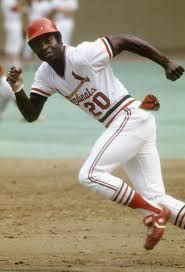


Pride.  First, there was Mickey Lolich.  He knew he was the best pitcher on this staff but he was sick and tired of hearing that Denny McLain was the golden boy, the best pitcher in the AL.  Of course, if Lolich lost this, the public would say "well, you can't have McLain pitch every day."  Next there was the left fielder, Horton.  The home town boy.  He had grown up in the shadow of Tiger Stadium.  He went to High School in Detroit.  His friends and family were probably out there in left field suffering that panic attack as they saw him pull up in front of Javier's single.  He loved playing for the Tigers and loved what that old English D meant to the city he grew up in.  He was one of the leaders of this team.  Imagine how bad the pride of this man was hurt when he was removed from the game the day before and replaced for 'defensive purposes".

Anger.  "Is this the end of it?"  The baseball fans in Detroit were devastated by the way the Tigers had lost the 1967 pennant race.  Entering the last weekend of the season with a chance to at least force a tie for the AL pennant, it had all fallen apart.  McLain, this year's savior, was pinned with a big part of the blame when he missed the end of the 1967 season with a foot injury.  Some crazy story about injuring his foot, tripping over furniture while he was checking on a noise outside.  No one believed him. Of course baseball fans couldn't dwell on the lost 1967 pennant for very long.  They had a distraction that made baseball unimportant.  The city had torn itself apart in 1967.  Buildings were set on fire, riots erupted.  Police and citizens clashed.  Terror tore through downtown Detroit.  Lolich, a National Guard member.was called into service as the city burned.  He told a story of his surreal nervousness as his commander drove a military jeep around the smouldering, deserted, ghost town streets of Detroit and the commander was stopping at red lights.  Hearing sporadic gun shots in the distance Lolich suggested that the red lights may not apply in this situation.  The Tigers winning ways in 1968 had been a big way for the city to come together.  A communal focus.  A communal love.  A positive representation of their city to offset the hatred and destruction the country had seen a year ago.  But this was how it would end.  A lot of noise.  A long season.  The first 30 game winner since Dizzy Dean won 30 in 1934 and the first in the AL since Lefty Grove won 31 in 1931. All of this time and energy spent and this is how it will end.
Desperation.  Everything rode on this play.  On this little white ball with red stitches.  If Lou Brock scores the Cardinals go back up by 2.  With a runner still on first and 1 out, Lolich would likely be pulled from the game.  Everything rode on this play. Horton fielded the ball on the first hop.  It bounced right into his waiting glove.  He had not caught it on the fly but he had played the hop perfectly.  His fundamentals were sound.  Square your body to the ball.  Get in front of it.  Don't let it get past you.  As he felt the ball smack in the glove he took two steps for some momentum and he let it go.  He let everything go.  The relief, the panic, the pride, the anger, the desperation.  He just put it all into the throw.

As it all came streaking home, Brock hit third and turned the corner.  What is always overlooked in this play is something that is so seemingly insignificant, yet so intrical to the play.  Don Wert.  More than anything Don Wert made this play possible.  What did Don Wert do?  He raised his arm and turned his body.  It is the key, silent gesture in a play that turned a World Series.

It is the answer to this great question:  how did Lou Brock, the speedster who was running all over the base paths freely, get thrown out at the plate?  He was out because he didn't slide.  Why didn't he slide?  He didn't slide because Don Wert raised his arm and turned his body.  What is seldom seen when watching a game at home is the on deck batter coaching the runner coming home.  He can be the difference.  By Wert simulating an attempt to cut off the throw from Horton, the Cardinals were tricked into believing Brock would score easily.  After all, why would the Tigers let that throw come through? Who would try to get Brock at the plate and risk turning an obvious RBI single into an RBI double.

The Tigers would.  They discussed it before the series and they felt that Brock had been conceded some bases on the base paths by his National League competition and had gotten a feeling of complacency.  They would challenge Brock with their throws and force him to beat them full speed.  Wert's fake of cutting off the throw fed the Cardinal's belief that no team would try to catch Brock and no one signaled for Brock to slide.

Brock and the ball arrived at the same time.  Standing in Brock's way was Bill Freehan with the ball.  As Brock seemingly stamped his foot on the plate he collided with Freehan and was called out.  The Cardinals argued but the call was right.  Brock never touched the plate.  Freehan had held him off.    It was the play that saved the series for Detroit.


Let's not get this wrong. It wasn't an immediate flip of the switch.  The Tigers still struggled.  They were retired easily in the 5th and left the bases loaded in the 6th.  It was in the 8th that they finally roared loudly.  After Wert struck out looking, Lolich singled. Cardinal Relief Pitcher Joe Boever gave up a single to Dick McAuliffe and walked Mickey Stanley.  When Al Kaline singled to score 2 and Norm Cash followed with a single scoring one, the Tigers took a 5-3 lead. Lolich made it interesting in the 9th by giving up singles to Tim McCarver and Ed Speizio putting two on with Roger Maris, the Home Run king from 1961 at the plate.  Fortunately for the Tigers this wasn't 1961 and Maris struck out.  The Tigers held off elimination for one more day.

The series returned to St.Louis for the last two games.  The Cardinals needed just one win in the last two at home to take the World Series and with Bob Gibson set to pitch the 7th game (if it went that far) it would be a tough, some said impossible, job for the Tigers.  Detroit made it clear early in Game 6 that they would make Gibson necessary.  With two runs already in, the Tigers came up for the top of the 3rd facing starter Ray Washburn.  It was a nightmare inning for St. Louis.  It went like this: Walk, single, RBI single by Kaline, Relief pitcher.  RBI single by Cash, Walk, Grand Slam by Jim Northrup, Relief Pitcher.  Walk, Hit by Pitch, Sacrifice bunt (out number 1), intentional walk, Ground out (out number 2), 2 run single by Kaline, Relief pitcher, RBI single by Cash, RBI Single by Horton, Flyball out (Out number three).  When the inning was over the Tigers had scored 10 runs, sent, 15 men to the plate, had seven hits (two by Cash and two by Kaline) and the Tigers had given their 30 game winner a 12-0 lead.  Kaline would add a solo Home Run in the 5th and the Tigers crusied to a 13-0 win.  Kaline's day was the stuff of legends.

Yet, if the Tigers were going to win this World Series, they would have to beat a living legend in Bob Gibson in St. Louis in Game 7.  His opponent for the day was Mickey Lolich.  Although some, including Lolich himself,  considered Lolich the Tigers’ best pitcher, McLain had won 30 games that year.  If you were a betting man it was almost impossible to go against the Cardinals. 

Gibson did what you would expect.  He dominated the Tigers.  The same man who had struck out 17 Tigers in his first start of the series, kept the Tigers off the bases until the 4th.  Mickey Stanley broke the pattern with a one out single but Gibson got the next two batters to leave Stanley at first base in the 4th, then retired another 8 straight batters.  That means that Gibson retired 21 of the first 22 batters he faced and the one runner he allowed never advanced past first.  That is damn near perfect.
Lolich, on the other hand, seemed to always be in trouble.  Just one pitch from blowing the whole thing.  In the first, the Cardinals put two on with two out but Mike Shannon flew out to end the threat.  In the second he walked Tim McCarver to lead off the inning but got out of it with a double play.  McCarver singled to start the 5th but Lolich got the next three batters.

Scoreless after 5 ½ the Cardinals looked like they would get their big inning in the bottom of the 6th.  Lou Brock led off with a single.  Looking to get a jump on Lolich, Brock left too early and the Tigers picked him off the hard way. (Lolich to Cash to Stanley).  Lolich got Julian Javier for the second out but the speedy Curt Flood followed with a single and Orlando Cepeda stepped in to bat. 
Flood was a great base runner in his time, but playing in the shadow of Lou Brock, he often was overlooked.  The Tigers were just as concerned about Flood on the base paths as they were Brock, especially with Cepeda at the plate.  A ball in the gap could score Flood from first and send the Cardinals to the world title.  If Brock was picked off the hard way, then Flood’s was the master level.  Like Brock, Flood took off early trying to get a jump on a ball hit by Cepeda or to get into scoring position with a  steal.  Lolich caught him leaning and threw to Cash.  Cash threw down to Dick McAuliffe.  Flood stopped and turned back to first, trying to avoid a repeat of Brock’s blunder.  Lolich had come over to cover first so McAuliffe threw to Lolich.  Flood reversed again.  Lolich threw down to Stanley at second base and Flood was out.  Lolich had allowed two of the game's best base runners to reach base in the same inning of a scoreless, season deciding game and escaped unharmed.  The Tigers still had to do the impossible.  They had to get to Bob Gibson.

Leading off the 7th in a still scoreless game, Stanley struck out looking and Kaline grounded out for the second out.  That brought up Norm Cash.  Cash was an enigma to Tigers fans.  When he flashed the signs of greatness that everyone knew he had he was the crowd’s favorite Tiger.  Although the Detroit press often portrayed him as lazy, indifferent and clownish and he had been booed often at home.  The Tigers had used Eddie Matthews, the aging Milwaukee legend, as a way to push Cash and put some fear in him about the safety of his job but Matthews was injured and Cash cruised along.  You couldn’t say Cash didn’t have  a sense of humor.  While the Tigers were being no-hit by Nolan Ryan (it would be Ryan’s second no hitter) Cash walked to the plate with a table leg, thinking the larger lumber would give him a better chance at hitting. Unfortunately, some took his humor as a lack of focus and the fans laughed, but shook their head.


Cash stepped to the plate with two outs and connected for a single to right field.  It was a clean base hit, you couldn’t quite call it a blooper but it wasn’t a hard line drive hit. It was only the second base runner Gibson had allowed and there was little concern for St. Louis.  Cardinals fans were still more upset over the missed opportunities of Brock and Flood getting picked off the inning before.  The focus changed when Willie Horton connected on the very next pitch.  It looked like an easy ground ball but it found it’s way between short and third for a base hit.  Two out, two on and neither of the hits were particularly impressive. 

Gibson loved to work fast but now it seemed like he was slowing, tiring.  McCarver went out to talk to him before they faced Jim Northrup.  Gibson hated the mound visits.  McCarver would tell him "runners on first and second..." and before McCarver could finish Gibson would snap "I know they're there.  I put them there."

Northrup followed Horton’s example and went after Gibson’s first pitch.  It was a fly ball to center field where Curt Flood, a seven time Gold Glove winner, was as sure a fielder as anyone.  Flood took off at the crack of the bat but the shadows played tricks on him.  On first reaction it looked like Flood had a beat on the ball and the great Gibson had performed one last escape trick.  Cardinals fans reacted with a collective stunned silence as they saw Flood stumble, just a bit, then recover and sprint in the opposite direction.  The ball fell just over his head and as Flood tore after the ball, Cash, Horton and Northrup tore around the bases.  It was a two run triple.


Just a few days before, as Brock had headed home for an insurance run, the Cardinals were sure they were World Champs.  Now, after a few great plays by the Tigers and some help from the shadows, the Tigers had the upper paw.

Bill Freehan kept the pressure on when he followed with an RBI double.  Suddenly, the curtain had been pulled back from the great and powerful Gibson.  Baseball fans had come to expect a Cardinals victory when Gibson took the mound in the World Series but now, he was human.

Gibson and Lolich would both finish the game.  The Tigers added another run on a Don Wert RBI single in the 9th and the Cardinals avoided the shut out with a solo Home Run by Mike Shannon in the bottom of the 9th but the Cardinals had blown a 3 games to 1 lead and the Tigers were World Champs.

TRIVIA QUESTION:
The St, Louis Cardinals have appeared in 15 World Series in their history and the Detroit Tigers have played in 11.  How many times have they played each other in the Fall Classic?

Answer to Last Week's Question:
Leo Durocher was elected to the Hall of Fame as a manager in 1994 by the Veterans' Committe.  In 24 years as manager he won 2008 games, 3 National League Titles and 1 World Series title.  He is best remembered as manager of the Dodgers and Giants.

He was, to put it mildly, a polarizing figure.  People either loved him or despised him.  After being fired by the Dodgers after the 1962 debacle, Durocher did get a chance to manage again.  He was hired by the Cubs in 1966 and he got the Cubs out to a big division lead in 1969, the first year of division play, although the team collapsed and lost to the Miracle Mets.  He held the Cubs managerial post from 1966 through most of the 1972 season.  

At 46-44 in 1972 he was let go by the Cubs.  The team was in 3rd place, 10 games behind the Pirates.  Before the 1972 season ended he was hired by the Astros.  The Astros were surprisingly in second place.  Durocher led them to a 16-15 record to finish the year in second place, 10 1/2 games behind the Reds.

Durocher's final year of managing was in 1973.  He led the Astros to an 82-80 record and a 4th place finish.


Sunday, December 16, 2012

14 Players You May Not Know from the 1960's But Should

The 1960's were bookended by two of the greatest upsets in the history of the game.  The Pittsburgh Pirates, who had not been to a World Series since 1927, surprised everyone by beating out the Dodgers, Giants and Cardinals to reach the World Series against the powerful Yankees.  If ever there was a David and Goliath story this was it.  Throughout the World Series the Pirates were outscored 55-27.  They won the close games and forced a Game 7.  Tied in the bottom of the ninth inning of Game 7 a light hitting second baseman named Bill Mazeroski hit an unexpected home run to end the series and topple the Yankees dynasty.  Following the loss Casey Stengel was fired by the Yankees.  He was told it was because he was seventy years old.  Casey told a reporter "I'll never make that mistake again."


The Yankees replaced Stengel with Ralph Houk and continued to dominate the American League in 1961 as Mickey Mantle and Roger Maris chased the biggest Yankee legend of them all, Babe Ruth.  As Mantle and Maris fought to top Ruth's 60 home runs, Yankees fans cheered for Mantle and booed Maris.  Mantle was viewed as a "true Yankee" and Maris was viewed as someone not worthy to carry Mantle's glove.  In the end Maris beat Ruth's record by one home run, yet commissioner Ford Frick, a big fan and previous publicist of Ruth's wouldn't let this stand.  He declared that Maris's record would go in the books with an * to draw attention to the fact that Maris had more games in the season than Ruth. 

The 1960's were a decade of continuous movement in the baseball landscape.  1962 saw the first expansion of the National League.  To compensate the National League fans in New York who were devastated over the loss of the Giants and Dodgers, the Mets were created (though based on the way they played for the first few years it seemed like a punishment rather than an appeasement).  The 1962 Mets are still the perfect example of a bumbling baseball team.  They were the true Major League version of the Bad News Bears.  Along with the Mets came the Houston Colt .45's in the National League.  The Los Angeles Angels and the Washington Senators (replacing the original Washington Senators who were now the Minnesota Twins) joined the American League in 1961.  By the end of the decade four more teams would come into play as the Montreal Expos, San Diego Padres, Kansas City Royals (replacing the Kansas City Athletics who had moved to Oakland) and the Seattle Pilots (who would very shortly become the Milwaukee Brewers). 

There were some great surprise teams who had one single year of success and gave us some of the greatest World Series of all time.  The 1960, 1962, 1964, 1965, 1967 and 1968 Series all went 7 games.  Starting with the Pirates in 1960, nearly every year had a surprise team reach the World Series (1961 Reds, 1962 Giants, 1964 Cardinals, 1965 Twins, 1966 Orioles, 1967 "Impossible Dream" Red Sox, 1968 Tigers and 1969 "Amazin'" Mets).  Although the 1964 Cardinals were listed as a surprise team, the Cardinals were truly the great team in the decade.  The St. Louis Cardinals had the most dominant pitcher of the decade with Bob Gibson, the most dominant base stealer in Lou Brock, the most dominant fielder in Curt Flood and the greatest team of the decade reaching the World Series in 1964, 1967 and 1968, each one a seven game classic.


With the addition of four teams to each league the Major Leagues created the divisional format for 1969.  There were now four divisions: American League East (Yankees, Orioles, Red Sox, Tigers, Indians and Senators), American League West (Athletics, Royals, Twins, Pilots, White Sox and Angels), National League East (Phillies, Cubs, Cardinals, Mets, Expos and Pirates) and National League West (Dodgers, Giants, Braves, Reds, Padres and Colt .45's).

The new format led to the first ever Championship Series rounds, a best of five series to determine the World Series participants.  The first NLCS was the Braves and the Mets (both surprises).  The first ALCS was the Twins and the Orioles.  The Orioles were supposed to destroy the comical underdog Mets.  The Orioles stuck to the script in the opening game winning 4-1 and entering the 9th inning of Game 2 tied at 1.  Then the miracle happened and the "Amazin's" went off script to win the next four games for their first World Series title.  It was the perfect end (unless you're an Orioles fan) to a decade full of unexpected World Series teams and upsets.


Although the names of Sandy Koufax, Don Drysdale, Mickey Mantle, Roger Maris, Tom Seaver, Bob Gibson, Frank Robinson, Brooks Robinson and Henry Aaron will be the names that are remembered thirty, forty or fifty years from now (or more), every decade has tremendously talented, successful players who make wonderful contributions to the success of their teams, organizations and the league as a whole. Unfortunately many of the players who fall into this category will be forgotten, overlooked and generally ignored. Here are 14 players* from the decade you may not remember but you definitely should:

Catcher:
Jerry Grote


Career Teams:  Houston Colt .45's (1963-1964), New York Mets (1966-1977), Los Angeles Dodgers (1977-1978), Kansas City Royals (1981) and Los Angeles Dodgers (1981)
All Star Appearances:  1968 and 1974
MVP Voting: None
Certain pitchers have a specific Catcher they insist on having behind the plate when they pitch.  Bob Welch of the Oakland A's demanded that Ron Hassey catch for him instead of Terry Steinbach.  When Greg Maddux pitched for the Braves he insisted on having Eddie Perez catch instead of Javy Lopez. Tim Wakefield insisted on having Doug Mirabelli catch instead of Jason Varitek because Mirabelli knew how to handle the knuckleball.  Tom Seaver, one of the best pitchers of the 1960's and one of the greatest pitchers ever, insisted that Jerry Grote catch when he pitched.  It was a matter of comfort and trust.  With Jerry Grote as the Mets' Catcher, the Mets manager could relax knowing that Grote could call a game better than any Catcher, possibly ever.  Grote would think ahead of the game and envision the entire thing unfold before it happened.  If a poor or average hitter would come up in the middle innings of the game with the Mets ahead, Grote would have the pitcher give the batter a pitch to hit.  Grote believed that if the batter got a hit in the middle innings he would be satisfied with his one hit for the day and be less likely to fight as hard in the late innings.  Grote was also a master of manipulating a game.  He would look at the pace of the game and anticipate who was likely to bat in the late innings.  If it looked like a team's big hitters were likely to come up in the late innings, Grote would ease up on a few batters to get the part of the batting order he wanted to face up in the ninth.  Very few catchers have ever been able to call a game like Grote.

John Roseboro (+)


Career Teams:  Brooklyn/Los Angeles Dodgers (1957-1967), Minnesota Twins (1968-1969) and Washington Senators (1970)
All Star Appearances:  1958, 1961, 1962 and 1969
MVP Voting:  1961, 1965 and 1966
Being a Catcher in the Dodgers organization in the early 1950's was not a very promising career path.  You were sitting behind Roy Campanella, the three time MVP, definite future Hall of Fame member and undisputed greatest Catcher on the planet.  When Campanella was paralyzed in a car accident, Roseboro was forced into action.  It wasn't the way you want to get a job but Roseboro made the best of it.  When the Dodgers moved to the west coast Roseboro went with them.  The rivalry between the Giants and Dodgers moved west with the teams.  Dodgers-Giants was always ugly but it was ugliest when they were fighting for first place. It was never uglier than August 22, 1965.  Juan Marichal, the Giants' pitcher, had a reputation as a knock down pitcher.  He knocked down Maury Wills and Ron Fairly in the first inning.  Pitching for the Dodgers was Sandy Koufax, who refused to ever throw at a batter.  When Marichal stepped up to bat, Roseboro wouldn't allow Marichal to get back to the bench without receiving a message and if the message didn't come from the mound it would come from behind the plate.  As Roseboro returned Koufax's first pitch he made sure it was close enough to Marichal's face to trim his mustache.  Marichal let Roseboro know that it better not happen again.  It did.  Marichal turned around and used the only weapon he had.  His bat.  He slammed it down on Roseboro's head at least three times and was ready to pound some more but was tackled before he could inflict more pain.  It is one of the ugliest scenes in the history of sports.  Roseboro recovered after receiving 14 stitches and missing some time.  Marichal later apologized to Roseboro and the two became close friends but the image of Roseboro vs. Marichal is the most violent image of the Dodgers-Giants rivalry.  Roseboro continued on a strong career and helped the Twins become a consistent playoff team at the end of the decade.

Firstbase:
Norm Cash


Career Teams:  Chicago White Sox (1958-1959) and Detroit Tigers (1960-1974).
All Star Appearances:  1961, 1966, 1971 and 1972
MVP Voting:  1961 (4th), 1962 (31st), 1965 (33rd), 1966 (12th), 1968 (23rd) and 1971 (12th).
When you think of American League power hitters Norm Cash is not one that comes to mind.  Yet, Cash hit a total of 377 in his career.  He never led the league and never hit more than 41 in a season.  When he hung up his spikes at the end of the 1974 season Cash was fourth in AL history behind Babe Ruth, Lou Gehrig and Ted Williams.  He has since been passed by many players as the home run numbers became inflated but those names are pretty illustrious.  Cash's best year was 1961.  He led the league in Batting Average, Hits, Intentional Walks (even more than Maris or Mantle) and On Base Percentage and set career marks in Hits, Triples, Home Runs, Stolen Bases, Runs, RBI and Batting Average.  Unfortunately that was the year Maris and Mantle battled each other to beat Babe Ruth's single season home run record.  Cash was an integral part of Detroit's 1968 World Series win.  Game 7 of the 1968 World Series was scoreless heading into the top of the 7th.  With 2 outs Cash took a 2-1 pitch for strike 2.  He turned to  the umpire and said "Come on,  it's outside".  He shook his head and took ball 3.  One strike away from moving to the 8th inning scoreless, Cash drove the next pitch to right field for a single setting off a three run rally.  The Tigers won Game 7 by a score of 4-1.

Secondbase:
Tony Taylor


Career Teams:  Chicago Cubs (1958-1960), Philadelphia Phillies (1960-1971), Detroit Tigers (1971-1974) and Philadelphia Phillies (1974-1976)
All Star Appearances:  1960
MVP Voting: 1963 (16th)
If someone asked you to name the top 10 Phillies of all time Mike Schmidt, Steve Carlton and Jimmy Rollins would probably be the first to come to mind.  Very few would think of Tony Taylor, yet he sits in the top ten of several Phillies historical categories.  It would be hard to argue that he had the historical impact on the organization of a Pat Burrell or Cole Hamels but Taylor worked in Philadelphia when the only people who went to Phillies games were probably there as some form of punishment.  Taylor was part of one of the most infamous Phillies teams in history.  The 1964 Phillies led the National League by 6 1/2 games with only twelve games left in the season.  For a team that had won 90 games to that point in the season winning another five or six should have been nothing.  Don't forget this was the Phillies.  After taking the 6 1/2 game lead they immediately lost the next 10 games while the Cardinals caught fire and took over first place. 

Shortstop:
Dick Groat


Career Teams: Pittsburgh Pirates (1952-1962), St.Louis Cardinals (1963-1965), Philadelphia Phillies (1966-1967) and San Francisco Giants (1967)
All Star Appearances:  1959, 1960, 1962 1963 and 1964
MVP Voting: 1957 (15th), 1960 (1st), 1962 (16th) and 1963 (2nd).
Few players are fortunate enough to play in a World Series Game 7 and be involved in one of the greatest moments of World Series history.  Even fewer players have that chance twice.  In the 1950's the Yankees seemed to be involved in the World Series every year.  When the Pittsburgh Pirates faced off against the Yankees in 1960 few gave the Pirates a chance.  When the Yankees took  a big lead heading into the bottom of the 8th of Game 7 everyone assumed the Pirates' magical season had ended.  Groat, the NL MVP in 1960, led the charge and drove in the first run of the inning with an RBI single.  A few batters later he scored on a big, game tying, 3 run home run by Hal Smith.  The Pirates went on to win the game with the most famous series ending home run in history.  The Pirates glory days didn't last too long into the 1960's and by 1963 Groat was traded to the Cardinals. It was a great move for the Cardinals, who had fallen on hard times since their last World Series in 1946.  With Groat's leadership and steady fielding the Cardinals were able to overcome the collapsing Phillies, fight their way to the World Series and force the heavily favored Yankees into a classic Game 7. Although Groat had only 5 hits in the 1964 World Series he played a big part in helping to topple the great Yankee dynasty...twice.

Thirdbase:
Ken Boyer


Career Teams:  St.Louis Cardinals (1955-1965), New York Mets (1966-1967), Chicago White Sox (1967-1968) and Los Angeles Dodgers (1968-1969)
All Star Appearances:  1956, 1959, 1960, 1961, 1962, 1963 and 1964
MVP Voting:  1956 (28th), 1958 (13th), 1959 (10th), 1960 (6th), 1961 (7th), 1962 (18th), 1963 (13th), 1964 (1st).
With seven All Star Appearances, five Gold Glove awards and an MVP award it would be hard to imagine Ken Boyer as a forgotten player.  Yet as the Cardinals began to dominate the decade Boyer seemed to always be the man overshadowed.  Overshadowed by Stan Musial's constant .300 average, by Lou Brock's stolen bases, by Bob Gibson's million strikeouts and, amazingly, even by Tim McCarver stealing home during a World Series game.  During his years in St.Louis Boyer was a consistent .300 hitter, consistently drove in close to 100 runs, scored close to 100 runs and hit between 25 to 30 home runs.  As the Musial era ended and the new Cardinals dynasty started Boyer was one of the few links between the eras.  In the 1964 World Series the Cardinals were viewed as lucky to have made it that far and as the Yankees threatened to take a 3 games to 1 lead the sports writers were writing their stories saying their early predictions had been dead on.  Down 3-0 in the top of the 6th the Cardinals loaded the bases with one out. Boyer stepped in and slammed a pitch to left field.  The grand slam gave the Cardinals a 4-3 lead and completely turned the series around.  That would have been a great World Series for anyone, yet Boyer wasn't done.  In Game 7 the Cardinals were up 6-0 when Mickey Mantle hit a three run home run to cut the lead in half and lead fans to believe some Yankee magic might be in the making.  But Boyer put the Cardinals back up by four with a solo home run.  The Yankees tried to rally in the 9th led by a solo home run by Clete Boyer, Ken's brother.  They became the first brothers to homer in the same World Series game.  Although Boyer has somehow been overlooked for the Hall of Fame his number was retired by the St.Louis Cardinals organization. 

Gene Freese


Career Teams:  Pittsburgh Pirates (1955-1958), St.Louis Cardinals (1958), Philadelphia Phillies (1959), Chicago White Sox (1960), Cincinnati Reds (1961-1963), Pittsburgh Pirates (1964-1965), Chicago White Sox (1965-1966) and Houston Astros (1966)
All Star Appearances:  None.
MVP Voting:  None.
Gene Freese did not have a tremendously long career and it was not a tremendously amazing career but the Cincinnati Reds had an amazing season in 1961 and Gene Freese was a big part of that team.  Going into the 1961 season few gave the Reds a chance.  It was assumed the Dodgers, Giants, Braves or Cardinals would be fighting for a World Series spot and the Reds were expected to be somewhere in the bottom half of the league.  Freese held down the hot corner while having his best, most complete offensive season.  He had career highs in Runs (78), Hits (159), Home Runs (26) and RBI (87).  He also had near career highs in Doubles (23), Stolen Bases (8) and Batting Average (.277).  Freese did not have a great World Series, only one hit and three walks with four strikeouts, but none of the Reds really had a great Series.  The Yankees knocked the Reds out in 5 games and Freese never did quite play the same again.  In spring training of 1962 Freese broke his ankle.  His career was not over but he would never play another full season.


Outfield:
Curt Flood


Career Teams:  Cincinnati Reds (1956-1957), St. Louis Cardinals (1958-1969) and Washington Senators (1971).
All Star Appearances:  1964, 1966 and 1968
MVP Voting:  1963 (24th), 1964 (11th), 1965 (15th), 1966 (20th), 1967 (13th) and 1968 (4th)
For students of the game it may be insane to see Curt Flood on a list of players that are unknown but sadly the casual fan doesn't hear about Curt Flood nearly enough.  The Cardinals dominated the 1960's with players like Stan Musial, Bob Gibson, Lou Brock and Tim McCarver.  Even with these hall of fame players there were several other big contributors to their decade of dominance.  No one did more for St. Louis than Curt Flood.  He was one of the best defensive players of the decade.  No one patrolled centerfield better than Flood and his seven straight Gold Gloves proved it.  Unfortunately Flood is now known for just two things and both detract from the greatness he had achieved.  First, in the 1968 World Series, just a few batters after Norm Cash started what turned out to be a game winning rally, Jim Northrup hit a fly ball to Flood.  Flood stood just outside the afternoon shadows as the ball left the bat.  He saw the ball and reacted immediately.  There was little doubt the gold glove winner had reacted right.  He took a few steps in, then headed towards left.  Flood could fly and he was moving quickly, when suddenly, he turned and started heading back to the wall.  He still had a chance to get there but he stumbled. He didn't fall but he lost about two steps.  By the time he recovered he had just enough time to throw his glove up but the ball had moved too far even for him to reach it.  The ball fell just over his head and rolled to the wall for a two run triple.  In just two bad steps Flood went from the best defensive centerfielder in the game to "that guy who couldn't catch a fly ball".  Flood played the 1969 season and even won another Gold Glove but after the 1969 season the Cardinals traded Flood and Tim McCarver to the Philadelphia Phillies.  Flood told the Cardinals he didn't want to go.  He loved St.Louis.  He loved the fans, the stadium, the organization, the city. He knew very little about Philadelphia other than the reputation it had for race problems.  This was before Catfish Hunter and before Messersmith and McNally fought for free agency.  This was the days before players had "no-trade clauses".  If a team wanted to trade you, you were gone.  Flood refused.  He told the league that he was not a piece of property they could sell without his permission.  He took his fight to the U.S. Supreme Court asking to have the "reserve clause" overturned.  He lost.  The Phillies, a bad enough team already, didn't need the extra headache and shipped Flood to the Washington Senators.  After one year in Washington Flood retired.  He fled the US and became a recluse eventually passing away in 1997.

Johnny Callison


Career Teams:  Chicago White Sox (1958-1959), Philadelphia Phillies (1960-1969), Chicago Cubs (1970-1971) and New York Yankees (1972-1973)
All Star Appearances: 1962, 1964 and 1965
MVP Voting: 1962 (18th), 1963 (15th), 1964 (2nd) and 1965 (24th)
When the Mets collapsed at the end of the 2007 season, the Red Sox imploded at the end of the 2011 season and the Braves fell apart at the end of the 2011 season, long time fans of Philadelphia  breathed a deep sigh of relief.  It meant that they could finally stop hearing that their 1964 season was the biggest failure in baseball history.  For nearly the entire 1964 season the Phillies had the rest of the National League decidedly beaten.  With just 12 games left in the season the Phillies held a 6 1/2 game lead.  The leader of the Phillies was Johnny Callison.  As the rest of the team folded under the pressure Callison did everything he could to keep the team afloat.  Over the last twelve games Callison hit .250 with 3 home runs (all in one game which the Phillies lost) and a double, driving in 10 and scoring 7.  It wasn't enough.  The Cardinals passed the Phillies for first place and eventually won the World Series.  Callison had his best season of his long career and finished second behind Ken Boyer of the Cardinals for the MVP award.

Vada Pinson


Career Teams:  Cincinnati Reds (1958-1968), St. Louis Cardinals (1969), Cleveland Indians (1970-1971), California Angels (1972-1973) and Kansas City Royals (1974-1975)
All Star Appearances: 1959 and 1960
MVP Voting:  1959 (15th), 1960 (18th), 1961(3rd), 1963 (10th) and 1964 (18th)
As teams develop talent and make constant adjustments to their rosters they need to make decisions to keep one player and not another.  Sometimes they decide correctly and sometimes they don't.  In the 1990's the Braves decided to keep Andruw Jones and discard Jermaine Dye.  It was the right decision.  In the 2000's the Angels chose to keep Bobby Wilson and not Mike Napoli.  That may have been a bad decision.  The 1960's Reds had to make the same decision.  The Reds surprised everyone by making the World Series in 1961 and Vada Pinson was a big reason why.  Pinson seemed to be an all around player: strong defensively, good speed and decent power.  The Reds had another talented young outfielder named Frank Robinson.  To be fair to Pinson, the Reds didn't need to get rid of Robby and they didn't suffer too much with Vada in the outfield.  Bill DeWitt, the Reds GM, decided that Frank Robinson needed to go.  When people complained DeWitt tried to explain that it would be alright because Robinson may have only been 30 but he was "an old 30".  Robinson went on to become one of the greatest players in the history of the game and Pinson became an above average player who made great contributions to the Reds organization and several other teams in his career, but he was not Frank Robinson.  Robinson and Pinson will forever be remembered as the two young outfielders who helped the Reds to the 1961 pennant but Frank is the one who gained immortality.


Tony Conigliaro (+)


Career Teams: Boston Red Sox (1964-1970) California Angels (1971) and Boston Red Sox (1975)
All Star Appearances: 1967
MVP Voting:  1965 (33rd) and 1966 (28th)
The 1967 Red Sox were in 4th place, only winning 4 of their last 12 games and their season was starting to fade away as they faced the California Angels on August 18th.  The score was 0-0 heading into the Red Sox half of the 4th.  The Sox needed this game to save their season.  The Sox had the heart of their order coming up.  Jack Hamilton threw the pitch to Tony C. up in the zone but got the ball too far in.  Petrocelli knelt in the on deck circle and heard it before he could process what had happened.  He ran to Tony Conigliaro as Tony C. laid face down in the dirt.  The pitch had shattered Conigliaro's face, severely fracturing the cheek bones and orbital socket.  Conigliaro was one of the great up and coming stars of the game and along with Yaz and Rico was expected to lead the Red Sox  into the postseason for a decade or more.  After Tony C. was carried off the field Petrocelli drilled a triple and scored on an error.  The Red Sox won the 1967 pennant and had a chance to win their first World Series since 1918 but without the potent bat of Tony C. in the lineup they lost game 7 to the Cardinals.  Conigliaro tried to make several comebacks but he just couldn't see the ball the same way and his numbers slipped.  He had one last great season in 1970 where he hit .266 with 36 Home Runs but he was traded to the Angels after the season as Boston started to rebuild their team.  Had Conigliaro not been injured the history of the Red Sox, the World Series, including the 1967, 1975 and 1986 World Series and the story of Major League Baseball may have been much different.

Pitcher:
Jim "Kitty" Kaat


Career Teams: Washington Senators (1959-1960), Minnesota Twins (1961-1973), Chicago White Sox (1973-1975), Philadelphia Phillies (1976-1979), New York Yankees (1979-1980) and St.Louis Cardinals (1980-1983)
All Star Appearances: 1962, 1966 and 1975
MVP Voting:  1966 (5th), 1967 (20th) and 1975 (28th)
Cy Young Voting#:  1975 (4th)
The rule is unofficial, but traditionally if you win 300 games as a pitcher you are guaranteed to get into the Hall of Fame.  Apparently 283 wins over a 25 year career doesn't quite cut it.  Jim Kaat was the best fielding pitcher in his era with no close runner up.  Kaat won 16 Gold Gloves as the best fielder at his position.  If you don't think fielding the ball from the Pitcher's position is tough, try following through on a pitch going 90+ miles an hour with your momentum taking you toward third base when a batter bunts a ball towards first base.  As your body falls away from the ball you have to make an immediate reaction to decide whether you are fielding the ball to throw to first or sprinting to first to cover the bag.  Not an easy play.  Just ask Danny Cox.  When the 1965 Minnesota Twins surprised everyone by reaching the World Series, Jim Kaat was their ace.  He won 18 games with a 2.83 ERA.  When the Twins faced the Dodgers in a 7th game Kaat was the obvious choice to start.  He didn't pitch terribly.  He gave up 2 runs, 5 hits and a walk in 3  innings but when you're playing a seventh game and you're facing Sandy Koufax, the manager gives you a very short leash.  The Dodgers went on to win Game 7 2-0 with Koufax only allowing 3 hits.  No one could have beaten Koufax that day.  Kaat 's 1966 season was even better, though the Twins were not.  Kaat won 25 games in 1966 and dropped his ERA to 2.75.  Kitty moved from team to team as his career progressed making the playoffs with the Phillies in 1976 and the Cardinals in 1982.  Since his retirement Kaat has been a broadcaster.  He still broadcasts live games for MLB Network and is one of the most insightful and classy broadcasters ever.

Harvey "Kitten" Haddix


Career Teams: St. Louis Cardinals (1952-1956), Philadelphia Phillies (1956-1957), Cincinnati Reds (1958), Pittsburgh Pirates (1959-1963) and Baltimore Orioles (1964-1965)
All Star Appearances:  1953, 1954 and 1955
MVP Voting:  1953 (17th)
Cy Young Voting#: None
I didn't realize until I started minutely researching Harvey Haddix that his nickname was Kitten and that having both Jim Kaat and Harvey Haddix on this line would make a feline family.  There is no intentional theme of cats in this week's article although both Haddix and Kaat were "south paws".   Haddix was not a Hall of Fame caliber pitcher but he was better than near perfect one night.  On May 26 1959 Haddix faced off against Lew Burdette and a Milwaukee Braves team that featured some great hitters like Henry Aaron, Eddie Matthews and Joe Adcock (haven't heard of Adcock before?  Check back next week).  When Lew Burdette struck out in the bottom of the 9th it was the 27th straight batter retired, a perfect 9 innings.  The only problem was that the game wasn't over.  Although the Braves had not put a single person on base, the Pirates had been unable to capitalize on any of their own 8 hits.  The game moved through the 10th, 11th, 12th and 13th.  The Pirates put runners on base in each inning and the Braves couldn't get anyone on base until the bottom of the 13th.  The inning started off with an error by the thirdbaseman ending the perfect game but still leaving the no hitter in tact.  Three batters later Joe Adcock drilled a double to right-center field scoring the game's only run.  Haddix had been perfect for 12 innings and lost on an unearned run in the 13th inning.  Haddix made major contributions to the Pirates' 1960 miracle season.   Although he only won 11 regular season games he won 2 in the World Series.  The Pittsburgh pitching staff was abused in the 7 game series with a collective ERA of 7.11.  They lost games by scores of 16-3, 10-0 and 12-0.  Fred Green had a Series ERA of 22.50.  Harvey Haddix was the savior of the pitching staff.  His 2.45 ERA was easily the best on the team and when Bill Mazeroski drilled a home run to end the World Series Haddix was the winning pitcher, his second win of the series.

Relief Pitcher:
Moe Drabowsky


Career Teams:  Chicago Cubs (1956-1960), Milwaukee Braves (1961), Cincinnati Reds (1962), Kansas City Athletics (1962-1965), Baltimore Orioles (1966-1968), Kansas City Royals (1969-1970), Baltimore Orioles (1970), St. Louis Cardinals (1971-1972) and Chicago White Sox (1972)
All Star Appearances:  None.
MVP Voting: None.
Cy Young Voting#: None.
Before the 1990's no one ever said "I want to be a relief pitcher when I grow up."  When kids ran out on the field to choose positions for a pick up game no kid ever yelled "I got closer."  For a long time being a relief pitcher was an insult.  It was a useless position that meant you were only good enough to pitch when the other guy proved he was so bad it wasn't worth leaving him in to get knocked around anymore.  Being a journeyman relief pitcher was even worse.  It meant no team wanted you to start and no team wanted you to even do the mop up duty.  Moe Drabowsky was all of these things but he did his job well.  He would never be confused for a Hall of Fame player, or even an All Star pitcher but in Game 1 of the 1966 World Series Moe Drabowsky changed the history of baseball in just a few innings.  Since moving to Los Angeles in 1958 the Dodgers had reached the World Series four times.  Since moving to Baltimore from St.Louis the Orioles had reached their first World Series.  No one gave the Orioles a chance.  The Dodgers were dominant.  The Orioles were...well, no one knew because no one had heard of them.  Game 1 was started by Don Drysdale, big double D, the most intimidating man in sports.  The O's weren't intimidated and took a 4-0 lead.  The Dodgers started to make a rally in the 3rd inning and Moe Drabowsky came in to keep the Orioles in the lead.  With the bases loaded he struck out the first batter he faced, then walked in a run and got the final out by forcing John Roseboro to pop out.  It was the last trouble he would have on the day.  He retired the next 10 batters in a row, allowed a walk and a single, then retired the next 8 batters to end the game, striking out 11 Dodgers in the process.  Drabowsky's win set the tone for the Orioles' four game sweep and launched the glory days of Orioles baseball that would stretch into the 1980's.  For the Dodgers it was the end of the Drysdale-Koufax era and would lead to a rebuilding that would result in the Garvey/Cey/Lopes/Russell era of the 1970's.

* Author's Note:  Just as in the last few weeks, and as may be seen in the next few weeks as we move through this series of articles, I did my best to keep this to one player per position, however, the farther we move from these eras, the easier it is to forget these types of players (and even some hall of fame players).  It is important to remember as we follow the sport that the superstars are not the only ones making contributions to the success of a team.  This is not a comprehensive list of players who fall into this category from this era, it is simply my choice of players who best represented their position and have become forgotten.  Your list is probably different.  Email me yours or leave a comment.
+-For readers interested in seeing the vivid pictures of the John Roseboro/Juan Marichal incident or the results of the Tony Conigliaro beaning, they are easily found all over the internet.  I felt it was important that I not use these images for my article.  Both Tony C. and John Roseboro have become known for these two moments which lasted no more than a few minutes.  Unfortunately, Roseboro's great career and the great potential of Conigliaro, have been largely ignored and focus has been placed on the gruesome images of these moments.  It is important to remember that both players made tremendous contributions to championship seasons for their teams and their career cannot be defined by just these few moments.
#-  The Cy Young award was not awarded until  1956.  Between 1956-1966 there was one award for both leagues.  It was not until 1967 that the American and National leagues each awarded a Cy Young trophy.

Wednesday, November 28, 2012

The Life of Marvin Miller


Marvin Julian Miller
April 14, 1917-November 27, 2012

Babe Ruth had just completed the greatest offensive season in the history of the game.  He had demolished every record known to mankind, single handedly saved the game from the Black Sox scandal and made the owners of the game millionaires by drawing unheard of numbers into the stadiums.  Thanks to those amazing feats Babe Ruth received a "generous raise" of $10,000.  For the season of 1921 he would now earn $30,000.  The greatest player to ever step on a baseball diamond (we can debate later) capped out his earnings at $75,000 in 1932.  As unbelievable as the offensive numbers that Ruth put up, the owners of his generation found Ruth's salary demands even more unbelievable.  During the great depression Ruth was asked if he felt odd that he made more money than Herbert Hoover.  Ruth's answer:  "Why shouldn't I make more than him?  I had a better year than him didn't I?"  Ruth had a habit of not quite remembering anyone by name (he called Benny Bengough, the Yankees backup catcher, "that googles guy") so it is quite possible that he really believed Hoover was a player in the league.  Regardless, Babe Ruth made less in his prime than the average player makes in the league today.

On Tuesday, November 27, Marvin Miller, the man who organized the players union passed away.  There is no one in the history of sports who had the impact that Miller had.  He never threw a pitch, swung a bat, caught a fly ball, made an error, ran a team, hired or fired a manager, or had an affiliation with any specific organization.  His impact was deeper than an agent fighting with a general manager over another incentive clause.  Marvin Millers impact on the game may never be able to be calculated.

The players of his eras idolized him.  The owners hated him.  By organizing the players union, Marvin Miller, not an athlete, not a manager but an economist, changed the way players careers are formed and the way teams are created.

This past season Carlos Lee of the Astros was able to veto a trade to the Dodgers because he decided it was not right for his family.  That was because of Marvin Miller.  This off season, teams will be tripping over each other to throw money at Josh Hamilton and Zack Greinke.  That's because of Marvin Miller.

Prior to the union there was no contract negotiations for players.  You were paid what you were told you would be paid.  There was no choosing what team you wanted to play for. You signed with one team and you played for that team until you were told you were traded or told your services were no longer needed.  You did not appeal suspensions.  You served the suspension and paid your fine because the league told you that was your punishment.

Miller created the players union in 1966.  Within ten years he had fought the owners to a frazzle and undone nearly 100 years of one sided agreements.  He helped Curt Flood fight a trade to Philadelphia that he didn't approve and took his case to the Supreme Court.  He helped Catfish Hunter get out of a bad contract that was not being fulfilled by the A's making him the first ever free agent.  He convinced Andy Messersmith and Dave McNally to play an entire season for their teams without a contract and used their status to topple the "reserve clause"  that had stood since the beginning of the league.

Most people would be satisfied with those achievements but Miller kept fighting for the players.  In the 1980's the owners had a "gentleman's agreement" not to bid on each other's free agents.  This wold stop star players from jumping from team to team and would keep the owner in Kansas City, Pittsburgh and Montreal from trying to outspend owners from New York and Los Angeles.  Miller found out and sued the owners for restricting the free market on players.

The entire structure of sports was changed all because one man convinced the players that they were stronger together than as individuals.  The players had tried it before but not until the powerful mind of Marvin Miller did the players make a move that allowed us to experience the game that we know today.
When Angels fans cheer Ryan Madson or Braves fans cheer B.J. Upton in their new uniforms this year, they can thank Marvin Miller.

Sadly, few people recognize his name and even fewer recognize his wide reaching and long lasting   contributions to the game of baseball and sports in general.