Showing posts with label Joe Torre. Show all posts

Saturday, July 26, 2014

Ladies and Gentlemen, your 2014 Hall Of Fame Class

A year ago the Hall of Fame induction weekend was a disappointment.  Some long time worthy individuals (Hank O'Day, Jacob Ruppert and Deacon White) were voted in by the veteran's committee, although, they were given little attention since the BBWAA failed to vote anyone into the Hall of Fame.

I have already discussed what makes a Hall of Fame player and why I feel the voters missed out on voting in some very deserving candidates.  I certainly encourage you to read those articles, however, I don't want to distract from the inductees this season who are clear Hall of Fame players.

Without further delay, here is your Hall of Fame Class of 2014:


Bobby Cox
Bobby Cox the player spent the majority of his team in the minors bouncing from minor league team to minor league team and organization to organization.  Drafted as a minor leaguer in 1959 by the Dodgers.  He went from the Dodgers to the Cubs to the Braves to the Yankees.  If the organizations were not enough, the stops throughout the minors were even greater:  Reno, Panama City, Salem, Great Falls, Albuquerque, Salt Lake City, Austin, Tacoma, Richmond, Syracuse and Fort Lauderdale.  In all that time he spent one and a half seasons in the majors.

By 1978 Cox was back in the majors but not as a player, as a manager.  He was hired by the struggling Braves organization to turn around the bottom dweller.  With the Reds and Dodgers at the top of the division, the Braves were rebuilding around a young group led by Dale Murphy, Ken Oberkfell, Bruce Benedict and Glenn Hubbard.  His first tenure in Atlanta lasted four seasons.  It was not a success.  Cox was replaced at the end of the 1981 season by Joe Torre.

Cox moved on to take over another struggling organization, the Toronto Blue Jays.  Toronto had only been in the league since 1977 and struggled to compete with the Red Sox, Tigers, Orioles and Yankees.  Even the Brewers were improving ahead of the expansion Jays.  Although the talent was blossoming with Alfredo Griffin, Ernie Whitt, Lloyd Moseby and Jesse Barfield in place the Blue Jays still finished in 6th place.  They slowly improved moving up to 4th in 1983 and 2nd in 1984, even putting a scare into the nearly unbeatable Tigers.  1985 was the Blue Jays year.  They ended the year in the top AL East perch, ahead of one of the most talented teams not to make the playoffs in the Yankees.  They got ahead to a three games to one lead in the ALCS.  It was the first year the series went to the best of seven format.  The Blue Jays then became the first team to lose an ALCS when leading 3-1.  The tough loss was Cox's last game as manager in Toronto.  The tough loss would also become the theme of his career.

Cox was named Manager of the Year, left Toronto and was hired on as the General Manager of the Braves.  As General Manager Bobby Cox was responsible for the acquisition of Kent Merker, Mike Stanton, Keith Mitchell, Brian Hunter, Lonnie Smith, Mark Wohlers, Ryan Klesko, Glavine, Avery, Greg Olson, Gant, Justice, Smoltz and Chipper Jones.  The team that was in place when Cox took over as General Manager was much less talented as the Braves were struggling at the bottom of the division.  Cox knew the team had talent in the pipeline and he also felt that manager Russ Nixon was not the man to lead them.  In 1989, with the Braves in last place, Cox replaced Nixon in the dugout.  Everyone could see that the Braves had talent, but they were thought to be a few years away.  The 1990 team finished in last and the slow climb to the top was just beginning.  Cox, however, turned things around quickly.  He knew this talent better than anyone and in 1991 he took the Braves to the playoffs for the first time since 1982.  They came within an eyelash of winning it all and Cox was named Manager of the Year for the second time.  The Braves would not miss the playoffs again until 2006.  During this successful run (1991-2006) the Braves would reach the World Series five times and won the World Series in 1995.  During the run of success he faced off against his Hall of Fame Classmate managers four times (twice against LaRussa's Cardinals and twice against Torre's Yankees).  When he retired after the 2010 season, his 29th season as manager, Cox had 2504 career managerial wins, four Manager of the Year Awards, a World Series title and the record for the most career ejections as a manager.  The 2504 wins places him fourth on the all time list behind Connie Mack, John McGraw and Tony LaRussa.


Tom Glavine
On June 4, 1984 in the second round of the major league draft, Tom Glavine was drafted by the Atlanta Braves.  He was a young, skinny kid out of Massachusetts, he had a ton of potential but every kid being drafted had a ton of potential.  The important thing was not how much potential you had but what you did with the potential you had.  Tom Glavine did more than anyone could have possibly imagined.  He made his major league debut on August 17, 1987 and started against the defending NL West champions Houston Astros.  It did not end well.  In 3 2/3 innings he gave up 19 hits, walked 5 and allowed six runs.  The rest of the year would not be spectacular as he finished 2-4. 1988 would be worse as his record was 7-17.  But the Braves were building a team and Glavine was learning to pitch in the big leagues.  By 1991 he had everything figured out.  Glavine won 20 games for the first time as the Braves went from worst to first.  Glavine would go on to win 15 or more games 10 times.  In five of those years he won 20 or more,  As the Braves rotation changed all star after all star behind him, Glavine remained the ace.  Glavine helped a talented group lead the Braves to the playoffs every year from 1991-2002.  At the end of the 2002 season, Glavine became a free agent and signed with the division rival New York Mets.  All he did in New York was help lead the team to the 2006 NLCS with a 15-8 record.  Glavine retired in 2008.  When all was said and done Glavine finished with a 305-203 record, a 3.54 ERA, 2 Cy Young Awards (and four more finishes in the top 3 in voting) and ten All Star Appearances.  You can add to that 14  post season wins, a World Series Title and the 1995 World Series MVP.  Tom Glavine was without a doubt a first ballot Hall of Fame player.


Tony LaRussa
Tony LaRussa is one of the many talented players to come out of the Tampa, FL area.  Growing up in the large shadow of Al Lopez, the original Tampa area star, LaRussa was signed by the Kansas City Athletics in June of 1962.  LaRussa would play parts of six years with in the majors with the Athletics, Braves and Cubs.  His final career batting average was .199.  After retiring as a player LaRussa went back to school, graduated from Florida State University and passed the bar exam but continued coaching in the minor leagues.  Midway through the 1979 season LaRussa was hired to replace Don Kessinger as manager of the struggling Chicago White Sox franchise.  The team had not reached the post season since Al Lopez led the team to the 1959 World Series.  It seemed like a slow climb but the White Sox finally made the post season in 1983, although they were ousted in the ALCS by the eventual World Champion Orioles.  LaRussa would remain on as manager with the White Sox through mid 1986.  Unhappy with the direction the team was taking LaRussa walked away and was replaced by Doug Rader for a few games before Jim Fregosi officially took over.  He was not out of work long as he was very quickly hired by the Oakland A's.  Taking over a team that was 31-52 he led the team to a 45-34 record the rest of the year.  LaRussa went into the 1987 season with some strong young talent.  Jose Canseco had won the Rookie of the Year award in 1986.  The team also had young talent like McGwire, Walt Weiss, Tony Phillips, Stan Javier, Terry Steinbach and Mike Gallegos.  The core of the team was there.  Now they needed something to bring it all together.  The 1988 team took over the league and LaRussa was the genius behind it all.  The A's would go on to win the AL West four of the next five years and would reach the World Series three straight years, winning the 1989 World Series.  As the talent moved on and the reality of the new free agent system took it's toll, the A's struggled to compete with the other teams in the division.  LaRussa finished the 1995 season in Oakland and said goodbye.

He moved on to St.Louis where the Cardinals were rebuilding.  The team was transitioning from the end of the Whitey Herzog era and had a few failed seasons under Joe Torre.  LaRussa immediately got the team headed in the right direction.  The team advanced to the NLCS and jumped out to a 3 games to 2 lead over Bobby Cox and the Braves but failed to advance.  Cox would go on to lose to Joe Torre and the Yankees.  Just as he had done in Oakland, LaRussa would constantly have his team in a playoff fight.  LaRussa would spend 16 years in St. Louis.  His teams would reach the post season eight times.  This included three World Series appearances (2004, 2006 and 2011) and two World Series wins.  Adding the appearance with the White Sox, and the four in Oakland, this gave LaRussa 13 post season berths in a 33 year managerial career, Six world series appearances and three World Series titles.  He is third on the all time wins list. won four manager of the year awards and eight other times finished in the top three in voting.


Greg Maddux
In 1984  the Cubs made the NLCS for the first time, though it was with a collection of mostly over the hill stars.  They really needed to rebuild around Ryne Sandberg and Bob Dernier.  As part of that rebuilding process they made a shrewd move in the 1984 draft when they drafted a young Greg Maddux in the second round.  He made his debut in 1986 and finished with a record of 2-4.  His second year in the league was no better than Glavine's second year.  Maddux finished at 6-14.  1988 was the start of the greatness.  He went 18-8 and made the All Star Team for the first time.  1989 was even better at 19-12 and he finished third in Cy Young voting.  Over the next three years he continued to excel and gain the reputation alternately as "Mad Dog" for his fierceness on the mound and "the Professor" for his studious approach of charting every pitch to every batter.  1992 was his final year with the Cubs.  He went 20-11, made his second All Star appearance and won his first Cy Young Award.

During the offseason Maddux moved on to Atlanta, joining Avery, Glavine and Smoltz on what was already considered the best rotation in the game.  Maddux would continue to gain a reputation for his control, his dedication and his dominance.  He again won the Cy Young in 1993, 1994 and 1995 as the Braves continued to dominate the National League.  Maddux would remain with the Braves until 2003.  During his years there he would win three Cy Young awards (finishing in the top 5 an additional four times), appear in seven All Star Games and 9 Gold Gloves (added to the three he had already on in Chicago.  He won a total of 194 games in Atlanta in 11 years there.

 After the 2003 season Maddux was again a free agent and he decided to return to his roots where the Cubs appeared to be building a strong young team.  The Professor was beginning to show his age slightly (although he won 16 games) and the Cubs were not quite as good as originally believed.  Injuries took a major toll on the Cubs and midway through the 2006 season Maddux was traded to the Dodgers in the middle of a playoff run.  He helped the Dodgers with a 6-3 record but was not able to get them past the first round.  He spent 2007 with the Padres and finished the year at 14-11 as the Padres collapsed down the stretch and finished just out of the playoffs.  He started 2008 with the Padres but as the Dodgers made another run to the playoffs Maddux ended his career in blue.  The Dodgers could not overcome the Phillies and Maddux walked away after the year with the reputation of one of the greatest pitchers in the history of the game.

Maddux finished his career with four Cy Young Awards, 355 wins, 8 All Star appearances, 18 Gold Gloves, 11 career playoff wins and one World Series title.


Frank Thomas
Last summer I was having a conversation with a good friend and fellow baseball fan when the name of Frank Thomas came up.  The friend said he felt that Thomas was one of the most disappointing franchise players in history.  While it is certainly true that Thomas did not lead the White Sox to the World Series he certainly can't be called disappointing.

Thomas was drafted in 1989 with the 7th overall pick and joined a franchise with one post season appearance in the previous thirty years.  The team had gone through rebuilding after rebuilding and finally had the player that would lead them to the post season.  Thomas made an immediate impact on the organization.  The White Sox went almost over night from a bottom of the league, after thought to an annual playoff contender.  Thomas was the unquestioned leader of the group.  In 1991, his first full year in the league, he began a streak of greatness that produced 8 straight years over 100 RBI, 6 straight years over 20 Home Runs (all but two of those above 30) and seven straight years above .300.  To be honest, Thomas was a bit of a throw back.  In an era where it became accepted for players like McGwire, Canseco, and Prince Fielder to strike out 100-150 times a year and hit .250 or so, as long as they drove the ball over the fence, Thomas was the opposite.  In the prime years of his career, as he was challenging for the triple crown each year, his strike outs were below 100 (with the exception of his first full year with 112 years).  Ironically, for a man who was nicknamed the Big Hurt, he never led the league in Home Runs or RBI.  He did, however, win a batting title in 1997.  Thomas made five All Star Games during these years, won two consecutive MVP's and became the face of the White Sox organization.

It was 2001 when injuries started to truly take their toll.  Frank's father passed away early in the season and a few days later he learned that he needed season ending surgery to repair a torn bicep.  It would happen at the worst of times.  As Thomas continued to fight back to regain his place at the top of the league, Bonds, McGwire, Sosa and seemingly everyone in the league was getting stronger.  Thomas would continue to put up impressive numbers but his injuries crept up with his age.  As the White Sox picked up Paul Konerko, Thomas's playing time diminished.  Sadly, as the White Sox pushed to their first World Series win since 1917, Thomas sat by and watched.

He moved on to the Athletics for the 2006 season and was a big reason for the A's reaching the ALCS.  He hit .270 with 39 Home Runs (impressive in the cavernous Oakland Coliseum) and drove in 114 runs and finished fourth in MVP voting.  He played 2007 in Toronto on what was expected to be a playoff contender.  Thomas certainly had a good season with 26 Home Runs, 95 RBI and a .277 average.  The rest of the talent did not contribute as hoped and the Jays fell flat.  He returned to start the 2008 season with the Jays but after just 16 games Thomas was released. He resigned with the A's and finished his year out with 55 games in Oakland.

When all was said and done Thomas finished his career with two MVP awards (four other top five finishes), 495 doubles, 521 Home Runs, 1704 RBI and a .301 average.  What was more, in an era when players were routinely suspected of steroid use with little or no proof, there was never a question that Thomas had played the right way.


Joe Torre
As a player Joe Torre was a 9 time All Star, an MVP and a very respected Catcher with the Braves, Cardinals and Mets.  He played in over 2000 career games but never played on a team that reached the playoffs.  With 2342 hits, 252 career Home Runs and 1185 RBI Torre's playing career got him some consideration for the Hall but he fell far short of induction.

Torre played his final games in 1977 with the Mets.  45 games into the season he became the player manager for the Mets.  The Mets were in between the Seaver era and the Strawberry-Gooden era and the team was suffering.  At no point did the team finish higher than 4th.  At the end of the 1981 season Torre left the Mets.

There was another National League team that needed a manager as Bobby Cox had moved on from the Braves to the Blue Jays.  Torre stepped in for Atlanta and led the Braves to their first playoff appearance since 1969.  It was an encouraging start but it didn't last.  The Braves fell to second place in his second year and third in his third year. He had no more chances to guide the Braves.

Near the end of the 1990 season he got one more chance at the helm.  This time it was in St.Louis and he replaced the legendary Cardinals manager Whitey Herzog.  He took over a Cardinals team in transition.  The core of the Cardinals team (Pendleton, Tudor, Cox, Coleman, Lonnie Smith, Milt Thompson) were gone.  In their place were young talent like Pagnozzi, Zeile, Gilkey and Whitten.  The pitching was not quite good enough and the Cardinals struggled.  The team was accused of under achieving with a string of second and third place finishes and part way through the 1995 season Torre was let go and labeled as a failure.  He was replaced in St.Louis with Tony LaRussa

Meanwhile, in New York, George Steinbrenner had grown upset with manager Buck Showalter.  Despite leading the Yankees to their first post season appearance since 1981, Steinbrenner constantly questioned Showalter's decisions.  When Torre became available, Steinbrenner demanded that the Yankees get him.  The Yankees baseball people told Steinbrenner that Torre was not the right man for the job.  Torre, they said, had failed with the talented Cardinals and the fact that LaRussa took them to the NLCS in their first year was proof that Torre wouldn't work.  Steinbrenner wanted him anyway.  In his first year in New York Torre took the Yankees to the World Series and faced Bobby Cox's Braves, who had beaten LaRussa's (formerly Torre's) Cardinals in the NLCS).  The Braves jumped out to a 2 games to 0 lead but the Yankees battled back and won the World Series, their first since 1978.  It was the start an unimaginably successful stretch for the Yankees.  They won the World Series again in 1998, 1999 and 2000 and came within an extra innings loss of winning the 2001 World Series.  The Yankees, under Torre's leadership, became the dominant team in baseball.  They were once again the powerhouse of Ruth, Gehrig, DiMaggio, Mantle, Munson and Jackson.  The team made the playoffs every year under Torre's leadership until 2007.  Unfortunately for Torre, despite the poor performance of the high priced free agents, Torre took the blame.  He was unceremoniously fired by Steinbrenner following the 2007 season.

Just as happened after he left St.Louis, he was not unemployed long.  The Dodgers quickly hired Torre to lead the team.  In his first year with the team, he led the Dodgers to the NLCS.  It was the first time the Dodgers had won a playoff series since Kirk Gibson's dramatic 1988 Home Run.  They fought tooth and nail (and very nearly hand to hand) with the Phillies who won a dramatic, tight, tense series.  With the help of Manny Ramirez, the Dodgers became a serious contender.  2009 saw Ramirez suspended for PED's but with the emergence of Ethier, Kemp and Russell Martin, the Dodgers again advanced to the NLCS. Again they fought the Phillies and it looked like they were set to take control of the series when Jimmy Rollins broke the heart of Dodger fans with an RBI triple to tip the series back in the Phillies direction.  The 2010 season was a disaster for the Dodgers as Johnathon Broxton struggled in the bull pen, Russell Martin injured himself and Matt Kemp fought with Torre and the coaching staff.  While this was going on the ownership group was tearing itself apart in divorce court.  At the end of the year Torre walked away.  He currently works for the Commissioner's office.  Torre retired with 2326 regular season wins, six World Series appearances and four World Series victories.

TRIVIA QUESTION:
Connie Mack, John McGraw, Tony LaRussa, Bobby Cox and Joe Torre make up the top five winningest managers of all time.  Who rounds out the top 10?

Answer to Last Week's Question:
Cy Young first pitched in the Major Leagues in 1890.  The World Series as we know it would not start until 1903.  In 1892 the Cleveland Spiders took on the Boston Beaneaters in the National League Championship Series.  Cy Young appeared in this championship series but his Cleveland Spiders lost 5-0 with 1 tie game.  When the American League opened for business in 1901 Cy Young signed with the new Boston franchise and when they took on Pittsburgh in the 1903 World Series, the first ever, Young and Bill Dinneeen were the aces of the Boston staff.  Young went 2-1 with a 1.85 ERA in  four appearances.  Boston beat Pittsburgh in the first ever World Series

Monday, November 12, 2012

Top 10 Managers of All Time

The job of a major league manager is hard enough on a daily basis.  Put yourself in the shoes of Jim Leyland, the Tigers manager, during Game 1 of this year's World Series.  A week ago you were celebrating sweeping the Yankees to advance to the World Series.  You had this series set up perfectly with the best pitcher in baseball, well rested, starting Game 1.

In the top of the fifth you're already behind 3-0.  Verlander hasn't pitched horribly.  He gave up a home run in the first with two outs and two strikes.  In the third he had two outs and two strikes when the ball hits the third base bag allowing a runner to reach second on what is normally a ground ball out.  The next batter has two strikes and fights off every good pitch Verlander makes, then loops a hit to score two runs.  Verlander has thrown 98 pitches and is due up this inning. 

As you pace the dugout, hands in your pockets to fight off the chill in the San Francisco air,  you need to make a decision.  Do you accept that this is not Verlander's night, pinch hit for him in the hope of jump starting your offense and trusting a bullpen that has been shaky for the last month?  Or do you trust that Verlander can hold the Giants long enough for Jackson, Young, Cabrera and Fielder to get you right back into this?  Regardless of what you choose, one outcome is certain:  you'll have to explain this to the world in a few minutes and many of them won't accept your explanation.

As the manager you have to make the decision to sit your overpaid superstar, who is 0 for the last 24, for the good of the team.  Every move you make is torn apart and critiqued within moments.  Every move you decide not to make is pointed to as the one move everyone is certain would have won the game. 

If having to explain every minor decision isn't hard enough, imagine you have to defend decisions that aren't yours.  Players try to steal without permission and get caught.  Batters decide they can sneak in a bunt in for a base hit and ruin a scoring chance.  This all falls on the manager and no manager who wants the respect of his players would ever blame the player publicly for this.  The manager silently takes the blame.

It is a lonely job.  A job that you accept knowing that you have a shelf life.  Earl Weaver managed the Baltimore Orioles from 1968 to 1982.  Since he left the team after the 1982 season the Orioles have had only one manager last more than two years.  That would be their current manager Buck Showalter who has been there for 2 1/3 years.

What makes a manager great?  A manager has to be able to make the tough decision to sit a star player who is slumping or to tell a legend that someone younger can do the job better and be able to back up the decision with confidence.  A manager has to deal with a fan base that rebels when the ownership refuses to pay the star players big money and leaves them with a shallow talent pool  but Olympic sized expectations.  A manager has to deal with his own success and the perception that because you have made the playoffs five years in a row you have to make it a sixth year in a row or the year is a failure and you are the reason.

A manager has pressure from five sides:  the players, the owners, the press, the fans and themselves.

Despite all of these pressures some thrive in the job.  Here are the ten I consider the best of all time*:
10.  Earl Weaver:


Teams Managed:  Baltimore Orioles 1968-1982
Years in Playoffs:  1969, 1970, 1971, 1973, 1974, 1979
World Series Appearances:  1969, 1970, 1971, 1979
World Series Victories:  1970
Manager of the Year: 0 (Manager of the year was not awarded until 1983)
Earl Weaver was best known for arguing with umpires and being a cranky old man.  What he is also known for is winning.  Weaver developed "the Oriole Way", an organization wide philosophy that taught fundamentals from rookie ball all the way through to the big league team.  He also was a great judge of talent and use of the entire roster through player platoons.  During his time in Baltimore he managed hall of fame players such as Brooks Robinson, Frank Robinson, Eddie Murray, Jim Palmer and Cal Ripken.  His run of success nearly ended on a high note.  In 1982, his Orioles made a late season run to catch the Brewers in the AL East race.  The season came down to a four game series head to head in Baltimore.  The Orioles had to take all four to win.  They came up just short.  Weaver was also known for using foul language.  During a particularly tough stretch for the Orioles batters, Weaver went on a dugout tirade.  One player approached Earl and said "Earl, I'd like to see you walk with the lord." Weaver froze, stared down the player and said: "I'd f---ing like to f---ing see you walk with the f---ing bases loaded."


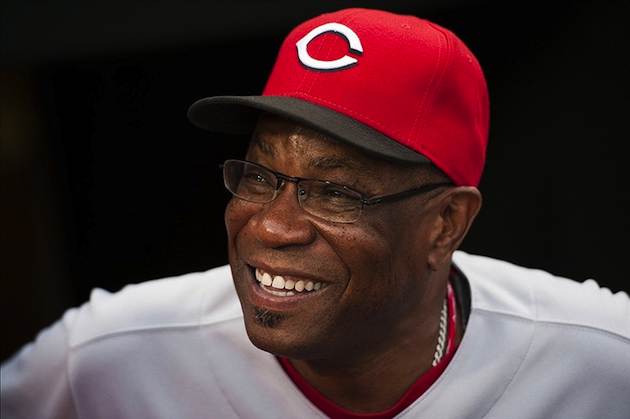
9.   Dusty Baker


Teams Managed:San Francisco Giants (1993-2002), Chicago Cubs (2003-2006), Cincinnati Reds (2008-Present)
Years in Playoffs: 1997, 2000, 2002, 2003, 2010, 2012
World Series Appearances: 2002
World Series Victories: 0
Manager of the Year:  1993, 1997, 2000
It seems blasphemous to think that one of the great Dodger players of the 1970's and early 1980's started his managing career as a Giant.  Although it has been a short managerial career compared to some other managers on this list, Baker has turned around three of the traditionally strong organizations in the history of the game.  Between 1958 when the Giants moved to San Francisco and 1993 when Baker took over, there were few bright years in the bay area.  Baker turned the rarely playoff bound Giants into a consistent force in the NL West pushing them one game short of a World Series ring.  After leaving the Giants he led the Cubs to their first playoff series victory (and if not for a fateful inning to their first World Series) since 1945.  Since leaving the Cubs he has turned the Reds into a two time playoff team in the NL Central (and they appear set to dominate the division for quite some time).  For some reason he doesn't seem to have the support of the Reds fan base but they will surely recognize his importance when he is gone.

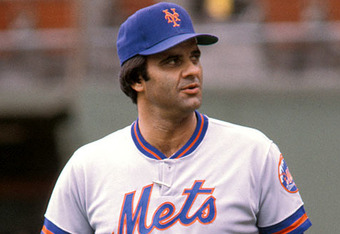
8.   Joe Torre


Teams Managed: New York Mets (1977-1981), Atlanta Braves (1982-1984), St. Louis Cardinals (1990-1995), New York Yankees (1996-2007), Los Angeles Dodgers (2008-2010)
Years in Playoffs: 1982, 1996, 1997, 1998, 1999, 2000, 2001, 2002, 2003, 2004, 2005, 2006, 2007, 2008 and 2009
World Series Appearances: 1996, 1998, 1999, 2000,  2001, 2003
World Series Victories: 1996, 1998, 1999, 2000
Manager of the Year: 1996, 1998
It may be hard to believe that Torre is not higher on the list.  The criticism of Torre was always that he had an unlimited budget to work with and anyone could win with the talent he was given.  That may be true but he certainly did more with less in 1982 in Atlanta and 2008 and 2009 with the Dodgers.  Torre's critics claim that he sat back and watched the Yankees win but Torre was constantly working his magic.  It takes a special manager to juggle the egos of David Wells, Gary Sheffield, Alex Rodriguez, Roger Clemens and any other random overpaid, under performing player Steinbrenner decided to drop on him.  Many of his coaches have gone on to become successful managers including Willie Randolph, Lee Mazzilli and Don Mattingly.

7.   Bobby Cox

Teams Managed: Atlanta Braves (1978-1981), Toronto Blue Jays (1982-1985), Atlanta Braves (1990-2010)
Years in Playoffs: 1985, 1991, 1992, 1993, 1995, 1996, 1997, 1998, 1999, 2000, 2001, 2002, 2003, 2004, 2005 and 2010.
World Series Appearances: 1991, 1992, 1995, 1996 and 1999.
World Series Victories: 1995
Manager of the Year:  1985, 1991, 2004 and 2005.
Sometimes a manager has a good group of players who are used to being told they can't win.  It's up to the manager to change the culture of the organization.  When Cox took over in Toronto they were in a division with the Yankees, Red Sox, Orioles, Tigers, Brewers and Indians.  At the start of every season they would be predicted to finish 6th if they were lucky (it was a dismal time for the Indians as well).  Cox changed all that and took Toronto to the playoffs for the first time in the history of the poor organization.  The Jays were one win away from reaching the Series when the 1985 Royals did what they do best and rallied (see the previous article Greatest World Series Moments: The Most Controversial).  1985 was the first year the LCS round was a best of seven as it had always been best of five.  The joke has always been that the Blue Jays didn't realize the series kept going after they reached three wins.  When Bobby Cox took over for Russ Nixon as manager of the Braves midway through the 1990 season, few thought the last place team had enough talent to get out of the cellar within the next ten years.  (See the previous article Greatest World Series Moments: Greatest Game Ever 2) Over the next 20 years Cox would continually develop players and recognize talent to fit into the Braves system.  Growing talent like David Justice, Ron Gant, Steve Avery, Tom Glavine, John Smoltz, Javy Lopez, Kevin Millwood and Chipper Jones he was also adept at finding small time players like Rafael Belliard, Mark Lemke, Jeff Blauser, Ryan Klesko and Alejandro Pena to fill roles.  Along with this he had the ability to find talent that had been discarded by other teams and resurrect their careers.  Among the long list are Terry Pendleton, Lonnie Smith, Sid Bream, Charlie Leibrandt, Mike Deveraux and Walt Weiss.

6.   Al Lopez

Teams Managed: Cleveland Indians (1951-1956), Chicago White Sox (1957-1965 and 1967-1969)
Years in Playoffs: N/A. (Yearly playoffs did not begin until 1969.  Until then the league winners would advance straight to the World Series)
World Series Appearances: 1954 and 1959
World Series Victories: 0
Manager of the Year: 0 (Manager of the year was not awarded  until 1983)
Probably one of the most forgotten great managers of all time.  Lopez was forced into an awkward position in taking over the Indians.  He replaced a fan favorite in Lou Boudreau and was dropped into a brewing feud between the Indians' GM Hank Greenberg and the Cleveland press.  Lopez rewarded Greenberg in 1954 by leading what many consider one of the top 10 teams of all time, the 1954 Indians.  Cleveland set the mark for most wins in a season but were swept out of the World Series by Willie Mays and the Giants in one of the greatest upsets of all time.  Lopez moved on to the White Sox and led them to their first World Series appearance since the 1919 Black Sox scandal.  Lopez was the first major league star to come out of the Tampa, FL area leading the way for players like Tony LaRussa, Lou Piniella, Tino Martinez and Luis Gonzales.  Why is he this high on the list when he only reached two World Series?  Compare the years he reached the World Series with the manager at number 4 on the list.  Lopez may not have the career wins of some of the people left off the list but he truly was the perfect example of getting more out of less.

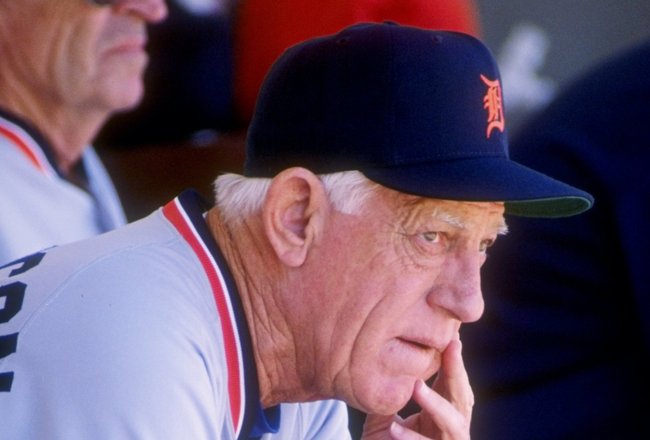
5.   Sparky Anderson

Teams Managed: Cincinnati Reds (1970-1978), Detroit Tigers (1979-1995)
Years in Playoffs: 1970, 1972, 1973, 1975, 1976, 1984
World Series Appearances: 1970, 1972, 1975, 1976, 1984
World Series Victories: 1975, 1976, 1984
Manager of the Year: 1984
Sparky may not have been an all star player but he was one of the brilliant strategists in the history of the game.  Anderson managed a short list of hall of famers (Bench, Morgan, Perez) and a long list of people who should be in the hall of fame (Griffey Sr, Concepcion, Trammell and Morris).  He also became the first manager to win a World Series in both the American and National League.  Sparky also managed three of the greatest teams in the history of the game:  1975 and 1976 Reds (see previous article Greatest World Series Moments: The Greatest Game Part 1) and 1984 Tigers.  His biggest contribution to the game was his use  of the bullpen.  Known as Captain Hook because of his habit of quickly pulling a pitcher, he was the first manager to truly use every pitcher available in every game.  Anderson is well known for his entertaining sound clips.  After the 1976 World Series he told the press that Thurman Munson was a great catcher "but don't never do no one the disservice of comparing 'em to Johnny Bench." (It's amazing that someone who can use that many double negatives in one sentence can pronounce disservice). In the 1984 World Series he told Kirk Gibson that Goose Gossage wasn't afraid of him.  "He don't wanna walk you."  Then, when Gibson hit a three run home run Anderson was yelling like a little kid: "No, don't walk 'im!  Don't walk 'im!"

4.  Casey Stengel


Teams Managed: Brooklyn Dodgers (1934-1936), Boston Braves (1938-1943), New York Yankees (1949-1960) and New York Mets (1962-1965)
Years in Playoffs: N/A  (Yearly playoffs did not begin until 1969. Until then the League winners advanced directly to the World Series)
World Series Appearances: 1949, 1950, 1951, 1952, 1953, 1955, 1956, 1957, 1958, 1960
World Series Victories: 1949, 1950, 1951, 1952, 1953, 1956, 1958
Manager of the Year: N/A (Manager of the year was not awarded until 1983)
The "Old Perfesser" was a jumbled up mess to the outside world but somehow managed to get the most out of his players.  It was like watching an episode of Mr. Magoo.  No one could explain it but somehow he succeeded. He was the first manager to successfully use a platoon system by switching right handed hitters vs left handed pitchers and left handed hitters vs. righties.  He was also unbelievably good at playing hunches.  He once decided to switch the rightie vs lefty system and played a Hank Bauer vs a right hand pitcher.  Bauer usually only played when lefties were pitching but he got a hit in each of his first three at bats.  When the other team brought in a lefty Stengel sent up Gene Woodling, who usually only hit agains righties. Woodling was furious at having sat the whole game and now only hitting against a lefty.  Bauer was furious at not getting a shot to get a fourth hit.  Stengel's explanation to Woodling:  "You'll play your position and do whatever the hell I tell you."  Stengel's explanation to Bauer:  "You ain't no 1.000 hitter.  And you're not a .500 hitter.  In fact, Mr. Bauer, you ain't even a .333 hitter.  So you had your 3 hits for the day and that's all it was gonna be.  That was your quota."  Stengel was fired after the Yankees lost the 1960 World Series in seven games.  Stengel was fired because he was seventy years old.  He told a reporter "I'll never make that mistake again."  He then took over the comical 1962 Mets.  When preparing for the expansion draft a reporter asked where you need to start building a team.  Casey's answer was a catcher, "otherwise you'll have to chase the ball the way to the backstop."  Before he passed away Casey would routinely attend old timers games where he once said "it's wonderful to meet so many friends I never used to like."

3.  Connie Mack

Teams Managed:  Pittsburgh Pirates (1894-1896), Philadelphia Athletics (1901-1950)
Years in Playoffs: N/A (Yearly playoffs did not begin until 1969. Until then the League winners advanced directly to the World Series)
World Series Appearances: 1905, 1910, 1911, 1913, 1914, 1929, 1930, 1931
World Series Victories: 1910, 1911, 1913, 1929, 1930
Manager of the Year: N/A (Manager of the year was not awarded until 1983)
It is definitely not a typo.  Connie Mack managed the A's for 50 years.  Many experts would probably place Mack at either number 1 or 2 on the list.  The reason I did not place him higher was due to the long stretches of truly terrible years between the World Series appearances.  Mack's golden years came in two separate eras.  The first was the era of the "$100,000 Infield" of Stuffy McInnis, Eddie Collins, Jack Barry and "Home Run" Baker as well as the great pitching of Eddie Plank, Eddie Rommel and Jack Coombs.  The second era in the late 1920's to early 1930's included the great teams of Al Simmons, Jimmie Foxx, Mickey Cochrane and Lefty Grove.  (See previous article Greatest Player Never to Win a World Series) Unfortunately, after he disbanded his 1914 World Series team (there are varying explanations why) he struggled to make enough money to rebuild.  He often signed great talent but had to sell them to other teams (usually Boston or New York) to offset another year in the red.  He finally rebuilt the team in the late 1920's but the Great Depression forced him again to sell off his stars.  From 1932 until the A's jumped to Kansas City there were few highlights.  Mack was the first manager to shift the position of his players in the field on a pitch by pitch basis.  He would stand on the top step of the dugout and waive his scorecard to direct his players into position.

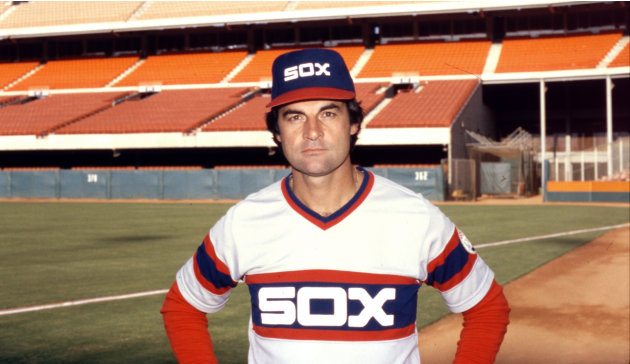
2.  Tony LaRussa


Teams Managed: Chicago White Sox (1979-1986), Oakland Athletics (1986-1995), St.Louis Cardinals (1996-2011)
Years in Playoffs: 1983, 1988, 1989, 1990, 1992, 1996, 2000, 2001, 2002, 2004, 2005, 2006, 2009, 2011
World Series Appearances: 1988, 1989, 1990, 2004, 2006, 2011
World Series Victories:  1989, 2006, 2011
Manager of the Year: 1983, 1988, 1992, 2002
LaRussa went out on top but he started at the bottom.  He took over a White Sox team in 1979 that had not made the postseason since Al Lopez (see number 6) led the "Go-Go White Sox" to the World Series in 1959.  The organization was in a tail spin but LaRussa got them back on track and by 1983 had them in the playoffs.  His White Sox team had Carlton Fisk and a young Harold Baines but few other stars, yet LaRussa guided them to a division title.  He was so highly regarded for his work in Chicago that the A's immediately fired their own manager and hired LaRussa when LaRussa left the White Sox in mid season 1986.  While in Oakland, LaRussa built a team that became one of the greatest of all time.  It combined aging greats like Don Baylor, Dave Parker and Willie McGee with young future greats like Canseco, McGwire and Terry Steinbach.  He also had a habit of claiming players that others had given up on and turning them into stars like Carney Lansford, Dave Stewart, Mike Moore, Bob Welch and Dennis Eckersley.  After taking Oakland to the playoffs in 4 out of 5 seasons (including 3 Series appearances and one Series win) LaRussa moved on to St.Louis where he replaced Joe Torre (see number 8)  as the Cardinals manager.  He had an immediate impact and took St.Louis  to a 3-1 NLCS lead over the Braves.  The Braves, led by Bobby Cox (see number 7) came back and won that NLCS.  He continued his ability to identify young talent like Albert Pujols and Rick Ankiel and resurrect players that others had given up on like Jim Edmonds, Larry Walker and David Eckstein.  During his 16 years in St.Louis they reached the playoffs 9 times, reached the World Series 3 times and won it twice.

1.  John McGraw

Teams Managed: Baltimore Orioles (1899, 1901-1902), New York Giants (1902-1932)
Years in Playoffs: 1908 (there was a one game "replay" at the end of the season because the Cubs and Giants were tied.  In one of he most famous moments in the history of the game, a regular season game was declared a tie game because of a protest by the Cubs). 
World Series Appearances:  1905, 1911, 1912, 1913, 1917, 1921, 1922, 1923, 1924.
World Series Victories:  1905, 1921, 1922
Manager of the Year: N/A (Manager of the Year was not awarded until 1923)
Few people in baseball history were as polarizing as John McGraw.  The list of players and managers who had long running feuds with "Mugsy" is like a  hall of fame roster.  Tinker, Evers, Chance, Ty Cobb, Babe Ruth, Frankie Frisch, Rogers Hornsby and Bill Terry all despised the man (some of them even played for him). His supporters are equally as impressive.  Christy Mathewson, Fred Lindstrom, Fred Merkle, Ross Youngs, Mike Donlin, Fred Snodgrass and a million others. The man himself was a paradox.  When he died his wife found a list of African American players he secretly wished he could have signed to play for the Giants, yet at the same time he carried a piece of string that had been used in a lynching as a good luck charm.  He was easy to hate.  There are rumors galore that he was involved in attempts to bribe other teams into throwing a few late season "meaningless games" the Giants' way.  He owned several pool halls with his business partner, Arnold Rothstein, the big money behind the Black Sox scandal.  Regardless of his personal life he was by far the most consistently successful manager in the game.  Connie Mack may have had two distinct eras of success but McGraw was constantly at the top of the league.  His list of World Series appearances could have at least three more years.  In 1904 his Giants won the National League but McGraw chose not to enter the World Series because he didn't feel he had to jeopardize his championship by playing "an inferior" American League.  In 1908 his team had one more regular season win than the Cubs but the Cubs protested a technicality and the game was ruled a tie.  When the season ended the teams were tied and played the first ever one game playoff, won by the Cubs.  In 1919, the year that would end in the Black Sox scandal, McGraw's Giants had a late season collapse.  Oddly, when the punishment from the gambling investigations came out McGraw lost his thirdbaseman and firstbaseman to life time bans.  No one who knew McGraw would ever accuse him of throwing games.  Anyone near him after a loss would tell you it wasn't pretty.  He also could have had two more World Series wins.  In 1912 one game was called a tie because of darkness (there was no night baseball at the time).  Game 8 was played in Fenway parking giving the Red Sox an extra home game, which they won.  McGraw argued that should have been played at the Polo Grounds.  In 1924, if it weren't for some supernatural assistance (see previous article Greatest World Series Moments: The Most Supernatural) he would have won another title.  Regardless of all the controversy McGraw was flat out the best manager of all time.

*Author's Note:  In choosing this list I not only took into consideration the amount of wins by the manager but the consistency of winning, the amount of teams that were led to the playoffs as well as the state of the organization when the manager took over.  I also took into consideration any major long lasting impact on the game. It was only the top 10 so I did leave off many great managers like Lou Piniella, Frank Chance, Bucky Harris, Tommy Lasorda, Walter Alston, Hughie Jennings, Wilbert Robinson and quite a few others.  This is my list.  I am certain your list would look different.  I'm anxious to hear who you would put on yours.  Email me yours at baseballeras (at) gmail (dot) com or leave me a comment in the box below.