Showing posts with label Pete Reiser. Show all posts

Saturday, November 30, 2013

Rivalries: Jackie vs. Leo

Don't forget to check out the other articles in our rivalry series:  Christy Mathewson vs Three Finger BrownTy Cobb vs Babe Ruth, and Joe DiMaggio vs Ted Williams.

"Listen up!"  The words were angry, vicious and worst of all at this time of the morning, loud.

It was late.  Half of those present were pulled out of bed.  Some of them may have just snuck into bed.  None of them had experienced anything like this spring training.  First of all, it was in Havana.  What the hell were a bunch of white guys, many of them southerners, doing in Cuba? Then of course there was Jackie Robinson.  What the hell was an African American from California  doing in Cuba with all these white southerners?

"Listen up!"  He said it again but the first one was probably enough.  When the Lip told you to listen you listened.  "I hear some of you guys got a problem with Robinson."  Leo knew exactly who the players were who had the problem.  "I don't care if the guy is yellow, or black or has stripes like a f***ing zebra.  I'm the manager of this team and I say he plays."


The problem became this: when the 1947 season opened and Jackie Robinson jogged out to first base for the Brooklyn Dodgers, Leo Durocher was sitting at home, suspended by the commissioner for his involvement with less than savory characters and his association with a married woman.  So in the end, he had no say over who played for 1947. 

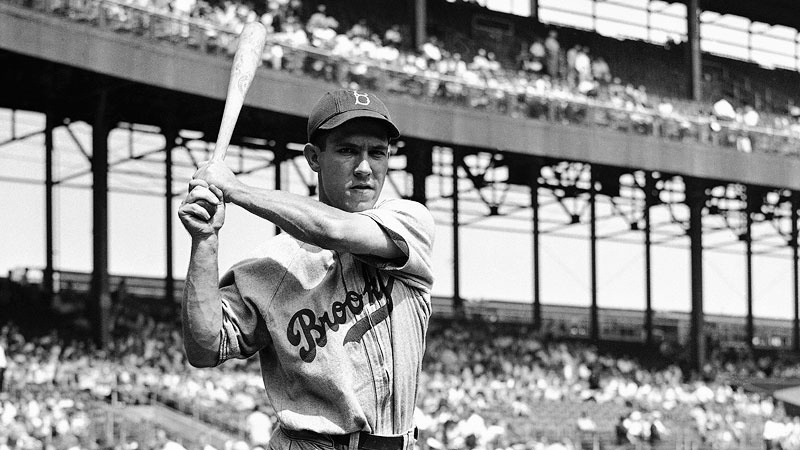
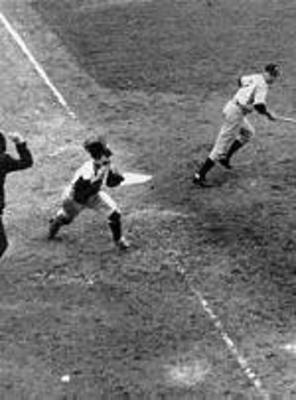
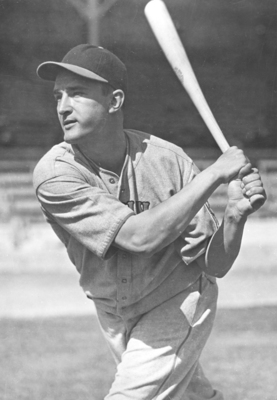
While Leo sat out for the season, Burt Shotton and Jackie Robinson took the Dodgers to their first pennant since 1941, Durocher's third year as manager.  He had been through a lot since then.  The Dodgers had fought with the Cardinals for first place.  The Cardinals were Leo's former team, Branch Rickey's former team and Pete Reiser's former team.  Durocher had seen Pete Reiser, the natural, the leader, the one man that had more talent (it was whispered) than even DiMaggio.  Reiser ran himself into a wall, literally, and fractured his skull.  The doctors told him to stay out or risk his life.  Durocher needed him in uniform for moral support but promised not to use him.  He couldn't keep the promise and Reiser's health was forever ruined.  Durocher saw many of his stars, Reiser, Reese and more, shipped off to war and miss the prime of their careers.


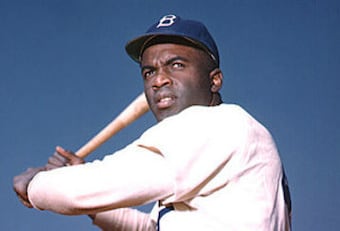
Durocher saw the same talent, or more, in Jack.  He couldn't wait to see what he could do.  He saw what Jackie could do, lead the team like few had done before, but Jack did it for Shotton and the Dodgers reached the World Series.  Durocher would need to wait for 1948 to get the advantages out of Jack's talent.  But if the Dodgers front office thought Jack's success the year before would mean immediate acceptance they were wrong.

The Dodgers bus pulled up to a Florida stadium in Spring Training 1948, overflowing with a record crowd to see the Dodgers.  Dodger Pitcher Rex Barney told the story of a big security officer stopping Jack at the entrance and questioning Jack's intelligence and literacy.  Durocher immediately spoke up.  "He can't go in there?  He can't go in that entrance?  Then we are not going in there.  Do you know what that means?"  In Barney's story the security guard relented knowing the overflow crowd would likely riot.  It was a rare moment of camaraderie between Jackie and Leo.


Like most award winning players, especially one as spectacular as Robinson, everyone wanted a piece of him.  Four off season months and lots of rubber chicken dinner speaking engagements later, Jack appeared at Spring Training twenty pounds above his 1947 playing weight.  Durocher was appalled.  Robinson wasn't the only over weight star.  Pete Reiser and Jack were forced to run for hours in rubber sweat suits to work off the excess fat.  While they were running laps in tropical heat Durocher was yelling at them "C'mon fatso!  Get moving."  It was humiliating for the players and Jackie resented it.

The difference between Shotton and Durocher was night and day.  Shotton had told the Dodgers that he would stay out of their way and that they could win despite him.  Durocher drove them relentlessly and let them know who was boss.  The pressure on Shotton was non existent.  If he had lost it would have been what everyone expected.  For Durocher the pressure was ever-present.  He was terrified that if the Dodgers struggled he would be blamed and fired.  The season was a disaster.  The team struggled.  Robinson struggled.  As the pressure mounted Durocher took it personally.

On Sunday, June 11, the Dodgers lost 3-2 to the Giants and fell to 35-37.  It was Durocher's last game as a Dodger manager.  On July 15, the Giants split a double header, bringing their record to 37-38.  Their manager, Giant legend Mel Ott, was fired and replaced with none other than Leo.  If the Dodger's Giants rivalry had been dormant for a few years it was about to erupt.


Durocher's style of managing caused quite a bit of resentment to the remaining Dodgers.  Two players in particular, Jackie and Carl Furillo, hated Leo.  Leo was from the old school.  The school that thought if you can distract your opponent they won't focus on the job.  Durocher would stand in the coaching box and mimic a person with a swollen head and point to Jack. 

After a tight pitch from Sal the barber, Jackie bunted the next pitch foul down the first base line and ran straight through Maglie.  Durocher yelled to Jackie.  "That's bush league Robinson."  Jack yelled back "You should know.  You taught me to do it."

Durocher was a master taunter but Jackie could give it right back.  Russ Meyer, a former Giant who was traded to the Dodgers said "He (Jackie) hated Durocher with a goddamn passion.  He used to taunt him." According to Meyer Robinson yelled taunts like "Hey Leo, who you gonna marry next?  Is Laraine taking good care of you?"

The funny thing about rivalries is that once the years go by the anger usually fades.  At the end of their careers both had won World Series.  Both ended in the Hall of Fame and both were remembered as successful.

Jackie himself reflected on the rivalry with clarity.  He remembered the spring training from hell in his auto biography.  "To get me in shape, Leo put me through some furious physical paces.  They were humiliating because rookies, reporters and teammates were all onlookers.  Leo also kept after me verbally, and as the world knows, he is a magnificent tongue lasher.  At the time I thought he was being too excessive, but later I realized he was only doing what was necessary, and even though his comments hurt, I could not forget that Durocher had done all he could the previous year to help ease my way into the majors...I think that Leo felt I had not given him my best effort and was working harder for Shotton.  That wasn't true but on the playing field Leo and I got into a number of hassles that were picked up by the press.  Leo and I were alike in so many ways, and that could have been part of our problem.  But no matter how many verbal insults were exchanged, I believe we never lost the respect we had for each other's abilities."

TRIVIA QUESTION:
Current Dodger Manager Don Mattingly has asked for a three year contract as a reward for his success.  It has been a long time Dodger organization policy to only give Dodgers' managers a one year contract (this dates back to long before the move from Brooklyn).  In fact, legendary Dodger manager Tommy Lasorda never had a contract longer than one year.  Mattingly's demand for a three year contract is eerily similar to the demand of Brooklyn manager Charlie Dressen back in 1953.  Dressen had led the Dodgers to a three game playoff against the Giants in 1951, followed by back to back National League Championships in 1952 and 1953.  Dressen wrote a letter to Walter O'Malley demanding a three year contract.  O'Malley did not deal well with demands from others so he replaced Dressen.  Who replaced Dressen as Dodgers manager?


Answer to Last Week's Trivia Question:
In games 1 & 2 of the 1951 World Series the Yankees started a young outfielder in his first full year in the Major Leagues.  The right fielder went 0-3, with 2 walks in Game 1.  In Game 2 the young player went 1-2 with a run and strikeout.  He only played part of the second game.  In the top of the 5th inning, Willie Mays led off the Giants' 5th inning with a fly ball to right-center field.  Joe DiMaggio moved over to track down the fly ball, invading the right field territory.  The young right fielder had started to track the ball himself but when he saw DiMaggio tracking it he attempted to move into a back up position.  When he changed his course Mickey Mantle caught his spike on an exposed drain pipe and severely damaged his knee causing pain for the rest of his life.

Thursday, April 11, 2013

Your Guide to 42: Watching the Movie Made Easy

The movie 42 is being released on April 12 and to be honest it has been a long time since I have been this excited for a movie.  Living in the LA area and loving the history of the game as I do, obviously I have read and researched Jackie Robinson quite a bit so I am going into this movie with what I feel is a pretty good understanding of how the people listed in the cast will be portrayed as well as what the key points of the film will be.  Recently, I was discussing the film with a friend and realized that not everyone will recognize the characters or know why they are important.  My intent with this article is to give anyone who plans to see the movie a better understanding of what you will be seeing and filling in the back story to allow you to focus on the movie with a clearer understanding of who everyone is.


KEY PLOT POINTS
Based only on what I have seen in the trailers and the cast list (found on imdb) it appears that there will be a few key focuses of the movie.
  1. Jackie's life leading up to his signing with the Dodgers organization, his relationship with his wife Rachel, his relationship with Clyde Sukeforth (the scout who brought Jackie to Brooklyn) and his relationship with Branch Rickey (the Dodgers owner who decided to break the color barrier).
  2. His 1946 season with the Dodgers farm team in Montreal, his relationship with his first manager, Clay Hopper, his acceptance by the Canadian fans and his fight to deal with the resistance of the white players and fans in the minor league.
  3. A petition circulated by many of the Southern players (and some non southerners) on the Dodgers 1947 team asking Branch Rickey not to bring Jackie to the majors.  The petition, started by Outfielder Dixie Walker and signed by most of the southern players, as well as a few northerners, has become a controversy in the study of Jackie Robinson.  The petition has never been seen and some of the players accused of signing it say it never existed and several who claim it did exist say they never signed it.  In this storyline look for Pee Wee Reese and Pete Reiser, the two Dodgers stars, to refuse to sign it.
  4. The Dodgers first game of the 1947 season against the Boston Braves.
  5. The Dodgers first and second series against the St. Louis Cardinals where Enos Slaughter spiked Jackie, Joe Garagiola argued with Jackie and Stan Musial calmed Jackie down.
  6. The Dodgers first series in Philadelphia where the Phillies, led by manager Ben Chapman, brutally taunted Jackie.  This was one of the first times that the team rallied in his support.  The reaction of the Dodgers and several others nearly cost Chapman his job.
  7. The Dodgers series against the Pirates where Fritz Ostermuller threw at Jackie's head, Hank Greenberg showed strong support for Jackie and Kirby Higbe threw at Pee Wee Reese's head.
  8. The eventual acceptance and support of Jackie's teammates and Jackie's success in the league.
It does not appear, based on the list of characters, that the movie will go past the 1947 season (there is no mention of Roy Campanella, Duke Snider, Gil Hodges or Carl Erskine), however, as mentioned above this is all speculation based solely on the previews and list of characters on the IMDB page.

CHARACTERS
Following is a list of characters you will see in the move broken into five categories:  1. Jackie and his family, 2.  Dodgers Management and Personnel, 3.  Dodgers Players, 4. Other league players and personnel and 5.  Individuals not listed but likely to appear in the film:

JACKIE AND HIS FAMILY
Jackie Robinson:

Obviously Jackie Robinson is the focal point of the movie and one of the most recognizable players in the history of the game.  There will be many posts of Jackie to come (and some that have already mentioned him) but there are a few key life points that will obviously be important to know. Jackie was born January 31, 1919 in Cairo, GA.  His mother moved the family when Jackie was very young to live with her brother and his family in Pasadena, CA.  Jackie originally attended Pasadena Community College then went on to become a lettered athlete in baseball, basketball, track and All-American football star at UCLA and was the first student at the school to letter in four sports in the same year.  Jack left UCLA just before graduation and was hoping to work towards being an Athletic Director.  He went on to play professional football (not in the NFL) and ended up playing in Hawaii.  As he was returning from Hawaii after the season the Japanese bombed Pearl Harbor.  Jack enlisted in the army and was in an officer training program.  While in the service he got into an argument with a white officer and was court martialed on exaggerated charges.  He was discharged, returned to the states and was offered a job playing in the negro leagues.  He was the Shortstop for the 1945 Kansas City Monarchs when he was approached by Clyde Sukeforth.

Rachel (Isum) Robinson:
Rachel Isum met Jackie Robinson when they were both students at UCLA.  Rachel was studying nursing and later went on to get a PhD in nursing becoming very successful and celebrated in the field.  Rachel and Jackie married and had a very successful marriage full of mutual love and support.  They had three children and without Rachel's support Jackie never would have succeeded in 1947.  The two were truly a team.  This is a perfect example of the saying that "behind every successful man is a successful woman".  Since Jackie's death in October 1972 Rachel has done a great job of preserving the legacy of Jackie Robinson and is often seen at events honoring his memory.

Mallie Robinson:
Mallie McGriff Robinson was one of 14 children born to Wash and Edna McGriff, slaves in the Cairo, GA area.  She married Jerry Robinson and had five children, Jackie being the youngest, and they worked as sharecroppers in Georgia.  Eventually Jerry left the family and Mallie could not afford to pay the rent on the land.  She packed up her five children and moved to live with her brother's family in Pasadena, CA.  She worked hard to support the five children and as they got older they helped support Mallie.  Her son Mack was an Olympic Athlete who finished second to Jesse Owens in the 1936 Berlin Olympics.

DODGERS MANAGEMENT/PERSONNEL
Branch Rickey:

Branch Rickey was one of the most successful executives in baseball when he signed Jackie to a professional contract.  A deeply religious man he refused to work on Sunday, even when he was a Catcher for the Yankees and later manager of the Cardinals.  Rickey often told a story of his time as the coach at Ohio Wesleyan University.  When the team tried to check into a hotel before a road game at Notre Dame, Rickey was told the team would not be accepted if they planned to check in with Charles Thomas, their African American Catcher.  Rickey was able to convince the hotel to allow them to stay as long as Thomas did not sign the register and Thomas was only given a cot in Rickey's room, not an actual bed.  When Rickey got to his room Thomas was sitting on the edge of the cot, crying and scratching at his hands.  Rickey stopped and watched not knowing what to do.  Thomas just said "It's my skin.  If I could just tear it off I would be like everyone else."  Rickey went on to become an executive with the St. Louis Browns and St.Louis Cardinals, introducing the famous Cardinals logo of two birds perched on a baseball bat.  He revolutionized the sport by developing the first farm system of teams but he kept the terrible memory of Charles Thomas in his mind the rest of his life.  After Happy Chandler,  the new commissioner, made a statement known as the "four freedoms"statement, the door was open for Rickey to break the color barrier.

Clyde Sukeforth:
Clyde Sukeforth was sent by Branch Rickey to scout Jackie and was told he was scouting players for the Brooklyn Dodgers negro league team.  Sukeforth reported back to Rickey, brought Jackie in for the first ever meeting and was a longtime supporter of Jackie.  Frequent readers of the blog will remember that Clyde was featured in the series of articles focusing on players you may not know but should.

Clay Hopper:
Clay Hopper was a Southerner managing the Brooklyn Dodgers' farm team, the Montreal Royals, when Branch Rickey assigned Jackie to play for the Royals.  Hopper was appalled that he would be the first white manager to manage an African American player and begged Rickey to assign Jackie to another team because he was terrified of what his neighbors would do.  While watching Jackie in practice before the season Rickey turned to Hopper and said "Can you believe the play that man just made?"  The response summed up Hopper's beliefs.  He asked Rickey "Mr. Rickey, do you really think a n*****'s a human being?"  Hopper did his best to adapt to the situation ( if he didn't he would be out of a job) and to adapt to the changing world.  As the Dodgers continued to sign players to follow Jackie's success Hopper continued to manage Montreal.  Joe Black, Roy Campanella and Don Newcombe all played under Hopper and although his racial views may or may not have changed, Campanella said he never had any negative experiences with Hopper.

Larraine Day:

Larraine Day was a famous actress best known for staring in the Dr. Kildare movie series along with Lew Ayres (husband of Ginger Rogers).  Day herself was married to actor Ray Hendricks, although she was carrying on an affair with Leo Durocher, the Dodgers manager.  Day and Hendricks sued each other for divorce on the grounds of infidelity and the scandal led to long time Dodger supporters, such as the Catholic Youth Organization, boycotting the team.  Already in hot water for his other issues, the Dodgers ordered Durocher and Day to end the relationship.  They refused, remained together and even married.  When Durocher moved to the Giants, Day was given a pregame radio program called "Day with the Giants".

Leo Durocher:

Durocher is famous for many things but the most famous was the statement he probably never made: "Nice guys finish last."  He was originally signed by the Yankees but was released when Babe Ruth accused him of trying to steal his watch.  Durocher was part of Rickey's "Gashouse Gang" 1934 Cardinals and was a fierce competitor who was always ready for a fight.  Before the 7th game of the 1934 World Series the legendary Frankie Frisch asked Durocher to play a little closer to second because Frisch was concerned he was too exhausted to play with his normal range.  He told Frisch, who was also his manager, "Go get yourself a wheelchair if you can't cover your territory.  I'm not making myself look bad to make you look good."  Durocher's controversy didn't begin or end with the Larraine Day scandal.  His battles with Lee MacPhail were legendary.  Durocher was also known to associate with George Raft, a Hollywood actor and close friend of mobster Bugsy Siegel.  Happy Chandler demanded that Durocher cut ties with the mobsters (and Raft) or he would be disciplined.  When Durocher taunted MacPhail for having gamblers in his owner's box during a spring training game, MacPhail complained to Chandler and an investigation began.  While the investigation went on Jackie was in Spring Training fighting to be promoted from Montreal.  When Durocher found out about the petition signed by the southern players he called a team meeting.  He made it clear that the players better fall in line or deal with him. He yelled at the team "I don't care if he's yellow or black or has stripes like a god damn zebra.  I'm the manager of this team and I say he plays."  The day before Opening Day 1947 Durocher was suspended for his gambling connections.  He was replaced by Burt Shotton for the 1947 season but was back on the bench for 1948.  Durocher and Robinson did not get along.  When Jackie struggled at the start of the new year Durocher seemed to take it personally.  Durocher treated Jackie like he did his other players (with a lot of yelling) but Jackie did not respond well and the relationship soured.  Durocher was fired half way through the 1948 season and was immediately signed by the rival Giants igniting one of the most vicious periods of the rivalry.


Burt Shotton:

Burt Shotton was forced into a tough situation.  The Dodgers had tied for first place in 1946 and were expected to challenge for the pennant in 1947.  The season started with the player revolt and the Durocher suspension followed very quickly after.  Rickey originally wanted Joe McCarthy, former Yankees manager, to take over but McCarthy refused.  Clyde Sukeforth was given a temporary job but convinced Rickey that Burt Shotton was the man for the job.  Shotton was known for wearing regular clothes in the dugout and not the usual full uniform.  When Durocher was let go half way through the 1948 season Shotton was brought back and managed through the end of the 1950 season.  When Cal Abrams was thrown out at the plate by Richie Ashburn to clinch a Phillies win over the Dodgers on the last day of the 1950 season Shotton was let go.

Harold Parrott
Harold Parrott was the Dodgers traveling secretary given the impossible task of coordinating the Dodgers travel plans for the 1947 season.  Parrott played a big part in keeping the balance on the team.  When the players signed the petition to ask Rickey not to bring Jackie to the Dodgers, Parrott was the one who learned of the player revolt and brought it to Rickey's attention.  Rickey told Parrott that he had confidence that everything would work out.  Rickey predicted there would be some kind of incident that would rally the team behind Jackie.

Red Barber

Red Barber, a southerner, was the Dodgers long time broadcaster who voiced his concerns to Branch Rickey about breaking the color barrier.  He may not have agreed with the signing at first, however, he quickly came to admire Robinson and was a great supporter of Jackie.  Barber worked with a young Vin Scully in Brooklyn to broadcast the Dodgers games and taught Scully everything he knew.  Shortly after Rickey sold his shares of the team to Walter O'Malley, Barber moved to the Yankees broadcast booth rather than working for O'Malley.

Jake Pitler
Jake Pitler was a first base coach for the Dodgers.  His Jewish background was used as a way to connect the team with the Jewsh community in Brooklyn.  Pitler was very supportive of Jackie.  During that first spring training Pitler told the press "It would be a crime not to let this boy come up because of his color."  Throughout the season Pitler routinely pointed out that Jackie was the motor that made the Dodgers go.


Dodgers Players:
Pee Wee Reese (Uniform #: 1):
One of many southern born players on the Dodgers, Reese was overseas in the military service when the news came out that Jackie had signed a contract with Brooklyn. Jackie had played Shortstop for the negro leagues, Reese's position.  When he was asked how he felt about Jackie possibly competing for Pee Wee's job, Reese said "if he can outplay me he deserves to play."  During Jackie's rookie season as the Dodgers were playing in Cincinnati Jackie was being heckled horribly.  During an in between inning warm up Pee Wee walked over to Jackie who was being called terrible names from the crowd.  He put his arm around Jackie's shoulder and just stood next to him looking at the crowd.  They didn't yell anything back to the crowd but it was a clear signal that the Dodgers players were standing by their teammate.  Reese and Robinson were very close friends.  They rarely hung out outside of the clubhouse but the two had an eternal respect for each other and loved to clown around before and after games.

Carl Furillo (Uniform # 6):

Furillo was one of the best players during the glory days of the Brooklyn Dodgers and one of the most misunderstood. An intense competitor, he was quiet, moody and with a quick temper. Furillo's part in the arrival of Jackie Robinson is full of controversy. When the Southern players drafted their petition they asked Furillo to sign it. What happened next depends on who you decide to believe. Furillo claims he flat out refused to sign it. Branch Rickey and later Buzzie Bavasi claimed Furillo had signed the petition. Some claimed Furillo signed it to keep Jackie out, while Bavasi claimed it was out of peer pressure and not out of any malicious intent. When the movie "Jackie Robinson Story" was released there was an Italian-American ballplayer who signed the petition but was not mentioned by name. Furillo was convinced that the player represented him and was furious he was being portrayed as a racist. It is not clear how he will be portrayed in the movie although based on the list of Dodgers players it appears he will be included in the group signing the petition. Jackie and Furillo were never close. Once asked what he would do if Jackie tried to take his job Furillo replied "I'd cut his legs off." Realizing how it would appear in print Furillo immediately went to Jackie and explained that although he said the words it was not intended as a racial comment but only in terms of a player fighting for his job. He had thought of the question only in terms of a baseball player trying to take his job and not as a racial question. Furillo did not socialize with Jackie outside the clubhouse (Furillo socialised with very few players) but on the field they supported each other.

Dixie Walker (Uniform #11):

Dixie Walker was born and raised in Georgia, as his name would suggest, and he was proud of his southern heritage.  Walker started his career in New York with the Yankees and is the only player to have played on the same team with Babe Ruth and Jackie Robinson.  While playing for the Yankees he was roomed with Ben Chapman, manager of the Phillies when Jackie broke into the league.  Walker was a fan favorite and important part of the improving Dodger organization.  The year before Jackie arrived Walker finished second in MVP voting as the Dodgers ended the regular season tied for first place with the Cardinals.  When Dixie found out that Rickey planned to bring Robinson to the Dodgers he gathered the southern players of the team together and started a petition asking Rickey not to force them to play with an African American.  From most sources Walker seems to be the main instigator of the petition idea (though the other players seemed to need little prodding).  Walker may not have liked Robinson but he learned to be professional around him and even helped Jackie in practices, something he would not do for other players.  When Duke Snider asked Walker for help on a play Walker told him "figure it out for yourself kid".

Eddie Stanky (Uniform #12)
Eddie Stanky had a good reason to fear having Jackie Robinson on the team. Stanky finished 7th in the MVP voting in 1946 for the Dodgers team that forced the first ever National League playoff. With Robinson playing a middle infield position and Pee Wee Reese, the team captain, at shortstop, it was clear where Jackie was destined to play. Stanky refused to sign the petition started by Dixie Walker, not necessarily because of Jackie, but out of loyalty to Branch Rickey. Stanky walked up to Jackie when he was officially given a spot on the Dodgers roster and said "I don't like you but we'll play together and get along because you're my teammate." As Ben Chapman and the Phillies launched an assault on Robinson, his teammates stood quietly by and let it happen. There was nothing they could (or would) do. Finally, during the third game in the Phillies series Stanky had had enough. "Hey you cowards, why don't you yell at someone who can answer back?" The Phillies did. Stanky was traded to the Boston Braves after the 1947 season and helped the Braves to their final National League Championship in Boston.

Ralph Branca (Uniform #20)


Ralph Branca is remembered for one pitch.  In the 1951 playoff against the hated Giants, Branca threw the pitch that Bobby Thompson turned into "the shot heard around the world" which started Russ Hodges screaming "the Giants won the pennant!" for seemingly hours.  In 1947 he was still a young pitcher for the Dodgers and was several years away from infamy.  He was throwing a no hitter against the Cardinals when Enos Slaughter spiked Jackie at first.  According to Branca he told Jackie he would bean the next Cardinals batter in retaliation but Jackie told him not to worry about it and just worry about getting the outs.  Branca did not finish the no hitter but he did do a lot to support Robinson in his time with the Dodgers.  Branca had several uniform numbers through his years with the Dodgers.  In 1947 he wore number 20, however, you may also see him in a #12 or #13 uniform.  He wore unlucky #13 at the time of Thompson's legendary home run.  Branca was also the father in law of Bobby Valentine.

Spider Jorgensen (Uniform # 21)
Spider Jorgensen was a team mate of Robinson's in Montreal and came up to the Dodgers in 1947 along with Jackie.  Jorgensen was in the spring training camp when Jackie first joined the organization and said he didn't think too much either way of having Jackie on the team. Jorgensen had played with African Americans in Junior College and in the California summer leagues and he had no concerns with having Jackie on the team.  (Only 10 months younger than Jackie, and being from California, it is likely that Jorgensen would have heard of Jackie's success at UCLA).  Like Hermanski, Jorgensen was a good player, but not a great player and as a rookie he probably felt it better to keep quiet and focus on playing in the 1947 season.

Gene Hermanski (Uniform # 22)
Gene Hermanski was a good outfielder for the Dodgers but not a great player. He first came to the majors in 1943 and hit .300 in only 18 games. He served in the military in 1944 and 1945 but was back for 64 games in 1946, hitting only .200. Hermanski is usually absent from Robinson literature and seems to have kept relatively quiet. This is just speculation but it may be that as a native of Massachusetts, and as a relatively marginal player at the time he may have had little social contact with the Southern players. He probably also felt it was best to keep quiet, keep his head down and focus on playing. He played a big part in the Dodgers success in 1947 and 1949 and their success in the early parts of the 1951 season. He was traded to the Cubs in June of 1951 and played through the 1953 season ending his career with the Pirates.

Bobby Bragan (Uniform #24)
Bobby Bragan was a utility player, mostly playing at Catcher, born and raised in Birmingham, AL. He did not play in 1946 but was back on the roster in 1947 for Jackie's rookie season. When he learned that Robinson would join the big league Dodgers, he signed the petition started by Dixie Walker. He also had salary issues with management and demanded to be traded. Bragan played in only 34 more games for the Dodgers over the next two seasons before retiring. He deeply regretted the petition he signed and went on to manage in the majors. Bragan's uniform number may also appear as#15. He wore #15 during the years 1943 and 1944. When he returned to the roster in 1947 he was given uniform #24.

Hugh Casey (Uniform #25)
Hugh Casey was one of the southern players who almost immediately sided with Dixie Walker when the idea of a petition was put forth. He and Jackie were never friends and Casey often made racial jokes in front of Jackie. Although they were not friends, Casey often worked with Jackie in practice and often defended him against other teams.

Rex Barney (Uniform #26)
Rex Barney was on the mound warming up in Cincinnati when the crowd started to verbally attack Jackie and Reese famously put his arm around Jackie's shoulder.  Barney would later say that Jackie was "the most exciting player I have ever seen- not the best but the most exciting."  Barney was a pitcher with a lot of potential but was often wild.  Going into the 1947 season he had pitched in 27 games and had a 4-7 record in parts of two seasons. He would go on to a 5-2 record in 1947.  His best season was 1948 when he went 15-13 with a 3.10 ERA.  His wildness continued to get worse as his career progressed and his career never got back on track.  After his playing days Barney worked for years as the stadium announcer in Baltimore.  He was known to say "Give that fan a contract!" anytime a fan made a nice catch on a foul ball and the end of announcements would often be completed with an exaggerated "Thank You!" extending the word you.  Following the Orioles last game played in Memorial Stadium the Orioles had a ceremony to celebrate the legends of the franchise.  The last sound that came over the PA of Memorial Stadium was Rex Barney's "Thank Youuuuuuu!"

Pete Reiser (Uniform #27)

Fans of the blog will remember the stories of Pete Reiser from the recent series of articles about players you may not know but should. Despite his many injuries and deteriorated state, the US Army called Reiser into duty and stationed him at Fort Reilly. The fort had a baseball team and obviously they wanted Reiser,a great star in the league at the time, on the team. As they were practicing they saw an African American Sergeant walk up to the field and just stand there watching not sure how to go about getting onto the team. The coach turned to him and told him he would "have to go play for the black team" which everyone knew didn't exist. Reiser did not clarify if he laughed along with the coach at the joke or kept silent but he did say that it was the first time he had seen Jackie Robinson and he would forever remember Jackie quietly walking away. Reiser was no pioneer in civil rights but he saw no reason Jackie shouldn't play. When Dixie Walker asked Reiser to sign the petition, Reiser told a story about his daughter being desperately ill while on vacation. The Reiser's looked up the closest doctor and went immediately. The doctor, who happened to be African American, treated Pete's daughter who immediately recovered. After telling the story he asked Walker what he would have done if he had been in that situation. Walker said he would have turned around and walked out of the doctor's office. Reiser told him he was a fool and flat out refused to sign Walker's petition.

OTHER LEAGUE PLAYERS/PERSONNEL:
Happy Chandler
Chandler was the second commissioner of baseball.  Judge Kennesaw Mountain Landis (the first) died  in 1944 Chandler replaced him (after a brief interim commissioner) and immediately showed that he intended to run things differently.  Landis had repeatedly said publicly that there was no ban on African-Americans playing in the Major Leagues but behind the scenes made it clear that he would not allow it.  Chandler was different.  Chandler was asked by two African American reporters whether he would continue Landis's policy.  He responded "I'm for the four freedoms and if a black man can make it at Okinawa and go to Guadalcanal, he can make it in baseball." Chandler, born and raised in Kentucky, was widely criticised by southern fans.

Johnny Sain (Uniform #33 for Braves)
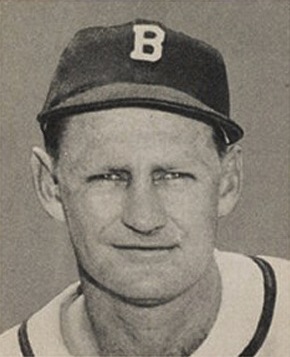
There was a clear game plan for the Braves in the 1940's and 1950's. The pitching staff was "Spahn then Sain, then pray for rain". Sain won 20 games in 1946 and would win another 21 in 1947. On April 15, 1947 Sain started the opening day game against the Dodgers and was the first pitcher to face Jackie Robinson in a regulation Major League game. Sain had a great amount of success against Jackie and throughout the years Jackie struggled to hit Sain's curve ball. Sain would win 24 games in 1948 as the Braves reached the World Series and would later go on to be a long time pitching coach for the Yankees.

Ben Chapman (Phillies Manager):


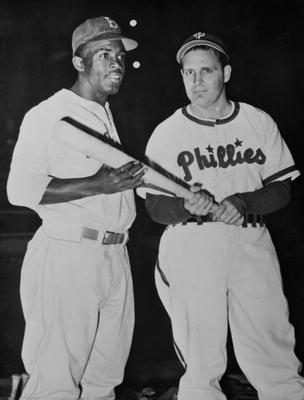
Chapman will likely be the villain in the movie.  He played for the Yankees in the early 1930's and was often the center of controversy in his playing days.  He was known around the league as a borderline dirty player and during the 1933 pennant race with the Senators he repeatedly spiked the Senators Second baseman Buddy Myers and had several altercations with the Senators team.  Chapman also got into trouble in New York when he made several off color jokes about Jewish fans.  When DiMaggio joined the Yankees Chapman became expendable and was traded.  He eventually wound up in Philadelphia and was player-manager beginning in 1945.  Chapman was born and raised in Alabama and was not shy about letting the world know he was against the integration of any institution, not just baseball.  When the Dodgers visited Philadelphia for the first time, Chapman began a barrage of abuse against Jackie and ordered his players and coaches to do the same.  Several Phillies players held their bats like machine guns, aimed them at Jackie and made gun noises.  The intensity of the abuse was well beyond what the Dodgers had suffered in any other city.  Chapman was criticised by the Dodgers, the press and the Phillies management.  Chapman was quick to say that he was only doing what had been done to all players, trying to get an advantage by "bench jockeying" and refused to admit he had targeted Jackie more intensely than he would have done to any other rookie.  The Phillies management was ready to fire Chapman immediately.  Chapman offered to apologize to Jackie and had Harold Parrott ask Jackie to help him out by taking some pictures together for the press.  To his credit Jackie agreed and photos of the two of them with uncomfortable smiles appeared in the papers the next day.  The only thing that Jackie insisted on for the apology was that Chapman come over to the Dodgers dugout to apologize.  The incident did nothing to change Chapman's outlook on life.

Herb Pennock:
Herb Pennock was a legend in Philadelphia. Known as "the Squire of Kennett Square" where he grew up, Pennock was signed by Connie Mack in 1912 and pitched for Mack's 1914 AL Champion Athletics. When Mack dumped payroll after the World Series loss, Pennock went on to pitch for the Red Sox until that team shifted most of their best players to the Yankees and he moved to New York in 1923. He was the star pitcher in the Yankees first World Series win. At the time Jackie came into the league Pennock was the General Manager for the Phillies and was ready to fire Ben Chapman after the ugly incident. Only Chapman's "apology" to Jackie saved his job.

Eddie Dyer
As a rookie manager in 1946 Eddie Dyer led the Cardinal to a first place tie with Brooklyn, a victory over the Dodgers in the first ever National League playoff series and a seven game World Series win over the Red Sox. Leading into opening day 1947 , Dyer had to deal with his players, led by a southern contingent, threatening to go on strike if they were forced to play in the same league as Jackie Robinson. Fortunately for Dyer, NL President Ford Frick ended all of the strike talk quickly by saying that anyone who chose to go on strike in protest of Robinson could stay home because they would not be welcomed back...ever. Following the first series with the Cardinals, Jackie mentioned Eddie Dyer as one of the "swell bunch of guys" who had treated him well.

Stan Musial (Uniform #6 for Cardinals)
Frequent readers who saw the post that was completed at the time of Musial's passing will know that he is generally considered one of the nicest and classiest men to have ever played the game. He was named along with Garagiola and Eddie Dyer as two players treating Jackie well during the Dodgers' first visit to St. Louis. When the Cardinals played the Dodgers in the second series, when Slaughter spiked Jackie and Garagiola had his confrontation with Robinson, Jackie was on first base and was angry. Jackie reportedly said (either to Stan or to the first base coach) "I don't care what happens but when I get down to second base I'm going to kill someone." Musial's response was "I don't blame you. You have every right to do it." Musial's calm, classy response calmed Jackie down.

Joe Garagiola (Cardinals Uniform #17):

Joe Garagiola was stationed at Fort Reilly with Pete Reiser when Jackie was told he would "have to go play for the black team".  There is no documentation that I have found to detail Joe's reaction. Garagiola's portrayal in the movie could go one of two ways.  Following the Dodgers' first visit to St.Louis in 1947 Jackie singled out several players as having treated him very well and being "swell guys".  Garagiola was one he singled out as being in that group.  The second time the Dodgers faced the Cardinals, during the playoff race, things did not go quite so well.  In the same game that Enos Slaughter spiked Jackie, Garagiola spiked Jackie as he tried to beat out a double play ground ball.  When Jackie came to bat Garagiola, a catcher,  and Robinson had a heated conversation, leading to Garagiola taking off his mask and the two exchanging words face to face. Garagiola forever denied that the spike was intentional and it is possible that Jackie overreacted to an accidental spiking, having been viciously spiked earlier in the game by Slaughter, not knowing that Garagiola was just running out a ground ball.  Garagiola was a childhood friend of Yogi Berra, both growing up in the St. Louis area.  Joe is best known for his humor and his career as an announcer after his playing days.  Garagiola had a thick, identifying accent and was the voice of the baseball and the World Series on NBC for nearly twenty years.  His last World Series broadcast was in 1988.  Garagiola was a television figure for decades hosting several game shows, appearing on the Today Show as a regular host and a fill in host for Johnny Carson.  During one 1968 hosting stint, filling in for Carson, Garagiola welcomed John Lennon and Paul McCartney to The Tonight Show.  It was the only appearance of any Beatles (as Beatles or later as solo artists) on The Tonight Show.  Garagiola continued broadcasting after leaving NBC and spent time on broadcast teams for the Angels and Diamondbacks.  Just over a month ago, February 22, Garagiola officially retired.

Billy Herman (Uniform #11 for Pirates)
Billy Herman was a great second baseman for the Cubs. A seven time All Star in Chicago and team leader for the Cubs' 1932, 1935 and 1938 World Series teams, the Dodgers made a trade for Herman early in 1941 and the double play combination of Herman and Reese helped lead the Dodgers to their first World Series since 1920. Herman hated Branch Rickey and was traded to the Braves midway through the 1946 season (the final straw that sent Herman packing is debated). In 1947 Herman was in his last year of his career and was playing for the Pirates. He is mentioned very little in connection with Robinson that I am aware so it is unclear if he will be one of the Pirates vocally against Jackie or one who showed concern when he was hit by Ostermuller.

Fritz Ostermuller (Uniform # 21 for Pirates)
When the Dodgers first faced the Pirates in 1947, the Pirates were a divided team among themselves, which likely explains why they ended so low in the standings that year (62-92, last place, 32 games behind the Dodgers).  Ostermuller was not happy that Jackie was in the league and took the opportunity to show Jackie what he thought. The first pitch was up and in, aimed right at Jackie's head.  Jack was able to get his arm up to deflect the ball but fell to the ground and was in severe pain.  His Dodgers teammates came to his defense and challenged Ostermuller, several Pirates players also showed some concern.  Later in the season, when Jackie stole home for the first time in his career, it was against Ostermuller. In that same series in Brooklyn Jackie homered off Ostermuller.

Kirby Higbe (Uniform #13 for Pirates)
Kirby Higbe was a southern born pitcher known to his teammates as Kirby "F'ing" Higbe because as soon as he checked into a hotel on the road he would call room service and announce "This is Kirby F***ing Higbe in room 205.  Send up...".  He would then charge the laundry list of items to the team.  When Dixie Walker asked players to sign a petition to keep Jackie off the team Higbe reluctantly signed.  A few days later he was having a few beers with Harold Parrott and his guilt got the best of him.  He let Parrott know of the planned revolt leading Rickey and Durocher to react.  His involvement led Rickey to trade Higbe to the Pirates, along with several players including future long time manager Gene Mauch (not in any way involved in the petition but just a very interesting side note), in exchange for Al Gionfrido.  Gionfrido would be one of Jackie's biggest supporters in the clubhouse and would make one of the greatest catches in World Series history in the 1947 World Series.  Higbe's part was not over.  The day before Ostermuller threw at Jackie, Higbe started against the Dodgers.  Pee Wee Reese led off the game and the first pitch was identical to the one Ostermuller sent at Jackie the day before, although Reese was not hit by the pitch.  Most believed it was because Pee Wee had refused to sign the petition but there could have been deeper bad feelings between the two as they were long time teammates.  Reese stepped back into the box and sent the second pitch of the game out of the park for a home run.

"Young" Ed Charles:
Ed Charles is listed on the IMDB cast page as "young Ed Charles" in the movie.  Charles would have been a week away from turning 14, growing up in Daytona Beach, FL, when the Dodgers opened the 1947 season.  Charles went on to be a pretty good player on some very bad teams.  He was drafted by the Braves in 1952 but would be moved to the Athletics organization before the Braves became consistent National League contenders.  He would play for the Athletics during the bad Kansas City years and then would be moved to the comical Mets.  Charles was still with the team when the  "Miracle Mets" won the 1969 World Series.  Ed Charles is still active in the baseball community and is very well respected.  He will likely be utilized to portray the doors that were opened to the youth of the country because of the success of Branch Rickey's plan and Jackie's hard work.

CHARACTERS NOT LISTED BUT LIKELY APPEARING OR BEING REFERENCED:
Hank Greenburg (Uniform #5 for Pirates)

Hank Greenberg was one of the greatest players the American League had ever seen and ranks along with Ty Cobb as the best player in Tigers history.  He won two American League MVP's and was a war hero.  After the 1946 season the Tigers traded the great First baseman to the Pirates.  He had no intention of going to the NL and planned to retire.  He was convinced by Bing Crosby, owner of the Pirates, to play for one season.  During the Pirates series with Brooklyn, when Jackie was on first base, Greenberg gave Jackie plenty of encouragement.  Having suffered years of abuse for his Jewish background Greenberg empathized with what Jackie was experiencing.  Greenberg offered to take Jackie out to dinner after the game but Jackie declined saying he was afraid it would put Hank in a bad position.

Bob Feller (Indians Pitcher) 

Bob Feller was one of the best pitchers in the history of the game  When he was asked how he felt about Robinson he said that he did not think he would make it in the majors because "he's all tied up in the shoulders" referring to Jackie's awkward almost lunging swings at times.  He was not the only one who felt Jackie's mechanics at the plate would make him an easy out.  Feller said that he doubted Jackie would have even been given a chance to play if he had been a white man.  A few months later he would be teammates with Larry Doby.

Dan Bankhead (Uniform # 23 for Dodgers)
Midway through the season when it was clear that Jackie was a success Rickey wanted to expand the experiment to cement the idea that this was for real and not just a stunt or gimmick.  On August 26th Rickey signed Dan Bankhead of the Negro League's Memphis Red Sox.  Bankhead made his debut on August 26th and was the second African American player to play in the National League.  He was not nearly as successful as Jackie.  He pitched in 18 innings with no record but an ERA of 7.20.  He finished his career in 1951 with a career 9-5 record and a 6.52 ERA.

Larry Doby (Uniform #14 for Indians):

It would be an interesting study to try and figure out what makes one person successful and another less successful under the same adverse conditions.  Larry Doby became the first African American to play in the American League on July 5, 1947, just a few months after Jackie Robinson debuted for the Dodgers.  Doby did not have the support (of management or teammates) or the personality of Robinson.  While Robinson and Rickey understood that always keeping quiet and not fighting back his first year in the league would help him in the long run, Doby was often angry, morose and distant.  Doby did not get the following or the attention that Robinson did and was often portrayed in books and newspaper articles as bitter.

Bill Veeck:
Bill Veeck owned several teams over the years and was always looking for ways to bring fans into the seats.  When he owned the Browns he hired a midget, Eddie Gaedel, to pinch hit for one game.  Later, when he owned the White Sox, he came up with Disco Demolition night and the players wearing shorts instead of the traditional pants.  Before Branch Rickey came up with the idea of breaking the color barrier, Veeck had planned to buy the Phillies and fill the starting lineup with African American players.  When Commissioner Landis learned of Veeck's plan he made sure the Phillies were sold to someone else.  As the owner of the Indians, Veeck was able to break the color barrier in the American League by signing Larry Doby. 

Buck O'Neil:

Of all the people who deserve to be in the Hall of Fame but are not, Buck O'Neil tops the list.  He never played in the major leagues, never managed in the major leagues but he was one of the greatest ambassadors the game has ever had.  Buck was Jackie's manager when he played for the Kansas City Monarchs of the Negro Leagues.

Sunday, December 30, 2012

13 Players You May Not Know From the 1940's But Should

The 1940's were a decade of struggling to survive economic trouble and international chaos and a decade of one drastic change that took too long to occur.  Several of the teams regularly at the bottom of the league in the 1930's rose to become consistent contenders.  The Braves, Red Sox, Indians, Dodgers and even the Browns reached the World Series.  The Giants, Athletics and White Sox fell on very hard times.  The league saw some of the best, closest races ever including the 1948 American League race that ended in a one game playoff between the Indians and Red Sox.

The baseball world was shocked on June 2, 1941 to learn that Lou Gehrig had passed away from ALS.  It seemed unbelievable that Lou Gehrig, often used as the poster boy of good health and physical prowess, could die so young of a disease so crippling.  Gehrig had started noticing some issues in 1937 but thought it was maybe his age catching up with him and slowing him down.  As the team reported for Spring Training in 1938 Gehrig noticed he was having problems with everyday tasks like lifting his legs to put on his pants and tying his shoes.  His coordination was off and he somehow just couldn't hit the way he used to hit. Gehrig went to the Mayo Clinic and was told of his diagnosis.  The man known as "Iron Man" was eroding before the eyes of the world.  Gehrig remained positive but there was no cure and his case of the disease ravaged his body quickly.


The greater part of the decade was interrupted by World War II.  Just six months after the death of Gehrig, the United States was attacked at Pearl Harbor, forcing the country into the conflict.  The league continued to operate through the war, however, many of the leagues great players including Ted Williams, Joe DiMaggio, Bob Feller and Hank Greenberg were sent off to fight in the war.  While the players were away, the Browns snuck into the 1944 World Series.  The war played havoc, not only with the outcome of the seasons, but the way games were broadcast.  Due to fears of air raids or the enemy getting intelligence about the weather patterns to plan attacks, broadcasts were not permitted to give any detail at all about the weather or temperatures.  When games went into rain delays the announcers just kept talking until the game resumed as though it were just a pause in the game.  During a St.Louis Browns game that went to rain delay Dizzy Dean, broadcasting for the Browns, ran out of filler material and told the listening audience "I'm not allowed to tell you why this game is being held up, but if you just stick your head out the window I'm sure you'll figure it out."


The World Series' played during the decade saw some great moments.  The Dodgers reached the Fall Classic in 1941 for the first time since 1920 and looked to be serious contenders for years to come.  They were still missing one piece but would have it by the end of the decade.  The Tigers lost the 1940 World Series in 7 games to the Reds, then rode the strength of Greenberg's return from war in 1945 all the way to a World Series win in 7 games over the Cubs.  The Red Sox reached the World Series for the first time since 1918 but would lose in 7 games to the Cardinals.  The 1948 World Series was between two surprise teams, neither of which had been in the World Series in decades. The Indians were in their first World Series since 1920 and the Braves since 1914.  The Indians won but have not won since.

The 1945 World Series saw the casting of a curse that still terrorizes Cubs fans today.  The Cubs led the best of seven series 2 games to 1 and were getting ready for Game 4 at Wrigley Field.  Billy Sianis, owner of Billy Goat Tavern in Chicago, bought two tickets to the game. One for himself and one for his mascot, a billy goat.  He apparently was allowed to bring the goat into the stadium, however, when he found his seat several of the other fans in the area felt the stench of the goat was too much to stand.  They complained and the Cubs officials asked Billy and his goat to vacate the premises.  Sianis was furious and sent a telegram to Mr. Wrigley which told him the Cubs would  "lose this World Series and you will never win a World Series again because you insulted my goat."  Cubs fans will point to the angry tavern owner (and not to the fact that they have routinely had sub par players and often owners who refused to spend the money needed to bring in the pieces they were missing or made poor personnel decisions) to explain the fact that the Cubs haven't won a World Series.  (They also ignore the nearly 40 years without a World Series win before the curse was invoked).

There was one change that took way too long to happen, yet, when it did, it completely changed the way the game was played.  Branch Rickey had long wanted to integrate the game and there had been a few half hearted attempts by others throughout the years.  Bill Veeck had once tried to buy the Phillies organization and fill out the roster with all players from the Negro Leagues but when the other National League owners heard of his plan they made sure the team was sold to someone else.  Rickey realized that once African Americans were allowed to risk their lives to fight for the country overseas, it made no sense to keep them from playing the national past time when they came home.  Rickey searched long and hard to find the right person to break the color barrier.  Had he looked forever he never would have found a better person.


Jack Roosevelt Robinson was an All-American football star at UCLA, an Olympic champion, a military veteran and a member of the Negro leagues.  Rickey called him to his office and explained his plan:  Jack would be signed to play for the Dodgers with the understanding that no matter what happened, regardless of the things yelled at him, objects thrown at him, attempts to spike him or intimidate him Jack couldn't fight back  He couldn't respond.  This was not just about the success of Jack.  This was about the success of an experiment to see if the country would be able to accept this mixing of the races.  The pressure that Robinson was under is beyond comprehension.  There was no one he could turn to and discuss the loneliness, the hurt, the stress, the anger.  When Robinson stepped on the field in 1947 he had to ignore the intentional spikings, the pitches aimed at his head, the insults and angry curses from the fans.  When the team bus stopped for dinner at a restaurant Jack sat alone on the dark bus waiting for the team to finish eating.  If he was lucky one of the players would bring him cold take out, otherwise he went hungry.  When the bus stopped to fill up with gas, Jack had to pray the gas station would have a restroom for "colored" or he would at least be able to sneak into the "whites only" restroom.  Otherwise it would be a hell of a long trip.  When the Dodgers reached St. Louis, Cincinnati or Chicago and the white players went to their fancy hotels with room service and a pool, Jackie had to go to the roach motels, the only ones where African Americans were allowed, or hope there was a prominent family in town who would take him in for a few days.  No rookie has ever had more pressure or worse conditions and few rookies have had better years.  He stole 29 bases (including stealing home several times), scored 125 runs, hit 31 doubles, and laid down 28 sacrifices.  There's a reason the rookie of the year award is named after him.  Halfway through the season, when it became clear that Rickey and Robinson had succeeded, nearly every team was looking to integrate.  The teams that did not adapt to the new league would be the teams that were at the bottom of the standings over the years to come.

Although the names of Jackie Robinson, Joe DiMaggio, Ted Williams and Bob Feller will be the names that are remembered thirty, forty or fifty years from now (or more), every decade has tremendously talented, successful players who make wonderful contributions to the success of their teams, organizations and the league as a whole. Unfortunately many of the players who fall into this category will be forgotten, overlooked and generally ignored. Here are 13 players* from the decade you may not remember but you definitely should:


Catcher
Mickey Owen


Career Teams:  St.Louis Cardinals (1937-1940), Brooklyn Dodgers (1941-1945), Chicago Cubs (1949-1951) and Boston Red Sox (1954).
All Star Appearances: 1941, 1942, 1943 and 1944.
MVP Voting: 1942 (4th)
The fourth game is often the crucial game of a World Series.  It can put a team up by an almost insurmountable 3 games to 1 lead or it can even the series at 2.  If your team is an underdog, looking to upset one of the all-time great teams, you need a quick boost of confidence, something that tells your team, without any words, "These guys aren't so great.  We can beat these guys."  The 1988 Dodgers had the Kirk Gibson home run.  1954 Giants had Willie Mays's great catch.  The 1941 Dodgers had Pete Reiser's Game 4, 5th inning, 2 run home run to put the Dodgers ahead 4-3.  The Dodgers pitchers tip toed through the landmines of the Yankees lineup for the next three innings and retired the first two batters of the 9th inning.  One more out and the Dodgers had the series tied and confidence moving through the rest of the Series.  Tommy Henrich stepped in to face Hugh Casey and was quickly down to his final strike.  Casey threw the next pitch low in the zone and Henrich swung and missed.  Strike 3 game over...except...  The ball broke so sharply that it bounced right past Mickey Owen, the Dodgers catcher.  The movement of the ball was so ridiculous that some later claimed it was a spitter.  Regardless, the ball went far enough away for Henrich to reach first.  The next batter was Joe DiMaggio who singled and was followed by a two run Charlie Keller double, a Bill Dickey walk and a Joe Gordon two run double.  The Dodgers lost the game and lost the next day as well.  The one thing that everyone knew about Mickey Owen the rest of his career was that one passed ball.  Owen was never a gigantic offensive threat (he never hit higher than .286 and never hit more than 4 Home Runs in a season) but he was usually a very strong fielder.  He rarely reached double digits in errors for a season and did not allow more than 11 passed balls in any season while usually throwing out more than 50% of potential base stealers.  Owen was drafted into the Navy for World War II and when he returned was unable to reach an agreement with the Dodgers so he signed a contract with a team in the Mexican League, which was attracting returning players with higher salaries.  The commissioner was furious and suspended all players who signed with the Mexican League indefinitely (it would be hard to imagine them caring that they were suspended from a league they weren't part of anymore).  After three years the Mexican League shut down and the offending players were begrudgingly allowed to sign with major league teams.  Owen joined the Cubs and although he was a good contributor on some truly terrible Cubs teams, he would forever be remembered for the passed ball that allowed the Yankees to win Game 4.

Firstbase:
Frank "Buck" McCormick


Career Teams: Cincinnati Reds (1934 and 1937-1945), Philadelphia Phillies (1946-1947) and Boston Braves (1947-1948).
All Star Appearances:  1938, 1939, 1940, 1941, 1942, 1943, 1944 and 1946.
MVP Voting:  1938 (5th), 1939 (4th), 1940 (1st), 1942 (27th), 1943 (9th), 1944 (13th), 1945 (24th) and 1946 (34th)
The Cincinnati Reds are often overlooked for their historical success as an organization.  The Cardinals, Yankees, Red Sox, Braves and even the Pirates are viewed as the paragons of success.  Many think the Big Red Machine teams of the 1970's were the most successful period for the Reds.  True, the 1930's were not the best of times for the Queen City franchise but they ended with marked improvement.  Frank McCormick was a big reason for the turn around.   As the Reds started their assault on the top of the league, Buck was leading the league in hits three years in a row (1938-1940), led the league with 128 RBI in 1939 and won the MVP of the league in 1940 hitting .309 with 44 doubles and 19 Home Runs.  McCormick played in the World Series three times (1939 Reds, 1940 Reds and 1948 Braves). His best appearance was in the Reds 1939 loss to the Yankees.  As the rest of the team struggled to hit (Lonny Frey went 0-17 in the series) McCormick hit .400 with 1 run, a double and an RBI.  The Reds came back the next year, McCormick's MVP year, and beat the Tigers in a 7 Game World Series.  In the 7th inning of Game 7, with the Reds trailing 1-0 McCormick led off the inning with a double (only the 5th hit of the day for the Reds).  It sparked a rally.  Jimmy Ripple followed McCormick with another double scoring Buck with the tying run.  A sacrifice bunt, intentional walk and a sacrifice fly later, the Reds scored the go ahead (and eventual World Series winning) run.  The rally was sparked by the league MVP and forgotten star Frank McCormick.
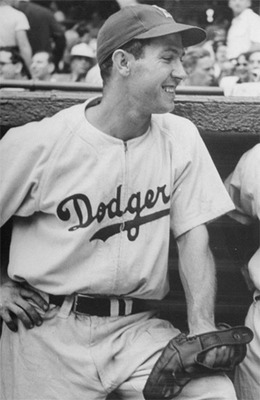
Phil Cavarretta


Career Teams:  Chicago Cubs (1934-1953) and Chicago White Sox (1954-1955)
All Star Appearances:  1944, 1946 and 1947
MVP Voting:  1943 (28th), 1944 (14th),1945 (1st), 1946 (10th), 1947 (23rd), 1948 (24th) and 1952 (23rd)
Fans of teams who have long stretches without a World Series title love to find a reason (other than the poor teams they fielded) to explain why the team hasn't won.  The Red Sox had the curse of Babe Ruth.  The Phillies (and Flyers, and Eagles, and 76ers) had the curse of William Penn.  The White Sox had the curse of the Black Sox.  The Cubs (still) have the curse of the Billy Goat.  Had you mentioned the curse to Phil Cavarretta he would have thought you were insane.  The Cubs, to Cavarretta, were a team constantly on the verge of a World Series win, they just always faced strong competition in the Series: The Philadelphia Athletics, the Yankees, the Tigers.  Their losing had nothing to do with a curse and definitely nothing to do with Phil Cavarretta.  The Cubs reached the World Series three times during Phil's tenure.   In Cavarretta's MVP season the Cubs took the Tigers to a Game 7.  It was an ugly series. The Cubs of the 1930's and 1940's had a reputation of being brutal on opposing players.  Their bench often was identified as one of the most vicious in taunting opponents.  The Tigers scored five times in the first inning of Game 7.  The inning was set up by a stunning sacrifice bunt by Hank Greenberg, the Tigers' version of Babe Ruth.  The Tigers manager Steve O'Neill said "that bunt upset them the rest of the game."  To the Cubs it wasn't over yet.  Cavarretta went 3-4 with a run and an RBI but it wasn't enough.  Cavarretta hit .423 with 2 doubles, a Home Run, scored seven runs and drove in 5 for the Series.  It would be the last time the Cubs would reach the World Series.


Secondbase
Joe "Flash" Gordon


Career Teams:  New York Yankees (1938-1946) and Cleveland Indians (1947-1950)
All Star Appearances: 1939, 1940, 1941, 1942, 1943, 1946, 1947, 1948 and 1949
MVP Voting: 1938 (12th), 1939 (9th), 1940 (23rd), 1941(7th), 1942 (1st), 1943 (25th), 1947 (7th) and 1948 (6th).
The Major League Baseball Hall of Fame has a Veterans Committee to review the borderline Hall of Fame players who were not originally elected.  The committee is made up of Hall of Fame members.  There are some who feel the Committee is pointless or just flat out stupid (I personally think they do a great job).  One of the deserving members of the Hall of Fame that was elected through this process was Joe Gordon.  There were a lot of people who complained that Gordon got in only because he was a Yankee and that it showed a Yankee bias.  I even saw someone write that it was "another undeserving" Yankee in the Hall of Fame.  Joe Gordon definitely deserves to be in the Hall of Fame.  A 9 time all star, 6 time World Series participant (5 time champion) and 1942 league MVP, Gordon lost three years in the prime of his career to serve in the military during World War II.  If nothing proves that he was not just another Yankee getting into the Hall of Fame, look at his contributions to the World Champion 1948 Indians.  He set career highs (even for a former MVP) in Home Runs and RBI and hit .280 for the year. Gordon was the double play partner for Cleveland's legend Lou Boudreau and his veteran, winning experience helped settle the Indians younger players.  Gordon had four hits in the 6 game series victory against the Braves, including a home run.  There is no doubt that Gordon belongs with the best of the best.

Shortstop
Vern Stephens

Career Teams:  St.Louis Browns (1941-1947), Boston Red Sox (1948-1952), Chicago White Sox (1953), St.Louis Browns (1953), Baltimore Orioles (1954-1955) and Chicago White Sox (1955)
All Star Appearances: 1943, 1944, 1946, 1948, 1949, 1950 and 1951
MVP Voting: 1942 (4th), 1943 (9th), 1944 (3rd), 1945 (6th), 1946 (19th), 1947 (31st), 1948 (4th), 1949 (7th) and 1950 (24th).
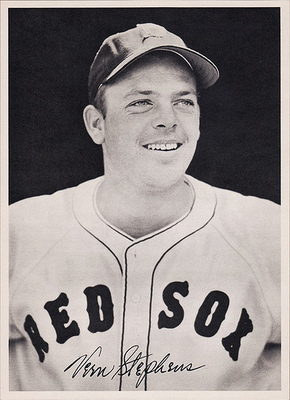
The St.Louis Browns reached the World Series once in their existence.  That's not a typo.  The St. Louis Browns won the American League pennant by 1 game over the Tigers and reached the 1944 World Series.  It would be easy to blow off the Browns success as only being made possible by the gigantic amount of talent that was sent to Europe to serve in the war.  True, the Browns had the least amount of men sent overseas. (insert joke here about the Browns players not even being good enough to be drafted).  Yet if they were that "lucky" to reach the World Series you would expect them to fall flat on their face when they faced the powerhouse Cardinals in the World Series.  They may not have had to face Joltin' Joe, Rapid Robert Feller, Hammerin' Hank Greenberg or Teddy Ballgame in the American League pennant race but they still faced a strong Cardinals team in their third straight World Series. The Cards had lost men too but Stan Musial, Danny Litwhiler, Marty Marian, Walker Cooper and Whitey Kurowski were still there.  The Browns team leader was unquestionably Vern Stephens, their shortstop.  He had lasted through some unbelievably bad Browns teams (he would last through quite a few more) but his 1944 season was probably his best.  He hit .293, drove in 109, scored 91 and hit 24 home runs.  The Browns got that momentum boost that Mickey Owen let slip past him.  They won the first game 2-1 as Denny Galehouse dominated the strong Cardinal lineup.  Game 2 was an 11 inning 3-2 Cardinals win and the Browns felt they could have easily been up 2 games to 0.  The Browns proved they were serious with a Game 3 6-2 victory but the pixie dust wore off and the Cardinals won the next three to close out the series.  The Browns never returned to the Series and within a few years Stephens was dealt to the Red Sox (along with half the Browns team).  The trade that brought Stephens to Boston was very similar to the trade this off season that sent half of the Marlins to Toronto.  The trade worked out for Boston.  Stephens went on to lead the league in RBI twice (he drove in 159 runs in 1949) and hit 29, 39 and 30 Home Runs in his first three years in a Red Sox uniform.  1948 was his best year in Boston.  As Ted Williams struggled with injuries, Stephens kept the Red Sox in the race, eventually allowing them to tie the Indians for first place.  In the 1948 one game playoff with the Indians, Cleveland took a 1 run lead in the first.  Stephens did what he did best:  he drove in a run to tie the game up.  Unfortunately, Ken Keltner saw to it that the Indians beat out the Red Sox.  The strong Red Sox teams of the 1940's are usually attributed to four main players:  Ted Williams, Bobby Doerr, Johnny Pesky and Dom DiMaggio.  Yet while they were the guys getting on base, Stephens was the one driving them in to the plate.

Thirdbase
Ken Keltner


Career Teams: Cleveland Indians (1937-1949) and Boston Red Sox (1950)
All Star Appearances:  1940, 1941, 1942, 1943, 1944, 1946 and 1948
MVP Voting:  1938 (14th), 1939 (12th), 1942 (14th), 1943 (34th) and 1948 (14th)
Every organization, whether brand new or one of the original sixteen, has their glory days.  Their one time period where the fan base can point to and say "That was our best time.  It will never be that good again."  Cubs fans have to go all the way back to the 1900's.  Braves fans will point to the 1990's.  I suppose Rockies fans can point to 2007.  Indians fans point to the 1948 season.  That was the last time Cleveland won a World Series.  The third baseman for the Indians' great team was Ken Keltner.  When the Indians and Red Sox tied at the end of the 1948 regular season, a one game playoff was set for Fenway Park.  Winner went to the World Series, loser went home for the winter.  The game was tied at 1 in the top of the fourth.  With Lou Boudreau and Joe Gordon on base, Ken Keltner untied the score with one swing.  Keltner launched a three run Home Run to give the Indians a 4-3 lead and knock Denny Galehouse out of the game.  As the tribe knocked off Bob Elliott and the Braves, Keltner's bat cooled off (2-16, .083 and 0 extra base hits).  Keltner had already done his job.  He had gotten the Indians to the World Series.

Outfield
Bob Elliot


Career Teams: Pittsburgh Pirates (1939-1946), Boston Braves (1947-1951), New York Giants (1952), St. Louis Browns (1953) and Chicago White Sox (1953)
All Star Appearances: 1941, 1942, 1944, 1947, 1948 and 1951
MVP Voting: 1942 (9th), 1943 (8th), 1944 (10th), 1945 (16th), 1947 (1st), 1948 (13th) and 1950 (24th)
Here's a trivia question to stump your friends with:  Who led the National League in hits during the 1940's?  Not Stan Musial or Pee Wee Reese or Phil Cavarretta.  It was Bob Elliott.  Similar to George Kell, Elliot played for the Pirates and Braves while they were struggling and finishing in the bottom of the league routinely.  Unlike Kell, Elliot was able to break into some national attention by winning the MVP in 1947 (Jackie Robinson's first year in the league) with a .317 average, 35 doubles, 22 Home Runs and drove in 113 runs as the Braves started climbing the standings ladder.  The next year they reached the top for the last time in Boston.  Elliott played well in the 1948 World Series, hitting .333 with 2 Home Runs, 4 Runs and 5 RBI.  Unlike George Kell, Elliott has not reached the Hall of Fame.

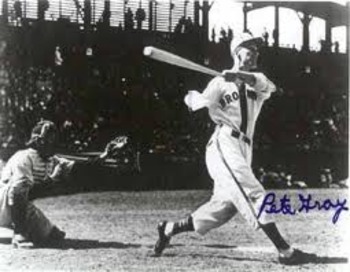
Pete Gray


Career Teams:  St. Louis Browns (1945)
All Star Appearances: None
MVP Voting:  None.
Jim Abbott was an amazing pitcher who overcame being born without a hand.  Pete Gray overcame similar obstacles.  At the age of 6, Pete Gray was in an accident where his arm was caught under a moving train.  The arm was amputated at the elbow.  As the Major Leagues saw their best talent of he 1940's sent to Europe to fight the war, the teams needed to fill out their roster with able bodied men not able bodied enough to be drafted.  Pete Gray likely would not have made the majors had it not been for the shortage of players, but he was doing just fine for Memphis in the minors.  Gray stood in the batters box from the left side and held the bat with his left (back) hand.  Obviously he couldn't follow through on his swing so he hit mostly singles (of his 51 hits only 8 were for extra bases.  He had two triples and six doubles).  To field the ball he kept his glove on his left hand.  When he fielded the ball he very quickly removed the glove and transferred the ball to his left hand.  It was so quick you almost couldn't believe it was possible.  He played in only 77 games and hit .217 but for his short time in the league he was a media sensation.


Vince DiMaggio


Career Teams: Boston Bees (1937-1938), Cincinnati Reds (1939-1940), Pittsburgh Pirates (1940-1944), Philadelphia Phillies (1945-1946) and New York Giants (1946)
All Star Appearances: 1943 and 1944
MVP Voting:  1941 (21st) and 1945 (33rd)
Occasionally baseball scouts find a gold mine of baseball talent in one area.  In the early part of the century everyone seemed to come from the crop of Irish immigrants.  In the 1920's it seemed to be the San Francisco area.  In the 1950's when the Aaron brothers, Willie McCovey and Tommie Agee came in the league they all came from Mobile, Alabama.  In the 1970's it was the Dominican Republic.  The 1930's seemed to be the DiMaggio household.  Vince DiMaggio was a good player but he was no Joe DiMaggio.  Vince, the oldest of the DiMaggio brothers, never threatened Joe's popularity or achievements but he did have a decent ten year career. It is not fair to compare his numbers (or any one's numbers) to Joe's but the biggest contrast is in the strikeouts.  Vince led the league in strikeouts six times.  Joe never had more than 39 in a season.  For his career Vince struck out 837 times, Joe's career strikeouts were only 369.

Dom "The Little Professor" DiMaggio


Career Teams:  Boston Red Sox (1940-1953)
All Star Appearances:  1941, 1942, 1946, 949, 1950, 1951 and 1952
MVP Voting: 1941 (27th), 1946 (29th), 1948 (29th),1949 (16th), 1950 (14th) and 1951 (19th)
Dom was the youngest of the three DiMaggio brothers.  Similar to Vince, he was no Joe, but he was still one of the top players in the league.  If the Yankees-Red Sox rivalry isn't vicious enough, imagine the intensity you added by throwing a sibling rivalry into it.  The 1948 pennant race was a tight three way battle between the Indians, Red Sox and Yankees.  Dom was scheduled to get married on October 6th, assuming the Red Sox weren't in the World Series.  The final three games for the Red Sox were head to head against New York in Fenway.  With two games left the Red Sox won, knocking the Yankees, and Joe, out of contention.  The DiMaggio's were having a big family dinner at Dom's house that night.  On the way to dinner Joe turned to Dom and said "You knocked us out today but we're going to return the favor tomorrow."  It wasn't a joke.  It wasn't sarcastic or bitter. Joe had spoken.  Dom replied "I think you're forgetting, I may have something to do with that."  Dom did.  He hit a game winning home run to send Boston to a one game playoff with Cleveland (which the Indians ended up winning).  He missed three years of his career to serve in World War II but he did get to play in the 1946 World Series.  Dom had seven hits in the seven game loss to the Cardinals, 3 doubles and although the Red Sox were constantly close they never made it back for a second chance.

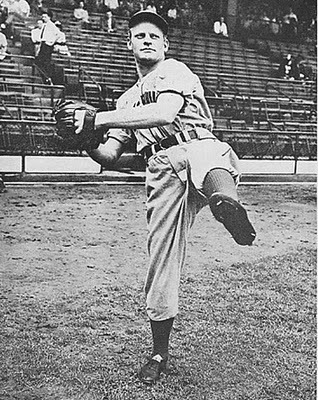
"Pistol" Pete Reiser


Career Teams: Brooklyn Dodgers (1940-1948), Boston Braves (1949-1950), Pittsburgh Pirates (1951) and Cleveland Indians (1952)
All Star Appearances:  1941, 1942 and 1946
MVP Voting: 1941 (2nd), 1942(6th) and 1946 (9th)
The St. Louis Cardinals were the first team to start using a farm system that fed directly into their Major League team and taught the young players the team's way to play the game.  The good news was that the Cardinals were able to build a strong team that was continuously near the top of the league.  The bad news was that they stockpiled talented young players they never intended to promote to the big leagues just so other teams couldn't use them.  The league didn't like it and forced the Cardinals to trade or release most of them.  Branch Rickey, the President of the Cardinals didn't want to lose Pete Reiser but he couldn't keep him.  He struck a deal with Larry MacPhail, President of the Dodgers and a long time friend.  He sold Pete Reiser's contract to the Dodgers for $100 with the understanding that he would come back to St. Louis when he was ready for the majors.  When the Dodgers manager Leo Durocher saw him in spring training he couldn't resist playing him.  He got an immediate notice from MacPhail never to play Reiser again and not to ask any questions.  Durocher ignored him.  Reiser very quickly became a star.  In his first full year in the majors, 1941, Reiser led the league in batting average, runs, doubles, triples, slugging percentage and hit by pitch.  In the World Series he hit only .200 but had 4 hits (a single, double, triple and the three run Home run that set up the Mickey Owen passed ball).  He was a "motor guy" who made the Dodgers offense go.  He could field, hit, run, throw. He did everything.  He had just one problem: he never knew when to stop.  In the middle of the 1942 season in a game against St.Louis, Reiser tracked a long fly ball from Enos Slaughter.  His teammates knew he wouldn't get it.  Reiser knew he would.  Sprinting straight back to the wall Reiser made the catch.  Reiser immediately collided head first, full speed, with the concrete wall in centerfield.  His skull was fractured.  Doctors told him he was done for the year but MacPhail refused to accept it and believed it was a personal affront to him that his star was being taken away.  Reiser suffered from double vision and dizzy spells but tried to force his way through the pain.  The doctor's were right.  It effected him terribly and long term. He struggled through the last few months and then was drafted for the military.  He returned after three years in the service but he wasn't the Reiser he was before.  Branch Rickey was furious with MacPhail for ruining what could have been a Hall of Fame  career.  Reiser is a legend in Dodgers history.  In the recent Captain America: The First Avenger film,the military is attempting to convince Steve Rogers that he is still in the 1940's and not the present day.  In the background, as he wakes from his coma, can be heard a play by play of a Dodgers game.  It is an inside the park home run for Pete Reiser.

Pitcher
Joe "The Fireman" Page


Career Teams:  New York Yankees (1944-1950) and Pittsburgh Pirates (1954)
All Star Appearances:  1944, 1947 and 1948.
MVP Voting:  1947 (4th) and 1949 (3rd).
The nickname given to Joe Page pretty much says it all.  For four tremendous years in the 1940's he put out fires set by the Yankees starters.  If the game started to get dangerous the alarm was rung and Page rushed in to close it down.  This was before a relief pitcher was a glamorous job.  It was looked at as an insult not as a specialty.  Page didn't care.  Between 1947 and 1950 Page saved 73 games, including an amazing (for the time) 27 saves.  Like nearly all relievers (except for Lee Smith, Mariano Rivera and Trevor Hoffman) Page had a short shelf life.  He was sent to the minors half way through the 1950 season and never recovered his strong form from the previous three years.   

Rip Sewell


Career Teams: Detroit Tigers (1932) and Pittsburgh Pirates (1938-1949)
Al Star Appearances: 1943, 1944 and 1946
MVP Voting: 1940 (25th), 1943 (6th) and 1944 (11th)
Rip Sewell developed a pitch that Richard Pryor's character in "Brewster's Millions" would have been proud of. Sewell called it the "eephus pitch".   Here's how it worked.  A good fastball (not a Randy Johnson fastball) is in the mid to high 90's miles per hour.  All pitchers want to have a good off speed pitch, probably in the mid to high 80's, to fool the batter a little and upset their timing.  The thing about pitching an offspeed pitch is that the motion needs to be a mirror image of your fastball motion or the change in speed won't fool anyone.  Sewell had only an average fast ball but one day he decided to take a little off the pitch.  The pitch moved only about 55 miles per hour.  That wasn't the weirdest part.  The pitch had an arc to it, not like a curve ball or a sinker.  It was an arc like a lawn dart.  It went about 20-25 feet up and came down (hopefully) through the strike zone.  It was like slow pitch soft ball with an over hand motion.  Batters couldn't resist it.  Imagine being a home run hitter and getting a pitch easier than batting practice to swing at.  The only problem was no one could hit this damn thing.  The pitch wasn't something you can use every pitch but it was effective enough to earn Sewell a place in the 1946 All Star Game.  The National League got slaughtered 12-0.  Sewell and the eephus pitch were the most memorable moment in the game.  Ted Williams stepped into face Sewell in front of the home town fans in Fenway.  Williams had heard all about this pitch but had never faced Sewell before.  As Williams stepped up to the plate, the greatest hitter who ever lived, couldn't resist it.  He yelled out to Sewell "C'mon Rip, show me that damn eephus pitch you got!"  Sewell chuckled and unleashed the high arcing, slow moving toss.  Williams waited on it and fouled it off.  Williams laughed.  Sewell laughed.  Then Williams, still smiling, got serious about his work.  "Let's go Rip.  Throw it again."  Then Rip Sewell did what no other pitcher had ever done.  He let Ted Williams know exactly what was coming.  Ted Williams did what no one else had been able to do before and never would again.  He knocked Rip Sewell's eephus pitch for a Home Run.

* Author's Note:  Just as in the last few weeks, and as may be seen in the next few weeks as we move through this series of articles, I did my best to keep this to one player per position, however, the farther we move from these eras, the easier it is to forget these types of players (and even some hall of fame players).  It is important to remember as we follow the sport that the superstars are not the only ones making contributions to the success of a team.  This is not a comprehensive list of players who fall into this category from this era, it is simply my choice of players who best represented their position and have become forgotten or misunderstood.  Your list is probably different.  Email me yours or leave a comment.