Since I started this blog a little over a year ago I have tried to give my honest opinion about things in baseball from the current happenings to historical perspectives and everything in between. To this point I have avoided broaching some subjects for several reasons. One of the topics I have avoided is the Hall of Fame and the place of steroid users in history.
First, I wanted to make sure that I thought out what my perspective is in detail so that I can properly give my views and second I needed to make sure I viewed this from as many perspectives as possible. The biggest focus of the Hall of Fame controversy right now is on what to do with the steroid users but there are a few other issues clouding the nomination process. So over the next three weeks we'll discuss three main points of the Hall of Fame controversy:
1) Steroids and the Hall of Fame: How are we setting the parameters of the "steroid era" and what do we define as a Performance Enhancing Drugs?
2) SABRmetrics and the new statistics dominating our analysis.
3) What makes a Hall of Fame Player?:
I am sure that many of you will disagree with my opinions and I would love to hear your views. The only way we, as baseball fans, will ever get past the controversy is to get as many perspectives as possible and respectfully discuss the issue. So let's get started with part one.
Steroids and the Hall of Fame:
To start off, the big question is "how do we define the steroid era". When people reference the steroid era they usually start the discussion with McGwire and Sosa's Home Run duel and end it with the start of drug testing around 2007 when testing became much stricter and better regulated. There are a lot of problems with this but three main problems exist with the parameters that have been artificially drawn around the era.- We have basically accepted that the "steroid era" is over (meaning that the rampant, unchecked use of the Performance Enhancing Drugs (PED) has stopped), yet in the last few years Bartolo Colon, Nelson Cruz, Alex Rodriguez, Johnny Peralta, Melky Cabrera and several other big stars have been embroiled in a performance enhancing drug ring that was only truly exposed because a disgruntled ex-employee of a South Florida clinic leaked information. How many other clinics similar to the one these players were associated with are out there and have not been discovered yet? Also, there are many ways that PED users can get around the system. When I worked retail we had to do whatever we could to stop shoplifters, however, we always knew that shop lifters were developing new ways to take things from under our noses and we were essentially playing catch up to their methods. Essentially this is the same idea. The PED users are always one step ahead of the people trying to catch them. The use of PEDs may never be ended completely.
- If the steroid era "lasted" from the late 1990's through the mid 2000's, is it fair to exclude someone from the Hall of Fame because they played in the steroid era as we have defined it and they "looked like they used steroids"? Last year there were no Hall of Fame members inducted on the normal ballot despite the presence of players like Mike Piazza, Jeff Bagwell and Craig Biggio on the ballot for the first time. Several voters withheld their votes because they said they were "punishing" the steroid era players (whether or not they used steroids) because the players had known others were using and did nothing about it. This argument has a few flaws to me, most importantly, how do we know that these players didn't go to the player's union and ask for testing. Drug testing had been on the table for a very long time before it was finally put in place (it was part of the issues that caused the 1994 strike). There had to be some players pushing for this testing for the Players' Union to finally agree to it. In 1988, as Jose Canseco amazed everyone with his 40 Home Runs/40 Stolen Bases, Tom Boswell of the Washington Post wrote an article saying that it was time we started to look into the possibility that steroids were impacting the record books. The reaction from his media colleagues was that Boswell, a very respected baseball writer and still a very respected historian, was out of line and had no proof. The support for Canseco by the media made it clear that the media had no intention of pushing the issue and Boswell's reputation was damaged. It is amazing that these same people are now punishing the players for not informing publicly on their teammates. In addition, the argument against players like Piazza and Bagwell was that there was no proof that they had used steroids but they "looked" like steroid users. One writer even said he did not vote for Piazza because he had back acne which is sometimes associated with steroid use. This argument turns the moral stand taken against those who didn't inform on the users into a way for writers to shift the blame from themselves for not pushing on an issue that they clearly were aware of as it happened.
- Performance Enhancing Drugs are not new. During the 1990's I had a subscription to Sports Illustrated. One of the issues that I received in the mail had a picture of a gaunt Lyle Alzado, former defensive lineman for the Broncos and Raiders. The article inside revealed that Alzado had a brain tumor that he linked directly to the use of anabolic steroids he took during his playing days. He admitted using steroids as far back as 1969. That's correct. 1969. In addition to that there were players as far back as the late 1800's who drank "tonics" that were supposed to have properties that could improve your health and energy. Pud Galvin reportedly drank "monkey testosterone" for better performance. In the 1930's at least one player was said to have taken injections of an extract from bull testicles. In the 1960's Mickey Mantle was trying to find a way to play through the knee pain that was destroying his career. He went to a doctor recommended to him by Mel Allen. The doctor's injection led to an infection that forced Mickey to miss the end of the 1961 season. During the 1970's Doc Ellis reportedly pitched a no hitter while high on LSD. In the 1980's players (including some Hall of Fame superstars) were using amphetamines as "pick me ups". They would simply drop the "greenies" into their coffee and dissolve them. We have arbitrarily defined the steroid era as post 1994 strike or the 1998 Home Run race, when clearly steroids and PED's have been around for decades. The voters who "punished" players for not demanding testing earlier have already voted for some players and elected players who very easily have done the same thing. We can certainly continue to incorrectly define the steroid era from post strike to the mid 2000's and the voters can continue to "punish" players of the era who didn't reveal the deep dark secrets of the locker room, but Cal Ripken, Tony Gwynn, Paul Molitor, Kirby Puckett, Wade Boggs, Ryne Sandberg and others also played in that time period and are already in the Hall of Fame (I am not implying, accusing or suggesting any of these players used PED's but they certainly played well into the steroid era and likely played with teammates who were using PED's). So it was a grand moral statement by the voters to "punish" last year's Hall of Fame candidates who didn't say anything about steroid use publicly, but if the issue truly bothered these individuals, why did they choose last winter to take their stand?
We can start with the most rudimentary, first grade essay format and define the words Performance Enhancing Drug.
Performance: the execution of an action
Enhancing: Heightening or improving, especially enhancing or improving in value, quality desirability or attractiveness.
Drug: 1) a substance that is used as a medicine or 2) an illegal and often harmful substance that people take for pleasure.
So basically what we are saying is that a Performance Enhancing Drug is any substance that improves your ability to perform. Carl Erskine pitched for the Dodgers in the 1950's. He often told a story of waking up a day after he had pitched not being able to raise his arm to comb his hair. His arm was swollen, bent and in pain. A friend on another team recommended Erskine see that team's trainer, who gave Erskine a shot. When Erskine's turn came up in the rotation a few days later he was not only healthy, he threw a no-hitter. If we apply the definition of performance enhancing drug, clearly the substance administered to Erskine enhanced Erskine's ability to recover from his sore arm and perform in his regular rotation spot. I am not implying that Erskine did not have the ability to throw a no hitter without the shot. Nor am I implicating Erskine as a steroid user, cheater or in any way saying anything negative about Erskine. In fact, Erskine is one of the most respected and well liked people from those Dodgers teams. My point is only that without that shot he likely would not have been able to even make the start. By definition that substance was a PED. That substance was cortisone. It is now used regularly by nearly every professional trainer in every major sport.
The Dodgers trainers used this same treatment to keep Sandy Koufax in performance shape, along with applying hot capsolin (an extreme version of icy hot so severe that it caused blistering on Koufax's arm) that allowed him to get his arm loose enough to throw his breaking ball. Again, I am in no way questioning the ethics, honesty or character of Sandy Koufax. The things that Koufax was able to accomplish and the pain that he endured in doing so are amazing and I admire the man greatly but clearly, by our current definition, this would be another Performance Enhancing Drug.
My point here is not that Erskine or Koufax should be viewed differently. Erskine had a great career and was a big reason for the success of the Dodgers. Koufax was a definite Hall of Fame player, one of the best pitchers in the history of the game and also one of the classiest people ever. So what if they were using an applied treatment from the training staff?
This is my point: the arguments against allowing the PED users into the Hall of Fame is that they have an advantage that other players in their eras (and older eras) did not have. This is another faulty argument. I think we can all agree that cortisone, when administered by a trained professional, is an acceptable substance that can assist the the body in a quick recovery allowing athletes to perform. But if we are using the argument that current PED users are cheating because they have an advantage that other players of previous eras did not, should we revise our view of the accomplishments of the 1950's to the present. For example, Hal Newhouser, Bob Feller, Dizzy Dean, and Carl Hubbell were all great pitchers who dominated the hitters of their eras but how much better could they have been and how much longer could they have pitched if cortisone were available then? The surgeries that are available now allow pitchers to simply repair a damaged arm that would have been beyond repair decades ago. Should we punish pitchers like Tommy John and Ron Guidry who had great careers but fell short of Hall of Fame numbers because their arms broke down before the current medical technologies that could have kept them pitching for much longer? As you can see the issue goes much deeper than a simple someone used steroids and someone else didn't.
Why do players look so much bigger than the old days?:
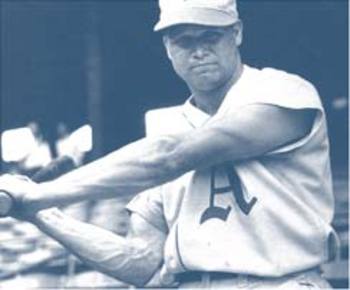
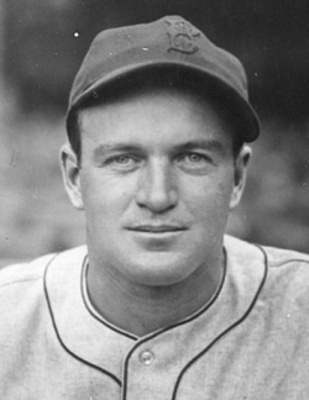
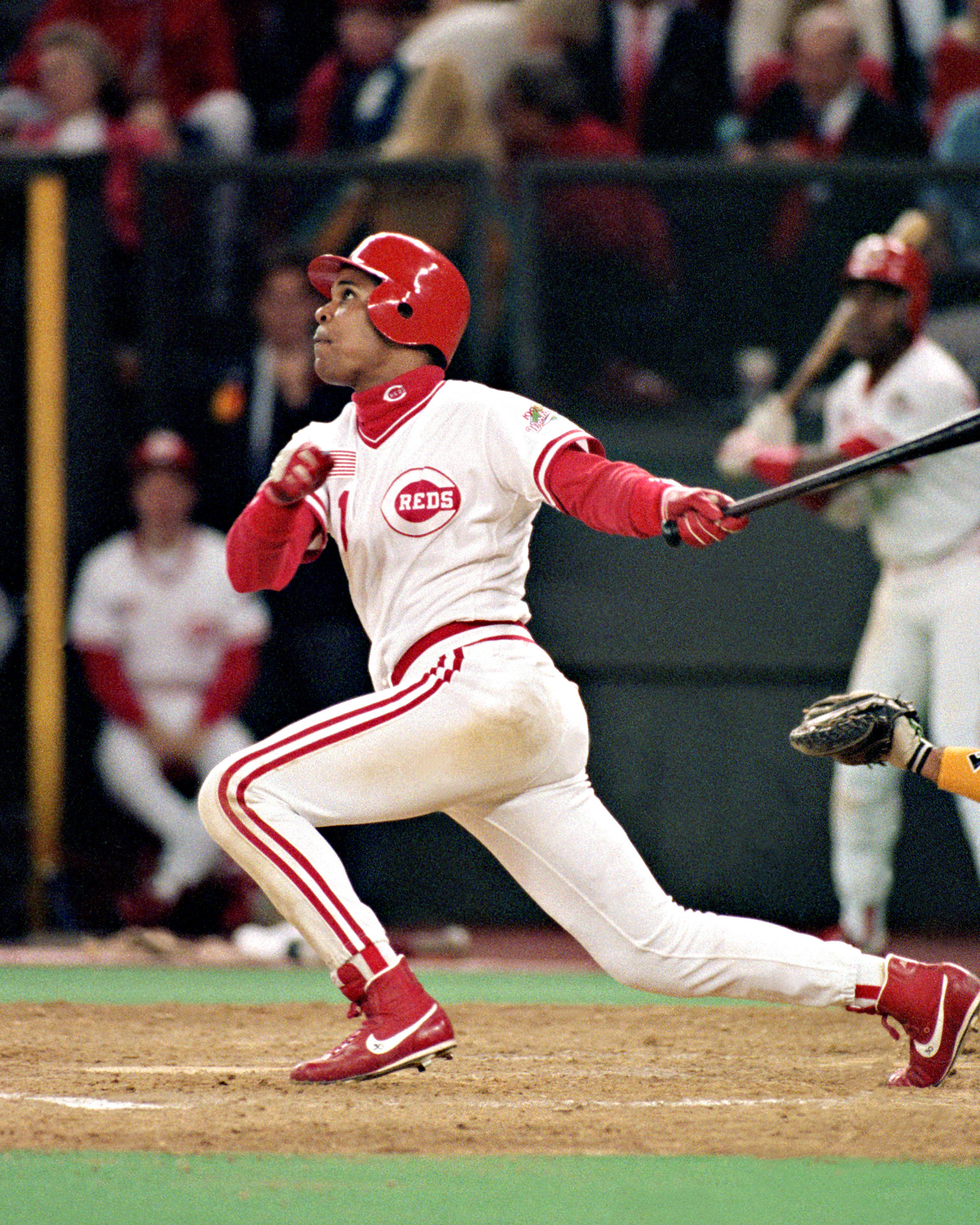
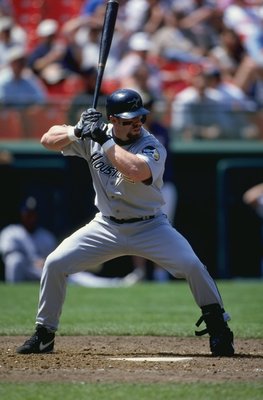
The first part of this answer feeds into the second answer. Looking at pictures of Mark McGwire, David Ortiz and Prince Fielder it is definitely a logical conclusion that there are more players of larger build today than there were sixty, fifty, or even twenty years ago. I have not done a percentage based analysis but it is definitely true that the players today are larger than most players of the past. It is not true in all cases. Two very specific examples are Jimmie Foxx and Ted Kluszewski. Foxx was known as "the Beast" because of his gigantic arms. Kluszewski was alternately known as "Big Klu" or "Killer" and had arms so big he had to cut the sleeves of his shirt to comfortably fit his arms into them. He routinely asked pitchers not to pitch him low and inside. It wasn't because he couldn't hit it. He could. He could hit it hard, but he couldn't control the fact that the ball always went right back up the middle and he was terrified he would kill a pitcher.
Foxx and Kluszewski are just a few examples. The truth is there are more players of a larger build today and steroids obviously play a big part in that. However, there has also been a significant philosophical shift in the training habits of the league in the last twenty to thirty years. For the first 100 years of organized baseball there was a fear by management and coaches of weightlifting. There was a fear that the development of muscles (specifically biceps and triceps) would hinder the movement of the arms and would lead to loss of fluidity in the swing. For pitchers, it was assumed that adding muscle to an individual would hinder their pitching motion and lead to more arm injuries. With the growth of the fitness industry, health and vitamin supplement improvements and a better study by baseball trainers of the human body, weight lifting is no longer off limits and is often added to off season training regimens under supervision of the team training staff. The acceptance of weight lifting by the baseball community has had a big impact on the new vision of the baseball player.
Why are we focused on baseball's players using steroids while other leagues ignore or do cursory testing?
When the NFL went on strike a few years ago one of the big issues causing the strike was the Players Union's stance on how far the league could go in testing for illegal substances. The league wanted to start testing for Human Growth Hormones (HGH) and the union refused. I actually heard one player make the argument that "no one's using HGH so there is no need to test for it." That is not an exaggeration, that was an actual argument a current player made. It would be like applying for a job that required a lie detector test and telling them "I'm not a liar so you don't need to do a lie detector test." It also sounded eerily like the argument that baseball players were making before the 1994 strike and before the drug testing policy went into place.
The NBA has a first offense penalty of 5 games. Second offense is a 10 game suspension. A third offense is 25 games and a fourth offense is a two year suspension. The problem with this system is that players can only be tested four times in a season so once that fourth test is up they are off limits.
The NFL suspends players for 4 games on first offense. Second offense is eight games and third offense is a full season.
The NHL has a stronger policy of 20 games for a first offense, 60 games for a second offense and permanent suspension for a third offense. The problem with the NHL's policy, similar to the NBA's, is that players can only be tested twice in a season.
The MLB has the strongest (though clearly not perfect) process for punishing offenders. The best part of it is the public and permanent shaming of the players. Manny Ramirez was considered by many one of the greatest hitters in the history of the game. When he was named as a violator of the MLB policy he went to an overnight pariah. Raphael Palmeiro was on his way to the Hall of Fame but hasn't been heard from since his positive test in 2005.
In 2006 Shawne Merriman, linebacker for the San Diego Chargers, was suspended four games for violation of the league's policy. Instead of being treated like a criminal and cheater, the way Palmeiro, Bonds, McGwire, Sosa and Clemens have been, Merriman was voted the league's Defensive Player of the Year...the same season that he had been suspended for four games. Many of the people who voted for Merriman as the best defensive player that year are the same voters taking a moral stand against PED users in the Hall of Fame. The Shawne Merriman example is just one of many situations where a player from another sport is given a clean slate when he returns from suspension while Major League Baseball players come back from suspension knowing that they have just thrown away their chance for a Hall of Fame career and the public's trust.
Why is all of this attention paid to MLB and not to the other sports? Simple. Baseball is still that national past time. I will not question that the NFL is the most popular sport in the United States and has been for a long time. However, baseball has a larger impact on our national psyche. If you mention specific numbers to sports fans, regardless of what sport they follow, they can likely tell you who the number belongs to. 61 automatically refers to Roger Maris. 714 automatically brings up Babe Ruth. 755 is Hank Aaron. These are the sacred numbers of baseball history. These are the number chases that captured the nation's attention.
What is the equivalent to these numbers in other sports? I recently asked a friend of mine, who is a big football fan, who held the record for all time rushing yards. He had to look it up and then was surprised at the answer (Emmit Smith). I asked him who threw the most career touchdown passes and who scored the most career points. He had no idea.
Ask a sports fan what the number 56 means and more often than not without thinking about it they will just say DiMaggio. Ask a hockey fan who has the record for most goals in a a season and you'll likely get a blank stare.
Say .401 to a baseball fan and they'll just tell you Teddy Ballgame. Ask a basketball fan who had the highest Field Goal percentage in a season and most people won't have a clue.
Regardless of the current popularity of football, baseball is still the national past time.
The Cheaters argument:
Every time the topic of steroids and PED's comes up there is a parade of angry callers to sports radio shows who usually say something like "they're cheaters and cheating is wrong so these are bad people." I am not condoning cheating and I am not condoning the use of PED's, despite what this next argument may say.
We cannot just automatically go with the simple argument that cheaters are bad and these players cheated so they are bad people.
We need to discuss this a little bit more thoroughly. Yes. It is absolutely wrong to cheat. The argument I hear from a lot of people is this: "I don't want my kids to think it is ok to cheat." That's a great philosophy, but are the people blaming the players for teaching their children the wrong message teaching the right message themselves? There are always gray areas to every argument and we seem to apply alternate severity to alternate situations. Don't forget as a society (sports fans society) we allowed the cheating to flourish despite clear signals there were issues. Now, after years of watching this happen we are all of a sudden (in the last ten years) horrified at what is happening.
A few years ago Don Imus, a "shock jock" radio host, was embroiled in a controversy over some horrendous, disgusting remarks he made about the Rutgers Women's basketball team. The comments he made were offensive and indefensible. The problem in this discussion is not whether what he said was offensive, the problem is why he thought he could say them. Imus had been in broadcasting since 1968, meaning by the time the Rutgers issue erupted in 2007 he had been in the field for nearly 40 years. His entire on-air personality to that point was someone with politically incorrect outspoken and often offensive opinions. This persona had gotten him high ratings and legions of fans. Every time he made an off color, offensive statement he received supportive phone calls from fans, higher ratings and higher salary. All of this not only condoned his outspoken behavior, it encouraged it. So it is completely illogical for people to get up in arms over the disgusting comments made by Imus in 2007 when they had encouraged him to be offensive for years. (again I am absolutely, positively not defending Imus or his comments. I am just making a point that if we were offended by those comments, why were we not in an uproar over comments he had been making for years.)
Steroids are a similar issue. As far back as the 1970's it was widely known that baseball players were using amphetamines for "energy boosts". There was little outrage or demand for penalties. In the late 1980's Tony Mandarich played offensive line for Michigan State and it was a poorly kept secret that he used steroids. Instead of punishing Mandarich the sports society named him "Michelin Man", put him on the cover of Sports Illustrated and chuckled as he was drafted second overall by Green Bay and became a "draft bust". I had mentioned the article by Tom Boswell earlier in this article. During the ABC broadcast of Game 1 of the 1988 World Series, moments before Jose Canseco blasted a Grand Slam to give the A's a lead, Joe Garagiola and Vin Scully discussed the article which mentioned the very real possibility that Canseco was using steroids. Garagiola said that it was unfair for Boswell to question Canseco and Canseco had publicly said that Boswell was a liar. Bottom line, Canseco was allowed to continue doing what he was doing and society punished Boswell for asking the question that everyone else ignored. By ignoring it, as a sports society, we condoned Canseco's (and anyone else's) use of PED's.
We still do this. We can argue all we like that cheaters are bad and cheating is bad and we don't like cheaters but what we say and what we do are completely at odds. The old argument that actions speak louder than words is still true. Use this past ALCS as an example. I sat in my living room watching the Red Sox fans taunt the Tigers Johnny Peralta with stadium wide chants of "Steroids, steroids", clearly demonstrating that as a society we no longer accept this behavior. Less than an hour later, when David Ortiz blasted a Grand Slam to put the Red Sox back in the game, the Fenway faithful erupted in ecstasy. Had they forgotten that Ortiz failed a drug test back in 2003? Likely not because Manny Ramirez who also failed a test in 2003 (and several since) is still persona non grata in Beantown. Instead of booing the player who had previously failed a drug test, Boston residents actually voted for Ortiz in the recent mayoral election (he came in third by the way). A similar example is Andy Pettite. In 2007 Andy Pettite admitted that he had used HGH. Since then Andy Pettite has been given several contracts, won a World Series and watched as his team mate Alex Rodriguez is treated like the worst human being in history. Pettite is lauded and promoted while Roger Clemens, his former training partner, is vilified and subject to Federal prosecution. These are just a few examples of the way every fan base of every team reacts.
Why? As a society, isn't our position that cheaters are bad people? So how do we justify turning Barry Bonds into the highest example of cheating while we vote for Ortiz as a public official. Why have we drawn the distinction between the two? I have never met any of these people and I am not able to judge them as human beings. Everything I hear about Pettite and Ortiz is positive. They are friendly, positive people who do a lot to benefit their communities (and help their teams win). These are not bad people. Yet every time someone tests positive for a banned substance, people bring out the same old angry argument that cheating is bad and cheaters are bad people.
Bonds, on the other hand, was the focus of almost all steroid talk in the early 2000's and was portrayed as evil by the media. I have never met Barry Bonds and I cannot judge him as a human being. From everything I hear about Bonds he can be surly, angry, bitter, hard to deal with and down right mean. I have also heard many times that he does many charitable things and donates large amounts of money that he does not discuss, take credit for or want anyone to know about. When Bonds was an active player I was far from being a Bonds fan. My opinion of him was that he was arrogant, selfish and over rated. Admittedly, my opinion was based solely on the fact that Bonds always played on teams that were direct rivals of teams for whom I am a big fan. Bonds also falls directly into the question of how we, as a society, react to cheaters. Whispers of whether or not Bonds was using PED's started in the early 1990's, shortly after he signed with the Giants. By that time Bonds was already a two time MVP, two time All Star, three time Gold Glove Winner and on his way to the Hall of Fame. After the whispers and suspicion began (and continued) Bonds was voted as the National League Most Valuable Player five more times and finished second another time. These votes come from the same people who vote for the Hall of Fame and took a moral stand against steroid users reaching the Hall of Fame last year. If using steroids is the sin that the media has told us it is why were these same people voting for players they suspected of using steroids and therefore encouraging the cheating behavior.
My argument here is not that we should turn Pettite and Ortiz into villains or that we should view Bonds as a saint. The point is that it is not acceptable to shout from the mountain tops that all cheaters are bad and villains then pick and choose which people we want this to apply to. We need to discuss this a little more before we just blindly start reacting to these situations.
I am sure that many of you readers disagree with me. Please send me your views so we can continue to discuss the situation.
Don't forget to check back next week for part two of the Hall of Fame Controversy.
TRIVIA QUESTION:
Mentioned in today's article were Carl Erskine and Sandy Koufax. How many combined no-hitters/perfect games did these two have in their career?
Answer to Last Week's Trivia Question:
Waiting on deck as Bucky Dent was recovering from the foul ball off his ankle was Mickey Rivers. Rivers noticed a crack in Dent's bat and had the bat boy bring one of his own. According to legend, Rivers told Dent "Hey homey, use this bat. It has a lot of hits in it." Dent used Rivers's bat to hit his infamous Home Run. Years later Rivers made statements that implied the bat may have been corked.