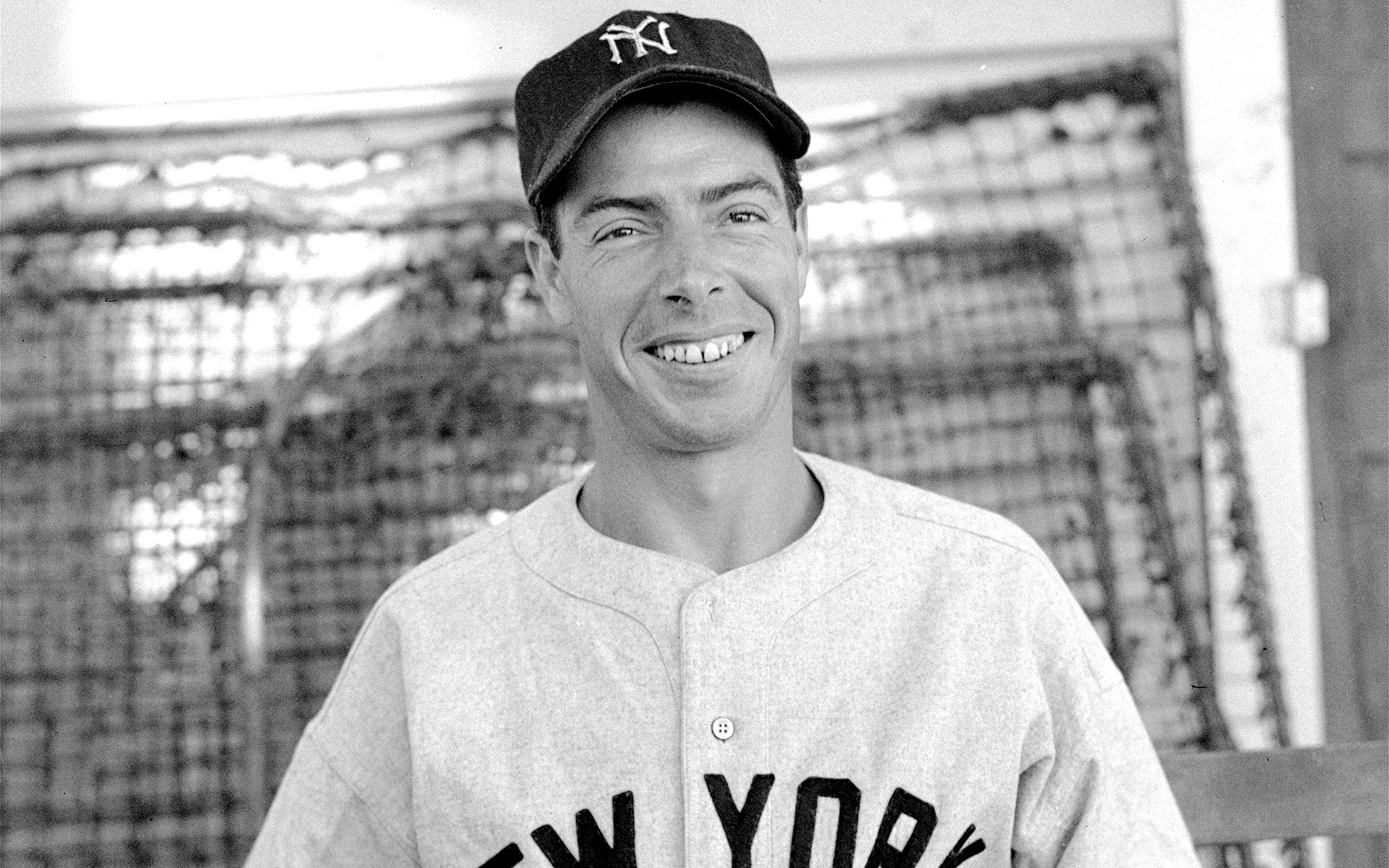
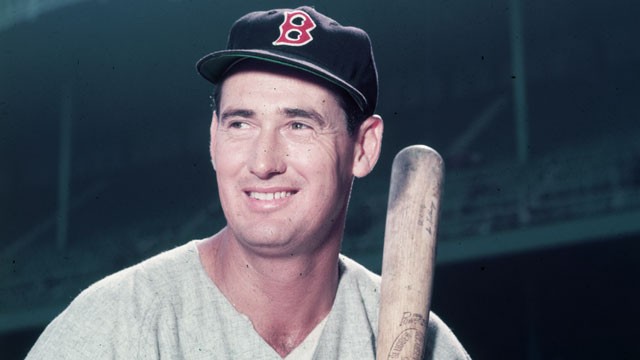
"He seemed to be doing everything wrong, yet everything came out right. He stopped everything behind the plate and he hit everything in front of it"
When Mel Ott gives you a compliment like that you must be doing something right. The problem with being a legend is that your actual accomplishments get blurred. The worst part about being a legend in the Yogi Berra mold is that your accomplishments get ignored. The name Yogi Berra is synonymous with funny sayings and a goofy personality, yet Yogi Berra is one of the greatest baseball players in history for what he did on the field and not for what he said.
Early Days in St. Louis
Lawrence Peter Berra was born in St.Louis, MO on May 12, 1925. Although he is known as Yogi, he was originally nicknamed Lawdie. The name came from his Italian immigrant mother's inability to properly call him Larry.
Baseball was all he wanted to do. His father did not approve. An Italian immigrant who worked hard every day of his life, he could not understand how wasting time on a ball field could lead to anything good, especially when Larry's grades fell off. Despite the wishes of his family Larry continued to play and spent every moment possible playing ball. In the Hill section of St. Louis, he met a boy who would become a lifelong friend. The boy's name was Joe Garagiola and both would go on to long careers behind the plate and would be famous for their humor.
So how did he go from Lawdie to Yogi? There are several stories. The first said that a team mate saw a news reel film featuring people doing Yoga. The Yogi leading the session, according to the team mate, looked exactly like Larry. Another version says the team photo led to the nickname. In the little league photo Berra can be seen sitting in the front row with legs folded, which reminded some of a Yoga pose and the name came from this. Regardless, the name stuck...forever.
Yogi was good at baseball though he didn't "look like a ball player". Even Branch Rickey, who could always spot talent didn't like Berra enough to offer a big contract. Of course, Rickey did offer a contract and Berra refused. The historical perception has been that Rickey missed out but knowing how shrewd Rickey was he may have been trying to get a bargain on a kid that few teams were legitimately considering. He gambled and he lost. Rickey signed Garagiola for $500 and offered Berra $250. Berra rejected the Dodgers' offer and signed for $500 dollars with the Yankees.
Nearly Missing Out
Berra joined the Yankees Class B Norfolk team in the Piedmont League for 1943, played in 111 games and hit .253. That is not a terrible average but his 16 errors probably gave pause to the Yankees brass who were used to having Bill Dickey behind the plate.
The numbers in Norfolk were not eye popping and he may have been concerned about his future but his focus quickly changed. With World War II destroying the world, Berra joined the navy at age 18 and was involved in the D-Day landing. As the story goes, while the landing craft was approaching the shore they came under heavy fire. Instinctively everyone crouched as low as possible to avoid getting hit. Everyone except Yogi. "I wanted to see what was going on."
Berra's service in the navy took him out of the 1944 and 1945 seasons. Many of those who served went overseas as boys and came back as men. After the experiences of combat it would have been easy to come back and lose focus on the game that he had played as a child. Berra could have missed out on a career that he had dreamt of before leaving for the war.
Learning the Game
Returning to the states Yogi was assigned to the New London affiliate and was spotted by Mel Ott. Ott was managing the Giants at the time and he thought he had to have the young funny looking Catcher. Berra's career is filled with cross road moments, starting with Rickey's decision to offer Berra a smaller contract than the offered to Garagiola. Had Yogi signed the contract with the Cardinals who knows if he would have made the majors. Now, in New London, Ott offered Larry MacPhail and the Yankees $50,000 dollars for the kid. MacPhail didn't know who the hell this Yogi kid was but he knew that Ott had an eye for talent and if Ott was offering that much he damn well better not let Ott have him. While Rickey's low ball offer pushed Yogi to the Yankees, Ott's over the top offer kept him there.
MacPhail assigned him to Newark of AAA and now wanted to keep an eye on him. Berra played 77 games in Norfolk in the 1946 season. He hit .314 with 15 Home Runs and 59 RBI. Even more impressive, Berra only struck out 16 times, despite having an unusual, crazy swing (a trait that would continue through his career).

Had he signed with the Cardinals he would have had to fight with Garagiola for a roster spot. Instead, in signing with the Yankees, he had to follow a legend. Bill Dickey, an 11 time All Star, had been the Yankees Catcher on 8 World Series teams. Ironically Dickey wore the number 8 on his back. Dickey was the epitome of the Yankees. Room mate and best friend of Gehrig, Dickey walked, talked, looked and presented himself like a Yankee. Known as a tough son of a bitch, Dickey was once suspended for punching Carl Reynolds of the Senators, breaking Reynolds's jaw. Baseball at Yankee Stadium was a serious business and Dickey was the perfect example of that philosophy.
Yogi was a nervous kid still learning the game. The learning process in New York better be quick. There is no acceptance of losing. Dickey was given a task. Get the funny looking kid up to speed and do it now. Joe McCarthy didn't have time to wait and the pitchers didn't have the patience or respect to help Berra along. Reynolds, Lopat and Raschi were used to working with Dickey who was always on the same page. If Dickey told them to do something they damn well did it because it was Bill Dickey. If Yogi told them to do it, they fought back because it was McCarthy interfering in their game.
The pitch call would be relayed to Yogi who would tell the pitcher what he was throwing. The problem was Raschi and Reynolds didn't take direction. This was their game and they made the decisions. They sure didn't make it easy on Yogi. In David Halberstam's great book "Summer of '49" he tells several great stories of the process Yogi worked through to gain the respect of these veterans. A catcher is supposed to communicate with the pitcher, talk with the pitcher, but Raschi didn't talk. he demanded. "Yogi, get your dago ass back behind the plate where you belong." Reynolds didn't make it any easier. Halberstam also tells the story of Yogi being caught between a war of wills between Reynolds and Stengel. Stengel tried to get Berra's attention to relay a pitch demand. Reynolds yelled to Yogi. "Don't look over there Yogi. Look at me. If you look over there I'll cross you up." At the same time Stengel demanded "Look over here or I'll fine your ass."
It was a hard time. But Dickey kept working with Yogi. Stengel saw what he had and did not give up. Although Berra is often portrayed as a goofy simpleton because of his funny quotes, it takes a strong mental facility to stick with the torment he went through in those first years. He played in only 7 games with the Yankees in 1946, Dickey's last year, but in 1947 he got plenty of playing time and made his mark, even getting MVP votes.
Berra knew how much help Dickey had been. "I owe everything I did in baseball to Bill Dickey. He was a great man."
Championship Years
Failure in New York baseball is not taken lightly. The Yankees had won the World Series in 1923, 1927, 1928, 1932, 1936, 1937, 1938, 1941 and 1943. They had also reached the World Series 1921, 1922, 1926 and 1942. Entering the 1947 season it had now been three seasons since they had reached the World Series. In New York that is unacceptable. Now, in 1947, everything was changing in the game. The Dodgers had broken the color barrier. The Red Sox were the defending AL Champions and Joe McCarthy was no longer the manager of the Yankees.
All successful runs must come to an end. The Celtics won eight straight championships at one time, then went decades without another. The Montreal Canadiens and Toronto Maple Leafs dominated the NHL for years but neither has won a Stanley Cup since the 1990s. The Browns and Lions were once the dominant team in the pre-Super Bowl NFL but have not won (or even appeared in a Super Bowl). It appeared, as 1947 dawned, that the Yankees were on the decline. Gehrig and Dickey were gone. DiMaggio was hurting. Keller and Henrich were aging. No one could have foreseen the run of success that came next.
The Yankees would win the American League in 1947, 1949, 1950, 1951, 1952, 1953, 1955, 1956, 1957, 1958, 1960, 1961, 1962, 1963 and 1964. Of those 15 World Series appearances the Yankees would win ten.
Before Yogi came the Yankees were stocked with legends: Dickey, Keller, Henrich, Raschi, Reynolds, Rizzuto and of course DiMaggio. When Yogi left they would still be stocked with legends: Ford, Skowron, Richardson, Bauer and of course Mantle and Maris. Two separate dynasties with one continuous stretch of winning and the one link between the two was Yogi.
The legend of Yogi is an uneducated man using the "tools of ignorance" as Roger Bresnahan called a catcher's equipment. Somebody once asked Yogi if he wanted to go to Toots Shoor's for dinner, the famous hang out for professional athletes and entertainers alike. "Nobody goes there anymore. It's too crowded." Yogi said.
Somebody asked him about a decline in attendance. Yogi had a logical answer. "If people don't want to come out to the stadium, how are you gonna stop them?"
While that legend of the funny guy grew, too many people missed out on the big secret. Yogi Berra was one of the best players who ever put on a uniform for any team. In a career that lasted 17 full seasons (and parts of two more seasons) Berra would make 15 All Star Games. He would receive votes for MVP in 15 separate seasons. Of those 15 seasons Berra would finish in the top 10 of voting seven times, in the top three six times and three of those times he would be named American League Most Valuable Player. In the history of the game 25 people have won more than one MVP. Only 10 have won more than two. One of those is Yogi Berra.
It is impossible to do justice to Yogi Berra's career in an article this short. He has been involved in some of the most unforgettable moments in the history of the game. In Game 1 of the 1955 World Series Jackie Robinson stole home. To this day, Yogi swears he tagged Jackie out and that the umpire was out of position. In Game 5 of the 1956 World Series, Yogi was calling the pitches behind the plate when Don Larsen threw a perfect game. In 1960, as Bill Mazeroski launched the Home Run that ended the Yankees dynasty it was Yogi Berra in left field watching the ball go over the wall. When Reggie Jackson launched his three World Series Home Runs in 1977, Yogi was on the bench as a Yankees coach.
Leading the Charge
By 1963 his playing time was declining and he was down to just 64 games in the season. At the end of the season he decided to walk away from the game and retire. In the 1963 World Series he made one appearance as a pinch hitter and was unsuccessful. After the Yankees were swept by the now Los Angeles Dodgers the Yankees started looking for a new manager. They decided on Yogi.
It was clear the organization was in decline but despite the diminished talent Yogi led the team to the World Series. They took the Cardinals to a decisive 7th game but Bob Gibson and the Cardinals were too much for the pinstripes.
Normally a rookie manager reaching the World Series would mean job security. Instead the Yankees fired Yogi after just one season and added insult to injury replacing him with the Cardinal's manager that had just beaten him.
Yogi moved on to the New York Mets organization and served as a coach on Gil Hodges's staff. Hodges was an amazingly successful manager with the Mets, leading the Miracle Mets to the 1969 championship. As the team prepared for the 1972 season the organization was thrown into chaos when Hodges passed away suddenly from a heart attack. Hodges's replacement was none other than Yogi Berra. The 1972 season was not the best. The team finished third in the National League East but with Tom Seaver in the fold it would have been foolish for anyone to count them out. Yogi led the team to the World Series in 1973, although, they lost in seven games to the Oakland A's. The Mets were not as successful in the following years and Yogi suffered for it. Part way through the 1975 season Yogi was fired and returned to the Yankees as a coach on Billy Martin's staff.
As George Costanza described it George Steinbrenner fired people "like it was a bodily function". Yogi saw managers come and go in New York. Billy Martin, Dick Howser, Bob Lemon, Billy Martin again, Dick Howser again, Gene Michael, Bob Lemon again, Gene Michael again, Clyde King, Billy Martin again. After all of this George Steinbrenner tapped Yogi on the shoulder and handed him the reigns.
The Split with the Boss
Yogi took control of a team in transition. The Yankees had been in the World Series in 1981 but with Steinbrenner it wasn't good enough. They had stars like Mattingly, Randolph, Winfield, Guidry and Righetti but unless the team won it all Steinbrenner was not satisfied. In 1984 Yogi led the team to a third place finish, although to be fair they were in the division with the unstoppable Tigers so third place was not so bad. Heading into the 1985 season Steinbrenner assured everyone that there were no plans for a change at the top. Berra was assured over and over again that he would be allowed to finish the entire season. The team appeared that it would be one of those streaky teams. They lost their first three. Then won four straight. They lost one, won one, lost three, won one, lost three. The record stood at 6-10. They hadn't even finished the first month of the season and Steinbrenner went back on his promise. Instead of allowing Yogi to work it out he put Billy Martin back in charge of the team. Yogi was furious. He vowed never to return to Yankee Stadium while Steinbrenner was involved with the team and he kept his promise until 2000. It took a personal apology from Steinbrenner to bring Yogi back home.

The Legend
It is unfortunate that Yogi's legend has become what it has. The version of Yogi that everyone knows certainly reminds us how fun this game can be. The unfortunate part is that it has overshadowed what was an amazing career as a player and not as a clown.
Despite the three MVP's, 15 All Star Games, 10 World Series championships (and 14 total appearances) it is the personality that is remembered about Yogi. According to the newspapers Yogi has made some of the greatest statements in history.
"It's not over 'til it's over."
"It gets late early out here."
"We made too many wrong mistakes."
"When you come to a fork in the road take it."
"So I'm ugly. I never saw someone hit with his face."
"90% of this game is half mental."
Yogi's best quote is probably the most accurate. "I haven't said half of the things I've said."
*This is not intended as a full biography and due to space I have done my best to summarize the life of the players in this series. For further information on Yogi Berra please check out:
Videos:
Yogi Berra: In His Own Words Video released through Yogi Berra Museum
Ken Burns Baseball
Websites:
http://yogiberramuseum.org/
http://www.baseball-reference.com/
http://www.baseball-almanac.com/
http://sabr.org/
Books:
The Perfect Yankee: The Incredible Story of the Greatest Miracle in Baseball History By Don Larsen with Mark Shaw. Foreward by Yogi Berra
DiMaggio's Yankees: A history of the 1936-1944 Dynasty. By Lew Freedman
Swinging '73: Baseball's Wildest Season. By Matthew Silverman
Summer of '49 by David Halberstam
Perfect: Don Larsen's Miraculous World Series Game and the Men Who Made it Happen.by Lew Paper
October 1964 by David Halbertsam
The Last Good Season: Brooklyn, the Dodgers and their Final Pennant Race Together
Jackie Robinson: A Biography by Arnold Rampersad
Impact Player: Leaving a Lasting Legacy on and Off the Field: A Memoir by Bobby Richardson with David Thomas
The Last Boy: Mickey Mantle and the End of America's Childhood by Jane Leavy
TRIVIA QUESTION:
The Yankees have retired 18 uniform numbers (including the league wide retiring of Jackie Robinson's 42). The number 8 has been retired in honor of two Yankees. Who are they?
Answer to Last Week's Question:
The format for the Home Run Derby TV show was a head to head competition. There were nine innings with three outs in each inning. Anything not hit over the fence was an out. The player who finished the game with the most Home Runs came back the next week. This was not all for fun. This was long before million dollar contracts and the players could win money if they won each week. The winner won $2000 and the runner up $1000. They could also earn extra each week. For example, three straight home runs was a $500 bonus, a fourth straight would be another $500. Each consecutive Home Run above four in a row would be an additional $1000 each. Henry Aaron won six consecutive games. Not yet known as the Home Run king, Aaron was years from pursuing Ruth's all time record. Yet he won six consecutive programs winning $13,500 dollars. Considering his yearly salary was $45,000 it wasn't a bad deal for basically taking batting practice. Aaron finally lost to Wally Post.
Answer to Last Week's Question:
The format for the Home Run Derby TV show was a head to head competition. There were nine innings with three outs in each inning. Anything not hit over the fence was an out. The player who finished the game with the most Home Runs came back the next week. This was not all for fun. This was long before million dollar contracts and the players could win money if they won each week. The winner won $2000 and the runner up $1000. They could also earn extra each week. For example, three straight home runs was a $500 bonus, a fourth straight would be another $500. Each consecutive Home Run above four in a row would be an additional $1000 each. Henry Aaron won six consecutive games. Not yet known as the Home Run king, Aaron was years from pursuing Ruth's all time record. Yet he won six consecutive programs winning $13,500 dollars. Considering his yearly salary was $45,000 it wasn't a bad deal for basically taking batting practice. Aaron finally lost to Wally Post.