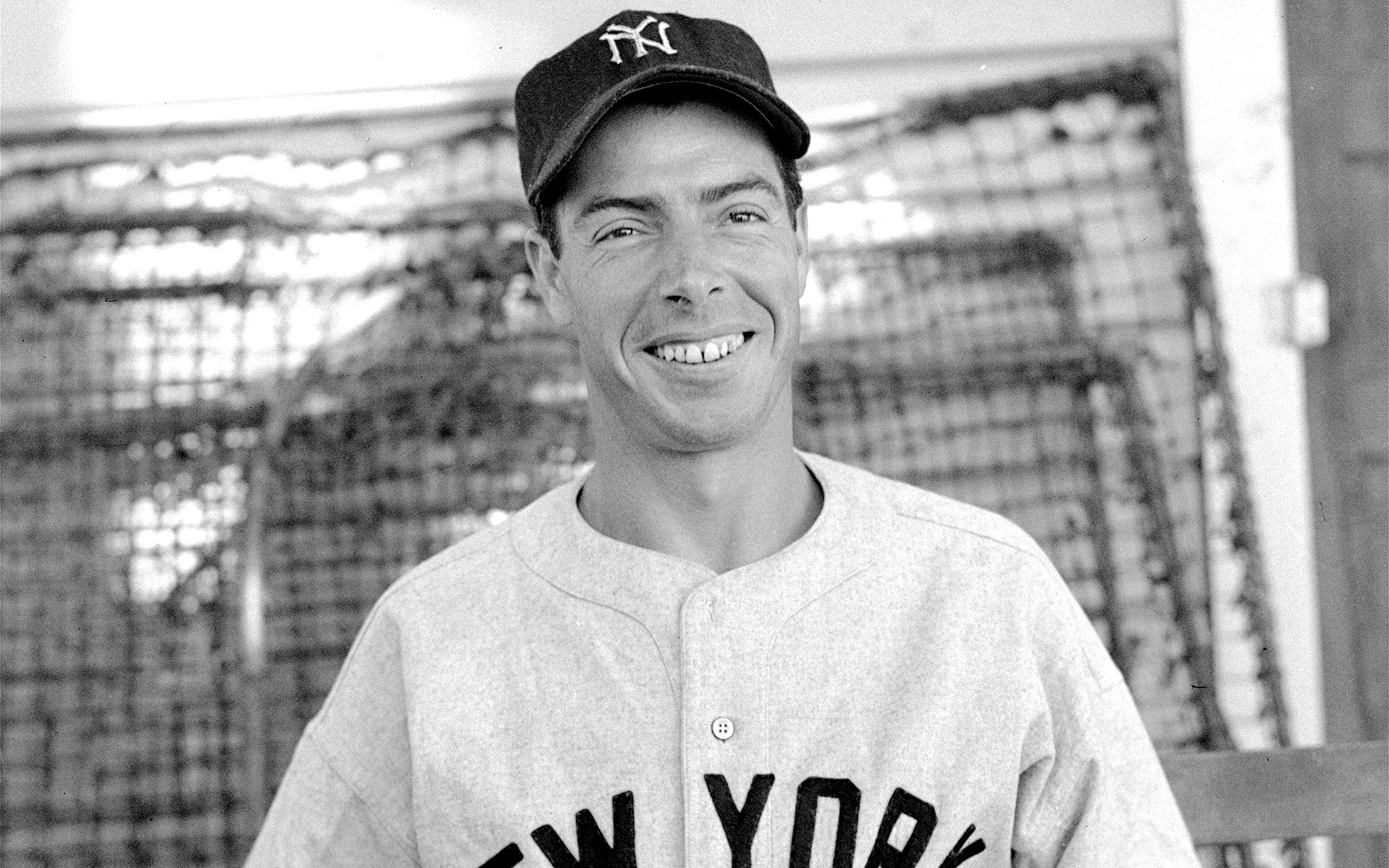
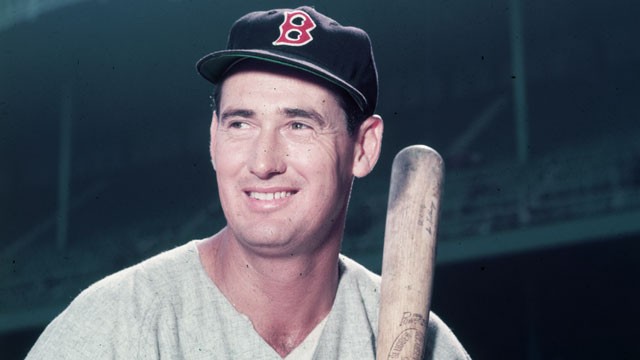
So what actually makes a team a dynasty? There can of course be several definitions since there are varying levels of success. A team can dominate their division for a decade but be bounced out in the first round of the playoffs year after year. We could of course consider that to be a divisional dynasty but you wouldn't call it an overall baseball dynasty. So let us set the parameters for this series of articles. A dynasty, for our purposes here, is a team that wins multiple World Series championships (above two as back to back is nice but not a dynasty) within a 5-10 year period. That being defined, this series will explore those teams that may have been a divisional or league dynasty but for whatever reason could not get over the hump to that World Series dynasty.
This series will show an array of near dynasties. Some are teams that made the World Series year after year but fell short. Others will be teams that competed right down to the end of the regular season year after year just to be beaten out. It will be a series of near misses and what could have beens.
Don't miss the other almost dynasty articles: The Detroit Tigers of the 1900's, The Chicago White Sox of the 1910's and the Pittsburgh Pirates of the 1920's. Now let's get started with this weeks "almost dynasty": The Boston Red Sox of the 1940's.
The Red Sox Yankees Dynasty
The Red Sox dominated the American League in the 1910's. While the White Sox had an "almost dynasty" the Red Sox had a legitimate dynasty. Their outfield of Lewis, Hooper and Speaker were widely accepted as the best group in the majors at the time and possibly ever. Their infield of Everett Scott, Jack Barry and Larry Gardner were the tops in the league (especially after the $100,000 infield in Philadelphia was broken up). Their best aspect was their pitching. Their pitching was so good that future Hall of Fame pitcher Herb Pennock was relegated to a relief role. Their starting rotation included Rube Foster, Ernie Shore, Carl Mays, Dutch Leonard and their ace pitcher Babe Ruth. With varying versions of these players the Red Sox won the World Series in 1912, 1915, 1916 and 1918. After the 1916 win the team was sold to a man named Harry Frazee. The name is infamous today but through the first two years Frazee was just another Red Sox owner and he even brought another World Championship to the team in 1918.
The decline of the Red Sox is associated, obviously, with the sale of Babe Ruth which theoretically brought a curse to Beantown. There was so much more to it than the Babe. It truly started in January of 1918. Larry Gardner and Hick Cady were sent to the A's for Stuffy McInnis, runiting the First Baseman with Jack Barry. This gave them 1/2 of the $100,000 infield, though McInnis was not what he used to be and Barry would spend the year in the military. In April of 1918 Rube Foster was sent to the Reds.
In December of 1918 the transfer began. Ernie Shore, Duffy Lewis and Dutch Leonard went to the Yankees. June 1919 they sent Jack Barry and Amos Strunk to the A's. In July 1919, after Mays walked out on the team. the Sox sent him to the Yankees leading to a near implosion of the league. In December of that year Ruth was sold to the Yankees. Almost exactly a year later Harry Harper, Waite Hoyt, Mike McNally and Wally Schang were sent to New York. Harry Hooper was later sent to the White Sox. In December 1921 Bullett Joe Bush, Sad Sam Jones and Everett Scott went to the Yankees. In July 1922 Joe Dugan and Elmer Smith went to the Yankees. Just before the 1923 season Herb Pennock and George Pipgras were sent to New York.

Looking at the 1921-1923 Yankee lineup, their first World Series teams, was like looking at the Red Sox dynasty. On their 1921 AL Champion team Ruth, Mays, Schang, McNally and Hoyt had come from the Sox. On the 1922 team Scott, Dugan Bush and Jones were added to that group. In 1923, the Yankees pitching staff featured eight pitchers during the regular season. Six of those had come from the Red Sox dynasty (Mays, Pipgras, Bush, Jones, Pennock and Hoyt).
While the Yankees were building an empire the Sox were floundering and Frazee was so far in debt to the Yankee owners, who were close friends, that the Yankees basically owned Fenway. While the Yankees went forward to win the AL in 1921, 1922, 1923, 1926, 1927, 1928, 1932, 1936, 1937, 1938, 1939, 1941, 1942 and 1943 (1932 was the last year with Ruth) the Red Sox plummeted. They rarely finished above 5th and finished 8th in 9 of 11 years. The other two years were a 7th place and a 6th place finish.
Rebuilding the Yawkey Way.
Tom Yawkey was born in Detroit in 1903, the year the Red Sox won the first ever World Series. His birth name was Thomas Austin and his father had married the daughter of the Yawkey logging and timber fortune. When Tom's father passed away in September of 1903, the family moved in with their wealthy uncle. When his mother died in 1918, the year of the Red Sox's last World Series title for a long time, he and his sister were adopted by their uncle, William Yawkey. Tom Austin became Tom Austin Yawkey. He grew up in opulence. His uncle even bought a substantial part of the Detroit Tigers and owned a large part of the team. He was known as the spendthrift owner compared to the tight fisted Briggs.
At 16 Yawkey became an orphan again when his uncle passed away. He inherited millions, including the stake in the Tigers but what the hell did a 16 year old know about running a business? Even less, with all of his assets in conservatorship until his 30th birthday, what did he care about the Tigers? His shares were sold to Briggs making Briggs the complete owner of the Tigers.
The Red Sox finished the 1932 season at 43-111. The Yankees, led by Ruth, won the American League and World Series. The Red Sox were dead last, 64 games out of first place. They didn't reach double digit wins until June 11, by which point they were already 24 1/2 games out of first and had lost 40 games. At the end of the year, owner Bob Quinn had thrown in the towel. He had owned the team for ten years, inherited a baseball graveyard and had lost money every single year. Luckily for Quinn, Tom Yawkey turned 30 in early 1933, at which point the lifelong baseball fan gained access to his millions. His first big purchase was the Red Sox. Yawkey would not stand for being a loser and he would start to build this team from the ground up.

The 1933 team won 20 games more than the 1932 team. They slowly added better players. Catcher Rick Farrell was acquired from the Browns. Billy Werber and George Pipgras were added from the Yankees. Joe Judge was signed as a free agent. It wasn't a finished product but it was better. In December of 1933 they added Lefty Grove, the best pitcher in baseball, and Max Bishop from the A's. In January 1934 they added Herb Pennock. The turning point really was after the 1934 season. The Senators were hurting for money and the Red Sox were hurting for leadership. The result was the sale of Joe Cronin to the Red Sox.

The team was improving and by 1938 they felt they were ready to compete. They had added Bobby Doerr, a young second baseman from the Hollywood Stars, to go with Joe Cronin at Shortstop. They finished second that year but were not nearly in contention, finishing 9 1/2 games behind the Yankees.
1939 was the big addition to the team. It was the year that the Splendid Splinter, the Greatest Hitter Who Ever Lived, Teddy Ball Game came to town. The 20 year old took the league by storm. He led the league in RBI, hit .327, 31 Home Runs and 44 doubles. What was more, his enthusiasm and dedication started to energize the others. With his passion for the game and Cronin's intensity the Sox looked like they had a bright future. They finished second again but 17 games behind the Yankees. Still, the "almost dynasty" was taking shape.
Another key piece was added for 1940 with the younger brother of Joe DiMaggio. "The Little Professor" hit .301 his first year in the league and gave the Sox defensive stability in center field. The Sox fell to 4th, although they were only 8 games behind the Yankees. They climbed back to second in 1941 but they were not nearly as close to first, finishing 17 games behind the Yankees. This was the era of DiMaggio vs Williams for AL supremacy. Williams always seemed to steal the show but DiMaggio always won the title.

After the 1941 season everything changed. The war was on in full force. Players started leaving for the service. The season went on as usual and the Yankees won as usual, with the Red Sox in second, as was the pattern. More players left in 1943 and the teams seemed to be a bit lost. The aging Joe Cronin was still trying to play short stop and the Red Sox were hanging in there but without Williams and DiMaggio they didn't quite have the manpower. 1945 was the worst of all. They fell to 7th while the Tigers broke the Yankees hold on the top of the league.
Postwar Prosperity.
Before the war one more key piece of the "almost dynasty" was added. Johnny Pesky debuted in 1942 and played so well as a rookie that he came in third in MVP voting. As the war ended and the players returned the Red Sox had their key players: Pesky, Doerr, DiMaggio and Williams. They added another key big bat before the season by picking up Rudy York from the Tigers.
York was a fun loving guy with a habit of falling asleep while smoking. The Tigers joke was that he led the league in burned mattresses and hotel fires but it was really no joke. There were serious concerns for his safety. He had struggled in the Tigers lineup without Hank Greenberg's bat and in his desperation to improve his strikeouts soared. The Tigers, realizing they were an aging team and needing to rebuild, traded York to Boston.
With the war over and the stars back on the field, the excitement for the season was immense. The Sox won their first five games and never looked back. They won 15 straight as April turned to May and before you could blink the Red Sox were shocking everyone. With the exception of Wednesday, April 24th, when they sat in second place, one game behind, they spent every day of the season in first place. Their lead reached as high as 16 1/2 in early September. They ran away with the pennant by 12 games. It had been nearly 30 years since Boston had seen a Red Sox World Series team. The organization had never lost a World Series. Here is where the true heartache of the Red Sox Nation would begin.
I previously discussed in fairly significant detail the heartbreak of the 1946 World Series and the unfair blame that was placed on Johnny Pesky. The loss was difficult to handle. Still, the core four players and the near World Series victory brought excitement to the city that hadn't been there since the days of Hooper-Lewis-Speaker. The 1947 Red Sox got off to a quick 4-0 start but it was clear that DiMaggio, Berra and the Yankees were back. The Sox fought hard to stay near the top but again the Yankees outdistanced them.
The Three Team American League
The 1948 season started an era of fierce competition between the Yankees, Red Sox and Indians. Every season between 1946 and 1958 one of the three teams would represent the American League in the World Series. 1948 was so tight that all three teams had a chance to win the pennant with a few days left. The season ended with the Red Sox and Indians tied forcing the first ever American League one game playoff. Boston gambled by starting Denny Galehouse and it was a gamble that did not pay off. Galehouse was near the end of a 15 year career and was never what you would consider a dominant pitcher. Galehouse would end the year with an 8-8 record (including the one game playoff) but he was 6-2 over the final two months of the season. It was not that the Red Sox did not have options. Mel Parnell had pitched 6 2/3 on 9/30 and won to improve his record to 15-8. Jack Kramer had pitched a perfect game on 10/2 to improve to 18-5. The complete game was necessary to keep the Sox in the race but it ruled out Kramer for the playoff game. Joe Dobson started on 10/3, the last day of the regular season but did not look sharp in his 4 1/3. Despite the short rest Parnell was positive he would be pitching. Everyone was sure he would be pitching. The morning of the game Joe McCarthy changed his mind. With the wind blowing out he decided a right handed pitcher would be a better choice. He went with Galehouse.
The game was tied at one entering the top of the 4th. Back to back singles by Lou Boudreau and Joe Gordon and a three run Home Run by Ken Keltner sealed the deal for Cleveland. With an 8-3 win the Red Sox were headed home and the Indians were headed to the World Series.
The 1949 season was just as close. It again came down to the final series of the year. This time between the Yankees and the Red Sox. On September 30 the Red Sox won while the Yankees lost to a below average Athletics team giving Boston a 1 game lead with two to play. The final two were head to head against the Yankees. Win one game and it was back to the World Series. Game 1 was a classic Yankee-Red Sox grudge match. In the top of the 3rd, already leading 1-0, an RBI single with the bases loaded by Doerr increased the lead to 2-0. Back to back walks forced in two more runs and it looked like the Sox were on their way to the World Series. A 2 run 4th and a 2 run 5th for the Yankees tied things up and Yankee Stadium suddenly got very loud while the Red Sox bats went silent. While the heroes of Red Sox lore, the very legends of the organization, went silent it was an unheralded Johnny Lindell of the Yankees who kept the Yankees alive. His Home Run in the bottom of the 8th allowed the Yankees one last chance at the pennant. The final game was another tense game. The Yankees scored one run in the first and so it stood through the 8th. In between both teams left men on base, grounded into double plays and generally squandered chances. It was the 8th inning that decided the season. The Red Sox had pinch hit for Ellis Kinder in the 8th. The pinch hitter walked but was erased on yet another double play. It was a tough decision to make but another that changed the "almost dynasty" of the Red Sox. Mel Parnell took the mound to start the bottom of the inning. He immediately gave up a Home Run to Tommy Henrich and a single to Berra. He was relieved by Tex Hughson who got Joe DiMaggio to hit into a double play giving Red Sox fans some hope. It was short lived. Two singles and a walk loaded the bases bringing Jerry Coleman to bat. Coleman hit a bases clearing double and the Yankees were up 5-0 just like that. The Red Sox put up one last fight with a three run 9th but it was over, and with it the almost dynasty.
The Red Sox would finish as close as third in 1950 and 1951 but they were never truly in contention. What could have been a dynasty was derailed by the dominance of the Yankees and the interruption of the World War. Ted Williams continued to be one of the greatest hitters the game has ever seen but the Red Sox would not see another pennant race until the rise of Carl Yastrzemski.
TRIVIA QUESTION:
As mentioned in the section "The Three Team American League", between 1946 and 1958 the American League was won by either the Yankees, Red Sox or Indians. The dominance was even greater than this though. Between 1941 and 1964 only three teams were able to win the league other than the Indians, Red Sox and Yankees mentioned. Which three teams were able to sneak in the World Series and what year did each do it?
Answer to Last Week's Trivia Question:
In the era of monopolies there was no rule in the Major Leagues saying that an owner could not own more than one team. Several owners had stakes in multiple franchises. The problem was that the owners would shift players from franchise to franchise on a whim. For example, the owner of the Louisville Colonels also owned the Pirates and shifted the players as he felt necessary. The owner of the Cardinals also owned the Cleveland Spiders. The owner of the Reds also owned part of the Giants. With so many teams being manipulated the competition suffered so the league decided to reduce the weakest teams. The Louisville Colonels, Washington Senators, Cleveland Spiders and the Baltimore Orioles were dropped from the league. The Spiders were one of the worst teams in the history of the game. They finished their season at 20-134.
Answer to Last Week's Trivia Question:
In the era of monopolies there was no rule in the Major Leagues saying that an owner could not own more than one team. Several owners had stakes in multiple franchises. The problem was that the owners would shift players from franchise to franchise on a whim. For example, the owner of the Louisville Colonels also owned the Pirates and shifted the players as he felt necessary. The owner of the Cardinals also owned the Cleveland Spiders. The owner of the Reds also owned part of the Giants. With so many teams being manipulated the competition suffered so the league decided to reduce the weakest teams. The Louisville Colonels, Washington Senators, Cleveland Spiders and the Baltimore Orioles were dropped from the league. The Spiders were one of the worst teams in the history of the game. They finished their season at 20-134.