Sunday, May 24, 2015

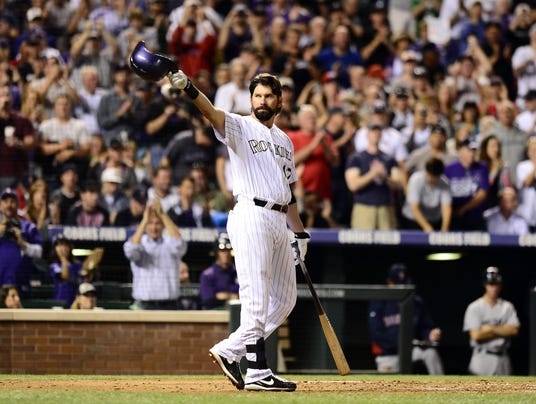
Why Don't the Colorado Rockies Wear That Number Anymore?

Every organization in the league has their own legends.  Some legends tower over the history of the game.  Some tower over a certain portion of the history.  Some define an organization and are the first thought anyone has when the team is mentioned.

Each team finds a way to honor their legends, usually with the retirement of the player's number.  For the fans of that team it is easy to sit in the stadium seats, look out on the display of retired numbers and feel pride in the part that number represents to their history.  Unfortunately, fans of the visiting team stopping  by to see a game may not know the meaning of those numbers.

So during this series we will explore what the retired numbers for each team mean and why they were retired.

So far in this series of articles we have reviewed the San Diego Padres, San Francisco Giants, Los Angeles Dodgers and Arizona Diamondbacks.  This week we will look at the Colorado Rockies.

Todd Helton joined the Rockies in 1997 for 35 games.  The following year he was a Rookie of the Year candidate, finishing second to Kerry Wood.  In his 17 years (how's that for irony) in Colorado Helton would make  five All Star appearances, receive MVP votes 6 times, win four Silver Slugger awards and three Gold Glove awards.  Helton was often near the top of the league in batting average and in 2000 Helton threatened to hit .400.  Helton retired after the 2013 season.  As an all time Rockies player Helton ranks high in many categories: WAR (1st), Offensive WAR (1st), Average (3rd), OBP (2nd), slugging % (7th), OBP (3rd), Games (1st), At Bats (1st), Plate Appearances (1st), Runs (1st), Hits (1st), Total Bases (1st), Doubles (1st), Triples (4th), Home Runs (1st), RBI (1st), Walks (1st), Strikeouts (1st), Singles (1st), Extra Base Hits (1st), Times on Base (1st),Hit By Pitch (3rd), Sac Fly (1st) and Intentional Walks (1st).  Only one other player in Rockies history wore the #17.  Pitcher David Nied wore the number from 1992-1996.

42
The number 42 was retired league wide in 1997 in honor of Jackie Robinson.  Pitcher Armondo Reynoso wore the number for the Rockies from 1992-1996.  He was the only player in Rockies history to be issued that number.

TRIVIA QUESTION:
The Rockies are not known for pitching, in fact they are known more in their history for poor pitching than they are for stellar pitching.  Yet, in their history, there is a name that seems to stand out above other pitchers.  This pitcher played three full seasons for the Rockies and appeared in parts of three others, including their 2007 and 2009 post season teams.  In 2010 he finished third in the Cy Young voting and made his only All Star appearance.

This pitcher ranks high in many pitching categories for the organization including: WAR for Pitchers (1st), ERA (1st), Wins (5th), Wins-Loss % (3rd), WHIP (1st), Walks per 9 IP (9th), Strikeouts per 9 IP (1st), Innings Pitched (5th), Strikeouts (1st), Games Started (5th), Complete Games (3rd), Shutouts (1st tied), K's/BB (5th), Home Runs/9IP (1st), Earned Runs (7th), Wild Pitches (2nd), Hit by Pitch (5th), Batters Faced (6th).

Who is he?

Answer to Last Week's Question:
Congratulations to Hope for answering last week's question!
Steve Finley was a sometimes over looked but irreplaceable piece of the Diamondbacks' playoff teams.  In fact, it seems that almost everywhere Finley went his teams won.  As a rookie in 1989, Finley was part of an Orioles team that very nearly became the first "worst to first" team in history.

Following the 1990 season Finley, Pete Harnisch and Curt Schilling were traded to the Houston Astros for Glenn Davis.  In his four years in Houston Finley built his reputation as a great young player.  He was strong defensively, had great speed on the base paths and could hit for power.

Following the 1994 season Finley was part of another huge trade.  This one sent Finley, Ken Caminiti, Andujar Cedeno, Robert Petagine and Brian Williams to the Padres. In return the Astros received Derek Bell, Doug Brocail, Ricky Gutierrez, Pedro Martinez (not that Pedro), Phil Plantier, Craig Shiply and Sean Fesh.  Finley and Caminiti helped turn the Padres into a contentder and reached just their second World Series in team history.

Following the 1998 World Series season Finley was a free agent and signed with the new Arizona franchise where he would help the Diamondbacks win their first ever World Series and achieve the franchise numbers shown in last week's trivia question.

At the 2004 trade deadline the Diamondbacks, now old and rebuilding, sent Finley and Catcher Brent Mayne to division rivals, Los Angeles, in exchange for Reggie Abercrombie, Koyie Hill and Bill Murphy.  The trade worked out for the Dodgers.  On the final Saturday of the season, with the Dodgers facing the hated Giants of Bonds, Finley stepped up to the plate needing just a sac fly to give the Dodgers the division title.  Instead, Finley hit a walk off, pennant clinching, Giant killing Grand Slam to send the Dodgers to the Playoffs.

Following the 2004 season Finley signed with the southern California Dodger rivals, the Angels where he had a frustrating, injury plagued season.  He was traded by the Angels to the Giants before the 2005 season.  After one season with the Giants he signed with the Rockies but was unable to finish the season where he was released in June.

Sunday, May 17, 2015

Why Don't the Arizona Diamondbacks Wear That Number Anymore?

Every team in the league has its own legends.  Some legends tower over the history of the game.  Some tower over a certain portion of the history.  Some define an organization and are the first thought anyone has when the team is mentioned.

Each team finds a way to honor their legends, usually with the retirement of the player's number.  For the fans of that team it is easy to sit in the stadium seats, look out on the display of retired numbers and feel pride in the part that number represents to their history.  Unfortunately, fans of the visiting team stopping  by to see a game may not know the meaning of those numbers.

So during this series we will explore what the retired numbers for each team mean and why they were retired.

So far in this series we have seen the San Diego Padres, San Francisco Giants and Los Angeles Dodgers.  This week we will look at the Arizona Diamondbacks.

Luis Gonzalez had big expectations placed on him when he came up with the Houston Astros.  He did not live up to the unrealistic expectations.  Gonzales had already completed his 9th year in the majors when the Tigers traded him to Arizona for Outfielder Karim Garcia before the 1999 season. Gonzalez immediately made an impact.  He became a 4 time All Star and finished third in MVP voting during the Diamondbacks World Series season.  Gonzalez would play a total of 8 years with the team and got the game winning hit off of Mariano Rivera when the Diamondbacks won their only World Series in 2001.  Gonzalez leads the teams statistics in many categories: WAR (1st), Offensive WAR (1st) , Average (1st), OBP (1st), Slugging % (1st), OBP (1st), Games (1st), At Bats (1st), Plate Appearances (1st), Runs (1st), Hits (1st), Total Bases (1st), Doubles (1st), Triples (6th), Home Runs (1st), RBI (1st), Walks (1st), Singles (1st), Extra Base Hits (1st), Times on Base (1st), Hit By Pitch (1st), Sac Fly (1st), Intentional Walks (1st).  In the Diamondbacks first season Jeff Suppan wore the number 20.  No other player has worn the number.

42
The Diamondbacks played their first Major League game in 1998.  By the time they started play the number 42 had already been retired in honor of Jackie Robinson..  No player ever wore the number for Arizona.

TRIVIA QUESTION:
Although the starting Center Fielder on the Diamondbacks World Series team does not often get mentioned in the Hall  of Fame conversation, he may get future consideration for number retirement by the Diamondbacks.  He ranks highly on the Arizona leader boards in a number of categories including: WAR (2nd) Offensive WAR (2nd), Defensive WAR (8th), Average (8th), On Base Percentage (7th), Slugging Percentage (3rd). On Base Percentage (4th), Games Played (4th). At Bats (3rd), Plate Appearances (3rd), Runs (2nd), Hits (2nd), Total Bases (2nd), Doubles (6th), Triples (3rd), Home Runs (2nd), RBI (2nd), Walks (3ed), Strikeouts (8th). Stolen Bases (5th), Singles (5th), Extra Base Hits (3rd), Times on Base (2nd), Hit by Pitch (8th), Sac Flies (3rd), Intentional Walks (4th), Stolen Base % (2nd), At Bats Per K (8th), At Bats Per Home Run (2nd),

Often overshadowed by the likes of Gonzales, Matt Williams and Mark Grace on offense and Johnson/Schilling on the mound, this player was known as Centerfield defensive star.  While with San Diego he won four Gold Gloves and made two All Star Teams, receiving MVP votes in the Padres 1996 playoff appearance (their first since 1984) and was a key piece of the Padres 1998 World Series team.  He won a fifth Gold Glove in 2004 and received MVP votes that year.

During the 2004 season he was traded to the Dodgers where he hit an iconic Grand Slam to win the NL West title for the Dodgers over the Giants on the final weekend of the season.  He went on to play for the Angels, Giants and Rockies before retiring in 2007,  Prior to his National League play he had been one of the bright young stars in a crowded Orioles outfield that included defensive stars Brady Anderson, Mike Devereaux and Joe Orsulak, which led to his inclusion in one of the worst trades in baseball history.

Who is he?

Answer to Last Week's Question:
Despite all the qualifications listed last week Steve Garvey has not been elected to the Hall of Fame and has not had his number retired by the Dodgers (though he has by the Padres).  Garvey became eligible for the Hall of Fame in 1993 and received 41.6% of the vote.  Only Reggie Jackson was elected during that year.  He reached a high of 42.6% of the votes in 1995, although only Mike Schmidt was elected that year.  He never fell below 20% of the vote but never came truly close to the required percentage.  In 2007 Garvey fell off the ballot.

Saturday, May 9, 2015

Why Don't the Los Angeles Dodgers Wear That Number Anymore?

Every team in the league has its own legends.  Some legends tower over the history of the game.  Some tower over a certain portion of the history.  Some define an organization and are the first thought anyone has when the team is mentioned.

Each team finds a way to honor their legends, usually with the retirement of the player's number.  For the fans of that team it is easy to sit in the stadium seats, look out on the display of retired numbers and feel pride in the part that number represents to their team's history.  Unfortunately, fans of the visiting team stopping  by to see a game may not know the meaning of those numbers.

So during this series we will explore what the retired numbers for each team mean and why they were retired.

We have already looked at the San Diego Padres and San Francisco Giants in this series.  This week we will look at the Brooklyn Dodgers/Los Angeles Dodgers:


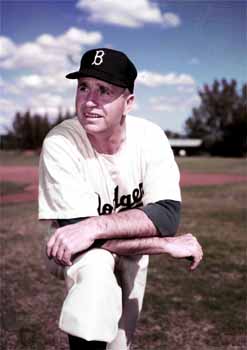
The Dodgers in Brooklyn got a reputation of winners in their final two decades.  It wasn't always that way.  The key man, the leader, in establishing that trend was Pee Wee Reese.  He was the captain, the field leader.  He well earned the #1.  He was more than numbers, he was the guiding force of the Brooklyn Dodgers.  The 10 time All Star also received MVP votes in 12 different seasons.  Pee Wee ranks among the top Dodgers in many categories: WAR (1st), Offensive WAR (2nd) , Defensive WAR (1st), Games Played (3rd), At Bats (2nd), Plate Appearances (2nd), Hits (2nd), Runs (1st), Total Bases (5th), Doubles (4th), Triples (8th), RBI (7th), Walks (1st), Stolen Bases (10th) Singles (2nd), Extra Base Hits (8th). Times on Base (2nd) and Sac Hits (3rd),  Before Pee Wee came along seven players wore the number 1: Johnny Frederick (1932-1934), Buzz Boyle (1935), Freddie Lindstrom (1936), Woody English (1937-1938), Packy Rogers (1938), Gene Moore (1939) and Charlie Gilbert (1940).  While Pee Wee Reese was serving in World War II, the number 1 was issued to Paul Waner (1943 and 1944) and Mike Sandlock (1945).  Following Reese's retirement in 1958 four players wore the number 1 for the Dodgers:  Billy Grabarkewitz (1969-1972), Rick Auerbach (1974-1976), Derrel Thomas (1979) and Gary Weiss (1980-1981).  Reese was inducted into the Hall of Fame in 1984 by the Veteran's Committee.

2

Tom Lasorda pitched two years  for the Dodgers in Brooklyn and lost his spot on the roster to Sandy Koufax.  If you ask Lasorda, he should have been kept instead of Koufax.  His work in those two years (8 games, 0-0, 7.62 ERA) are not why his number is retired.  Lasorda's number is retired because he managed the team for 22 years, won 1599 games as manager and constantly had the Dodgers contending for first place.  Under Lasorda's leadership the Dodgers won 8 division titles, 4 National League Pennants and two World Series.  Before Lasorda took over the team 14 players wore the number 2:  Neal Finn (1932), Joe Judge (1933), Jim Bucher (1934-1937), Leo Durocher (1938-1945), Bobby Morgan (1950-1953), Randy Jackson (1956-1958), Don Demeter (1959-1960), Bart Shirley (1966), Dick Schofield (1966-1967), Zoilo Versalles (1968), Bobby Valentine (1969-1972), Paul Powell (1973), Orlando Alvarez (1973-1975) and Ellie Rodriguez (1976).The number 2 was never issued following Lasorda's retirement.  Lasorda was elected to the Hall of Fame in 1997.

4

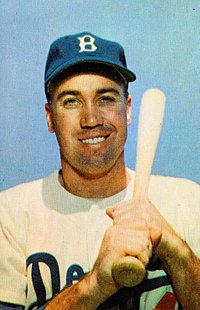
If Pee Wee Reese was the leader of the Brooklyn teams, Duke Snider was the power.  Snider hit 407 career Home Runs and likely would have hit quite a few more if not for the first few years in Los Angeles when the Dodgers played in the oddly shaped Coliseum.  Snider played on six of the Dodgers World Series teams, the first in 1949, and hit 11 World Series Home Runs.  Snider is in the top 10 Dodgers in many categories WAR (2nd), Offensive WAR( 1st), Slugging % (4th), OPS (5th), Runs (3rd), Hits (4th), Total Bases (2nd) , Doubles (2nd), Triples (6th), Home Runs (1st), RBI (1st), Walks (4th),Singles (9th), Extra Base Hits (1st) Times on Base (4th) and Intentional Walks (3rd).  Snider was a long time presence for the Dodgers long after he retired and he loved to mentor young players.  10 players were issued the number 4 before Duke (some of them quite famous in their own right):  Hack Wilson (1932-1934), Frenchy Bordgaray (1935-1936), Tony Malinosky (1937), Bert Haas (1937), Dolph Camili (1938-1943), Gil Hodges (1943), Joe Orengo (1943), Gil English (1944), Babe Herman (1945) and Mike Sandlock (1946).  Three players wore the number 4 following Snider: Tom Hutton (1966-1969), Kevin Pasley (1974-1977) and Bill North (1978).  Snider was elected into the Hall of Fame in 1980.

19

There has been a general rule with the Dodgers management that only players inducted into the National Baseball Hall of Fame in Cooperstown will have their number retired.  That will explain why you don't see Maury Wills, Fernando Valenzuela, Steve Garvey, Orel Hershiser or Kirk Gibson's numbers up there.  There is one exception to this rule: Jim Gilliam.  Gilliam does appear on a number of the Dodgers lists of top ten all time: WAR (8th), Offensive WAR (8th), Games Played (5th), At Bats (5th), Plate Appearances (3rd), Runs (4th), Hits (8th), Total Bases (9th), Doubles (7th), Walks (2nd) Singles (6th), Times on Base (3rd), Gilliam was quite a bit more than that.  He was one of the longest hold overs from the Brooklyn days, spent 14 years as a player for the Dodgers and remained as a coach until his death in 1978, just before his 38th birthday.  During the post season of 1978 the Dodgers wore a patch with the number 19 on their uniform sleeve in honor of Gilliam. Before Gilliam came along 17 players wore the number for the Dodgers: Ray Phelps (1932), Chink Outen (1933), Babe Phelps (1935-1936), Jim Lindsey (1937), Ralph Birkofer (1937), Ira Hutchinson (1939), Herman Franks (1940-1941), Cliff Dapper (1942), Frenchy Bordagaray (1943), Ed Head (1944), Charlie Fuchs (1944), Tom Sunkel (1944), Morrie Aderholt (1944-1945), Cy Buker (1945), Joe Hatten (1946-1951), Johnny Schmitz (1951-1952) and Joe Landrum (1952).    No player was issued the number 19 after Gilliam's death.

20

Don Sutton debuted for the Dodgers in 1966 and joined a defending World Champion.  He finished at 12-12 that year and would not appear in the Dodgers' World Series loss to the Orioles.  Sutton would go on to pitch for the Dodgers for a total of 16 years and win 233 regular season games and another five post season games for the Dodgers.  Sutton was the link in the chain of great Dodgers pitchers between Koufax and Drysdale to Valenzuela and Hershiser.  Sutton was a four time All Star and four times received votes for the Cy Young (all of them top 5 finishes).  Of course Sutton ranks in the top 10 all time Dodgers in many categories: WAR for Pitchers (4th), Wins (1st), WHIP (6th), Games Pitched (1st), Innings Pitched (1st), Strikeouts (1st), Games started (1st), Complete Games ( 8th), Shutouts (1st).  24 players wore the number before Sutton came along:  Sloppy Thurston (1932-1933), Glenn Chapman (1934), Zack Taylor (1935), Harry Eisenstat (1935), George Cisar (1937), Tom Baker (1937), Ernie Koy (1938-1940), Wes Flowers (1940), Kemp Wicker (1941), Larry French (1941-1942), Al Glossop (1943), Tommy Warren(1944), Charlie Osgood (1944), Ralph Branca (1946-1947), Elmer Sexauer (1948), Hank Behrman (1948), Phil Haugstad (1947-1951), Carmen Mauro (1953), Rip Repulski (1959-1960), Turk Farrell (1961), Daryl Spencer (1962-1963), Dick Scott (1963), Larry Miller (1964 and AL Ferrara (1963-1965). 11 players wore the number 20 following Sutton's departure: Candy Maldonado (1982-1985) , Ed Amelung (1986) , Larry See (1986), Phil Garner (1987), Don Sutton (in his return in 1988), Willie Randolph (1989), Mike Davis (1989), Brian Traxler (1990), Darren Holmes (1990), Mitch Webster (1991-1995), Mike Blowers (1996) and Darren Lewis (1997).  Sutton was elected to the Hall of Fame in 1998.

24

For a team as consistently competitive as the Dodgers were in their last two decades in Brooklyn it seems odd that they had so many managers.  There was Leo Durocher, Clyde Sukeforth, Burt Shotton, Durocher again, Ray Blades, Shotton again, Charlie Dressen and finally Walter Alston,  Wearing number 24 Alston led the team to seven first place finishes, seven National League pennants and four World Series wins (the first four in franchise history).  Alston spent 24 years as Dodgers manager and won 2040 regular season games.  In addition to the 7 first place finishes, he led the team to 8 second place finishes.  18 players wore the number 24 before Alston came along: Ed Pipgras (1932), Cy Moore (1932), Jimmy Jordan (1933), Watty Clark (1934), Bobby Reis (1935), Randy Moore (1936), Jim Peterson (1937), Jake Daniel (1937), Buck Marrow (1937-1938), Lee Rogers (1938), Al Hollingsworth (1939) Bill Crouch (1939), Joe Gallagher (1940), Tommy Tatum (1941), Paul Waner (1941) Augie Galan (1941-1946), Bobby Bragan (1947-1948) and Hank Edwards (1951).  No player was issued Alston's number 24 following his departure.  Alston was inducted into the Hall of Fame in 1983.

32

Along with Jackie Robinson, Sandy Koufax could be the most iconic Dodger of all time.  Koufax started with the Dodgers in Brooklyn but did not become a great pitcher until the team moved to Los Angeles.  Koufax was absolutely dominant through 1966 and is considered one of the greatest pitchers the sport has ever seen.  Koufax was a six time All Star, three time Cy Young winner and an MVP.  He ranks high on many Dodgers' categories and would have ranked much higher had his elbow not broken down.  For All Time Dodgers lists he ranks: WAR (3rd), ERA (10th). Wins (5th), Win Loss % (7th), WHIP (4th), Hits/9 IP (2nd), K/9IP (3rd), Games Pitched (7th), K's (3rd), Shutouts (3rd), K/Walk (6th),  18 players wore the number 32 before Koufax: Goody Rosen (1937), Art Parks (1939), Boots offenberger (1939), Jimmy Ripple (1939), Lee Grissom (1940-1941), Bob Chipman (1941), Johnny Rizzo (1942), Rube Melton (1943), Bill Lohrman (1943), Fats Dantonio (1944), Ray Hayworth (1944-1945), Babe Herman (1945), Les Webber (1945-1946) Joe Tepsic (1946), Willie Ramsdell (1947-1948), Cal Abrams (1949-1952), Rocky Nelson (1952) and Bill Antonello (1953),
No player was issued number 32 following Koufax's retirement.  He was elected into the Hall of Fame 1972 on the first year of eligibility.

39

Roy Campanella was one of the most well respected Dodgers of the Brooklyn era and had he not been paralyzed in a car accident likely would have played well into the Los Angeles era.  He was so well respected by the O'Malley's that he was often spoken of as a future manager, twenty years before Frank Robinson became the first African American manager.  An All Star in 8 of his 10 years he was also a 3 time MVP.  He ranks high in many Dodgers categories;  Offensive WAR (10th). Slugging % (10th), Home Runs (4th) and RBI (8th), If he had not been injured he would certainly be higher on many lists.  Only three players wore the number before Campy:  Ray Lucas (1933), John Corridon (1946) and Ed Chandler (1947).  Three players were issued Campy's number 39 following his retirement : Ken Rowe (1963), Howie Reed (1964-1966) and Bob Lee (1967).  Campanella was inducted into the Hall of Fame in 1969.

42

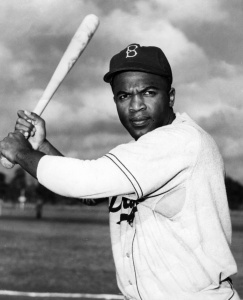
Little explanation is needed for Jackie Robinson.  He is the face of the Dodgers history and much of Baseball's history. Along with Reese and Snider, Jackie dominates the Dodger record books: WAR (3rd), Offensive WAR (3rd), Defensive WAR (7th), OBP (4th), OPS (9th), Runs (7th), Walks (6th), Extra Base Hits (10th), Hit By Pitch (2nd),  What is most amazing about Jackie's numbers is that baseball was considered his 4th best sport.  He was best known for football at UCLA and was an Olmypic athlete in Track.  He also lettered in Basketball while at UCLA.  If he had been allowed to play baseball directly out of college there is no telling what his numbers could have been.  Only 1 player, George Jeffcoat (1939) wore the number 42 before Jackie and only Ray Lamb (1969) ever wore the number 42 following Jackie's retirement. Robinson was inducted into the Hall of Fame in 1962.

Don Drysdale was the counterpart to Sandy Koufax and in some ways a better pitcher.  Drysdale won 209 games in 14 years with the Dodgers.  He represented the team in 8 All Star Games, was a Cy Young Award Winner and four times received MVP votes (twice finishing in the top 5).  Drysdale and Koufax defined the first winning era of the Los Angeles chapter.  He leads even Koufax in many of the Dodgers pitching categories: WAR for Pitchers (2n), Wins (2nd), Games Pitched (2nd), Innings Pitched (2nd), Strikeouts (2nd), Complete Games (6th), Shutouts (2nd), Prior to Drysdale no player ever wore the number 53 for the Dodgers.  Following Drysdale only Tom Paciorek (1970) ever wore the number.  Drysdale entered the Hall of Fame in 1984.

TRIVIA QUESTION:
As mentioned in today's article, with the exception of Jim Gilliam, the Dodgers' team policy has generally been to not retire a player's number unless they are elected to the Hall of Fame.  This leaves quite a few players with major impacts on the team history without thatt honor.  One player spent 14 years of a 19 year career with the Dodgers, won an MVP, received MVP votes 8 times as a Dodger (including a second place finish), made eight All Star Teams and won 4 Gold Gloves.  He also is among Dodgers top 10 lists in a number of categories: WAR (9th), Games Played (9th), At Bats (8th), Plate Appearances (8th), Hits (5th), Total Bases (6th), Doubles (3rd), Home Runs (6th), RBI (5th),Strikeouts (9th), Singles (7th)Extra Base Hits (6th), Times on Base (9th), Sac Flies (3rd), Intentional Walks (4th).  In addition to all  that, this player was the leader on 4 Dodger Playoff Teams (all of which made the World Series and one of them won) and won an NLCS MVP with the Dodgers.  After leaving the Dodgers he played in another NLCS and won an NLCS MVP with that team.  The man also holds the National League record for consecutive games played.  Who is this?

Answer to Last Week's Trivia Question:
Amos Wilson Rusie, known as the Hoosier Thunderbolt, played 10 years in the Major Leagues.  He started in 1889 with his hometown Indianapolis Hoosiers going 12-10 with a 5.32 ERA.  When the Indianapolis franchise closed shop because of financial issues, Rusie was sent to the Giants.  Rusie would pitch for the Giants from 1890-1898, although he would miss all of 1896 as a hold out.  In his 8 seasons with the Giants, Rusie never won less than 20 games (his lowest total was 20).  His win totals were amazing: 29, 33, 32, 33, 36, 23, 28 and 20.  Rusie won the 1894 Pitching Triple Crown, twice had the league's top ERA, led the league in strikeouts 5 times and four times led the league in shutouts.  Rusie was inducted in the Hall of Fame by the Veterans Committee in 1977.

Saturday, May 2, 2015

Why Don't the San Francisco Giants Wear That Number Anymore?

Every team in the league has its own legends.  Some legends tower over the history of the game.  Some tower over a certain portion of the history.  Some define an organization and are the first thought anyone has when the team is mentioned.

Each team finds a way to honor their legends, usually with the retirement of the player's number.  For the fans of that team it is easy to sit in the stadium seats, look out on the display of retired numbers and feel pride in the part that number represents to their history.  Unfortunately, fans of the visiting team stopping  by to see a game may not know the meaning of those numbers.

So during this series we will explore what the retired numbers for each team mean and why they were retired.

Last week we looked at the San Diego Padres.  Continuing this series is the San Francisco Giants.  More accurately the New York Gothams/New York Giants/San Francisco Giants.

They are one of the most storied franchises in the history of the sport dating back to 1883. It should be no surprise that the team has honored quite a few of their former players, and will likely honor quite a few of their current heroes in the coming years.  So why don't the Giants wear certain numbers anymore?  Let's take a look:

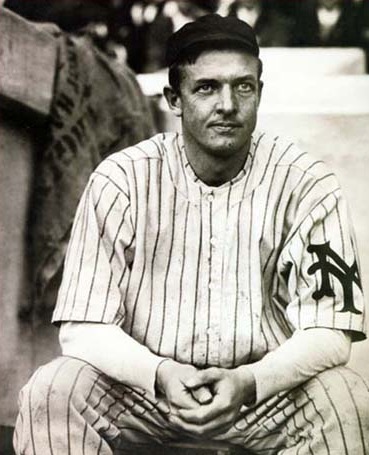
Known as the "Christian Gentleman" or "Big Six" Christy Mathewson was one of the first stars of the game.  In fact, Matty changed the public perception of what a baseball player could be.  Before Mathewson, baseball players were viewed as borish, uncouth and uneducated drunks.  Mothers warned their sons not to become a ball player.  Mathewson was a college educated, well spoken gentleman who preached clean living and had once considered priesthood.  Mathewson created the "fadeaway" pitch which was essentially the early version of the slider.  He won 372 games for the Giants in 17 years and was the identifying field leader of the Giants.  In the 1905 World Series Mathewson pitched three complete games (27 innings) and allowed 0 runs. Hard as it is for a pitcher to win three games in any World Series, three shut outs in a World Series has never been approached.  Mathewson played long before players used numbers on their uniforms so the Giants "retired" his initials.  Despite not having played for nearly 100 years, Mathewson still ranks high in the Giants' record books: WAR for Pitchers (1st), Wins (1st), ERA (1st), W-L % (5th), WHIP (1st), BB/9 IP (3rd), Games Pitched (2nd), Innings Pitched (1st), Strikeouts (1st), Games Started (1st), Complete Games (1st), Shut Outs (1st), Hits (1st), Walks (4th), BB/K (3rd), HR/9 IP (7th), Losses (1st), Earned Runs (3rd), Wild Pitches (4th), Hit By Pitch (7th), Batters Faced (1st)

JM
The Giants history stretches back to the very beginning of the game, long before numbers on the back of the uniforms identified players.  Yet the history of the Giants would be nothing without John McGraw.  From 1902 through 1932 McGraw led the Giants as their manager.  He led the team to the World Series in 1905, 1911, 1912, 1913, 1917, 1921, 1922, 1923 and 1924.  They won the World Series in three of those appearances.  In several other seasons (1904, 1908 and 1919) he could have guided the Giants to more World Series appearances but came up just short.  He ended his Giants managerial career with 2583 wins and is generally considered the greatest manager of all time.

LS
Lon Simmons never played a game in the Major Leagues but he is closely associated with the San Francisco area for good reason.  Born in Washnigton state, he played baseball at Burbank High School and Glendale College in Califorrnia before entering World War II.  He never made it past the Phillies' minor league system.  Simmons started broadcasting professional sports in 1957 and was the voice of the 49'ers from 1957 through 1980.  One of his iconic calls being the Jim Marshall wrong way play. From 1958 when the Giants came to town until 1973 he joined with Russ Hodges as the voice of the Giants.  He rejoined the Giants doing part time work from 1996 to 2002.  Simmons passed away on 4/5/2015.

RH
Russ Hodges started announcing games in New York in the 1940s and was the Giants' equivalent of Vin Scully.  Hodges called the Giants World Series appearances in New York in 1951 and 1954 and made the famous call on Bobby Thomson's pennant winning Home Run.  Hodges moved to San Franciso and broadcast the team's games through 1970.

3

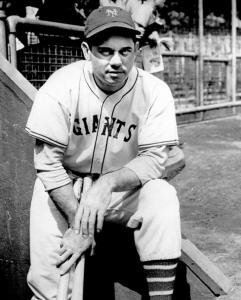
Bill Terry is often forgotten  as one of the greats of the game but the big First Baseman was just as important as McGraw or Mays.  He did not manage as long as McGraw (10 years) or get as many hits as Mays (2193) but the history of the Giants would have been dramatically different without him.  Let's start with the obvious:  he is still the last National League batter to hit over .400 in a season (.401 in 1930).  He was the NL First Baseman in the first three All Star Games and seven times received votes for MVP. As a manager, Terry took over for McGraw when the older man retired in 1932 and immediately turned the team around.  In 1933 he led the team to a World Series win and kept the team competitive in the years that followed.  He led them back to the World Series in 1936 and 1937 but they lost to the Gehrig-DiMaggio Yankees both years.  There is one specific reason that Giants fans should remember Terry every time they see the Giants play:  he designed the orange and black uniforms, switching from the red and blue color scheme of the McGraw years.  After all these years Terry still ranks in the top 10 Giants all time in many offensive categories: Batting Average (1st), Games Played (5th), Runs (5th), Hits (3rd), Doubles (4th), Triples (5th). RBI (5th), Singles (3rd) as well as several other categories.  Following Bill Terry's retirement in 1936 the number 3 was issued to 17  other players: Mel Ott (1937), Hank Leiber (1937), Wally Berger (1937) ,Jimmy Ripple (1938),  Jo-Jo Moore (1939), Harry Danning (1940), Johnny Rucker (1941), Joe Medwick (1943), Jim Mallory (1944-1945), Charlie Read (194), Johnny Mize (1942-1946), Herman Franks (1949), Ozzie Virgil (1969), Mike Sadek (1973-1981), Jeff Ransom(1982) and John Rabb (1982).  Bill Terry was elected into the Hall of Fame in 1954.

4
Mel Ott was the third baseman on the teams led by Bill Terry and he was considered the power in the lineup.  Ott played 22 years in the Major Leagues, all with the Giants, made 11 All Star Games and 13 times received MVP votes.  He led the league in Home Runs 6 times and walks 5 times.  Like Terry, Ott still appears in the top 10 in many categories of the Giants all time leaders: Games Played (2nd), Runs (2nd), Hits (2nd), Total Bases (2nd), Doubles (2nd), Home Runs (3rd), RBI (1st), Walks (2nd), Strikeouts (6th) and singles (2nd).  Ott was also one of the most well liked players, league wide, in the history of the game.  The first player issued the number 4 for the Giants was Bill Terry in 1932.  Only one other player (Hank Leiber in 1937) ever wore the number for the Giants.Mel Ott was elected to the Hall of Fame in 1951

11
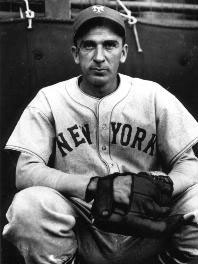
Carl Hubbell was known as "King Carl" for a reason. Carl pitched 16 years for the Giants in New York. He was a 9 time All Star, including the starting pitcher in the first two games, and won two MVP.  He dominated the 1930s and had the Cy Young Award existed at the time, he likely would have been the winner in most years of his career.  He won 253 games and finished with a 2.98 ERA.  Hubbell also is credited with developing the Screwball and his most famous accomplishment was striking out Babe Ruth, Lou Gehrig, Al Simmons, Jimmie Foxx and Joe Cronin consecutively in the 1934 All Star Game.  As far as his place among all time Giants pitchers:  Wins (2nd), Walks per 9 IP (5th), Innings Pitched (2d), Strikeouts (4th), Games Started (3rd), Complete Games (4th), Shutouts (3rd), Only Freddie Fitzsimmons (1932) was issued the number 11 prior to Hubbell.  It was never issued again.  Carl Hubbell was inducted into the Hall of Fame in 1947.

20

Visiting fans who see the tributes paid to Monte Irvin may look at his numbers and ask why so much attention is given to this man.  Simple.  He was great.  Irvin signed with the Giants before the 1949 season at the age of 30 and was the first African American player on the Giants.   He was much more than that though.  Irvin was a great defensive outfielder, an All Star, an MVP candidate and a key piece of the 1951 and 1954 Giants World Series teams.  Unlike Ott, Hubbell, Terry and Mays he does not appear on every category of the Giants all time list (he is 9th in On Base Percentage) but the 1950s  New York Giants would have been much less successful without him.  Had he started his career in the Major Leagues at a younger age he may have been much higher on a lot of lists.  21 players were issued the number 20 after Monte Irvin: Darryl Spencer (1956-1959) , Bob Nieman (1960), Dale Long (1962). Bily Hoeft (1963), Frank Johnson (1968-1969), Dick Groat (1967), Bernie Williams (1970-1972), Glenn Redmond (1974) , Bobby Murcer (1975-1976) ,Vic Harris (1977-1978), Joe Strain (1979-1980), Jeffrey Leonard (1985-1986), Eddie Milner (1987), Phil Garner (1988), Tony Torcato (2003), Michael Tucker (2004-2005) , Todd Greene (2006), Fred Lewis (2007), Pat Misch (2008), Steve Holm (2008-2009) and John Bowker (2009-2010).  Monte Irvin was elected to the Hall of Fame in 1973 for his career in the Negro Leagues.

24

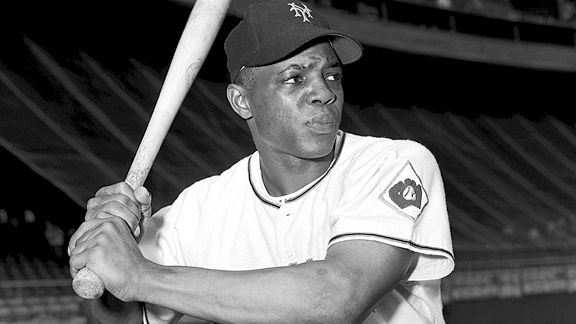
Willie Mays is the Giant.  He is the identity of the team on both coasts.  No man is more associated with the team than Mays.  Rookie of the Year (1951), 20 All Star Games.  15 times received MVP votes (12 of those in the top 10 and twice a winner). 12 time Gold Glove winner.  He is often in the conversation of greatest player of all time.  Mays absolutely dominates the Giants record books: WAR (1st), Offensive WAR (1St), Defensive WAR (3rd), Slugging % (2nd), Games Played, (1St), At Bats (1st), Plate Appearances (1St), Runs (1st), Hits (1st), Total Bases (1st), Doubles (1st), Triples (2d), Home Runs (1st), RBI (2nd), Walks (3rd), Strikeouts (1st) Stolen Bases (3rd), Singles (1st), Extra Base Hits (1st), Times on Base (2nd), Sac Flies (1st), and Intentional Walks (3rd).  22 players wore the number 24 for the Giants before Mays:  Doc Marshall (1932), Francis Healy (1932), Bernie James (1933), Fresco Thompson (1934), Al Cuccinello (1395), Kiddo Davis (1936-1937), Bill Lohrman (1937), Jumbo Brown (1938), Jimmy Ripple (1939), Buster Maynard (1940), Sid Gordon (1941), Frank Demaree (1941), Gus Mancuso (1942), Bobby Coombs (1943), Charlie Mead (1944), Andy Hansen (1944), Slim Emmerich (1945), Bob Joyce (1946), Woody Abernathy (1946-1947), Joe Lafta (1947-1949) and Mario Picone (1952).  No player was issued the number 24 after Mays left the Giants.  Mays was elected to the Hall of Fame in 1979.

27


Juan Marichal was a 9 time All Star, 7 time MVP candidate and one time Cy Young candidate.  Six times the man known as the Dominican Dandy led the team in wins and was the ace pitcher on the 1962 World Series team. He ranks high among all time Giant pitchers:  Wins (3rd), WHIP (4th), Walks/9IP (4th), Games Pitched (6th) , Innings Pitched (5th), Strikeouts (2nd), Games Started (2nd), Complete Games (6th), Shutouts (2nd), Strikeouts/BB (2nd), 16 players wore the number before Marichal: Joe Malay (1933), Hank Leiber (1933-1934), Phil Weintraub (1935), Mickey Haslin (1938), Hy Vandenberg (1937-1939), Tony Cuccinello (1940), Al Glossop (1940), Ace Adams (1941-1946), Goody Rosen (1946), Willard Marshall (1947-1949), Earl Rapp (1951), Spider Jorgensen (1951), Al Corwin (1953), Bill Taylor (1954-1956), Bob Schmidt (1958) and Jim Hegan (1959).   No player was issued Marichal's number after he left the Giants. Juan Marichal was elected to the Hall of Fame in 1983.

30
Orlando Cepeda, known as the Baby Bull, was a key piece of the Giants identity in the transition from New York to San Francisco.  In the Giants' first west coast season Cepeda won Rookie of the Year.  He went on to All Star appearances in 6 of his 9 years in the Bay and four times received MVP votes.  He was a big part of the Giants 1962 World Series team.  Cepeda spent only 9 years in SF so his numbers are not quite as high as Terry, Ott and Mays but he still ranks among the top 10 in several categories: Slugging % (5th). Total Bases (9th), Home Runs (6th), RBI (10th).  Nine players wore the number 30 before Cepeda: Tip Tobin (1932), Hooks Iott (1947), Bill Voiselle (1947) Ray Poat (1947-1949) Kirby Higbe (1949-1950), Daryl Spencer (1952), Sid Gordon (1955), Dick Littlefield (1956) and Bob Lennon (1956).  Twenty players were issued #30 following Cepeda: Billy Hoeft (1966), Jim Johnson (1970), John Carrithers (1970-1973), John Boccabella (1974), Darrel Thomas (1975-1977) , John Camargo (1978-1979), Bob Kearney (197), Chilli Davis (1981-1987) , Rusty Tillman (1988), Donnell Nixon (1988-1989), Mark Thurmond (1990), Chris James (1992), Jim McNamara (1992-1993), Jim DeShaies (1993), Jamie Brewington (1995), Dan Peltier( 1996), Marcus Jensen (1996-1997), Jacob Cruz (1997-1998) and Dante Powell (1998). Orlando Cepeda was selected for the Hall of Fame by the Veteran's Committee in 1999.

36

Gaylord Perry won 314 games over 22 years.  10 of those years were in San Francisco and 134 of those wins were in a Giants uniform.  Perry won 15 or more games in 6 straight seasons, was twice an All Star and  finished second in the Cy Young voting in 1970, finishing behind Bob Gibson.  The following year, his last in San Francisco, he helped lead the Giants to a division title.  Perry may not be the biggest name in Giants history but he does appear on  the Giants top 10 in several categories including:  WAR for Pitchers (7th), Innings Pitched (8th), Strikeouts (6th) ,Games Started (8th), K's/BB (4th). 17 Giants wore the number before Perry: Hugh East (1941), Frank Rosso (1944), Bennie Warren (1946), Monty Kennedy (1946) Mickey McGowan (1948), Alex Konikowski (1948), Clint Hartung (1949-1950), Sam Calderone (1953), Joe Garagiola (1954), Mario Picone (1954), Bob Lennon (1954-1956), Max Surkont (1956-1957), Joe Margoneri (1956-1957), Billy Muffett (1959), Bud Byerly (1959-1960), Sherman Jones (1960) and Frank Linzy (1963).  24 players wore the number following Perry: Sam McDowell (1972), Garry Mathews (1972-1976), Tim Foli (1977) , Skip James (1977-1978), Jim Dwyer (1978), Bill North (1979-1981), Dan Schatzeder (1982), Bill Wellman (1982-1986), Keith Comstock (1987), Dennis Cook (1988),  Randy McCament (1989-1990), Rafael Novoa (1990), Gil Heredia (1991-1992), Steve Reed (1992), Erik Johnson (1993), Gino Minutelli (1993), Tim Layana (1993), Tony Mendez (1994), Kenny Greer (1995), Shawn Estes (1995-1996), Jay Canizaro (1996), Wilson Delgado (1997), Joe Nathan (1999-2003) and A.J. Pierzynski (2004).  Gaylord Perry was elected into the Hall of Fame in 1991.

44
Willlie McCovey is probably one of the most under rated players in the history of the game.  McCovey debuted in 1959, the Giants' second year in San Francisco, and after only 52 games he won the Rookie of the Year award unanimously and received an MVP vote.  He was a 6 time All Star and ten times received MVP votes.  He was the MVP of the 1969 season, finishing ahead of Tom Seaver, Hank Aaron and Pete Rose.  Of course he ranks high on a number of the team's all time categories:  WAR (4th), Offensive WAR (4th), Slugging % (8th), OPS (6th), Games (3rd), At Bats (3rd), Plate Appearances (3rd), Runs (6th), Hits (4th) Total Bases (4th), Doubles (5th) , Home Runs (4th), RBI (4th), Walks (4th), Extra Base Hits (4th), Times on Base (4th), Hit By Pitch (7th), Sac Flies (2nd), Intentional Walks (2d),  Only six players wore the number prior to McCovey:  Johnny Vergez (1933), Andy Hansen (1947-1950), Al Gettel (1951), Steve Ridzik (1956-1957), Ray Crone (1957-1958) and Don Johnson (1958).  No Giant player was issued the number following McCovey's departure.  McCovey was elected to the Hall of Fame in 1986.

42
Jackie Robinson's number hanging in the Giants' stadium may seem a bit like taunting to the Giants'  faithful, especially since it is in Dodger blue.  But Jackie Robinson very nearly did wear the black and orange.  Jackie was ready to retire following the 1956 season but kept it quiet.  He had signed a deal with LOOK magazine to break the news and give the publication a big exclusive.  What he did not know was that the Dodgers were in the process of trading him to the Giants.  When the news broke that he was a Giant and that he was retiring instead of going to the Giants all hell broke loose.  It strained his relations with the Dodgers front office for years as well as giving voice to  claims by the Giants of shady dealings, adding to the legendary rivalry with stories of Jackie retiring to avoid the horrors of a Giants uniform.  In total, 16 players wore the number 42 for the Giants:  Gene Thompson (1946), Max Lanier (1952), Frank Hiller (1953), Marv Grissom (1953-1958), Joe Shipley (1959-1960), Bobby Bolin (1961-1969), John Morris (1972) Jim Willoughby (1972-1974), Gary Alexander (1977), Milt May (1980), Mike LaCoss (1986), Michael Jackson (1992-1994), John Roper (1995), Shawn Barton (1996), Keith Williams (1996) and Kirk Rueter (1996-1997).


TRIVIA QUESTION:
Surprisingly, despite their tremendous success in the early decades of the New York Giants, only Mathewson and McGraw have been honored by having their initials "retired".  There is a Giants pitcher who twirled for the team from 1890-1898.  He still ranks highly in the top 10 of many Giants categories: WAR for Pitchers (2nd), Wins (5th), Games Played (7th), Innings Pitched (4th) Strikeouts (3rd), Games Started (5th) Complete Games (3rd), Shutouts (4th), Walks (1st), Hits (4th), Home Runs/9 IP (5th), Losses (2nd), Earned Runs (2nd), Wild Pitches (3d), Hit By Pitch (1st ), Batters Faced (2nd).  This Pitcher was elected into the Hall of Fame by the Veterans Committe in 1977.  Who is this pitcher?

Answer to Last Week's Question:
 Although he was known mostly for his time with The A's and Brewers, Rollie Fingers spent 4 years with the Padres (1977-1980).  During that time Fingers had a 34-40 record and saved 108 games.

Similarly, Rich "Goose" Gossage is best remembered as a member of the great Yankee teams of the 1970s.  Gossage pitched 4 seasons with the Padres (1984-1987).  He went 25-20 with 83 saves.
Sunday, April 19, 2015

Why Don't The San Diego Padres Wear That Number Anymore?

Every team in the league has its own legends.  Some legends tower over the history of the game.  Some tower over a certain portion of the history.  Some define an organization and are the first thought anyone has when the team is mentioned.

Each team finds a way to honor their legends, usually with the retirement of the player's number.  For the fans of that team it is easy to sit in the stadium seats, look out on the display of retired numbers and feel pride in the part that number represents to their team's history.  Unfortunately, fans of the visiting team stopping  by to see a game may not know the meaning of those numbers.

So during this series we will explore what the retired numbers for each team mean and why they were retired.

This week we will look at the San Diego Padres.

JC

Jerry Coleman started his career in baseball as a Rookie of the Year in 1949 for the World Series Champion Yankees.  His road to the majors had been slowed slightly by World War II,  where he served in the military.  Coleman would play a total of nine years, all with the Yankees, and was a member of six World Series teams. After retirement Coleman broadcast games for the Yankees, CBS and the Angels.  His association with the Padres started in 1972.  He broadcast for the Padres consistently from 1972 through 2013, although he did take over as manager during the 1980 season.  Despite never playing a game for the Padres Coleman was elected into the Padres Hall of Fame in 2001.  There is a statue in Coleman's honor at Petco Park.  He passed away this past winter.

RK
Ray Kroc bought the Padres organization in 1974.  He was already well known as the genius behind McDonald's restaurants.  Before Kroc's ownership the team had never finished higher than 6th in a 6 team division.  Following Kroc's purchase of the team they slowly (very slowly) started to turn things around.  To be fair, during the first few years of his ownership they were playing in the same division as the Big Red Machine and the Dodgers of Garvey, Lopes, Cey and Russell.  Kroc eventually built the team into a contender.  He passed away in January of 1984.  The Padres won their first ever Division and National League title that same year.

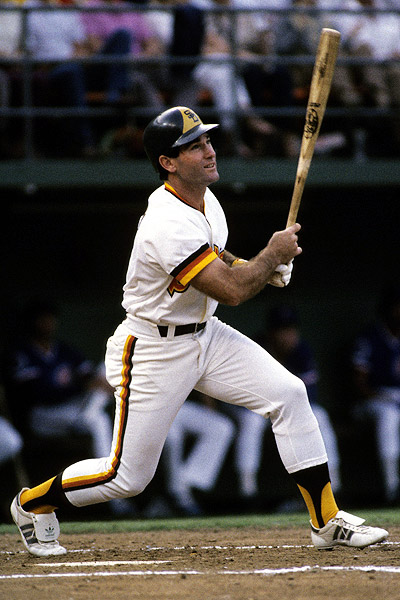
Steve Garvey is better known for his time with the Dodgers as an 8 time All Star, MVP winner and the face of the Dodgers of the 1970's.  In 1983 Garvey joined the Padres organization where he would play a total of five years. Garvey's arrival in San Diego coincided with the improvement of the team's young players like Eric Show, Craig Lefferts and Tony Gwynn.  Garvey's signature moment as a Padre came in Game 4 of the 1984 NLCS against the Cubs.  With the game tied in the bottom of the 9th and the Cubs one win away from  advancing to the World Series, Garvey launched a 2 run Home Run to send the series to a deciding 5th game.  Garvey would win the NLCS MVP.  Following Garvey's departure only Keith Moreland wore the number 6 for San Diego before Garvey's number was retired.  Despite having his number retired Garvey does not appear in the top 10 of any major offensive category of the Padres' history.

This should speak for itself.  #19 was Mr. Padre, Tony Gwynn.  Gwynn leads the team's all time stats in WAR, Offensive WAR, Batting Average, Games Played, At Bats, Plate Appearances, Runs, Hits, RBI, Total Bases, Doubles, Triples, Walks, Stolen Bases, Singles, Extra Base Hits, Times on Base, Sac Flies and Intentional Walks.  Gwynn made 15 All Star Games, received MVP votes 12 times, won 7 Silver Slugger Awards and 5 Gold Gloves.  He also won 8 batting titles, hit over .300 every season except his first year when he played in only 54 games (he hit .289).  Seven times he hit above .350 for the year and twice (1987 and 1994) he was a serious threat to hit .400 for the year.  Gwynn was inducted into the Hall of Fame in 2007.  Gwynn was a part of the only two World Series teams in Padres history.  No player was issued the number 19 for the Padres between the time Gwynn retired and the retirement of the number.  

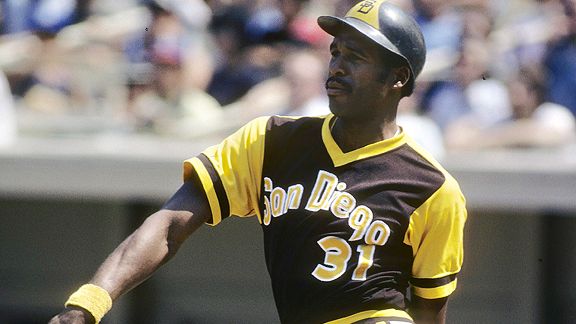
Dave Winfield played for the Padres from 1973 through 1980 before leaving for the Yankees as a free agent.  In the days before Tony Gwynn, Winfield was the closest thing the Padres had to a Mr. Padre.  With the Padres Winfield was a three time All Star, Gold Glove winner and twice received MVP votes finishing 3rd in 1979 behind Keith Hernandez and Willie Stargell.  After leaving the Padres Winfield would go on to play with the Yankees, Angels, Blue Jays, Indians and his home town Twins.  At the end of his career he had collected over 3000 hits and over 500 Home Runs.  Winfield still ranks high in many Padres categories: WAR (2nd), Offensive WAR (2nd), Average (10th), Slugging % (7th), OPS (8th), Games (3rd), At Bats (3rd), Plate Appearances (3rd), Runs (2nd), Hits (3rd), Total Bases (2nd), Doubles (5th), Triples (3rd), Home Runs (4th), RBI (2nd), Walks (4th), Stolen Bases (7th), Singles (4th), Extra Base Hits (2nd), Times on Base (2nd), Sac Flies (2nd), Intentional Walks (3rd).  Winfield was elected into the Hall of Fame in 2001.  Following Winfield's departure seven players wore the number 31 for the Padres (LaMarr Hoyt, Ed Whitson, Dave Staton, Bill Beane, Bob Tewksbury, Trey Beamon and Matt Clement).

Randy Jones spent 8 years as a Padre.  He finished his Padre career with a 92-105 record.  In 1972, his first full season with the Padres, Jones finished with an 8-22 record.  The following year he went 20-12 and followed that up with a 22-14 season.  In both of those 20 win seasons he finished high in the Cy Young voting (2nd in 1975 and 1st in 1976).  Jones was often referred to as a "junk ball" pitcher (his nickname was Junk Man) but he was one of the few pitchers that Pete Rose hated to see on the mound.  Jones ranks high in many of the Padres' all time pitching categories:  WAR (4th), ERA (8th), Wins (2nd), WHIP (7th), Walks per 9 inings (1st), Innings (1st), Strikeouts (8th), Starts (1st ) Complete Games (1st), Shutouts (1st), and Losses (1st).  The Padres retired his number on 5/9/1997.  Six players wore the number 35 for the Padres between Jones' retirement and when the number was honored (Luis DeLeon, Chris Brown, Walt Terrell, Rafael Valdez, Al Osuna and Jason Thompson).

During the Padres' only consistently competitive period of their history Trevor Hoffman was the team's closer.  When opposing batters heard Hell's Bells chiming over the stadium speakers , they knew for whom the bells were tolling.  From 1993 through 2008 Hoffman was consistently one of the best relief pitchers in the game.  Hoffman saved a total of 601 games in his career.  Hoffman's name is very prominent in the Padres record books: WAR for Pitchers (1st), ERA (1st ), Wins (10th), WHIP (1st), Walks per 9 IP (6th), K per 9 IP (1st), Games (1st), Saves (1st), Innings (9th) K's (3rd) and Losses (7th), Following Hoffman's departure no player was issued the #51.

42
The league retired the number 42 permanently for all teams in 1997.  In total there were 13 players who wore the number 42 for the Padres.  The final was Pedro Martinez from 1993-1994.  It is not the Pedro Martinez pitcher of Red Sox fame but a pitcher who spent just two years with the Padres as a relief pitcher.  The other players to wear 42 for the Padres were: Billy McCool (1969) , Earl Wilson (1970), Dick Kelley (1971), Ron Taylor (1972), Al Severinson (1972), Bob Miller (1973), Frank Snook (1973), Jerry Turner (1974-1976), Mark Lee (1978-1979), George Staberlein (1980), Sid Monge (1983-1984), Greg Harris (1984) and Rich Rodriguez (1990-1993).

TRIVIA QUESTION:
Trevor Hoffman is second all time in Major League Baseball history with 601.  Although their numbers are not retired by the Padres, there are two Hall of Fame Relief Pitchers in the top 25 all time for saves, both of whom spent time in a Padres uniform.  Who are these two players?

Answer to Last Week's Trivia Question:
The Pacific Coast League started in 1887 and consisted of four teams:  Oakland (no team name), San Francisco (no team name), San Francisco A & G's and San Francisco Damianas.

The Pacific Coast League disappeared from 1887 to 1898.  It returned for the 1898 season consisting of 8 teams: Fresno/Watsonville (bizarre pairing conisdering the distance between the cities), Oakland Reliance, Sacramento Giltedges, San Francisco (no team name), San Franciso Athletics, San Jose (no team name), Santa Cruz (no team name) and Stockton,

The league disappeared again until returning in 1903 (the year of the first World Series).  Every year since then the Pacific Coast League has operated at various levels of the minor league.

Sunday, April 12, 2015

I Didn't Know He Played For: Hollywood Stars

The city of Hollywood is known world wide for many things.  There is the famous Hollywood sign, of course. The Sunset Strip.  The Miracle Mile.  Paramount Studios.  The Walk of Fame.  The LaBrea Tar Pits.  It has the streets where Lucille Ball, Bing Crosby, Bob Hope and Rudolph Valentino walked.  It has the bars that launched the careers of The Doors, Van Halen, Motley Crue and Guns N Roses.

One of the lost traditions of the Hollywood area is the legacy of the Hollywood Stars.  From 1926-1957 (with the exception of 1936 and 1937) the city of Hollywood had a team in the Pacific Coast League.  In 1958, when the Dodgers arrived in town, the Hollywood Stars closed up shop.

Of course those in the Los Angeles/Hollywood area know the legendary Dodgers who came through town. The names like Koufax, Drysdale, Hershiser, Garvey, Cey, Lopes, Valenzuela and Gibson will never be forgotten.  What has been forgotten are the days when the Hollywood Stars played at Gilmore Field (now the site of The Grove at 3rd and Fairfax.  There is a small display at the Farmer's Market entrance honoring the history of Gilmore Field).  So although you may know the Dodgers who came through town, here are a list of other players who came through town as part of the Hollywood Stars  (and don't miss the other teams in this series and learn about players you may not know played for  ReadingOrioles,  Red SoxYankeesBlue Jays and Rays):


Braggo Roth:

Braggo Roth would play 8 years in the Major Leagues, mostly with Cleveland.  He never played in a World Series game but he seemed to have a knack for just missing the action.  In fact he was moved around so much his nickname became the "Globetrotter".  He played for the White Sox in 1914 and 1915.  In 1915 he was traded to the Cleveland Indians and in return the White Sox received Shoeless Joe Jackson.  Two years later the White Sox were World Champions.  He played for the Indians through 1918.  In March 1919 he was sent to Philadelphia in exchange for Larry Gardner, Charlie Jamieson and Elmer Myer.  While Roth suffered in the depths of the A's dark years, the three players that went to Cleveland helped the Tribe win their first ever World Series.  He wouldn't spend long in Philadelphia and would be sent to Boston half way through 1919.  Unfortunately for Roth, the Red Sox were on the decline as most of their stars (including Babe Ruth and Carl Mays) had been sent to the Yankees. From the Red Sox he was sent to the Senators and then sent to the Yankees for 1920.  He left the Yankees after the 1920 season.  Had he made the team one more year he would have made his first ever World Series, at the same time the Yankees made their first.  Roth was out of baseball as a player for 1921 and 1922 before returning to the minor leagues for 1923.  His final professional ball was played with the 1928 Hollywood Stars.  In 67 games he hit .283 with 1 Home Run.

Emil Yde:
Emil Yde had a brief but sometimes spectacular Major League career.  He started with the Pirates in 1924 and went 16-3.  It was a great personal season in the midst of a tough season for the Pirates.  His 1925 Pirates season was strong (17-9, 4.13) and although his ERA was high his win total helped the Pirates reach their first World Series since 1909.  Yde made one appearance in the Fall Classic that year.  He started Game 4 and allowed 5 hits and 4 runs in 2 1/3 innings for a Series ERA of 11.57.  The Pirates would win the Series but Yde was never effective again.  In what was a disaster of a season in 1926 Yde struggled (8-7, 3.65) while the team imploded in the middle of the ABC affair.  Yde would play part of 1927 for the Pirates but would again be ineffective.  1929 saw him drop to Indianapolis in AAA before resurfacing  with the Tigers for one average season (7-3, 5.30).  Trying to hang on to the baseball life for another shot at the big time, Yde landed in Hollywood.  He spent three years in Hollywood with the best year being 1932 with a 17-9 record and 3.94 ERA.

Bob Meusel:

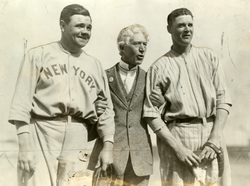
The name Bob Meusel has become forgotten and unfairly so.  The first extended run of Yankee American League dominance was not possible without Bob.  Meusel was the Lou Gehrig of the Yankee lineup before Lou Gehrig.  Joining the Yankees in 1920, he was the first power hitter to join Babe Ruth in the Yankee lineup.  The two formed a powerful duo until Gehrig came along and then the three of them formed a powerful trio.  Ruth batted third, Gehrig fourth and Meusel fifth.  Between 1920, when Meusel joined the Yankees and 1930 when he left,  the Yankees won six American League titles and three World Series titles.  In the infamous 1927 Murderer's Row lineup Meusel hit 5th, wearing the #5 before DiMaggio came along.  Like Yde, Meusel tried to cling to the professional baseball life after the majors.  He found himself in Minneapolis in 1931.  In 1932, Yde's final year in Hollywood, Meusel played there as well.  In 64 games he hit .329 but at the end of the year, at age 36, Meusel walked away for good.

Bobby Doerr:

Bobby Doerr was born and raised in Los Angeles attending Fremont High School, located on San Pedro Street in what would now be considered South Central Los Angeles.  Doerr would be a part of the successful Red Sox group of the 1940's and 1950's that included Ted Williams, Dom DiMaggio and Johnny Pesky but before he made it to the majors he played for his local minor league team the Hollwood Stars.  Doerr played the 1934 and 1935 seasons in Hollywood before being acquired by the San Diego Padres, at that time a minor league affiliate for the Red Sox.  Following one year in San Diego Doerr was on to a Hall of Fame career in Boston.

Willard Hershberger:
Willard Hersberger had a short but tragic career.  The minor league career for Willard was much longer than his Major League career.  He moved through El Paso, Springfield, Erie, Newark and Binghamton before landing in Hollywood in 1934 (along with Doerr).  He hit .307 in 114 games that year before continuing on in the minors to Oakland and then Newark.  In 1938 he finally made the Major Leagues with the Cincinnati Reds.  According to Billy Werber, the Reds third baseman and sometime room mate of Hershberger.  "he was a hypochondriac and asked Dr. Richard Rhode, the Reds trainer, to check him out almost every day."  Hershberger was the backup Catcher for the Reds but was most effective as a Pinch Hitter in the Reds championship seasons of 1939 and 1940.  In August 1940 Hershberger got a chance behind the plate when Reds' star Ernie Lombardi injured an akle.  Unfortunately that chance coincided with a losing streak and Hershberger assumed that he was the cause.  "I called the wrong pitches.  If Lom had been in there we wouldn't have lost.  I've let the team down." Werber says Hershberger told him.  The next day Hershberger commited suicide.

Rod DeDeaux:

Raoul Marshall "Rod" Dedoux played a total of 2 games in the Major Leagues for the 1935 Brooklyn Dodgers, during the era the Brooklyn team's poor play gave them the name of the "Daffiness Boys".  He was born in New Orleans in 1914 but the family moved to California and Rod attended Hollywood High School. After his two games with Brooklyn he was sent back to the minors where he bounced around for a few years.  His final stop was in his home town of Hollywood where he played all of 30 games and hit .165.  Dedeaux's impact on baseball came not as a player but as a coach.  He ran the USC baseball program until 1986 during which time he won more games than any collegiate coach and managed two US Olympic teams, including the 1984 games in Los Angeles.  His program also produced some of the biggest names in baseball including Fred Lynn, Mark McGwire and Randy Johnson.

Charlie Root:

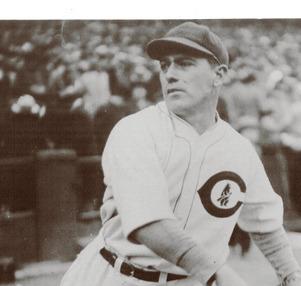
Charlie Root is mostly remembered as the man who gave up the "called shot" to Babe Ruth.  Root was actually a very good pitcher for the Cubs from 1926-1941.  Over his 17 year Major League career Root won 201 games and appeared in four World Series for the Cubs.  Following his departure from the Cubs in 1941 Root spent three seasons with the Hollywood Stars.  His best year was 1943 when he went 15-5 with a 3.09 ERA.

Rip Russeell:
Rip Russell would not have a tremendously long Major League career but he would play on one iconic team:  the 1946 Red Sox.  He spent the first four years of his career with the Cubs before being returned to the minor league Los Angeles Angels.  In 1946 Russell resurfaced with the Red Sox and played 80 games for the eventual American League champions.  He would get two plate appearances in the World Series against the Cardinals and would get a base hit in both giving him a 1.000 career post season  average.  Russell would play part of 1947 with the Sox before returning to Sacramento of the Pacific Coast League.  He would play 114 games of the 1948 season in Hollywood and would finish his professional career in 1949 with the Toledo Mud Hens.

Mel Queen:

Mel Queen came to the Yankees as a highly touted pitching prospect in 1942.  After a few unsuccessful years with New York he was sold to the Pirates where he continued to disappoint based on the high expectations placed on him.  He would finish his career in the major leagues with a 27-40 record before being sent to the Hollywood Stars, by that time a minor league affiliate for the Pirates. In 1952, his first year with the Stars, he went 14-9 and would also have a 16-8 season for Hollywood but his success in the minors could never be translated into Major League success, baffling the experts.  In all he spent four years in Hollywood.

Bill Mazeroski:
Bill Mazeroski was a 7 time All Star, 7 time Gold Glove winner, eventual Hall of Famer and hit one of the most famous Home Runs of all time.  Before all that he was a Hollywood Star.  Mazeroski played part of the 1955 and part of the 1956 season in Hollywood.  His minor league career was short since his talent was obvious and talent in Pittsburgh, at the time, was missing.

Al Zarilla:
Al Zarilla was never the star of a team.  He was never the driving force on a pennant winner.  He was never someone that changed the way an opposing team approached the game.  He was a very good player similar to a modern day Mark Ellis, Jamey Carroll or Nick Punto.  He would play 10 years in the Major Leagues, mostly with the St.Louis Browns and was a member of the only Browns World Series team.  His big league career ended in 1953 but he hung  on in the minors for a few years after.  He made a quick stop in Hollywood in 1955 trying to catch on with the Pirates but a .111 average did nothing to get him back to the big leagues.

Gene Freese:
Gene Freese was sort of a journeyman ballplayer.  He made stops with the Pirates, Cardinals, Phillies and White Sox before landing with the Reds where he made his biggest impact. The 1961 Reds were the first Cincinatti NL Champs since 1940 and Freese was a major part of that.  Freese had a 12 year career in the majors but was never really able to stick with one team.  Early in his career while trying to stick with the Pirates he made a stop in Hollywood.  In 68 games there he hit only  .274 but hit 11 Home Runs and drove in 36.  It was enough to get him called up to the Pirates.

TRIVIA QUESTION:
The Pacific Coast League started play in 1887.  The league disappeared and returned in 1898 for one season.  What year did the Pacific Coast League establish themselves as an annual league?

Answer to Last Week's Question:
There are very few teams in the league who have never reached the World Series.  Even teams like the Padres, Brewers and Rockies who are often overlooked for their success have reached the World Series at least once in their history.

The Montreal Expos joined the National League in 1969, the same year as the San Diego Padres.  The Expos reached the post season in 1981 when they lost to the Los Angeles Dodgers in the NLCS and came very close to playoff berths several other years as well.  Unfortunately, following the 1994 strike the Expos experienced a steady decline.  Eventually they moved to Washington and became the Nationals.  The Nationals reached the NLDS in 2012 but failed to advance.  They reached the playoffs again in 2014 but lost to the Giants in the NLDS.

The Seattle Mariners joined the American League in 1977.  From their entrance in the league until 1994 the team was the joke of the league.  In 1995 the team made a miraculous comeback while the Angels collapsed and the Mariners made their first post season appearance.  After beating the Yankees in one of the greatest post season series of all time the M's lost to the Indians in the ALCS.

The Mariners reached the ALDS in 1997 but were beaten by a strong Orioles team.  They would reach the ALCS in 2000 and 2001 but lost to the Yankees both seasons.  The Mariners have not reached the post season since 2001.


Saturday, April 4, 2015

2015 Final Predictions

***The Season Preview and Predictions that follow are not betting advice in any way shape or form.  Please do not bet any money based in any part on these predictions.***

This looks like it will be another great season.  This could be one of the most competitive seasons in years and there are few teams who look like they have no chance at all to make the playoffs.  So get ready because it is a long, fun trip to October.  I hope everyone enjoys the ride as much as I will.

Head of the Class: 
The Giants, Cardinals and Dodgers look to remain at the top of the league while the Nationals seem to be on the verge of joining them.

The Red Sox and Tigers remain the favorites in the AL.

Look Out Below:
The Phillies, Braves and Reds have unloaded and seem to be falling to the bottom of the NL.

The A's, Royals and Angels look like they may suffer major setbacks after playoff runs in 2014.

Ready to Strike?:
The Cubs, Padres and Marlins are sparking excitement with young talent and big offseason pick ups.  The Mets also want to join in the October conversation.

The Mariners and Blue Jays want to make their first post season appearances in over a decade each.  The White Sox want to take advantage of an aging and injured Tiger team.


Rock Bottom:
The Rockies, Brewers and Phillies are definitely at the bottom.  Each will likely be unloading talent as the season progresses.

The Astros, Rangers, Rays and Indians look to be the worst in the AL although depending on how things play out the Yankees could join them.

Here is a final prediction of what I believe the standings will look like at the end of the year:
American League East
1. Toronto Blue Jays
2. Boston Red Sox (Wild Card)
3. Baltimore Orioles (Wild Card)
4 New York Yankees
5. Tampa Bay Rays

American League Central
1. Detroit Tigers
2. Chicago White Sox
3. Kansas City Royals
4. Minnesota Twins
5. Cleveland Indians

 American League West
1. Seattle Mariners
2. Los Angeles Angels of Anaheim
3. Oakland Athletics
4. Texas Rangers
5. Houston Astros

Wild Card Game:
Boston Red Sox over Baltimore Orioles
American League Divisional Series: 
Boston Red Sox over Detroit Tigers
Toronto Blue Jays over Seattle Mariners
American League Championship Series:
Toronto Blue Jays over Boston Red Sox

American League Most Valuable Player: Adam Jones, Baltimore Orioles
American League Cy Young Award Winner: Felix Hernandez, Seattle Mariners

1. Washington Nationals
2. Miami Marlins
3. New York Mets
4. Atlanta Braves
5. Philadelphia Phillies

1. St. Louis Cardinals
2. Pittsburgh Pirates
3. Chicago Cubs
4. Cincinnati Reds
5. Milwaukee Brewers

1. San Francisco Giants
2. Los Angeles Dodgers (Wild Card)
3. San Diego Padres (Wild Card)
4. Arizona Diamondbacks
5. Colorado Rockies

National League Wild Card Game: 
Los Angeles Dodgers over San Diego Padres
National League Division Series:
St. Louis Cardinals over San Francisco Giants
Washington Nationals over Los Angeles Dodgers
National League Championship Series: 
Washington Nationals over San Francisco Giants

National League Most Valuable Player:  Andrew McCutcheon, Pittsburgh Pirates
National League Cy Young Award Winner:  Steven Strasburg, Washington Nationals

WORLD SERIES:
Washington Nationals over Toronto Blue Jays


TRIVIA QUESTION:
If correct, this year's prediction would mean that the Washington Nationals/Montreal Expos franchise would be appearing in their first ever World Series.  How many teams in the league have never reached the World Series?

Answer to Last Week's Question:
Mike Trout won the 2014 MVP.

In 1969, the year the league went to a divisional format, Harmon Killebrew of the Twins won the MVP, helping lead the Twins to the ALCS.

From 1971 through 1974 the AL West won every MVP (1971, Vida Blue A's, 1972, Dick Allen, White Sox, 1973, Reggie Jackson, A's and 1974 Jeff Burroughs, Rangers).  In 1977 Rod Carew won the MVP for the Twins.

Don Baylor led the Angels to the ALCS in 1979 and won the MVP and he was followed by the Royals' George Brett in 1980.

The East dominated the award until Jose Canseco's 40/40 season of 1988 and Rickey Henderson's 1990 season.  Dennis Eckersley made it three A's MVP's when he won the 1992 MVP and Cy Young.
Frank Thomas won the 1993 MVP in the last two division format season and although Thomas also won the 1994 MVP the Sox were in the Central.

From 1996 through 2004 the West dominated the award: 1996, Juan Gonzalez Rangers, 1997 Ken Griffey, Mariners, 1998 Juan Gonzalez, Rangers, 1999 Ivan Rodriguez, Rangers.  2000 Jason Giambi, A's, 2001 Ichiro Suzuki, Mariners, 2002 Miguel Tejada, A's, 2003 Alex Rodriguez, Rangers, 2004, Vladimir Guerrero, Angels.

Between Guerrero and Trout (2014) only Josh Hamilton of the Rangers (2010) won the MVP giving the division a total of 22 MVP.